


























Views
Downloads



Grade 3 Reading Comprehension — Printable No-Prep Worksheet
Paste this activity's link or code into your existing LMS (Google Classroom, Canvas, Teams, Schoology, Moodle, etc.).
Students can open and work on the activity right away, with no student login required.
You'll still be able to track student progress and results from your teacher account.
This Grade 3 reading comprehension worksheet gives students a complete, engaging story to build foundational literacy skills. By reading "Learning at the Library" and tackling targeted questions, students practice extracting key details, sequencing events, and using context clues to strengthen their overall reading proficiency.
At a Glance
- Grade: 3 · Subject: ELA
- Standard:
CCSS.ELA-LITERACY.RL.3.1— Ask and answer questions to demonstrate understanding of a text.- Skill Focus: Reading Comprehension
- Format: 5 pages · 13 problems · Answer key included · PDF
- Best For: Independent practice and sub plans
- Time: 25–35 minutes
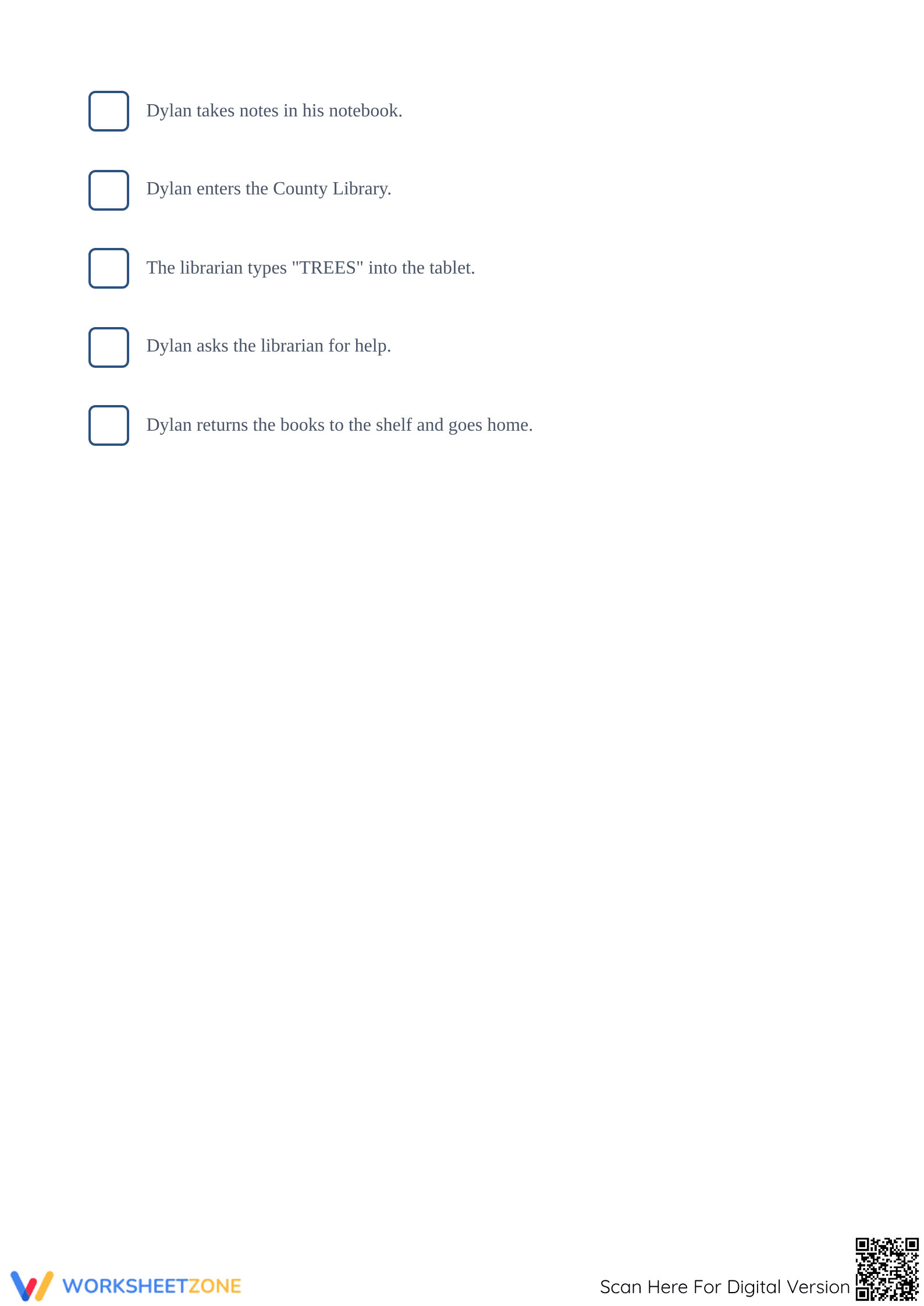
This comprehensive five-page packet features an original reading passage followed by four distinct activity sections. Students will complete a multiple-choice comprehension check, write short answers for a detailed text analysis, fill in the blanks for vocabulary building, and number events to establish story order. A complete answer key is provided for quick and accurate grading.
Zero-Prep Workflow
This resource is designed for immediate classroom implementation, requiring under two minutes of total teacher setup:
- Print (1 minute): Simply print the five-page PDF packet and the accompanying answer key.
- Distribute (1 minute): Hand out the packets to students for independent work, morning work, or literacy centers.
- Review (5 minutes): Use the included answer key to quickly grade the 13 tasks or review them together as a whole class.
Because the instructions are self-explanatory and the text is included, this worksheet is an ideal, stress-free addition to any substitute teacher plan.
Standards Alignment
This worksheet is directly aligned to CCSS.ELA-LITERACY.RL.3.1, requiring students to ask and answer questions to demonstrate understanding of a text, referring explicitly to the text as the basis for the answers. It also supports sequencing and vocabulary development in context. Both standard codes can be copied directly into lesson plans, IEP goals, or district curriculum mapping tools.
How to Use It
This reading packet is highly versatile. Use it after direct instruction on finding text evidence to give students a chance to apply their skills independently. Alternatively, assign it as a quiet morning work activity to settle the class while building stamina. As a formative assessment tip, observe how students approach the "Story Order" section; if they struggle to sequence the five events, they may need additional support with narrative structure and transition words. Expect students to complete the reading and all 13 questions in 25 to 35 minutes.
Who It's For
This resource is designed for third-grade general education students, but it also serves as excellent review material for fourth graders needing extra comprehension practice. For students requiring accommodations, teachers can read the passage aloud or highlight key paragraphs where the short-answer evidence can be found. Pair this worksheet with an anchor chart on finding text evidence to maximize student success.
Mastering reading comprehension requires consistent, text-dependent practice that challenges learners to look closely at the narrative structure. Aligned with CCSS.ELA-LITERACY.RL.3.1, this resource prompts students to ask and answer questions to demonstrate understanding of a text. According to Fisher & Frey (2014), providing students with structured opportunities to interact with a text through varied question types—such as multiple-choice, short answer, and sequencing—significantly improves their ability to extract meaning and retain critical information. When learners are asked to locate specific evidence to support their answers, they develop stronger cognitive pathways for processing complex information. By engaging with this multi-part worksheet, students move beyond passive reading to actively analyze the narrative, locate specific evidence, and build the critical thinking skills necessary for advanced literacy. This targeted approach ensures that foundational reading skills are firmly established for future academic success.


