


























Views
Downloads


Grade 3 Reading Comprehension: Cooking | Essential Worksheet
Paste this activity's link or code into your existing LMS (Google Classroom, Canvas, Teams, Schoology, Moodle, etc.).
Students can open and work on the activity right away, with no student login required.
You'll still be able to track student progress and results from your teacher account.
This Grade 3 reading comprehension worksheet helps students master informational text analysis through an engaging story about cooking with family. By following David and his grandfather, learners practice identifying key details, sequencing events, and defining domain-specific vocabulary. It provides a structured approach to building literacy confidence while exploring real-world procedural tasks in a kitchen setting.
At a Glance
At a Glance
- Grade: 3 · Subject: English Language Arts
- Standard:
CCSS.ELA-LITERACY.RI.3.1— Answer questions by referring explicitly to the text for evidence- Skill Focus: Reading Comprehension & Sequencing
- Format: 4 pages · 12 problems · Answer key included · PDF
- Best For: Independent practice or sub plans
- Time: 20–30 minutes
What's Inside
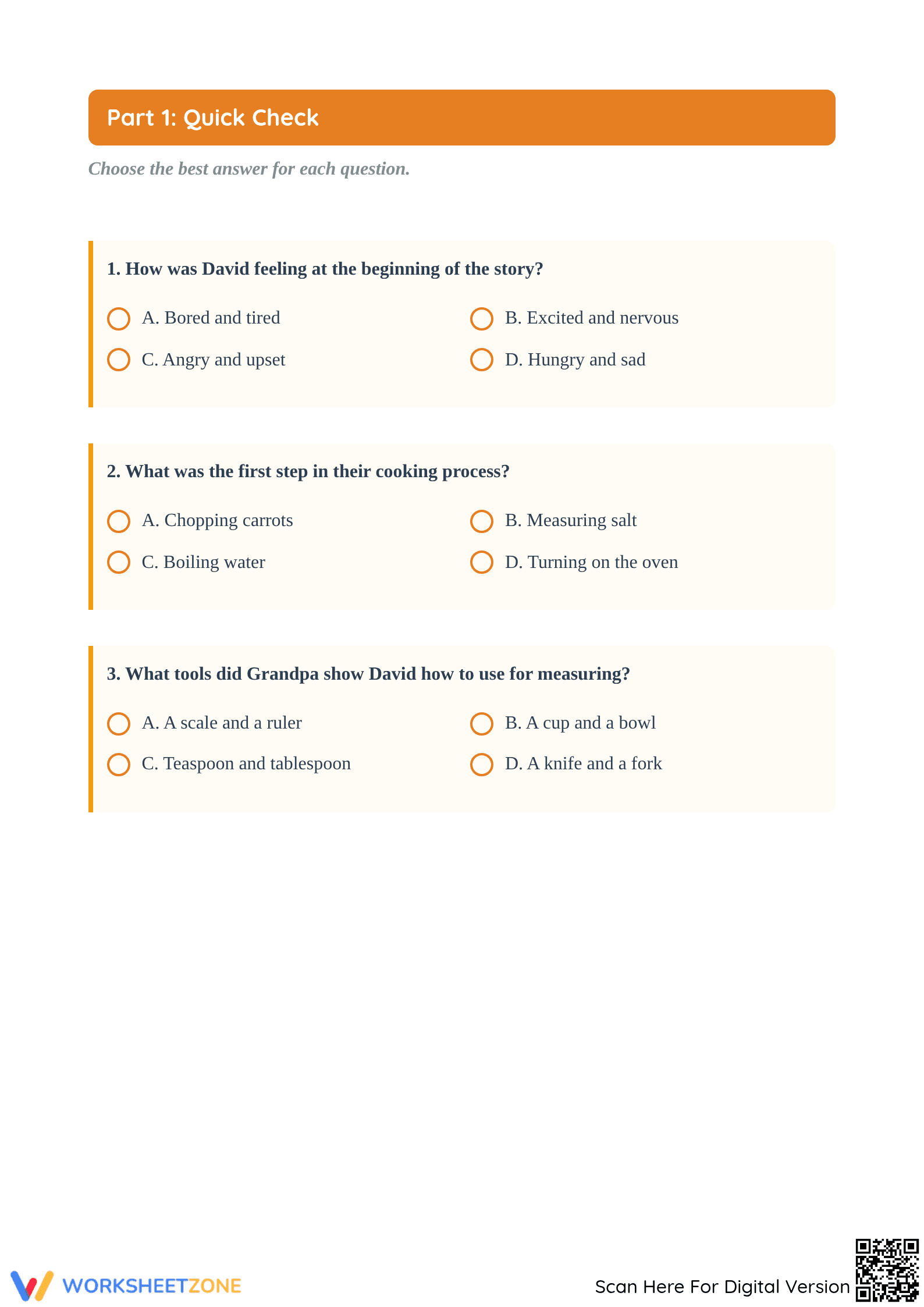
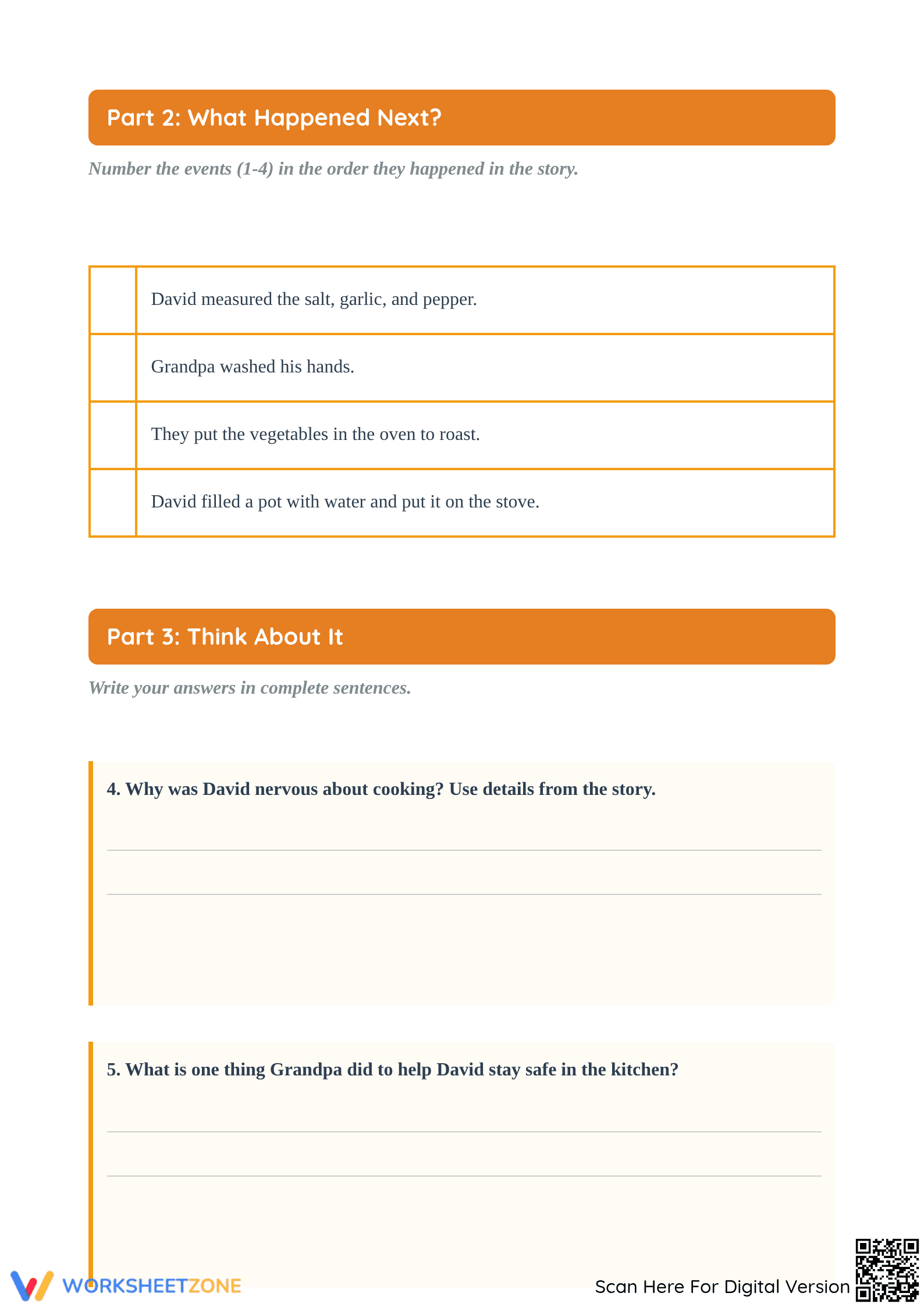
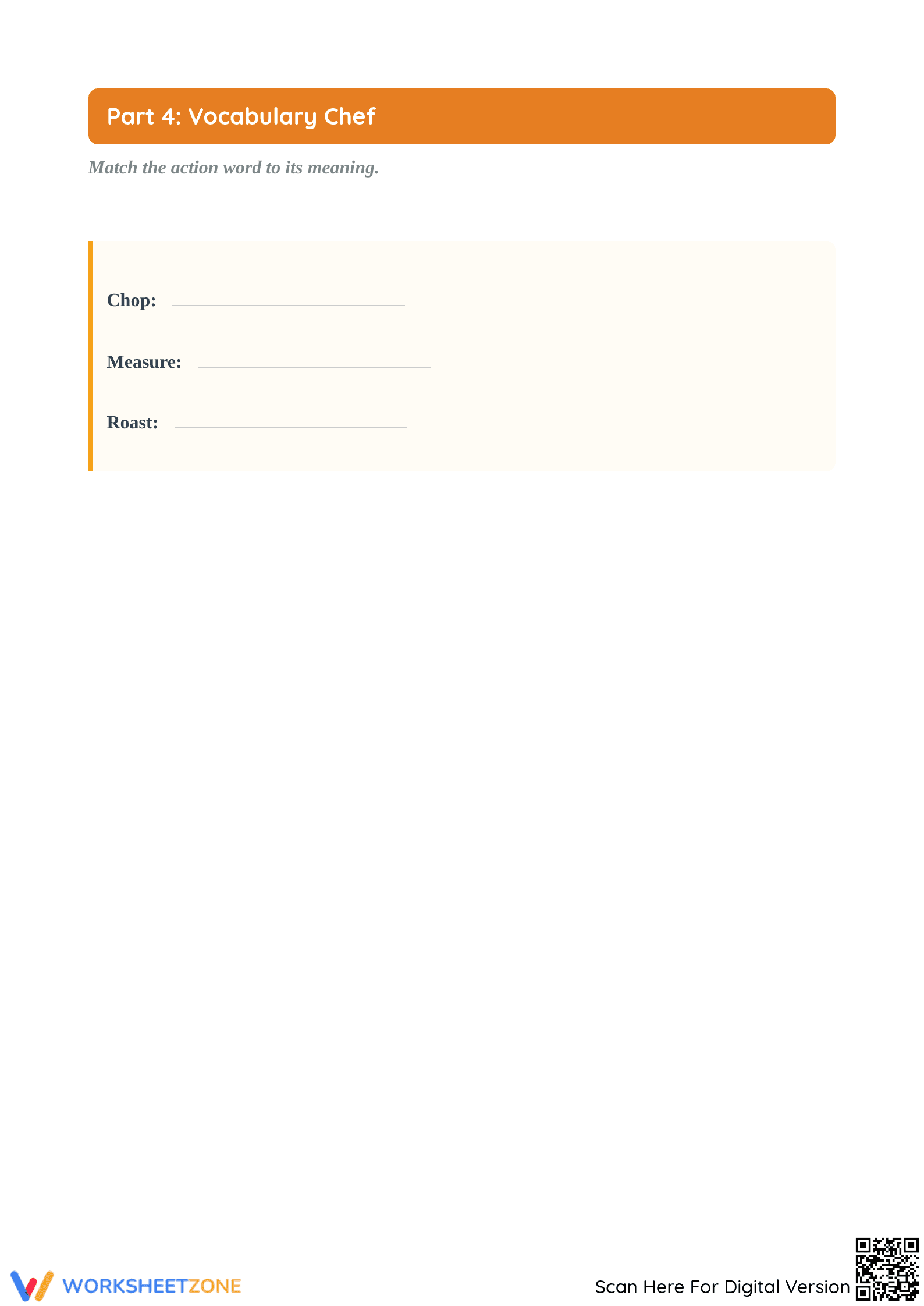
The packet contains four pages designed to guide students through a reading cycle. It features a narrative passage followed by three multiple-choice questions, a four-step sequencing table, two open-ended prompts requiring text evidence, and a vocabulary matching section. A full answer key is provided for easy grading and immediate student feedback.
Zero-Prep Workflow
This resource is designed for a zero-prep workflow to save teacher time. First, print the four-page PDF (30 seconds). Second, distribute the packets to students for independent or small-group work (1 minute). Third, review the answers using the included key or have students self-correct (5 minutes). Total preparation time is under 2 minutes, making it an ideal solution for busy mornings or sub days.
Standards Alignment
This worksheet is primarily aligned with `CCSS.ELA-LITERACY.RI.3.1`, requiring students to answer questions by referring explicitly to the text. It also supports RI.3.3 regarding steps in technical procedures. Both standard codes can be copied directly into lesson plans, IEP goals, or district curriculum mapping tools.
How to Use It
Use this worksheet during the independent practice phase of a lesson on informational text structures. It works well as a formative assessment after a whole-class reading of a procedural text. Teachers should observe if students flip back to the first page to find specific details for the sequencing and short-answer sections. Expect most third graders to complete the full packet in 25 minutes.
Who It's For
This resource is perfect for general education third-grade students, English Language Learners needing context-rich vocabulary, and fourth graders requiring remedial support in sequencing. It pairs naturally with a classroom anchor chart on transition words or a direct instruction lesson on how to follow multi-step directions in a recipe.
According to the RAND AIRS 2024 report, structured reading interventions that combine literal comprehension with procedural sequencing significantly improve long-term retention of informational text structures in elementary learners. This worksheet addresses these needs by integrating CCSS.ELA-LITERACY.RI.3.1 through a multi-modal approach. Students move from simple recall to higher-order sequencing and vocabulary application, which mirrors the rigorous demands of state-level assessments. By requiring students to cite specific actions from the text, the resource reinforces the evidence-based shift in modern literacy instruction. Research from Fisher & Frey (2014) suggests that gradual release models, supported by clear task segmentation as seen in this 4-page layout, allow students to develop stamina for longer passages. This essential tool provides the necessary scaffolding for Grade 3 students to transition from learning to read to reading to learn, ensuring they meet critical end-of-year benchmarks for informational text mastery.


