


























Views
Downloads
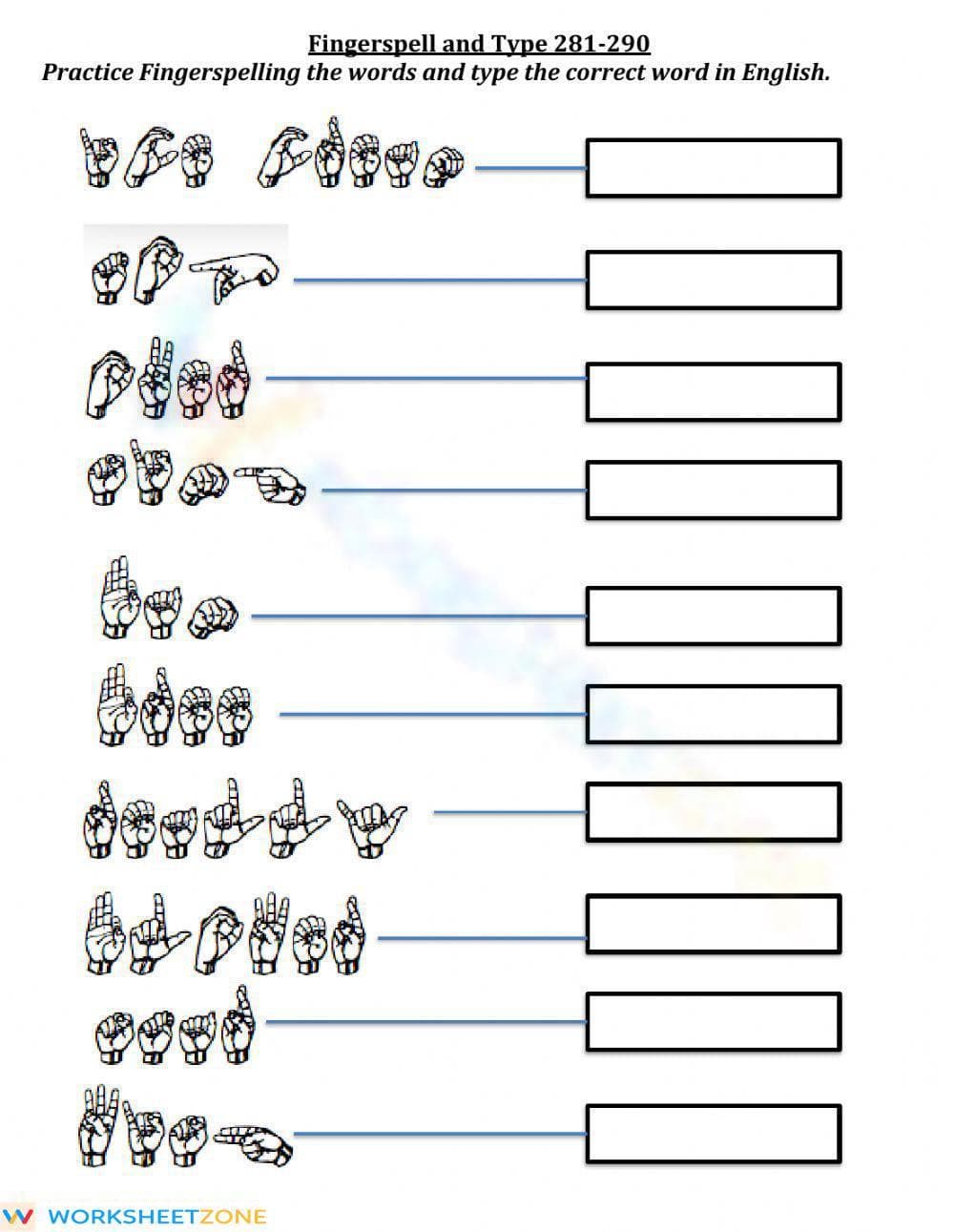

Printable Fingerspell and Type ASL Worksheet | Grades 1-4
Paste this activity's link or code into your existing LMS (Google Classroom, Canvas, Teams, Schoology, Moodle, etc.).
Students can open and work on the activity right away, with no student login required.
You'll still be able to track student progress and results from your teacher account.
This printable worksheet helps students master American Sign Language (ASL) fingerspelling by decoding hand signs into English words. By engaging with 10 tasks, learners bridge the gap between visual recognition and written spelling. This resource ensures students develop a complete understanding of inclusive communication while reinforcing core literacy skills and visual processing.
At a Glance
- Grade: 1-4 · Subject: English Language Arts
- Standard:
CCSS.ELA-LITERACY.L.2.2.D— Identify and spell words by recognizing American Sign Language fingerspelling letters- Skill Focus: ASL Fingerspelling Recognition
- Format: 1 page · 10 problems · Answer key included · PDF
- Best For: Literacy centers and inclusive classroom activities
- Time: 10–15 minutes
What's Inside. The worksheet features 10 rows, each presenting a sequence of ASL hand signs spelling a word. Beside each sequence is a box for typing or writing the English equivalent. This single-page layout is visually clean to reduce cognitive load. A comprehensive answer key is included to facilitate rapid grading or student self-correction.
Zero-Prep Workflow
Teachers can implement this worksheet with under two minutes of preparation. First, print the single-page document (30 seconds). Second, distribute it during a literacy block (30 seconds). Finally, review the answers using the included key (60 seconds). It is also highly suitable as a quick-start sub-plan activity.
Standards Alignment
This resource aligns with `CCSS.ELA-LITERACY.L.2.2.D`: "Spell words using learned letter-sound patterns." It requires students to apply knowledge of letter sequences to form accurate English words. This standard code can be copied directly into lesson plans, IEP goals, or district curriculum mapping tools to meet literacy and inclusion mandates.
How to Use It
Assign this as a "bell-ringer" to settle students at the start of an ELA block. Alternatively, use it as a formative assessment after introducing the ASL alphabet. Observe whether students decode signs individually or recognize common word shapes. Expected completion time is 10 to 15 minutes for most learners.
Who It's For
This is designed for students in Grades 1-4, particularly in inclusive classrooms or ASL introductory courses. It serves as a differentiation tool for students who benefit from visual-tactile learning. Pair this with an ASL alphabet anchor chart or a direct instruction lesson on sign-to-letter correspondence.
The "Fingerspell and Type 281-290" worksheet effectively integrates visual literacy with traditional spelling conventions. According to Fisher & Frey (2014), the use of multiple modalities—such as visual signs and written letters—enhances the retrieval process in early learners and supports the development of orthographic mapping. By requiring students to recognize CCSS.ELA-LITERACY.L.2.2.D patterns through a non-traditional medium like American Sign Language, the task reinforces the plain-English skill of decoding visual information into standardized written output. This specific 10-task set provides targeted practice that fits into existing literacy frameworks without requiring extensive teacher preparation. Research highlights that students exposed to ASL fingerspelling often show improved phonological awareness and a deeper grasp of letter-sound correspondence. This printable PDF serves as a robust tool for measuring student progress in inclusive settings while providing clear, assessment-ready data for educators.


