


























Views
Downloads

Printable Fingerspell and Type Worksheet | Grade 2 ELA
Paste this activity's link or code into your existing LMS (Google Classroom, Canvas, Teams, Schoology, Moodle, etc.).
Students can open and work on the activity right away, with no student login required.
You'll still be able to track student progress and results from your teacher account.
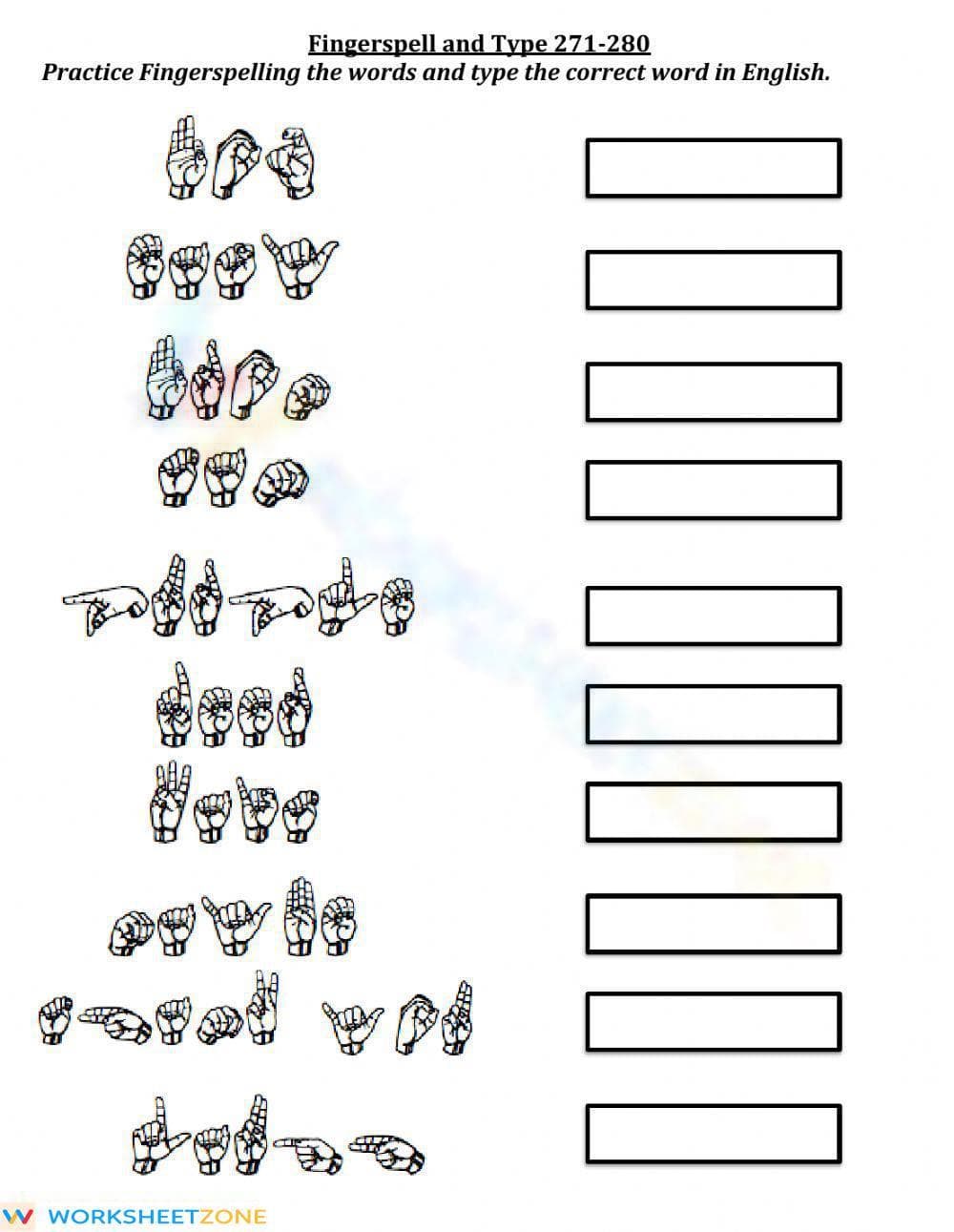
This Fingerspell and Type worksheet provides Grade 2 students with a unique way to practice spelling and vocabulary through American Sign Language (ASL) fingerspelling. By decoding hand signs into written English words, learners strengthen their letter-sound correspondence and memory recall. This essential resource bridges manual communication with written literacy for a comprehensive learning experience.
At a Glance
- Grade: 2 · Subject: English Language Arts
- Standard:
CCSS.ELA-LITERACY.L.2.2— Demonstrate command of the conventions of standard English capitalization, punctuation, and spelling.- Skill Focus: ASL Fingerspelling and Vocabulary Recognition
- Format: 1 page · 10 problems · Answer key included · PDF
- Best For: Independent spelling practice and literacy centers
- Time: 15–20 minutes
What's Inside
This 1-page PDF includes ten distinct fingerspelling rows, each representing a common vocabulary word. Next to each ASL sequence is a dedicated text box for students to type or write the corresponding English word. The clear, high-contrast illustrations ensure easy recognition, and a full answer key is provided for quick grading or student self-correction.
Zero-Prep Workflow
- Print: Spend less than 30 seconds printing this single-page document.
- Distribute: Pass out the sheets for immediate student engagement without additional setup.
- Review: Use the included answer key to verify student work in under 1 minute.
Because the instructions are self-explanatory, it serves as an ideal sub plan or morning work activity. Students can complete the entire set independently, allowing teachers to focus on small-group instruction.
Standards Alignment
This worksheet is aligned to `CCSS.ELA-LITERACY.L.2.2`, focusing on the student's ability to "demonstrate command of the conventions of standard English capitalization, punctuation, and spelling when writing." By translating visual signs into correctly spelled words, students practice orthographic patterns in a novel context. Both standard codes can be copied directly into lesson plans, IEP goals, or district curriculum mapping tools.
How to Use It
Use this worksheet as a warm-up activity during your daily literacy block or as a formative assessment after introducing the ASL alphabet. Teachers should observe whether students can identify individual letters quickly or if they need to refer back to an ASL chart. Completion typically takes 15–20 minutes, making it a perfect tool for checking fluency in letter recognition before starting direct instruction.
Who It's For
This resource is designed for elementary students in Grades K-5, specifically those needing multisensory spelling support or an introduction to deaf culture. It is an excellent pairing for a class reading passage about communication or a direct instruction lesson on the ASL alphabet. ESOL students may also find it helpful for reinforcing English letter shapes through visual representation.
According to a ScienceDirect TpT Analysis, multisensory approaches that combine visual, kinesthetic, and linguistic stimuli significantly improve vocabulary retention in elementary learners. This worksheet utilizes American Sign Language fingerspelling to reinforce CCSS.ELA-LITERACY.L.2.2, requiring students to decode visual hand positions into written English words. By engaging different neural pathways than traditional rote memorization, this 10-problem task builds spelling accuracy and letter fluency. The research indicates that integrating diverse communication methods into standard English Language Arts curriculum supports broader cognitive development and inclusive classroom environments. This self-contained practice sheet offers a structured environment for students to master letter-sound correspondence while gaining exposure to alternative literacy systems. Educators can rely on this aligned resource to provide meaningful independent practice that meets rigorous state standards while remaining accessible for diverse learner populations.


