


























Views
Downloads

Grade 1 Antonyms — Printable No-Prep Worksheet
Paste this activity's link or code into your existing LMS (Google Classroom, Canvas, Teams, Schoology, Moodle, etc.).
Students can open and work on the activity right away, with no student login required.
You'll still be able to track student progress and results from your teacher account.
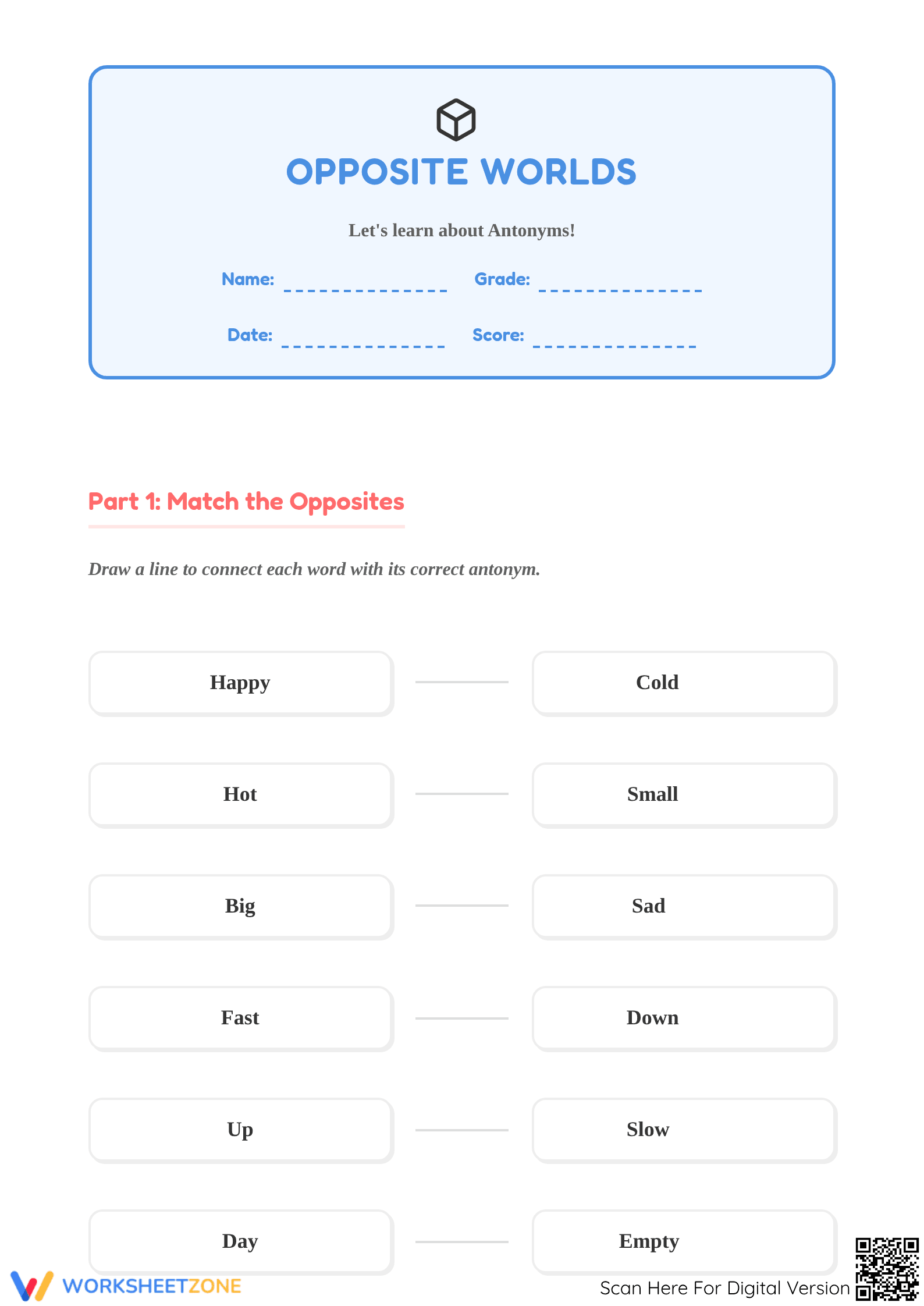
This Grade 1 antonyms worksheet, titled "Opposite Worlds," provides a comprehensive 4-page practice set for young learners to master word relationships. Students identify and produce opposites through matching, multiple-choice selection, and sentence completion. By engaging with these lexical pairs, children build the vocabulary foundations necessary for reading comprehension and descriptive writing.
At a Glance
- Grade: 1 · Subject: English Language Arts
- Standard:
CCSS.ELA-LITERACY.L.1.5— Identify and generate antonyms to demonstrate word relationship mastery- Skill Focus: Antonyms and Word Opposites
- Format: 4 pages · 25 problems · Answer key included · PDF
- Best For: Independent practice and vocabulary reinforcement
- Time: 20–30 minutes
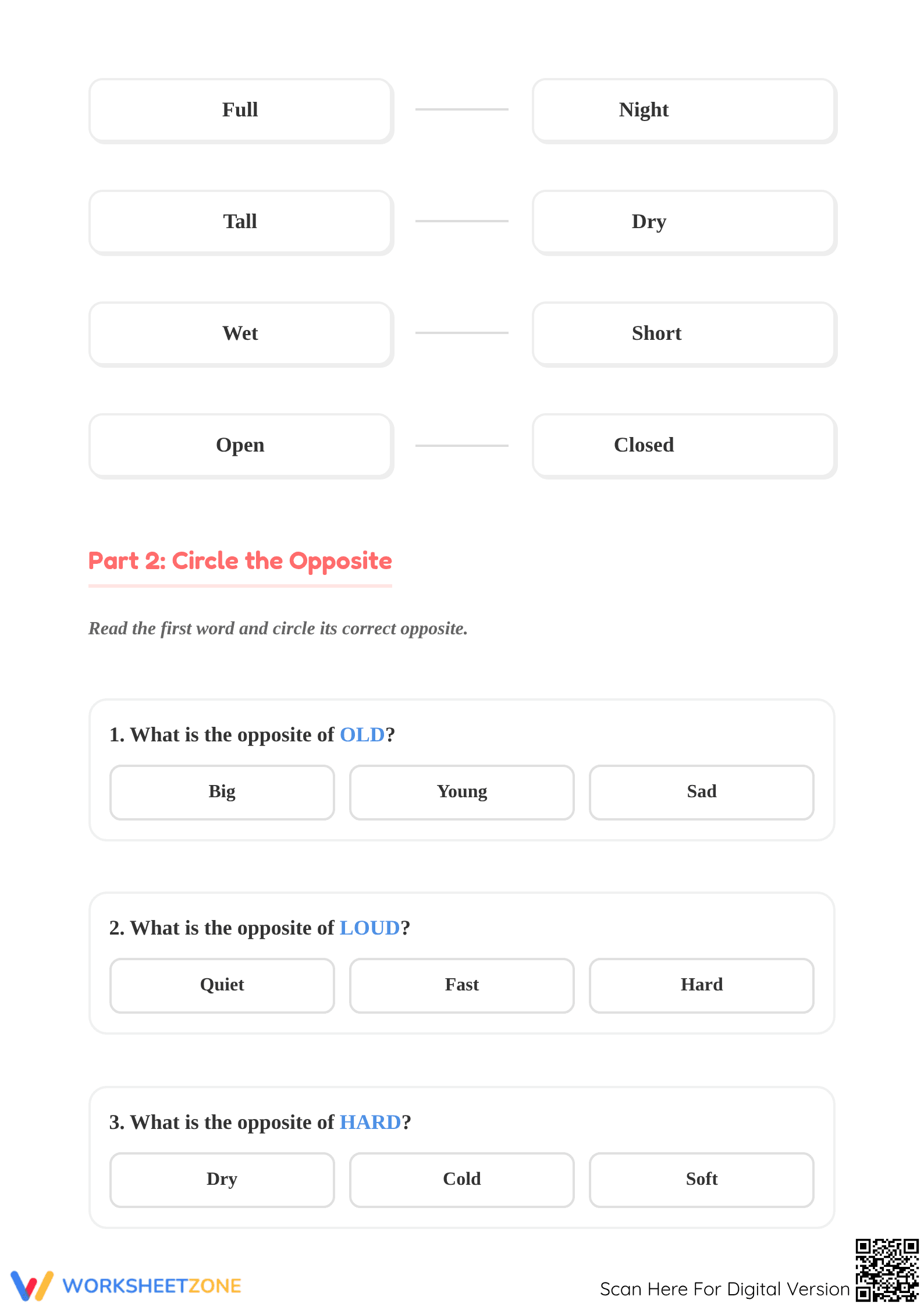
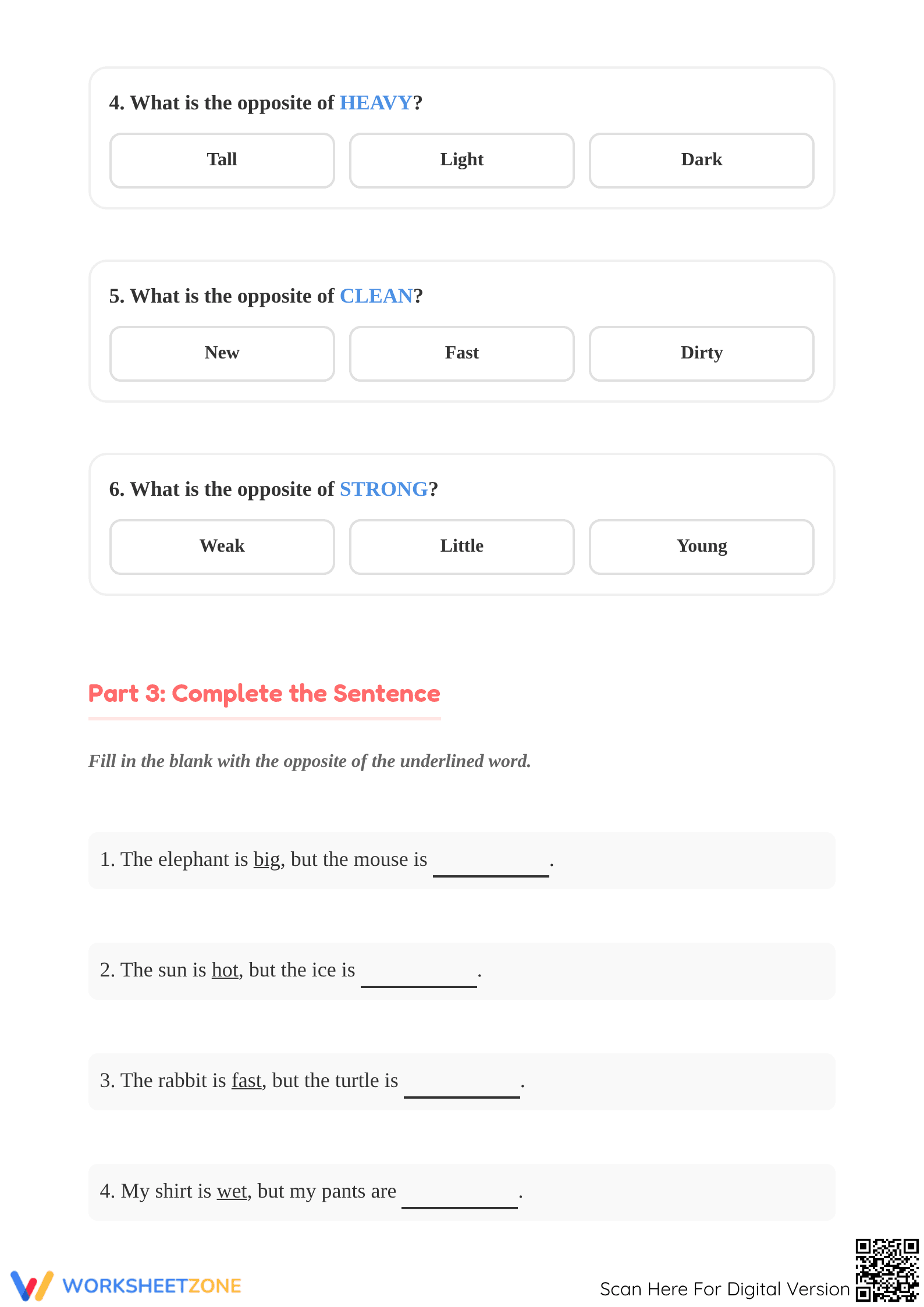
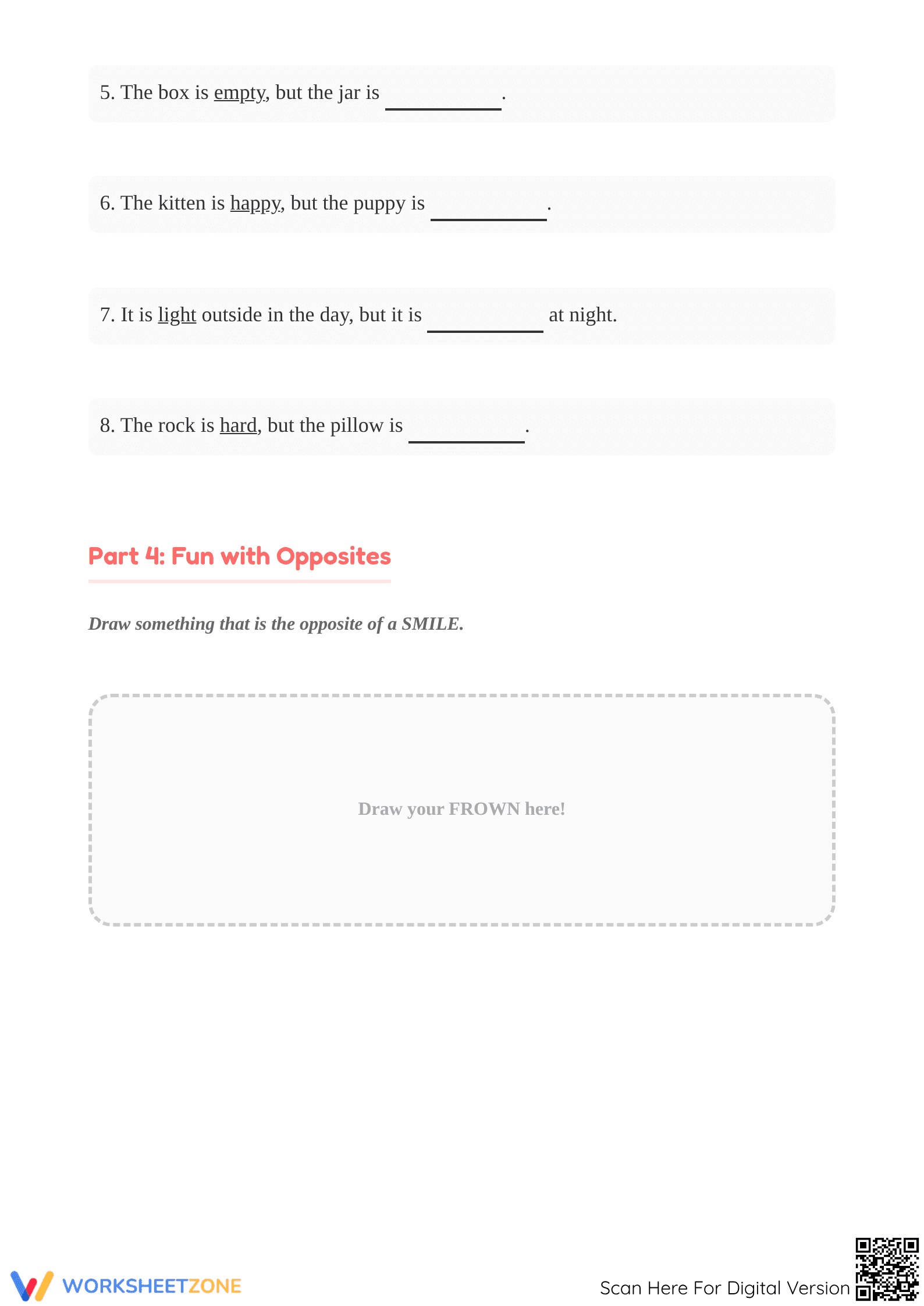
This extensive PDF packet contains four distinct sections designed to build mastery through varied cognitive tasks. It includes a 10-pair matching activity, 6 multiple-choice "Circle the Opposite" questions, and 8 "Complete the Sentence" prompts that require students to generate the correct antonym in context. The final page features a creative drawing task to reinforce the concept of opposite emotional expressions.
Zero-Prep Workflow
- Print (30 seconds): Generate copies of the 4-page packet or select specific pages for targeted practice.
- Distribute (1 minute): Pass out the worksheets for morning work, center rotations, or homework.
- Review (1 minute): Use the included answer key for rapid grading or peer-checking during class.
Aligned primarily to CCSS.ELA-LITERACY.L.1.5, this worksheet focuses on word relationships and nuances in meaning. By identifying opposites like "heavy/light" and "strong/weak," students demonstrate an understanding of how lexical choices affect meaning. This standard code can be copied directly into lesson plans, IEP goals, or district curriculum mapping tools to track vocabulary development and semantic awareness.
Use this packet during the "Independent Practice" phase of a vocabulary lesson. After introducing the concept of antonyms using anchor charts, assign the matching page to gauge initial understanding. During the activity, observe if students struggle with abstract pairs like "hard/soft" versus concrete ones like "big/small" to identify areas for small-group reteaching. Expect a total completion time of 25 minutes for the full 4-page set.
This resource is tailored for first-grade students but serves as an excellent remedial tool for second graders or an enrichment activity for advanced kindergarteners. It pairs naturally with common Grade 1 informational texts or "Opposites" picture books. The clear formatting and predictable task structures also make it suitable for English Language Learners (ELL) working on basic descriptive adjectives.
Effective vocabulary instruction in the primary grades requires explicit attention to word relationships, a core component of linguistic development. This worksheet targets the CCSS.ELA-LITERACY.L.1.5 standard by requiring students to identify, select, and generate antonyms across 25 structured tasks. Research by Fisher & Frey (2014) emphasizes that building semantic networks—such as understanding that "hot" is the opposite of "cold"—is critical for long-term reading comprehension and verbal fluency. By moving from simple matching to contextual sentence completion, this resource provides the "gradual release" necessary for young learners to move from recognition to production. The inclusion of visual drawing tasks further solidifies the conceptual understanding of opposites by engaging multiple modalities. Educators can utilize this 4-page packet to provide evidence of student mastery in lexical word classes, ensuring that foundational ELA skills are met through focused, high-repetition practice in a classroom-ready format.


