


























Views
Downloads

Essential Telling Time Worksheet | Grade 1 & 2 Math
Paste this activity's link or code into your existing LMS (Google Classroom, Canvas, Teams, Schoology, Moodle, etc.).
Students can open and work on the activity right away, with no student login required.
You'll still be able to track student progress and results from your teacher account.
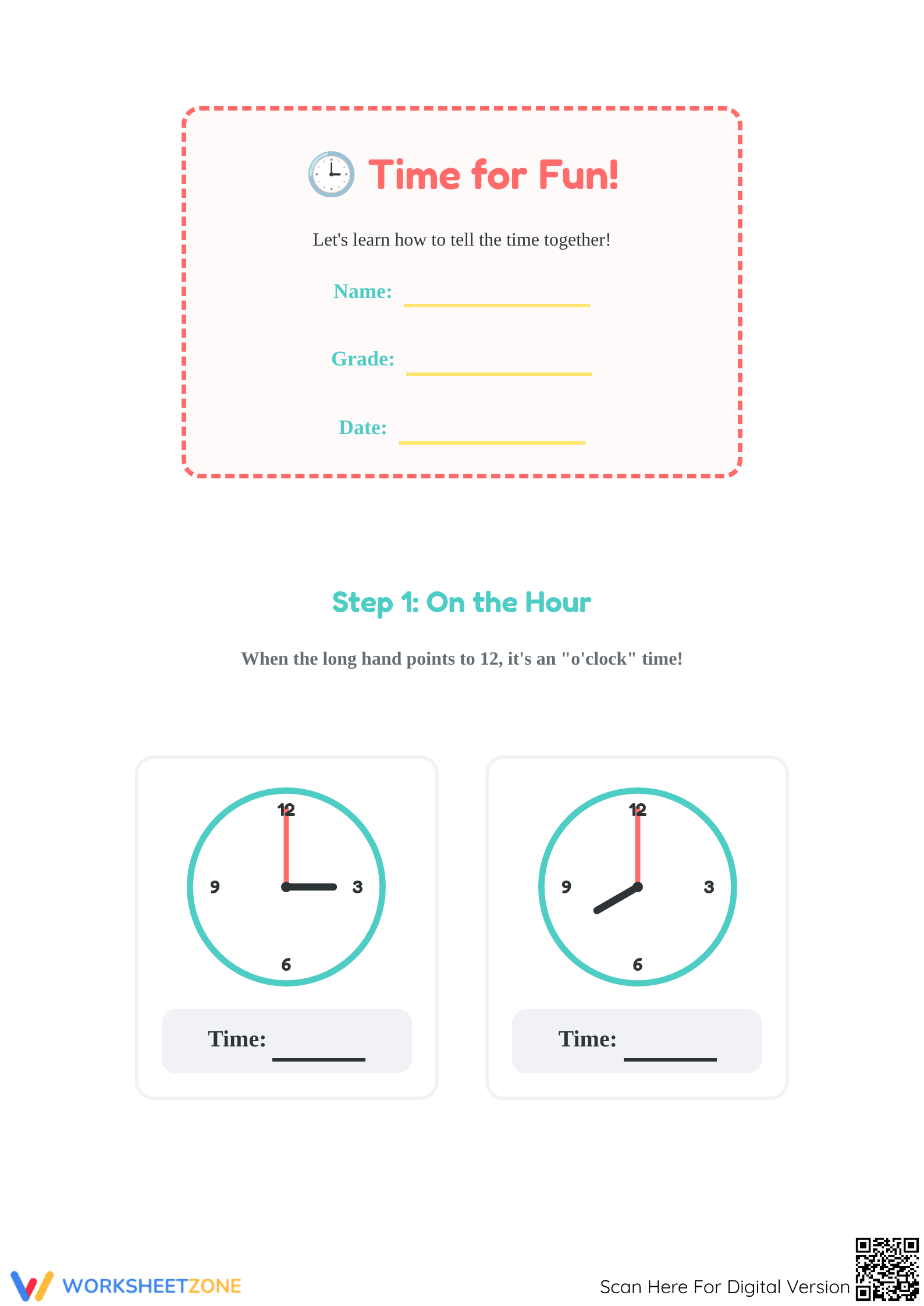
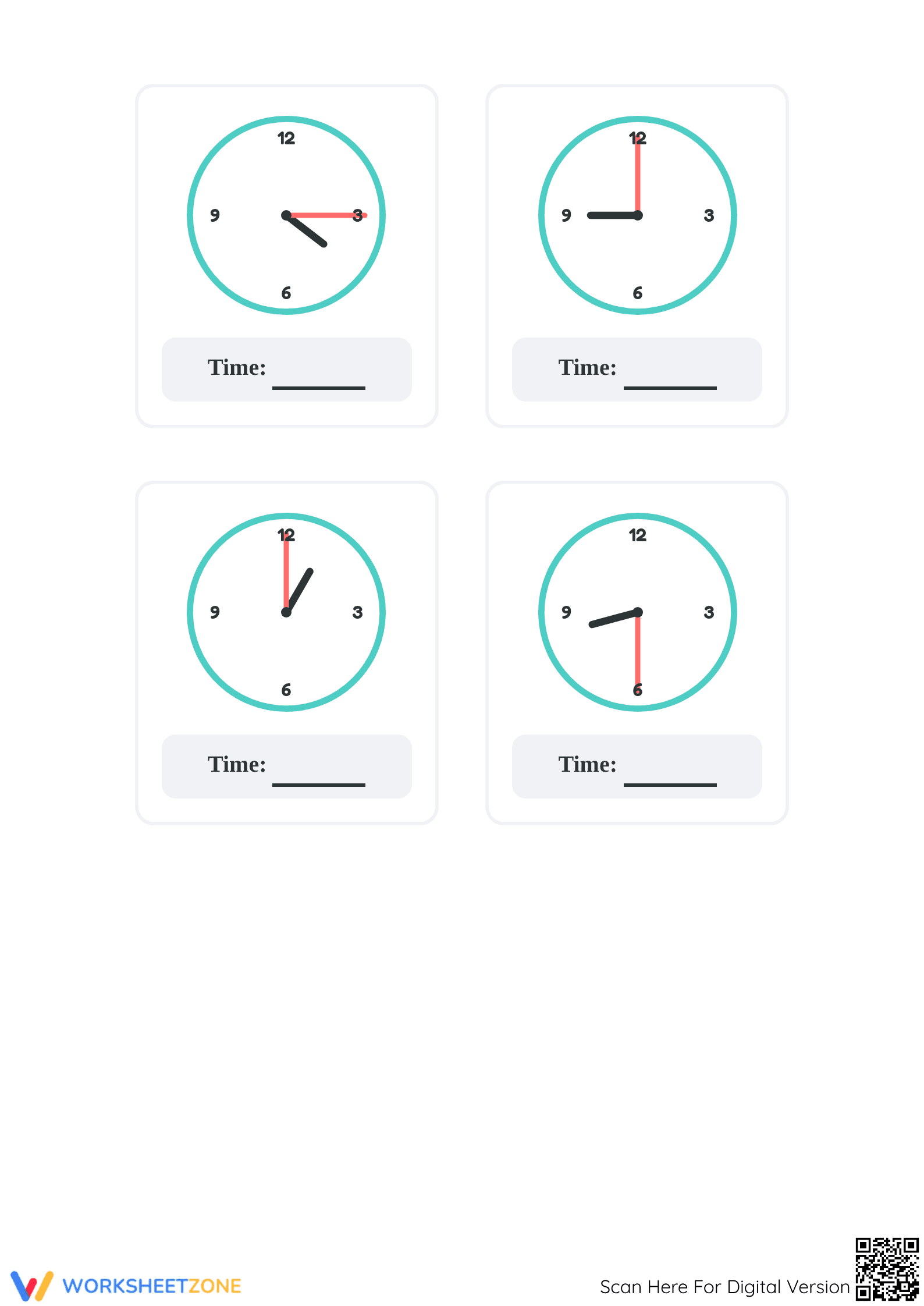
This Grade 1 and 2 math worksheet provides a structured approach to mastering the analog clock. Students will develop the skill of telling time to the hour, half-hour, and quarter-hour through a scaffolded progression. Learners will confidently translate clock face positions into accurate time measurements.
At a Glance
- Grade: 1–2 · Subject: Date and Time
- Standard:
CCSS.MATH.CONTENT.1.MD.B.3— Tell and write time in hours and half-hours using analog clocks- Skill Focus: Reading analog clocks
- Format: 5 pages · 12 problems · Answer key included · PDF
- Best For: Scaffolding introductory time-telling lessons
- Time: 20–30 minutes
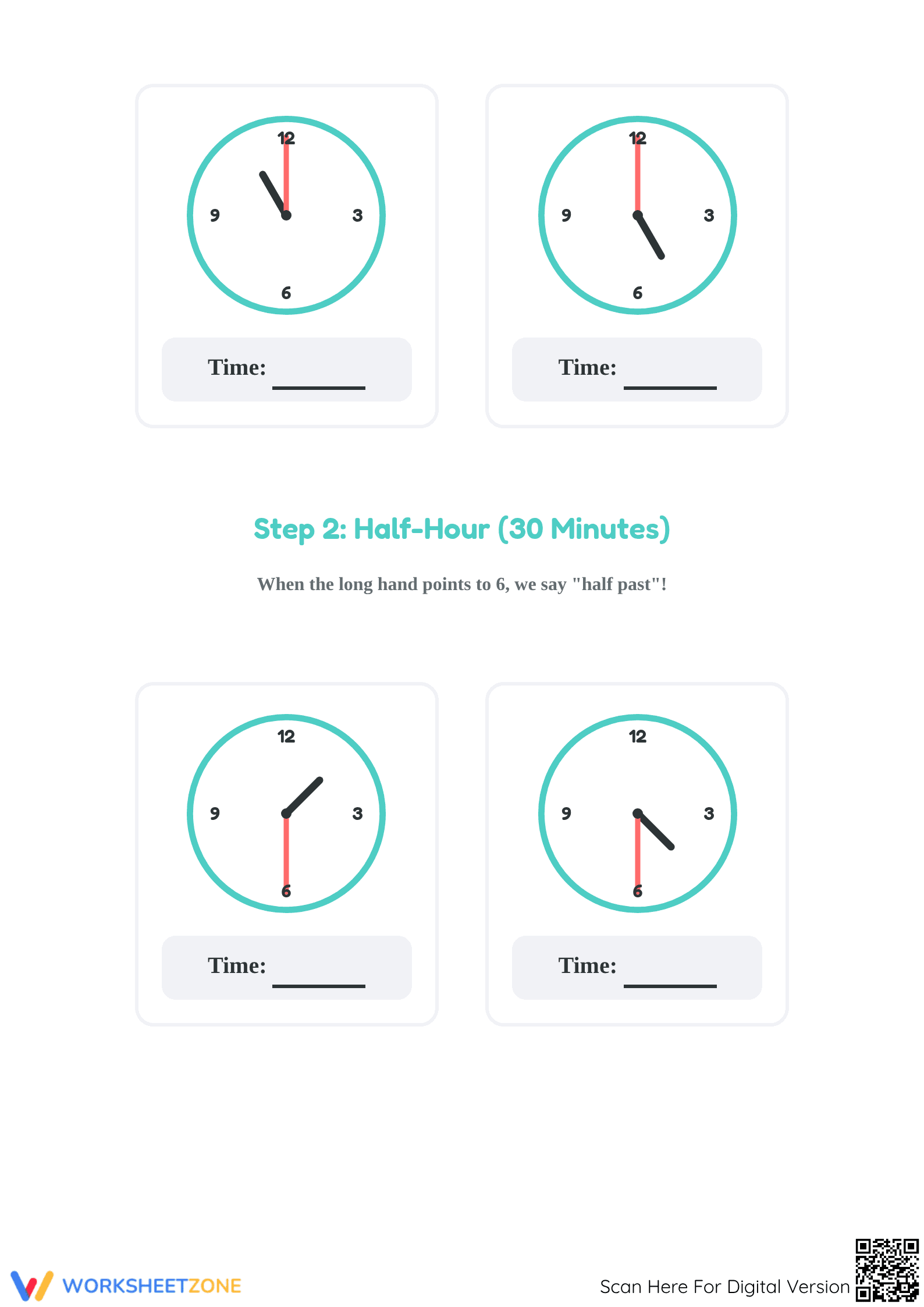
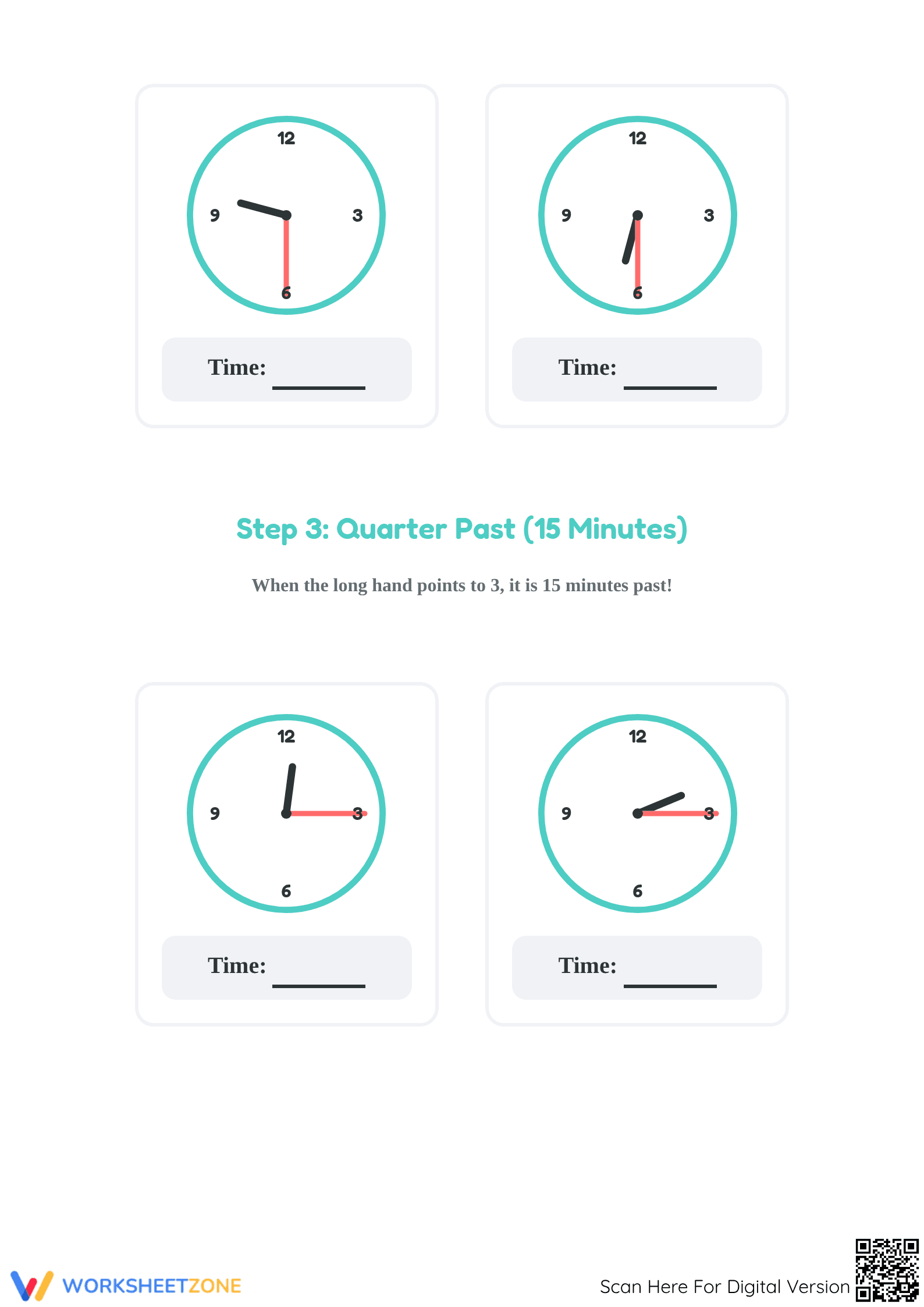
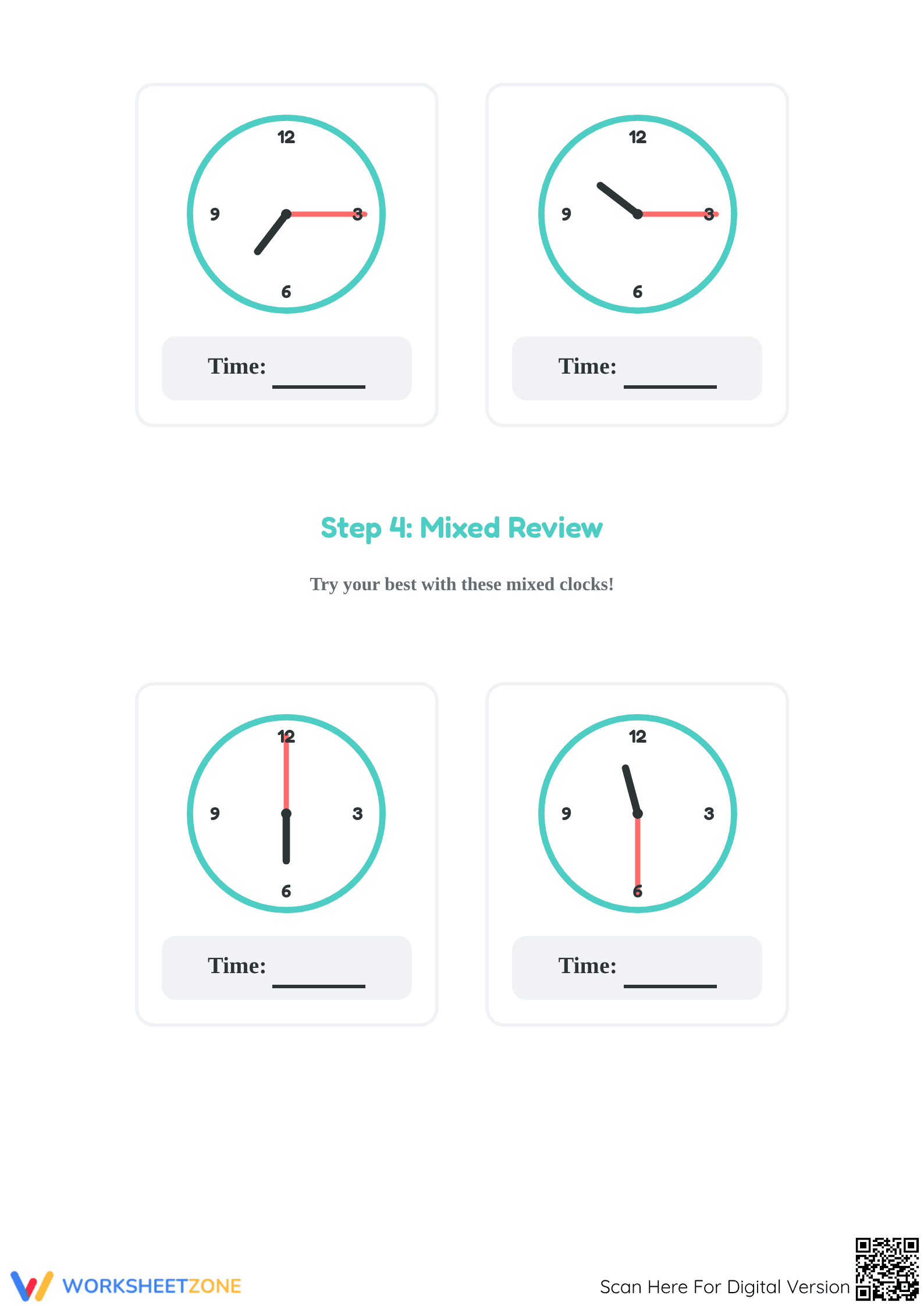
This comprehensive 5-page PDF packet features a clear, instructional layout designed for early learners. It contains 12 distinct analog clock faces distributed across four specialized steps. The resource includes explicit instructional cues for "o'clock," "half past," and "15 minutes past," ensuring students have the linguistic support needed to succeed. A full answer key is provided for rapid grading.
Skill Progression
The worksheet follows a deliberate instructional sequence:
- Guided practice: The first pages focus on "On the Hour" and "Half-Hour" increments with visual hand-placement reminders.
- Supported practice: Page three introduces "Quarter Past" concepts with targeted problems.
- Independent practice: The final pages present a mixed review of all concepts to assess retention.
This "I Do, We Do, You Do" framework ensures a high success rate as students move toward mastery.
Standards Alignment
This resource is primarily aligned to CCSS.MATH.CONTENT.1.MD.B.3, which requires students to tell and write time in hours and half-hours. It also serves as an introductory bridge to CCSS.MATH.CONTENT.2.MD.C.7 by introducing quarter-hour increments. Both standard codes can be copied directly into lesson plans, IEP goals, or district curriculum mapping tools.
How to Use It
Use this packet during a "Time for Fun" lesson to introduce analog clocks. Alternatively, assign pages as formative assessments after direct instruction. Teachers should observe whether students confuse the hour and minute hands during the "Half-Hour" section. Expect a total completion time of approximately 25 minutes.
Who It's For
This worksheet is ideal for first-grade students learning basic time and second-graders requiring a refresher on quarter-hour intervals. The large, clear clock faces are beneficial for students with visual processing needs. For a complete lesson, pair this resource with a physical clock to provide tactile reinforcement during the guided practice phase.
Effective mathematics instruction for early childhood requires a transition from concrete to representational models. This worksheet adheres to the CCSS.MATH.CONTENT.1.MD.B.3 standard by focusing on the representational reading of analog clocks, a foundational skill for later temporal reasoning. According to EdReports 2024, high-quality instructional materials in mathematics must provide a clear progression of complexity to prevent cognitive overload. By isolating o'clock, half-past, and quarter-past increments, this resource reduces the split-attention effect often found in complex clock faces. Research from Fisher & Frey (2014) emphasizes that scaffolded practice is critical for procedural fluency in skills like time-telling. This packet provides exactly that structure, moving from explicit instructional steps to a comprehensive mixed review. The inclusion of 12 problems across 5 pages allows for sufficient repetition to solidify the relationship between the circular dial and the linear progression of time, preparing students for more advanced interval measurements.


