


























Views
Downloads
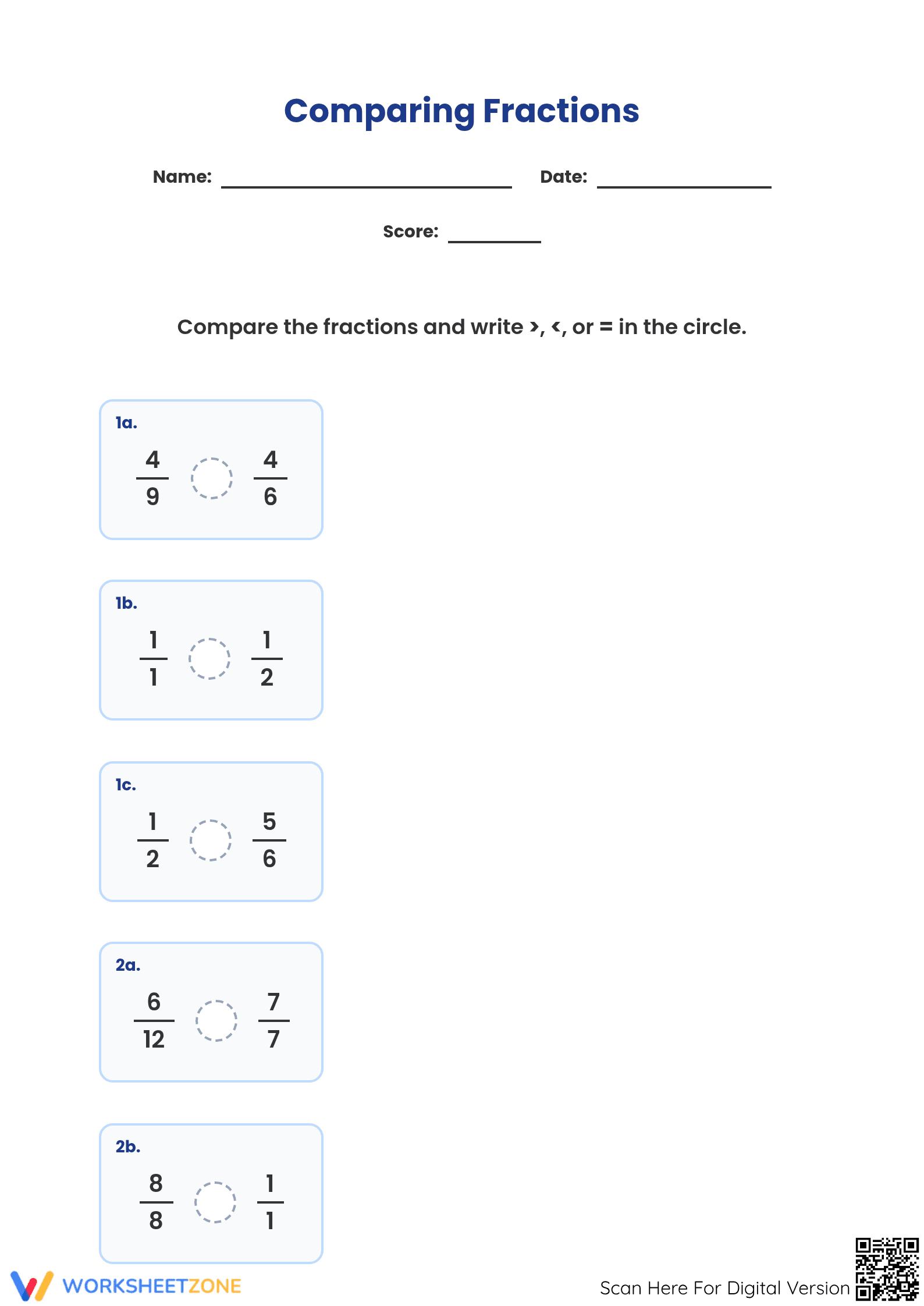
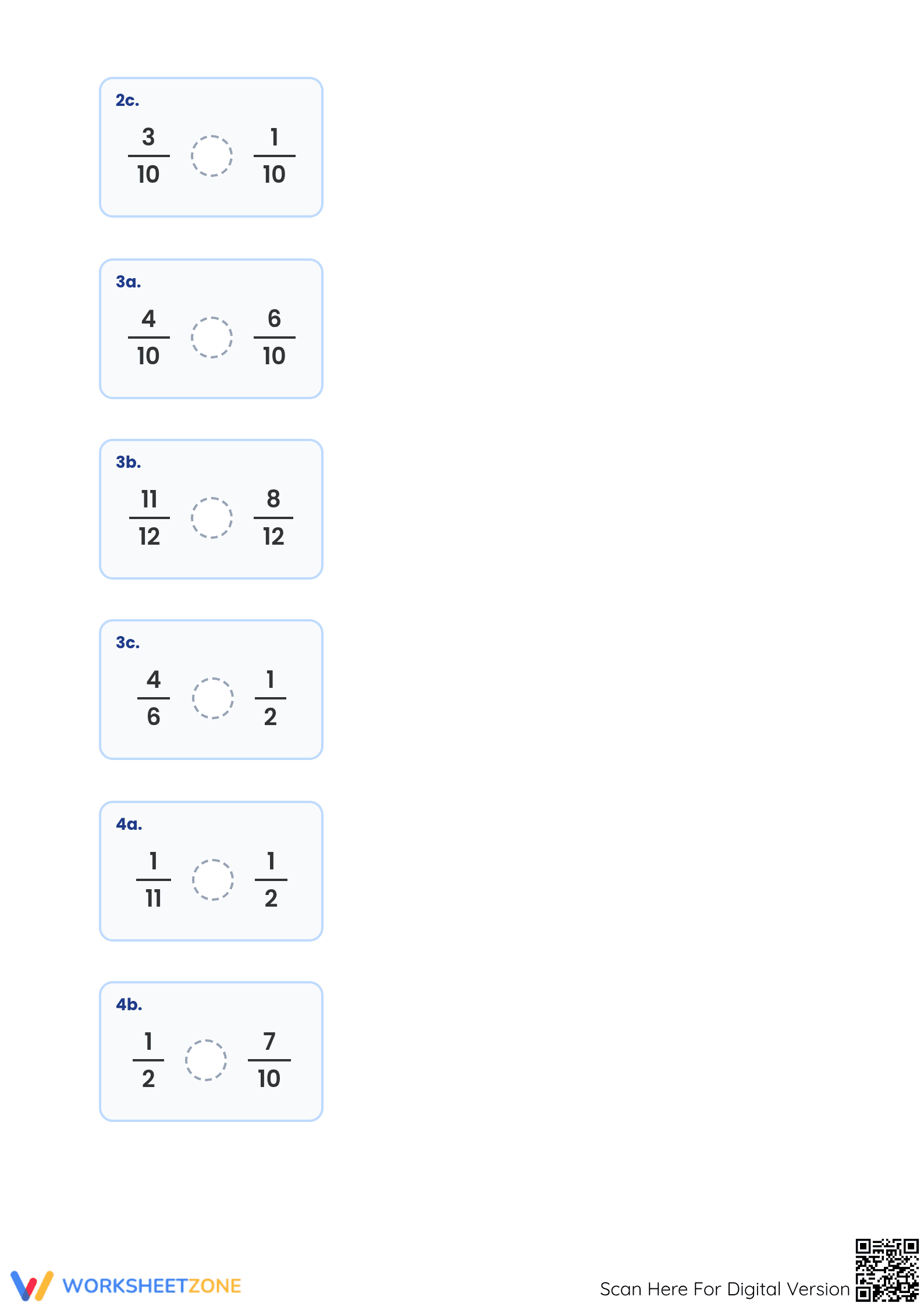
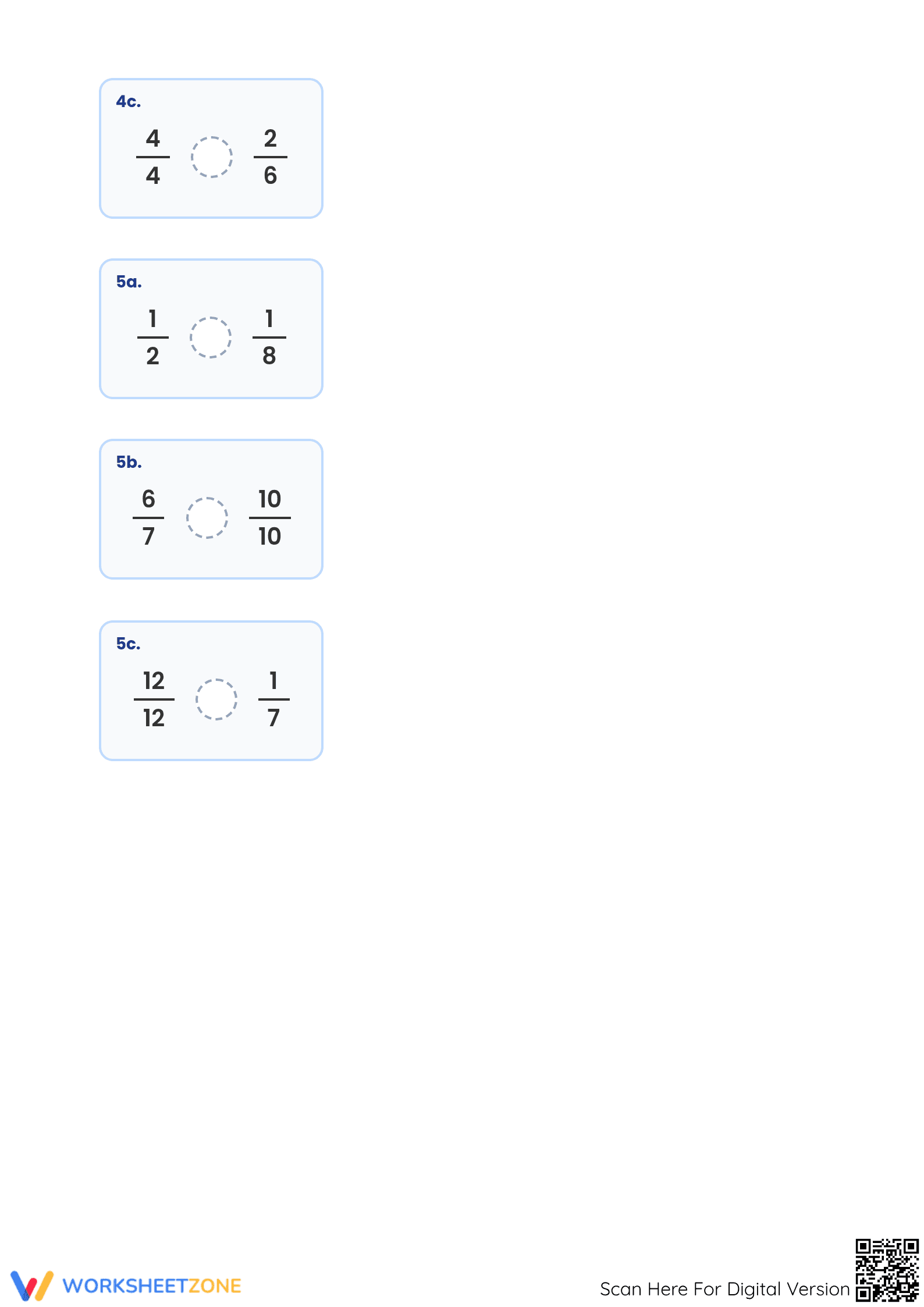

Printable Comparing Fractions Worksheet | Grade 5 & 6
Paste this activity's link or code into your existing LMS (Google Classroom, Canvas, Teams, Schoology, Moodle, etc.).
Students can open and work on the activity right away, with no student login required.
You'll still be able to track student progress and results from your teacher account.
Master Fraction Comparison Skills
Mastering numerical relationships is essential for upper elementary students. This comprehensive comparing fractions worksheet provides targeted practice for Grade 5 and Grade 6 learners to evaluate fraction values using greater than, less than, and equal to symbols. By identifying common denominators or comparing to benchmarks, students develop the deep conceptual understanding required for complex algebraic thinking.
At a Glance
- Grade: 5 · Subject: Math
- Standard:
CCSS.MATH.CONTENT.4.NF.A.2— Compare two fractions with different numerators and denominators by creating common denominators- Skill Focus: Comparing fractions using inequality symbols
- Format: 3 pages · 15 problems · Answer key included · PDF
- Best For: Independent practice or formative assessment
- Time: 15–20 minutes
What's Inside
This resource contains three structured pages featuring a total of 15 comparison tasks. Each problem is presented in a clear, distraction-free layout with a circular field for students to enter the correct symbol. The worksheet covers a wide range of scenarios, including fractions with like denominators, like numerators, and unlike denominators, as well as equivalent values. A full answer key is provided for immediate feedback.
Zero-Prep Workflow
The zero-prep design ensures implementation in under two minutes. First, download and print the three-page PDF. Next, distribute the sheets for a quick warm-up or homework assignment. Finally, use the answer key for a five-minute peer-review or whole-class check. This efficient workflow makes it an ideal choice for sub plans or filling last-minute instructional gaps in the curriculum.
Standards Alignment
The primary alignment is CCSS.MATH.CONTENT.4.NF.A.2, which requires students to compare two fractions with different numerators and denominators. By recognizing that comparisons are valid only when the two fractions refer to the same whole, students build the foundational logic needed for 5.NF.A.1. Both standard codes can be copied directly into lesson plans, IEP goals, or district curriculum mapping tools.
How to Use It
Use this worksheet as a mid-lesson check during units on fraction equivalence. Before moving to addition, observe if students use common denominators to compare values. For a formative assessment, assign one page as an exit ticket and collect results to identify students who may need small-group intervention or additional visual support with benchmark fractions.
Who It's For
This resource is designed for fifth and sixth-grade students who need to solidify their fraction comparison skills. It is particularly effective for learners who struggle with visualizing fraction magnitude. Pair this worksheet with an interactive anchor chart or visual area models to provide additional support for English Language Learners and students with specific learning needs in mathematics.
Developing fluency with fraction comparisons is a critical milestone in mathematical development. According to research from EdReports (2024), instructional materials that emphasize conceptual understanding lead to higher retention rates in middle school mathematics. This worksheet aligns with best practices by requiring students to apply the CCSS.MATH.CONTENT.4.NF.A.2 standard through varied problem sets. By engaging with 15 distinct tasks, students move beyond visual estimation to rigorous mathematical proof. The clear formatting and answer key support the gradual release of responsibility model, ensuring learners transition from modeling to independent mastery. This resource serves as an essential tool for teachers looking to bridge the gap between basic fraction identification and advanced operations, providing a proven method for assessing student readiness for complex algebraic concepts in later grades.


