


























Views
Downloads
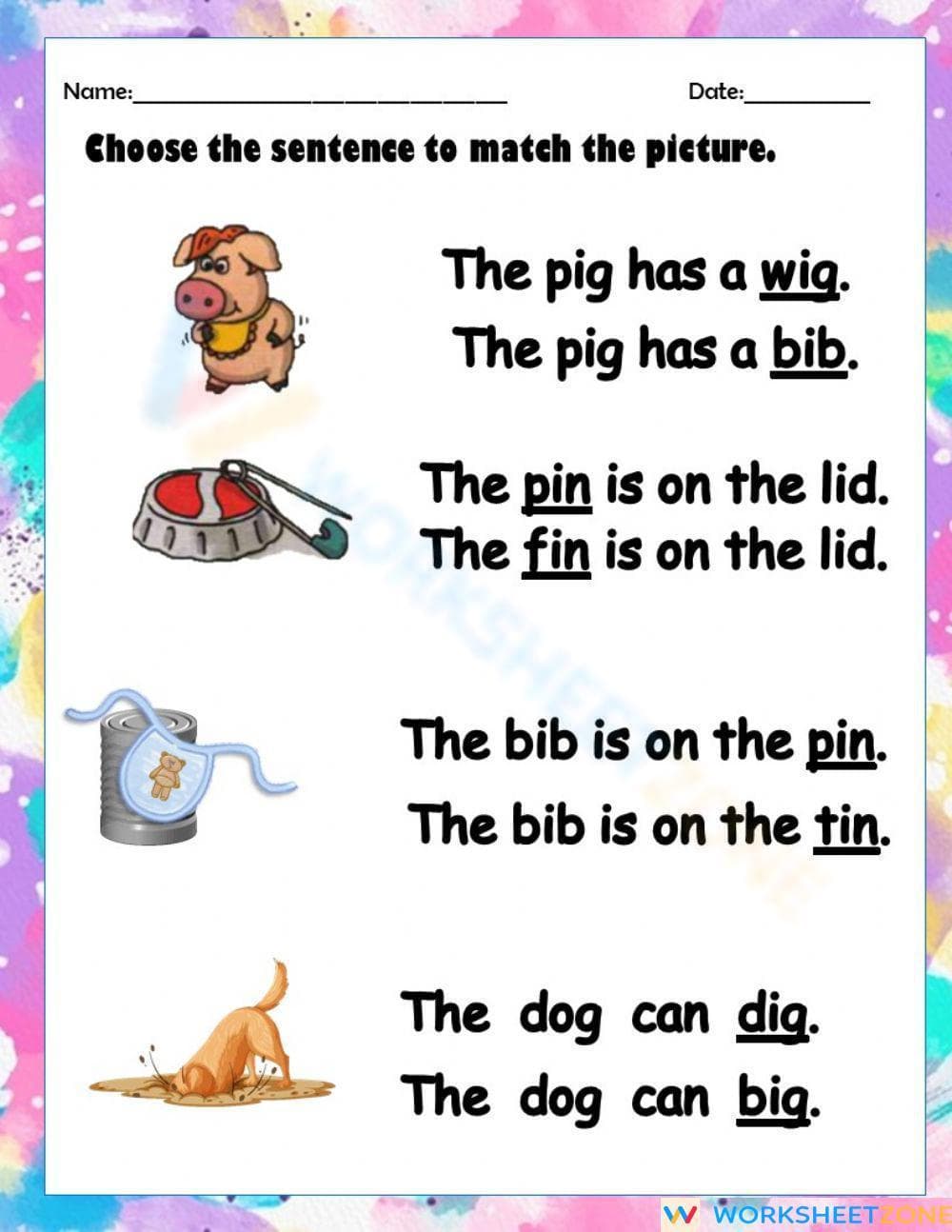

Essential Short 'i' CVC Words Worksheet | Grade K-1 Aligned
Paste this activity's link or code into your existing LMS (Google Classroom, Canvas, Teams, Schoology, Moodle, etc.).
Students can open and work on the activity right away, with no student login required.
You'll still be able to track student progress and results from your teacher account.
This essential short 'i' CVC worksheet helps Kindergarten and Grade 1 students master phonics by matching sentences to descriptive pictures. Students practice identifying vowel sounds and decoding three-letter words like pig, wig, and bib. This focused reading exercise builds early literacy confidence and ensures young learners can connect written text with visual context effectively.
At a Glance
- Grade: Kindergarten · Subject: English Language Arts
- Standard:
CCSS.ELA-LITERACY.RF.K.2.D— Pronounce initial, medial vowel, and final sounds in three-phoneme CVC words- Skill Focus: Short 'i' Phonics & Decoding
- Format: 1 page · 4 tasks · Answer key included · PDF
- Best For: Literacy centers and morning work
- Time: 10–15 minutes
Inside this single-page PDF, you will find four targeted matching exercises designed for early readers. Each task presents a high-quality illustration paired with two similar-looking sentences that differ by one CVC word (e.g., "pin" vs "fin"). This structure forces students to look closely at word endings and middle vowels. A full answer key is included to facilitate quick checking or student self-correction.
Zero-Prep Workflow
- Print: Print the single-page PDF in under 30 seconds.
- Distribute: Hand out the sheets to students with zero extra setup required.
- Review: Check student work in under a minute using the included answer key.
Requiring no additional manipulatives, this is an ideal choice for emergency sub plans or quiet transitions during small group rotations.
Standards Alignment
This worksheet is directly aligned with CCSS.ELA-LITERACY.RF.K.2.D, which requires students to isolate and pronounce the individual phonemes in CVC words. It also supports Grade 1 phonics standards for decoding regularly spelled one-syllable words. Both standard codes can be copied directly into lesson plans, IEP goals, or district curriculum mapping tools to demonstrate rigorous adherence to foundational literacy requirements.
How to Use It
Use this during your phonics block as a formative assessment after introducing the short 'i' sound. Observe if students are guessing based on the first letter or truly decoding the final consonant. It also works well as a follow-up to a shared reading session involving short vowel stories. Students should complete the page in approximately 12 minutes to demonstrate their proficiency with consonant-vowel-consonant patterns.
Who It's For
This resource is designed for Kindergarteners beginning to blend sounds and Grade 1 students needing reinforcement of short vowel patterns. It provides excellent support for English Language Learners (ELLs) by providing clear visual cues for every word. Pair this worksheet with a short 'i' anchor chart or a decodable reader to create a comprehensive lesson on foundational reading skills.
The efficacy of CVC word recognition in early childhood is well-documented as a predictor of future reading fluency. This worksheet addresses CCSS.ELA-LITERACY.RF.K.2.D by requiring students to decode short 'i' phonemes within a structured sentence context. According to a RAND AIRS 2024 analysis, targeted phonics practice that integrates visual-textual matching significantly improves word-object association in Tier 1 literacy instruction. By focusing on three-phoneme words, this resource provides the necessary scaffolding for students to transition from simple sound isolation to sentence-level reading. The inclusion of subtle distractors (e.g., bib vs wig) aligns with Fisher & Frey (2014) recommendations for increasing cognitive demand during independent practice. Educators can use these tasks to verify that learners have moved beyond mere memorization toward active decoding strategies. This printable document serves as a verified tool for measuring phonological awareness progress in diverse early elementary classrooms.


