


























Views
Plays
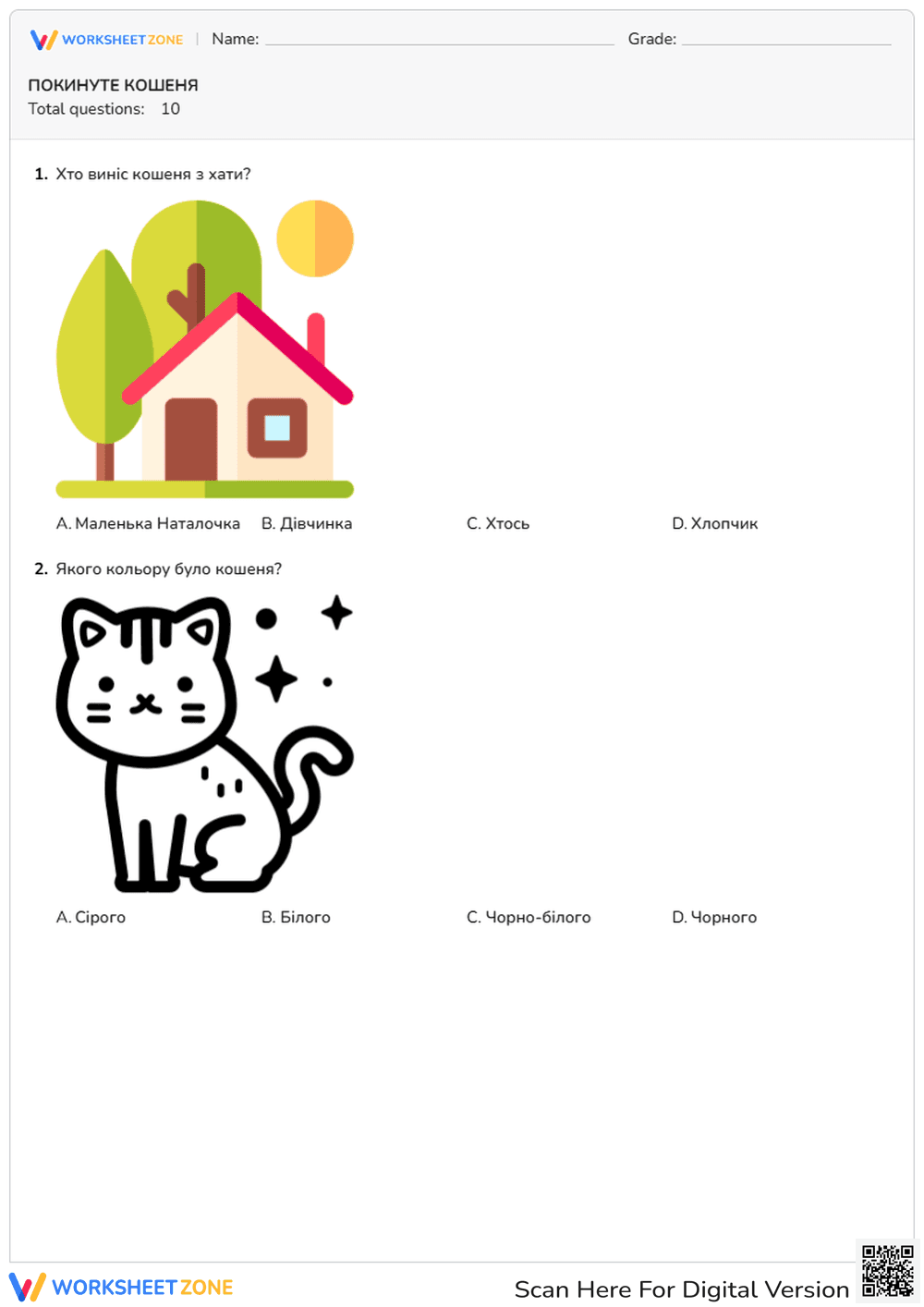
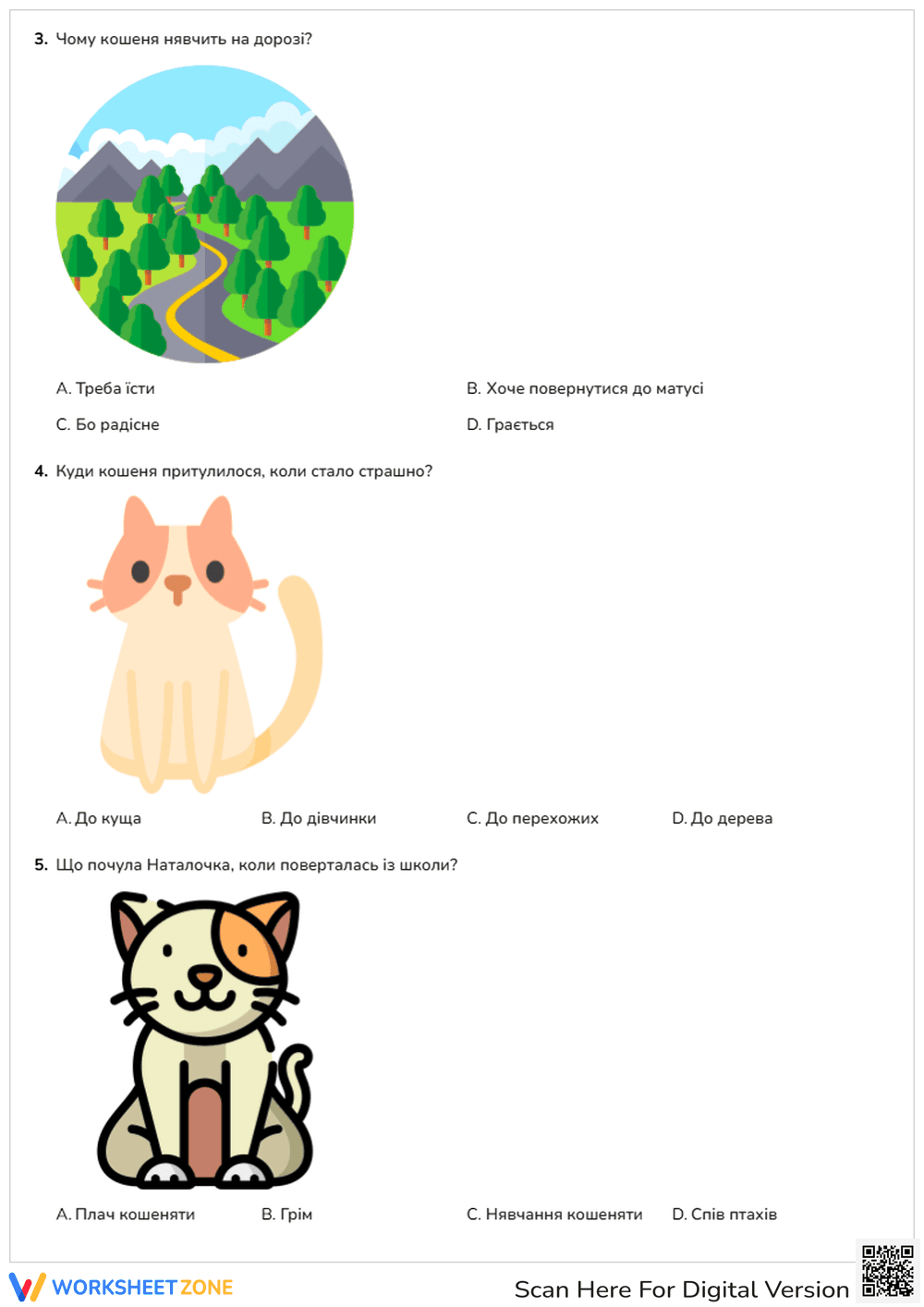
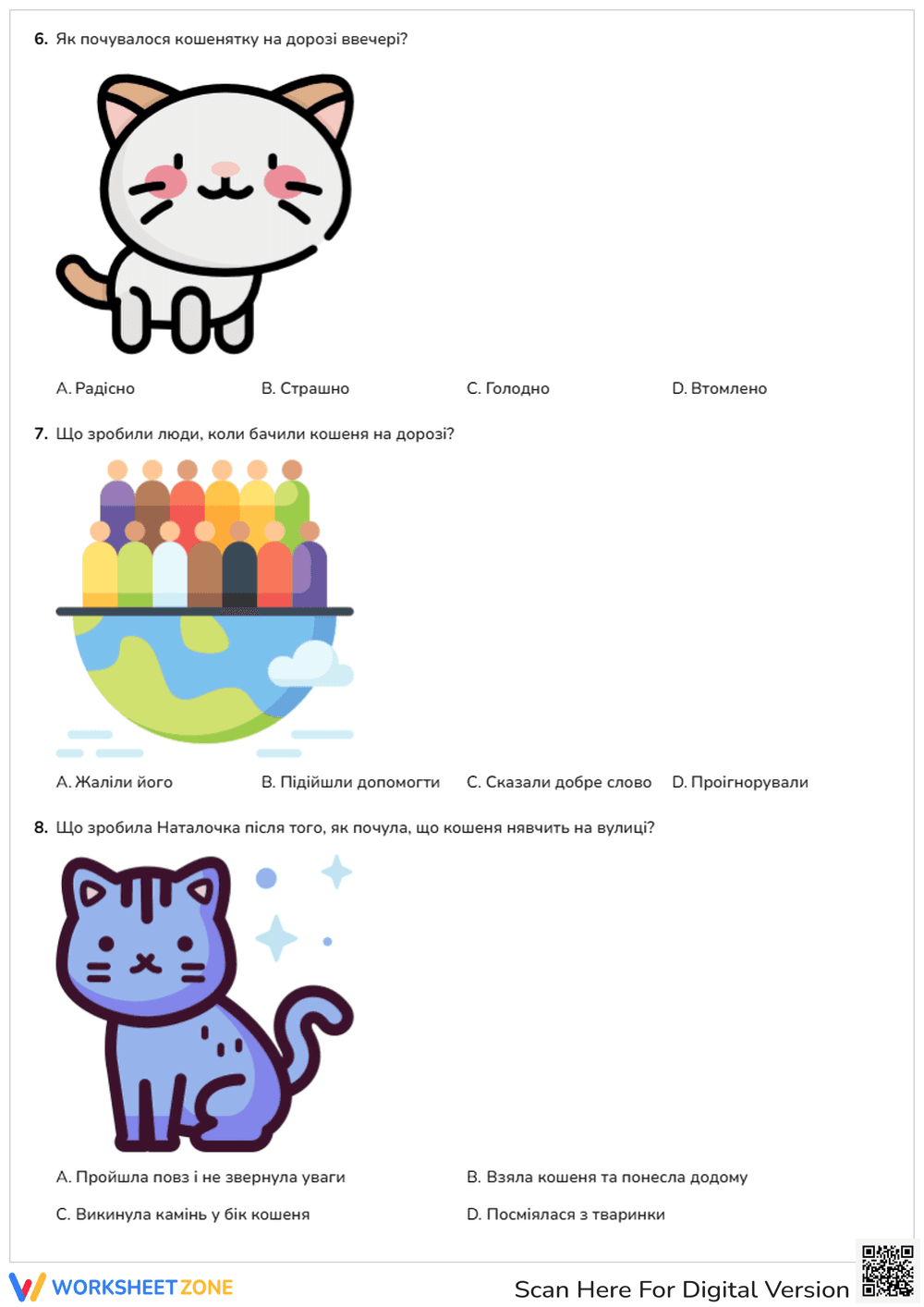
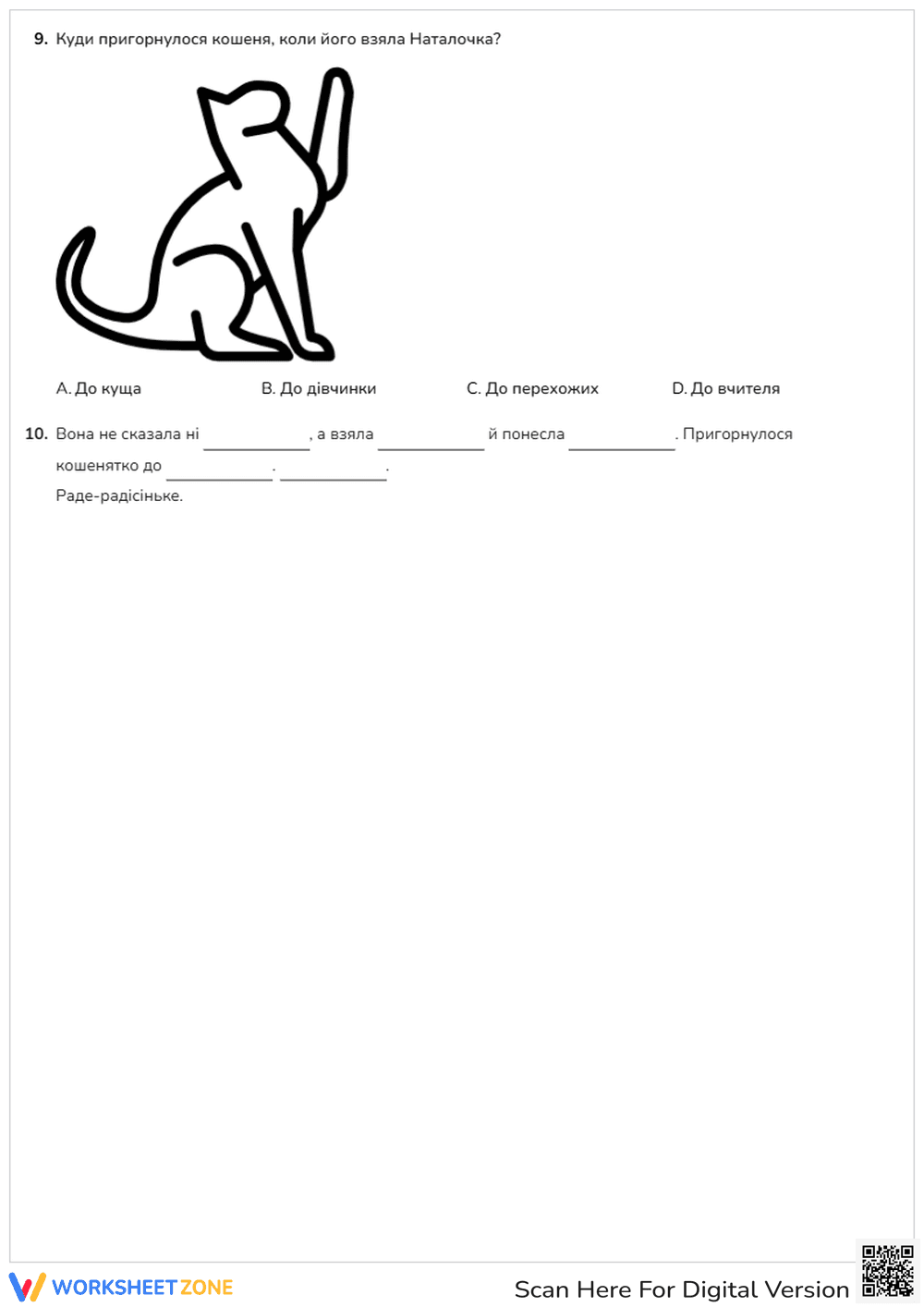

Kindness Worksheet: The Abandoned Kitten | Grade K Ready
Paste this activity's link or code into your existing LMS (Google Classroom, Canvas, Teams, Schoology, Moodle, etc.).
Students can open and work on the activity right away, with no student login required.
You'll still be able to track student progress and results from your teacher account.
This Grade K empathy and reading comprehension worksheet helps students identify key story elements and character emotions through the narrative of an abandoned kitten. By answering 10 targeted questions, learners practice identifying character actions and the positive impact of kindness. This resource ensures students connect emotional intelligence with literacy skills effectively.
At a Glance
- Grade: Kindergarten · Subject: Kindness / Behavior
- Standard:
CCSS.ELA-LITERACY.RL.K.3— Identify characters, settings, and major events in a story with prompting- Skill Focus: Empathy and Social-Emotional Learning
- Format: 4 pages · 10 problems · Answer key included · PDF
- Best For: Social-emotional learning and reading comprehension
- Time: 15–20 minutes
What's Inside
This comprehensive 4-page PDF contains a structured quiz based on a narrative about a kitten and a girl named Natalochka. It features 9 multiple-choice questions supported by clear, engaging illustrations and 1 final fill-in-the-blank summary task. The layout is designed for early learners with large text and visual cues to assist in decoding the story's meaning and emotional arc.
Zero-Prep Workflow
- Print (1 minute): Select the 4-page PDF and print enough copies for your small group or whole class.
- Distribute (30 seconds): Hand out the worksheets alongside the primary story text or after a shared read-aloud session.
- Review (5 minutes): Use the included answer key to quickly check for understanding or lead a class discussion on the kitten's feelings.
This resource is an ideal sub plan or morning work activity because it requires no teacher setup beyond basic printing.
Standards Alignment
The primary standard addressed is `CCSS.ELA-LITERACY.RL.K.3`: With prompting and support, identify characters, settings, and major events in a story. This worksheet specifically targets the identification of the protagonist (Natalochka), the setting (the road/home), and the sequence of events leading to a kind resolution. This standard code can be copied directly into lesson plans, IEP goals, or district curriculum mapping tools.
How to Use It
Use this worksheet as a formative assessment after a read-aloud about animal welfare or kindness. During instruction, observe if students can link the kitten's visual expression in the illustrations to the correct emotional vocabulary in the questions. It works best as a 20-minute independent activity following a teacher-led discussion about how we should treat those in need.
Who It's For
This resource is designed for Kindergarten students and early learners developing social-emotional skills. It is particularly useful for English Language Learners or students with IEPs who benefit from heavy visual scaffolding. Pair this worksheet with a picture book about pets or an anchor chart focused on "Helping Hands" to reinforce the theme of kindness.
According to Fisher & Frey (2014), the use of scaffolded questioning in early literacy significantly improves a student's ability to internalize narrative structures and develop perspective-taking skills. This worksheet applies those principles by using 10 specific tasks to guide students through the emotional journey of the characters. By aligning with CCSS.ELA-LITERACY.RL.K.3, the resource ensures that social-emotional learning is grounded in rigorous academic standards. Research from the NAEP suggests that early exposure to empathy-based narratives correlates with higher reading engagement in later primary years. This document provides a structured way for educators to capture evidence of student growth in both reading comprehension and character development. The combination of visual prompts and text-based questions supports a wide range of learners in achieving mastery of basic story analysis while fostering a classroom culture of compassion and care.


