


























Views
Downloads

Grade 5 Lobo Literature Study — Printable No-Prep Worksheet
Paste this activity's link or code into your existing LMS (Google Classroom, Canvas, Teams, Schoology, Moodle, etc.).
Students can open and work on the activity right away, with no student login required.
You'll still be able to track student progress and results from your teacher account.
This Grade 5 literature worksheet provides a comprehensive analysis of Ernest Thompson Seton’s "Lobo, the King of Currumpaw." Students engage with the text through character mapping, thematic fill-in-the-blanks, and critical reflection on the relationship between humans and the natural world. It ensures students master character interaction and environmental themes effectively.
At a Glance
- Grade: 5 · Subject: ELA Literature
- Standard:
CCSS.ELA-LITERACY.RL.5.3— Compare and contrast characters, settings, or events using specific text details- Skill Focus: Character Analysis & Theme
- Format: 4 pages · 17 problems · Answer key included · PDF
- Best For: Independent reading assessment or sub plans
- Time: 45–60 minutes
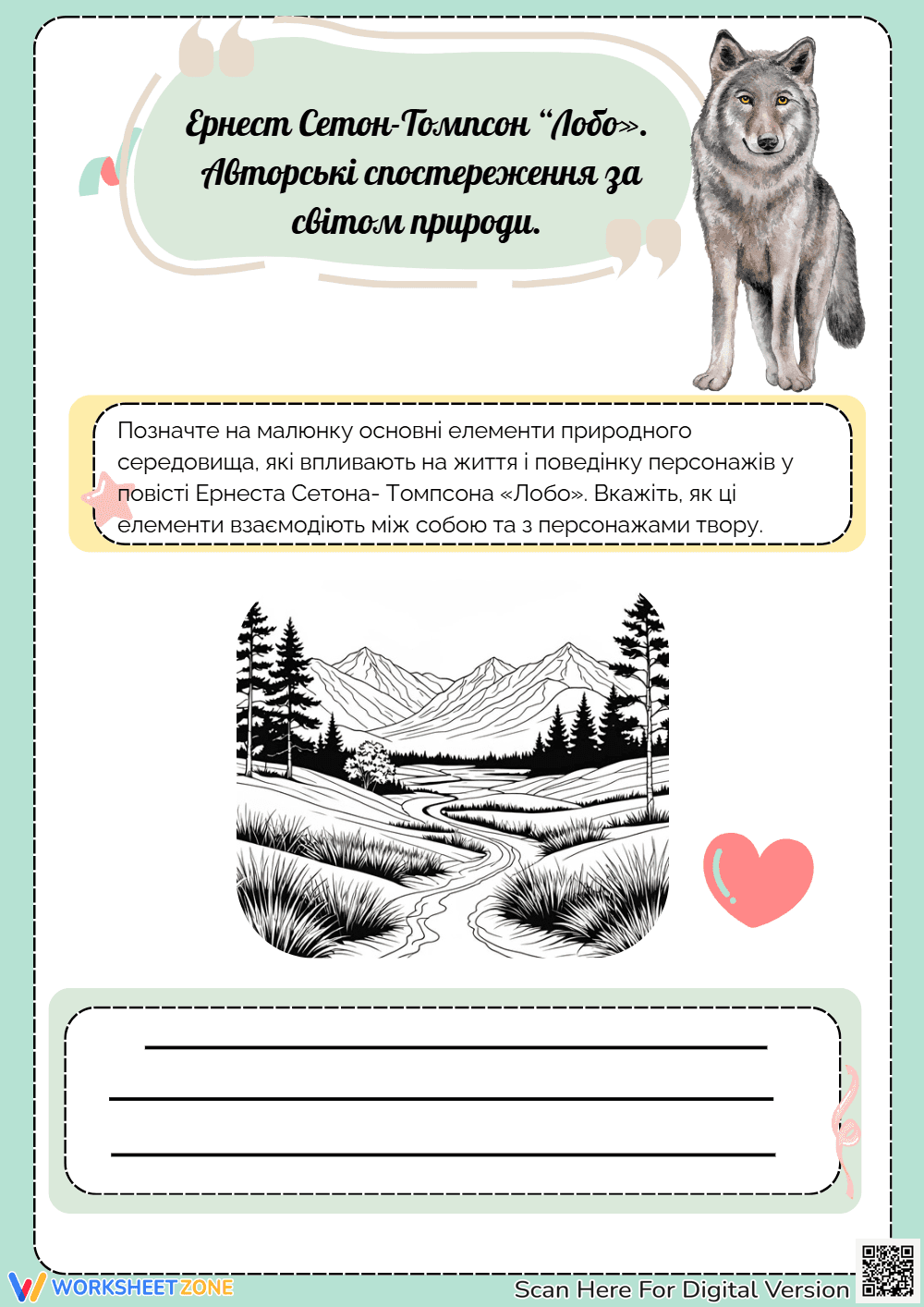
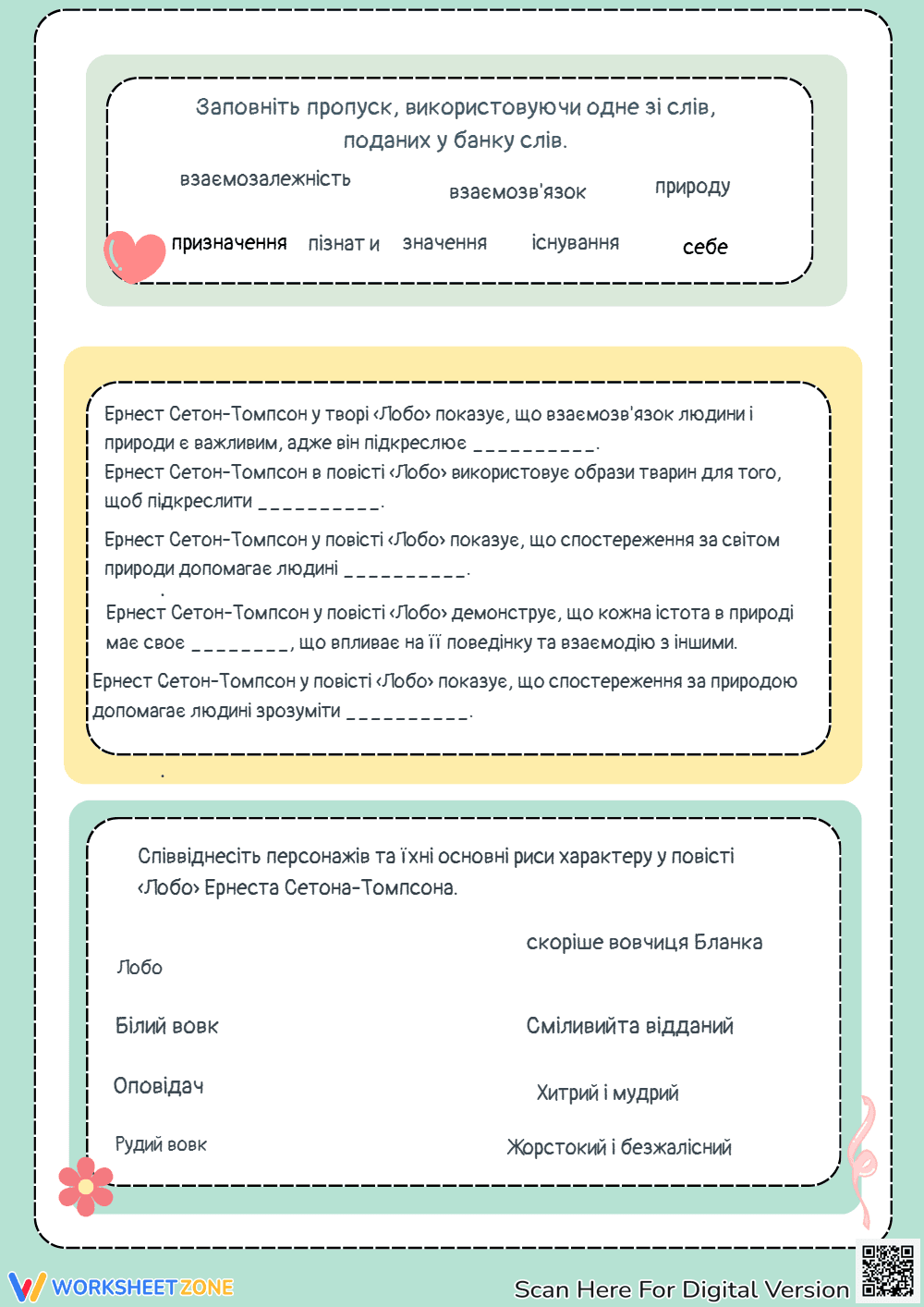
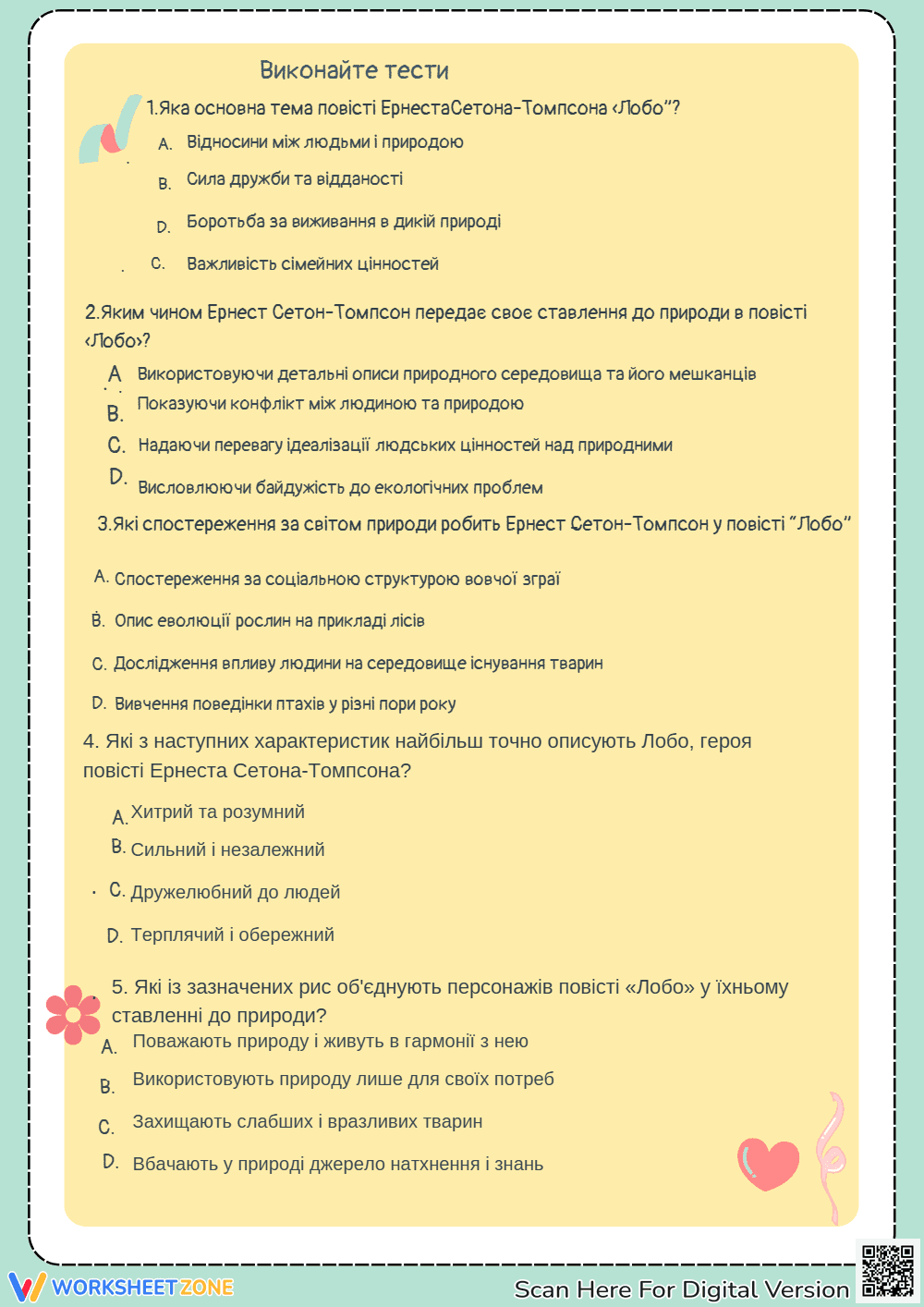
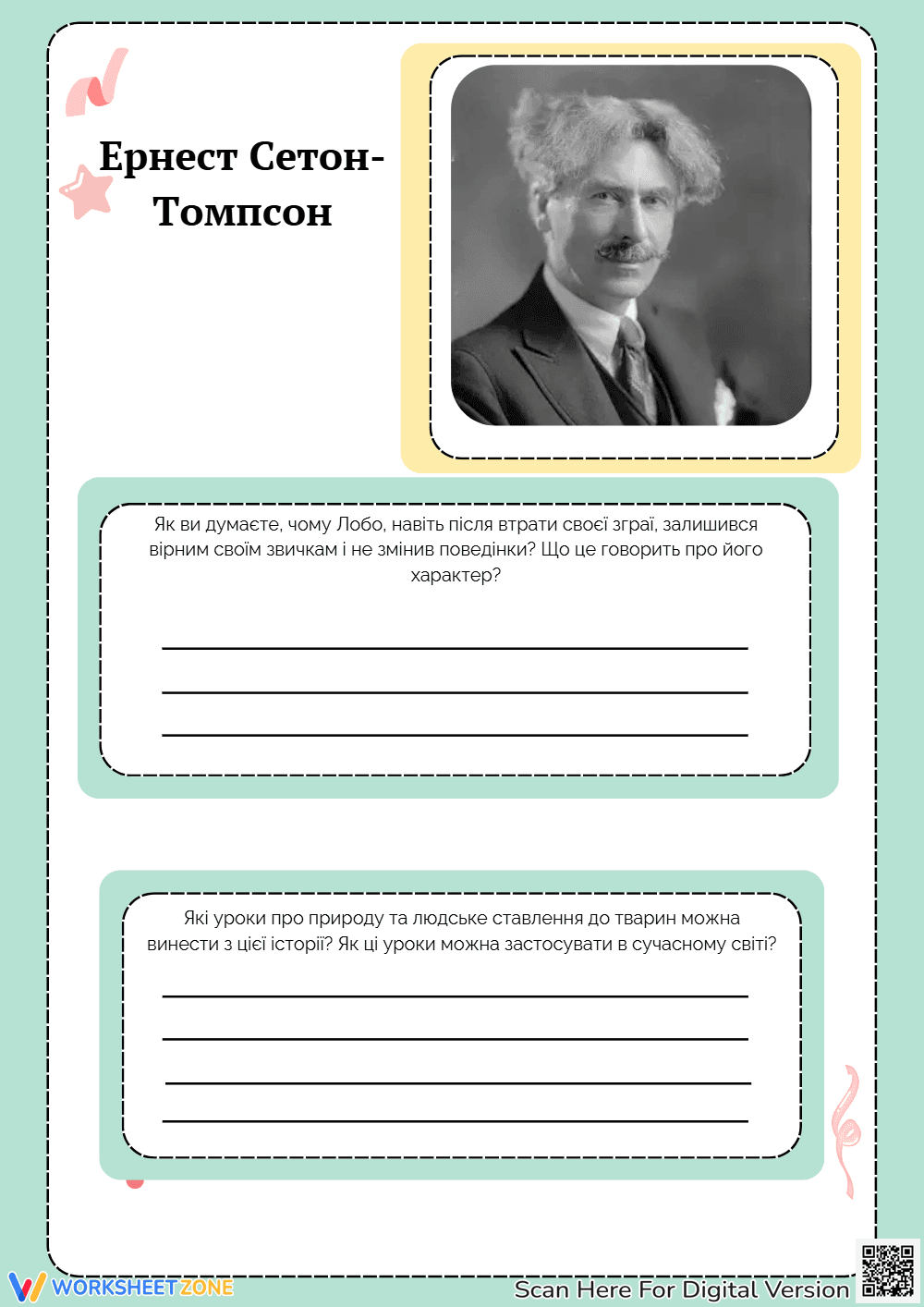
The packet contains four distinct pages of literary exploration. Page one focuses on environmental observation and setting. Page two features a word bank for thematic cloze sentences and a character matching exercise. Page three offers five multiple-choice questions targeting comprehension. Finally, page four provides deep-reflection prompts regarding the author's message and the story's modern relevance.
This resource follows a zero-prep workflow designed for busy educators. First, print the four-page PDF (30 seconds). Second, distribute to students as a standalone unit or a follow-up to a read-aloud (1 minute). Third, review student responses using the structured layout to identify gaps in character comprehension (5 minutes). Total teacher preparation time is under two minutes.
The primary focus is `CCSS.ELA-LITERACY.RL.5.3`, which requires students to compare and contrast characters or events. By matching Lobo, Blanca, and the Narrator to specific traits, students demonstrate their ability to draw on specific details from the text. Both standard codes can be copied directly into lesson plans, IEP goals, or district curriculum mapping tools.
Use this worksheet during the "You Do" phase of a gradual release model after reading the short story. It serves as an excellent formative assessment to gauge if students understand the nuanced relationship between the wolf pack and the narrator. Expect students to spend approximately 50 minutes completing the full packet.
This is designed for Grade 5 students studying world literature or animal-themed narratives. It is particularly effective for students who benefit from structured scaffolds like word banks and matching tasks. Pair this with an anchor chart on character traits for maximum instructional impact.
According to Fisher & Frey (2014), structured literary analysis tools like character matching and thematic fill-in-the-blanks are essential for developing complex comprehension in middle-grade learners. This worksheet aligns with those findings by providing a multi-modal approach to the text "Lobo" by Ernest Thompson Seton. By requiring students to cite environmental interactions and character motivations, the resource supports the CCSS.ELA-LITERACY.RL.5.3 requirement for evidence-based analysis. Research indicates that scaffolded reflection prompts, such as those found on page four, significantly improve a student's ability to synthesize authorial intent and real-world applications. This 4-page packet ensures that Grade 5 students move beyond surface-level reading to a deeper understanding of how characters and settings interact to drive a narrative's theme.


