


























Views
Downloads

Printable Addition Strategies Worksheet | Grade 1-2
Paste this activity's link or code into your existing LMS (Google Classroom, Canvas, Teams, Schoology, Moodle, etc.).
Students can open and work on the activity right away, with no student login required.
You'll still be able to track student progress and results from your teacher account.
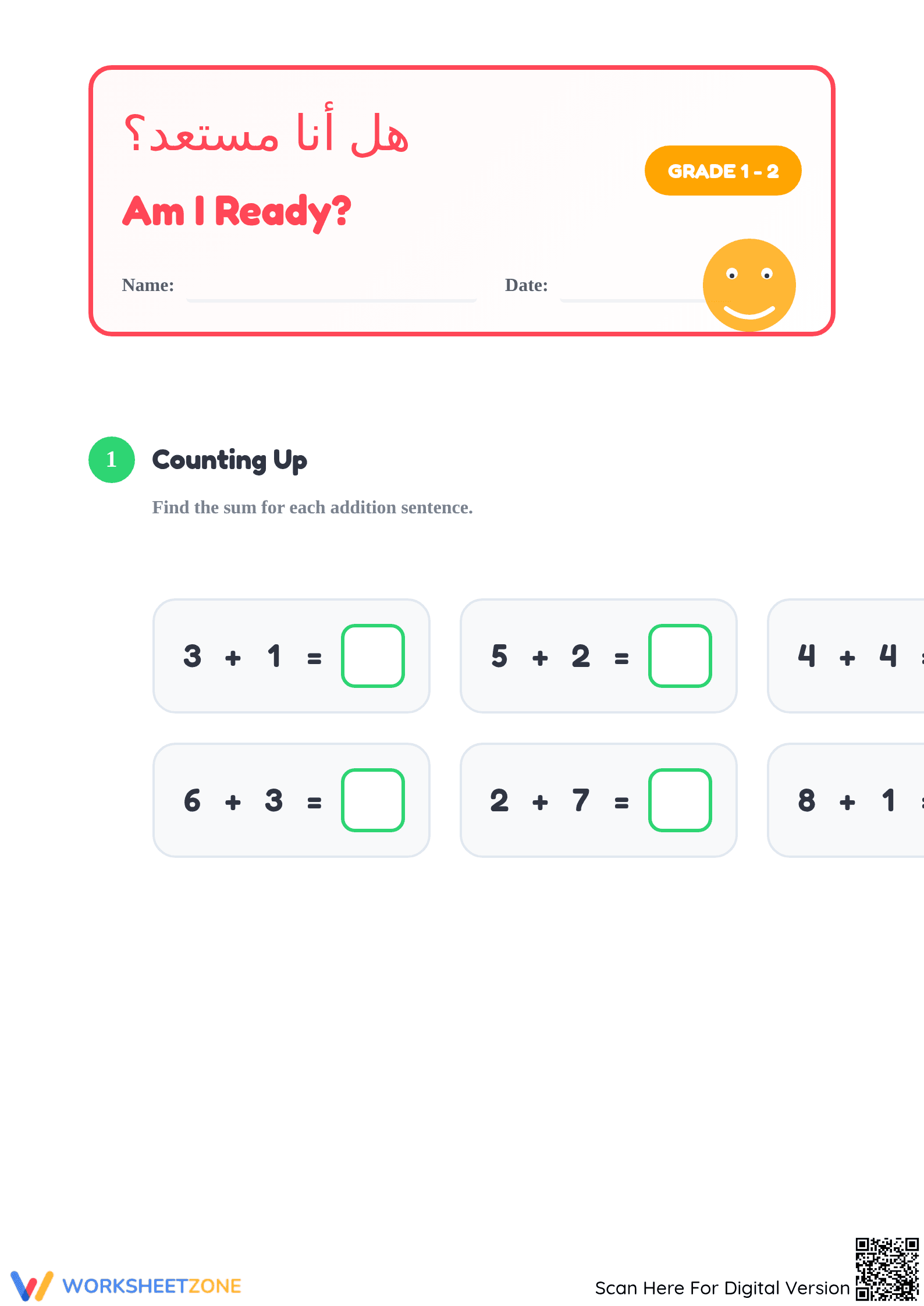
This worksheet provides targeted practice for first and second-grade students to build fluency in addition within 20. Through a structured sequence of activities including counting on, making ten, and using doubles, learners will strengthen their mental math strategies and move towards automaticity with essential addition facts.
At a Glance
- Grade: 1–2 · Subject: Math
- Standard:
CCSS.MATH.CONTENT.1.OA.C.6— Add and subtract within 20, using mental strategies.- Skill Focus: Addition fluency, making ten, doubles facts
- Format: 3 pages · 24 problems · Answer key included · PDF
- Best For: Independent practice, skill reinforcement, math centers
- Time: 15–25 minutes
What's Inside
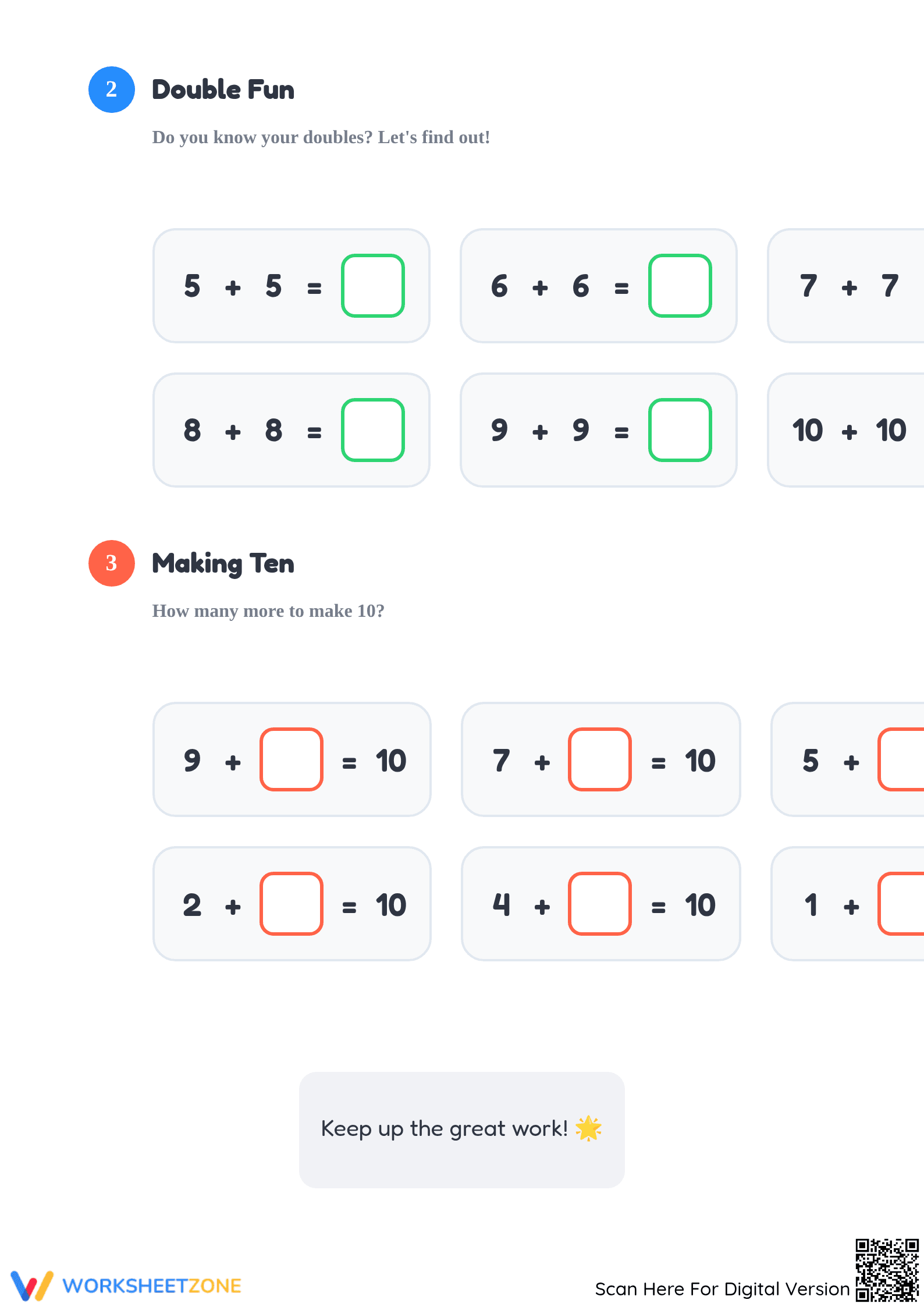
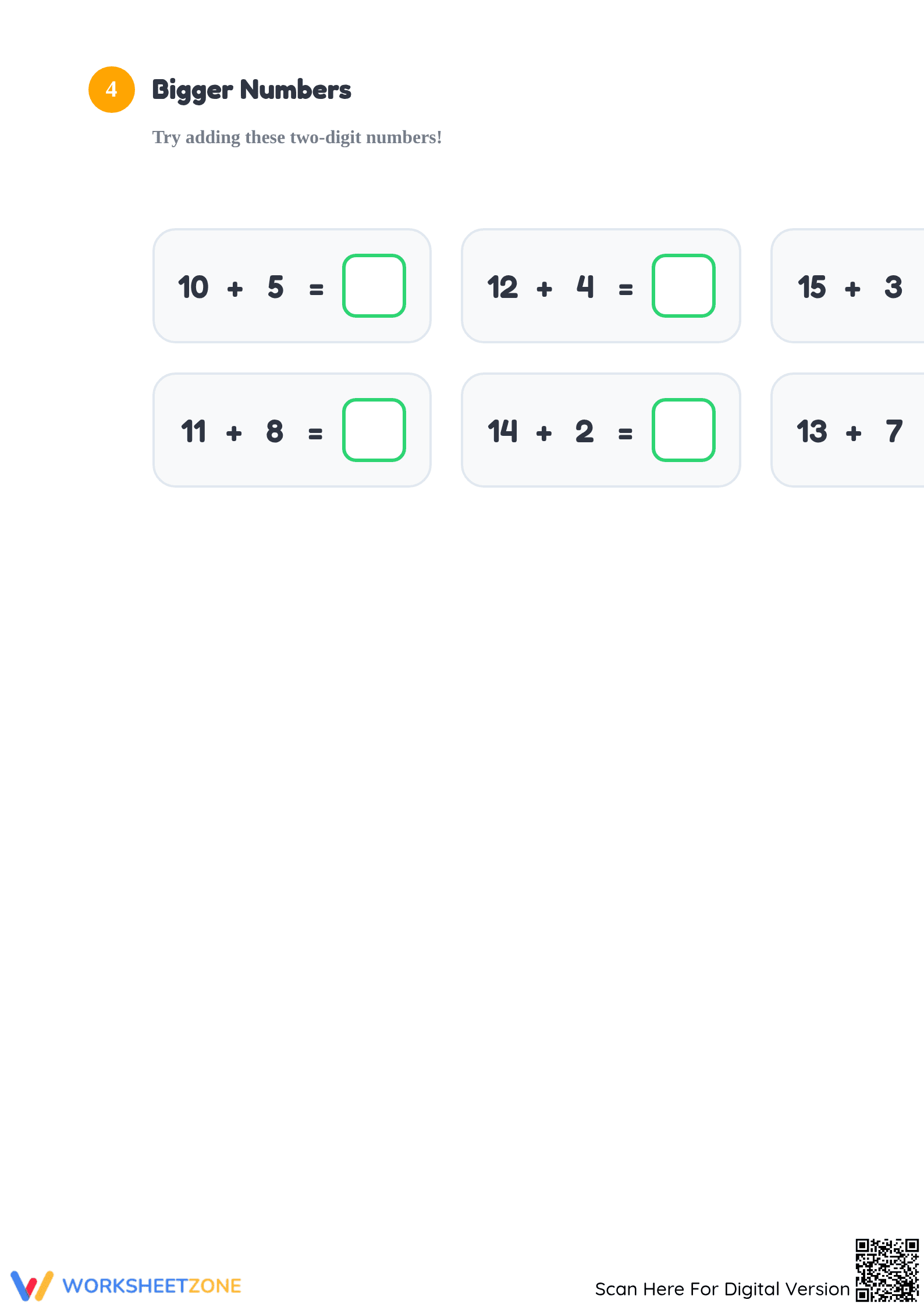
This three-page resource contains 24 addition problems across four sections. The layout is clean and provides ample space to work. A full answer key is included for quick grading or student self-correction, covering all problems from simple sums to adding with two-digit numbers.
Skill Progression
The worksheet is structured to move from foundational to more complex addition strategies.
- Guided Practice: The "Counting Up" section (6 problems) provides a simple entry point to reinforce the core concept of addition.
- Supported Practice: "Double Fun" and "Making Ten" (12 problems) scaffold two key mental math strategies: using doubles and composing ten.
- Independent Practice: The "Bigger Numbers" section (6 problems) challenges students to apply skills to equations with two-digit numbers.
This progression helps build student independence.
Standards Alignment
This worksheet directly aligns with Common Core standard CCSS.MATH.CONTENT.1.OA.C.6, requiring students to add within 20 using strategies like counting on and making ten. The tasks systematically build these competencies and also support the goal of CCSS.MATH.CONTENT.2.OA.B.2 for fluent addition. Both standard codes can be copied directly into lesson plans, IEP goals, or district curriculum mapping tools.
How to Use It
Use this worksheet after a lesson on addition strategies. It works well for independent practice, math centers, or homework. As a formative check, observe which section students find most difficult to identify where they need support. Most students will complete the worksheet in 15 to 25 minutes.
Who It's For
This resource is for first and second graders developing addition fluency. It is ideal for whole-class practice or small group intervention. For students needing support, pair this with a number line. For those needing a challenge, ask them to write a story problem for one equation in each section.
Building foundational addition fluency is critical for future mathematical success. This worksheet targets key mental strategies aligned with CCSS.MATH.CONTENT.1.OA.C.6, which emphasizes methods like making ten and using doubles. Research confirms that moving students from counting strategies to more efficient, fact-based retrieval is a key developmental step. According to the RAND AIRS (2024) meta-analysis on early math instruction, consistent practice with varied problem structures, as provided here, is essential for developing the flexible number sense required for algebra. By offering structured practice on composing numbers and using known facts (like doubles), this resource helps students build the automaticity that frees up working memory for higher-order problem-solving, a cornerstone of effective elementary mathematics education. This targeted approach ensures learners are not just finding answers but are building a robust understanding of how numbers work.


