


























Views
Downloads



Personal Safety & Circles of Trust Worksheet | Grade 2 Ready
Paste this activity's link or code into your existing LMS (Google Classroom, Canvas, Teams, Schoology, Moodle, etc.).
Students can open and work on the activity right away, with no student login required.
You'll still be able to track student progress and results from your teacher account.
This Grade 2 personal safety worksheet provides a comprehensive framework for teaching students about body boundaries and social circles. By identifying safe adults and learning the PANTS rule, children develop the vocabulary and confidence to protect their physical autonomy. It transforms complex safety concepts into actionable steps for young learners to ensure their well-being.
At a Glance
- Grade: 2 · Subject: Social Skills
- Standard:
NHES.4.2.1— Demonstrate healthy ways to express needs and set personal boundaries- Skill Focus: Personal Safety & Boundaries
- Format: 4 pages · 5 concepts · Instructional Guide · PDF
- Best For: Social-emotional learning and safety lessons
- Time: 30–45 minutes
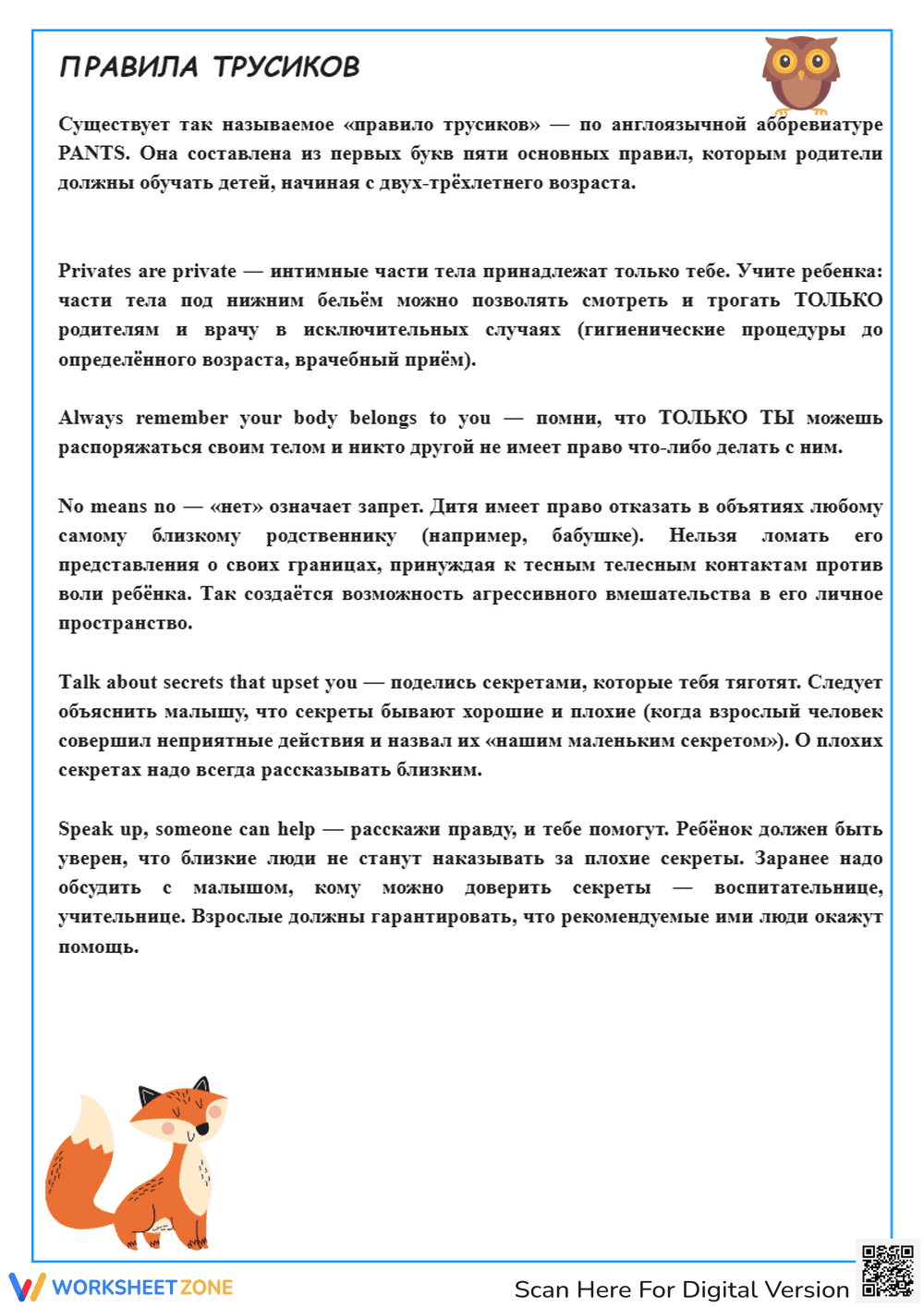
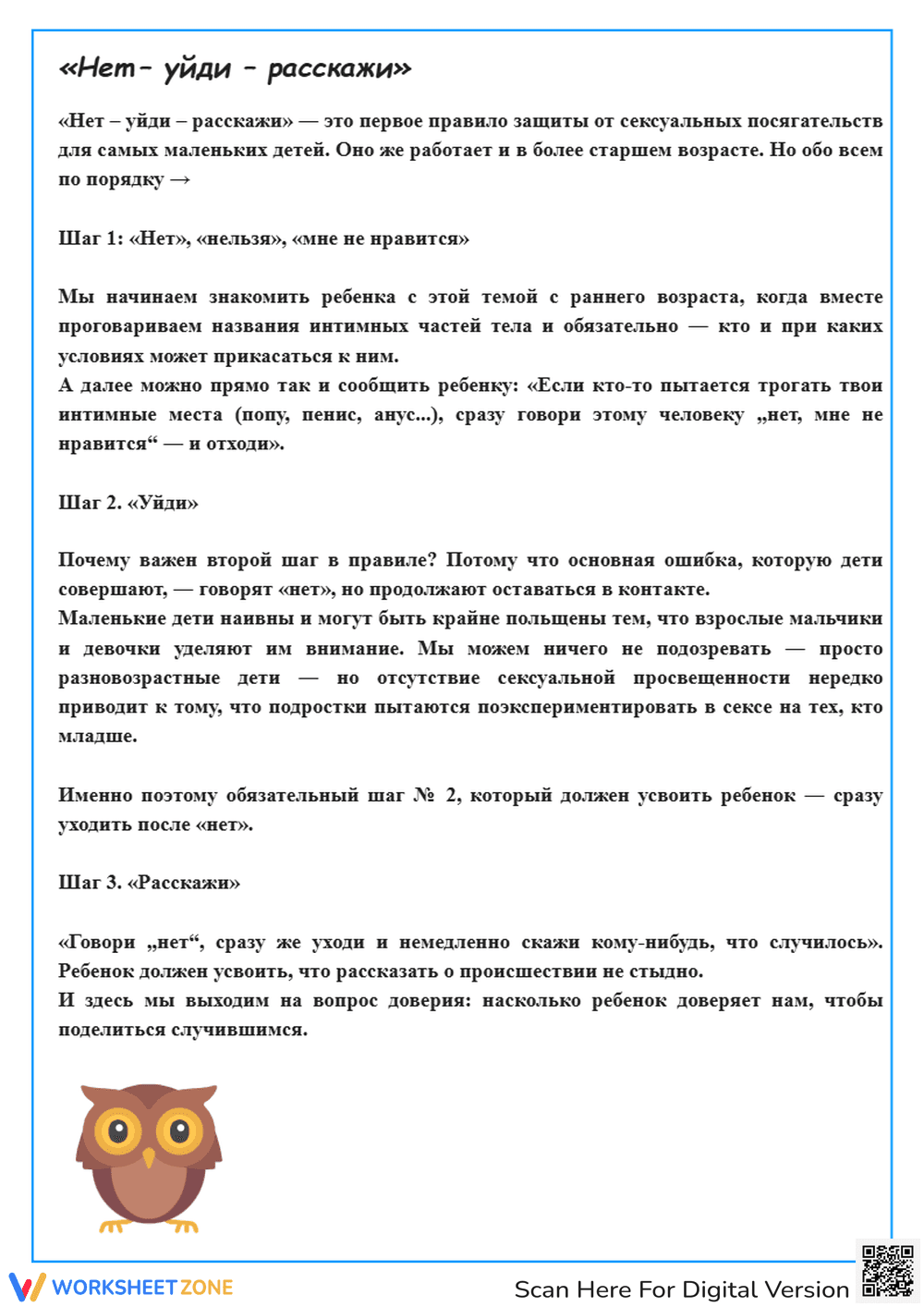
What's Inside: This 4-page instructional PDF includes a detailed breakdown of the "Circles of Trust" model, a visual guide to the PANTS rule (Private parts, Always remember, No means no, Talk about secrets, Speak up), and the "No-Go-Tell" safety protocol. The resource uses clear diagrams and structured text to explain which behaviors are appropriate for different social groups, from immediate family to strangers.
Zero-Prep Workflow: This resource is designed for immediate classroom implementation. First, print the 4-page guide (1 minute). Second, distribute the packets to students or display the diagrams on a smartboard (1 minute). Third, facilitate a guided discussion using the provided text as a script to ensure all safety points are covered accurately (30 minutes). Total teacher preparation time is under 2 minutes, making it an ideal resource for planned safety units or emergency sub plans.
Standards Alignment: This worksheet aligns with `NHES.4.2.1`, which requires students to demonstrate healthy ways to express needs, wants, and feelings, specifically regarding personal space and safety. It also supports CASEL competencies in self-awareness and relationship skills. This standard code can be copied directly into lesson plans, IEP goals, or district curriculum mapping tools to document compliance with health education mandates.
How to Use It: Use this worksheet during a dedicated health or social-emotional learning block. It is most effective when introduced after a general discussion about feelings and safety. Teachers can use the "Circles of Trust" diagram as a formative assessment by asking students to point to which circle a specific person (like a doctor or a neighbor) belongs to. Expected completion time for a full guided session is 40 minutes.
Who It's For: This resource is specifically tailored for Grade 2 students but is appropriate for any early elementary setting. It is particularly useful for school counselors, special education teachers working on social boundaries, and parents looking for a structured way to discuss body safety at home. It pairs naturally with an anchor chart about "Safe Adults" or a direct instruction lesson on personal space.
According to Fisher & Frey (2014), the gradual release of responsibility is vital when teaching sensitive social-emotional skills like personal safety. This worksheet facilitates that process by providing clear definitions of the `NHES.4.2.1` standard, allowing students to move from understanding the "Circles of Trust" to applying the "No-Go-Tell" protocol in hypothetical scenarios. Research indicates that children who can clearly define their personal boundaries and identify a network of safe adults are significantly better equipped to advocate for their own physical safety. By using the PANTS rule and visual social mapping, this resource provides the 4 pages of scaffolding necessary for 2nd-grade students to internalize these life-saving concepts. The structured approach ensures that the plain-English skill of setting boundaries is taught with both sensitivity and clinical accuracy, meeting the rigorous demands of modern health education frameworks.


