


























Views
Downloads
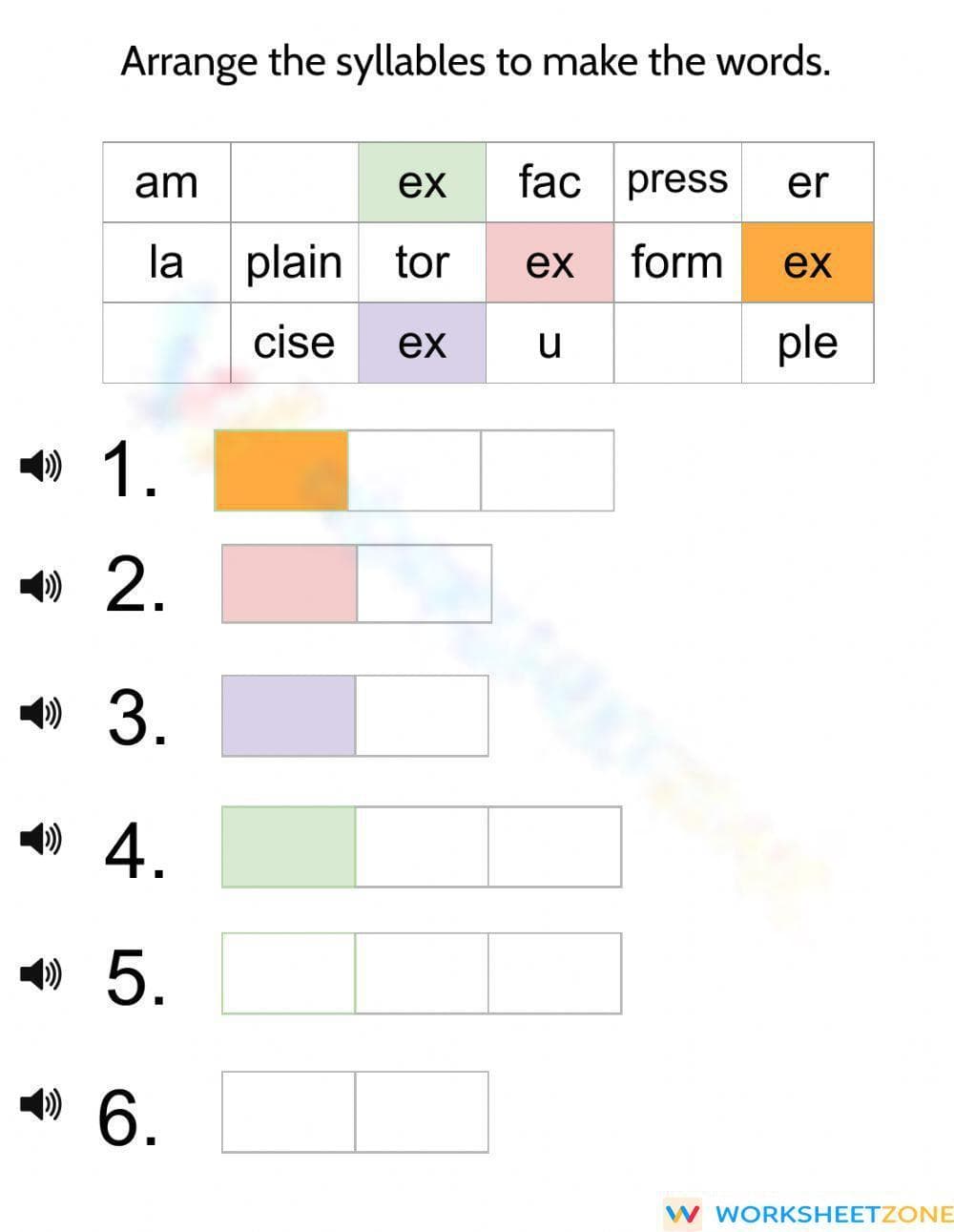

Printable Syllables Worksheet | Grade 3-4 Phonics Practice
Paste this activity's link or code into your existing LMS (Google Classroom, Canvas, Teams, Schoology, Moodle, etc.).
Students can open and work on the activity right away, with no student login required.
You'll still be able to track student progress and results from your teacher account.
This Essential Grade 3-4 phonics worksheet helps students master multisyllabic word construction through a guided syllable-arrangement activity. By manipulating syllable blocks, learners build phonological awareness and improve spelling accuracy for complex vocabulary. This resource provides a focused environment for students to practice decoding strategies and recognize common word patterns effectively.
At a Glance
- Grade: 3-4 · Subject: English Language Arts
- Standard:
CCSS.ELA-LITERACY.RF.3.3.C— Decode multi-syllable words by identifying common patterns and syllables- Skill Focus: Syllable Manipulation
- Format: 1 page · 6 problems · Answer key included · PDF
- Best For: Independent practice or literacy centers
- Time: 10–15 minutes
What's Inside
This worksheet features a clear syllable bank containing components for six specific multisyllabic words. Students are presented with visual cues, including color-coded boxes that provide a supportive starting point for the word-building process. The layout includes six numbered items with designated grid spaces for syllable placement, ensuring a structured and organized learning experience. A complete answer key is provided for efficient grading.
Zero-Prep Workflow
- Print: Generate the single-page PDF in under 30 seconds.
- Distribute: Hand out copies to students for immediate independent work (1 minute).
- Review: Use the included answer key to verify syllable arrangements and provide instant feedback (1 minute).
Total teacher engagement time is under three minutes, making it an ideal choice for emergency sub plans or quick bell-ringer activities.
Standards Alignment
CCSS.ELA-LITERACY.RF.3.3.C: "Decode multi-syllable words." This activity aligns with the standard by requiring students to recognize and combine distinct syllables into coherent units. This standard code can be copied directly into lesson plans, IEP goals, or district curriculum mapping tools.
How to Use It
Use this worksheet as a formative assessment during a unit on phonics and word structure. After direct instruction on syllable types, assign the page to observe how students apply decoding rules to unfamiliar words. It also serves as an excellent literacy center activity where students can work collaboratively or independently to solve the word puzzles within 15 minutes.
Who It's For
This resource is primarily intended for Grade 3 and 4 students developing their decoding fluency. It is particularly effective for English Language Learners (ELLs) who benefit from the visual syllable blocks and structured grid. Pair this worksheet with a syllable-type anchor chart or a short reading passage containing the target vocabulary for a comprehensive instructional block.
According to research by Fisher & Frey (2014), the gradual release of responsibility in literacy instruction is significantly enhanced by providing students with scaffolds that bridge the gap between guided and independent practice. This multisyllabic word construction task utilizes visual cues and syllable banks to support the decoding process, which is a critical precursor to reading fluency. Systematic practice with syllable manipulation has been shown to improve both spelling and reading comprehension in upper elementary grades. By requiring students to actively arrange word components, the activity reinforces the phonological loop and aids in long-term vocabulary retention. This Grade 3-4 ELA worksheet aligns with CCSS.ELA-LITERACY.RF.3.3.C by focusing on the decoding of multi-syllable words. Educators can utilize these six structured tasks to evaluate student mastery of word patterns efficiently. This evidence-based approach ensures that students build the necessary foundational skills for complex text analysis.


