


























Views
Downloads
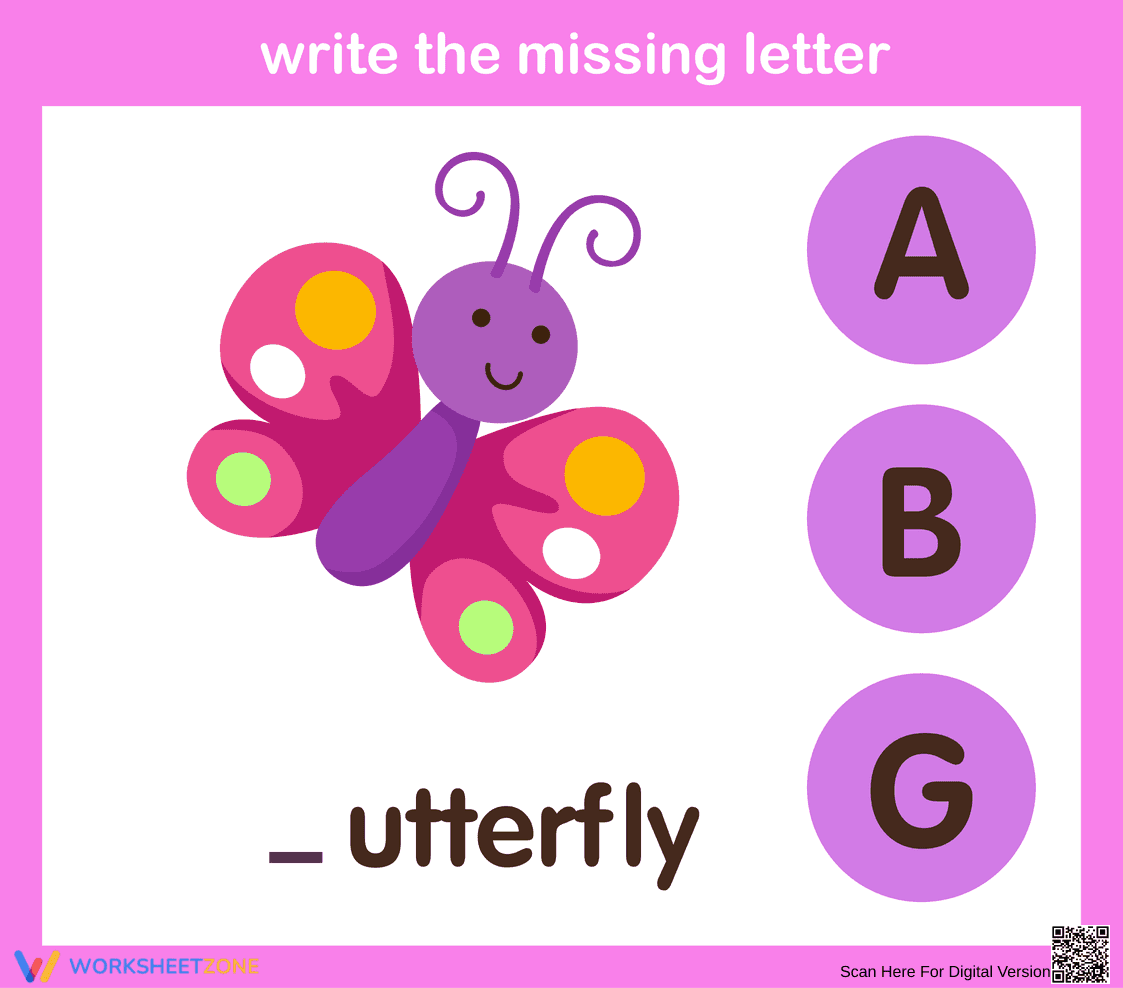

Grade Pre-K Beginning Sounds — Printable No-Prep Worksheet
Paste this activity's link or code into your existing LMS (Google Classroom, Canvas, Teams, Schoology, Moodle, etc.).
Students can open and work on the activity right away, with no student login required.
You'll still be able to track student progress and results from your teacher account.
This foundational beginning sounds worksheet helps early learners connect spoken words to written letters. By identifying the missing initial consonant for a familiar picture, students develop crucial phonemic awareness. This single-task activity provides immediate visual reinforcement to build reading confidence.
At a Glance
- Grade: Pre-K · Subject: ELA
- Standard:
CCSS.ELA-LITERACY.RF.K.3.A— Demonstrate basic knowledge of letter-sound correspondences- Skill Focus: Beginning sounds
- Format: 1 page · 1 problem · Answer key included · PDF
- Best For: Morning work or centers
- Time: 5–10 minutes
Inside this resource, educators will find a highly visual phonics activity centered on a colorful butterfly illustration. The task requires students to look at the image, say the word aloud, and select the correct missing initial letter from three options (A, B, G). The layout is clean and distraction-free, featuring large text designed for early childhood visual tracking. A simple answer key is provided.
Zero-Prep Workflow
- Print (1 minute): Simply download the PDF and print the required number of copies. No special cutting or laminating is required for standard use.
- Distribute (1 minute): Hand out the sheets during morning arrival or place them directly into literacy center folders.
- Review (1 minute): Quickly check the circled or colored letter to assess understanding.
Total teacher preparation time is under two minutes. This straightforward format makes it an excellent addition to any emergency sub plan, ensuring learning continues without complex setup instructions.
Standards Alignment
This activity aligns with CCSS.ELA-LITERACY.RF.K.3.A: "Demonstrate basic knowledge of one-to-one letter-sound correspondences by producing the primary sound or many of the most frequent sounds for each consonant." It also supports early vocabulary development by pairing familiar images with text. Both standard codes can be copied directly into lesson plans, IEP goals, or district curriculum mapping tools.
How to Use It
This worksheet serves as an excellent warm-up activity before direct instruction on the letter "B". Teachers can project the PDF onto a smartboard, asking the class to sound out the word "butterfly" together before students complete their individual copies. Alternatively, it works perfectly as an independent literacy center task. While students work, teachers should observe whether they are guessing randomly or actively sounding out the /b/ phoneme before selecting their answer. Expected completion time is a brief 5 to 10 minutes.
Who It's For
This resource is designed primarily for Preschool and Pre-K students who are just beginning their phonics journey. It is also highly effective for Kindergarten students needing targeted intervention on initial consonant sounds. For differentiation, teachers can provide an alphabet anchor chart to support students who struggle with letter recognition. Pair this worksheet with a read-aloud book about insects to create a cohesive, thematic learning experience.
Mastering early phonics skills, particularly identifying beginning sounds, is a critical predictor of future reading success. This resource directly targets CCSS.ELA-LITERACY.RF.K.3.A, requiring students to demonstrate basic knowledge of letter-sound correspondences. According to a comprehensive EdReports 2024 analysis on early literacy acquisition, students who engage in explicit, picture-supported phonemic awareness activities show significantly higher retention of consonant sounds compared to those using text-only methods. By isolating the initial phoneme in a familiar word like "butterfly" and providing distinct multiple-choice letter options, this worksheet reduces cognitive overload while reinforcing essential decoding pathways. Early childhood educators can utilize this targeted practice to build a strong foundation for independent reading, ensuring young learners develop the automaticity required for fluent word recognition, spelling proficiency, and broader long-term literacy achievement in the primary grades.


