Worksheets
Lesson Plans
Coloring Pages
Home
Activity:
Topic:
CCSS:
________is the instrument used to measure air pressure. barometer. Low pressure will usually bring what kind of weather? Stormy. Pressure is the effect of the weight of all the air above pressing down. High pressure will usually bring what kind of weather? clear and dry. Based on the information in the table, in which city will it most likely rain? City Z. Which weather condition will most likely occur when the atmospheric pressure in an area begins falling? rainy. Which kind of weather change will occur with an increase in air pressure? cooler and dryer. _______ pressure systems are characterized by fair weather. High. Which is the best indicator that precipitation is on the way? low pressure. What type of air pressure is present? High
Which type of weather system brings cold, dry air: High Pressure System. Which type of weather system brings warm, moist air? : Low Pressure System. High pressure systems are represented with a capital H. What color is the letter H on a weather map? : Blue . Low pressure systems are represented with a capital L on a weather map. What color is the letter L on the weather map? : Red. Which weather system brings sunny, dry, calm, clear weather? : High pressure system. Which weather system brings rainy, stormy, cloudy weather? : Low pressure system . What type of pressure system is happening when you see this weather in the picture? : High pressure system. Which type of pressure system would bring this type of weather as shown in the picture? : Low pressure system. If a barometer is showing that air pressure is dropping, what type of weather would we see? : cloudy, stormy weather. If a barometer is showing that air pressure is rising, what type of weather would we see? : sunny, clear weather. The image shows a weather map with different pressure systems. What type of weather would Texas be having right now: clear, sunny, dry weather . The following picture shows a weather map of Virginia. What type of weather is Virginia having in this map? : cloudy, rainy weather
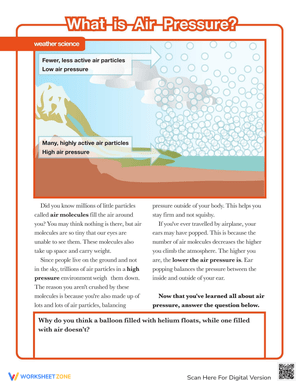
Explore air pressure and its effects with our science worksheet! Learn about air properties and measurement. Download your air pressure worksheet today and explore!
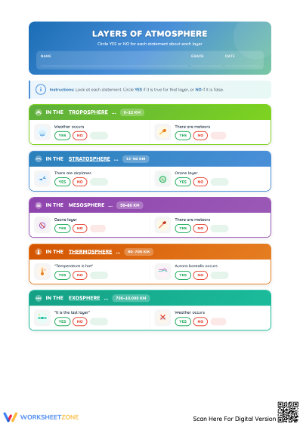
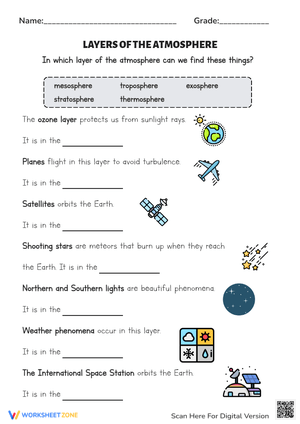
The atmosphere we breathe everyday has more than 2 layers as we usually supposed. Find what they are and match the layer with what happen in it.
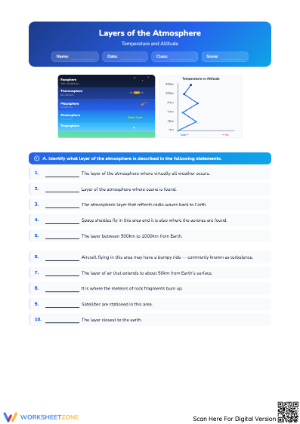
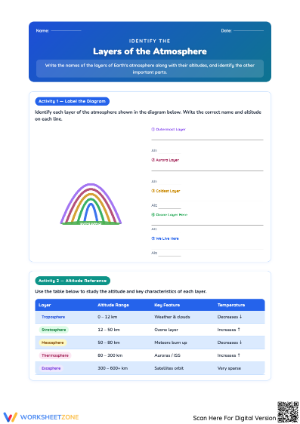
A detailed worksheet on atmospheric layers, focusing on temperature, altitude, and key features. Great for Grades 5–8 and pairs with the Atmosphere Layers Learning Poster.
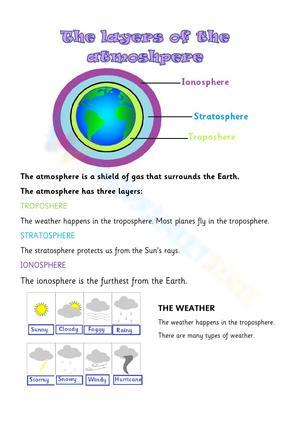
What are the 4 MAIN layers in the atmosphere? Thermosphere. The lowest layer, where weather occurs is called the ___________________________. Troposphere. The naturally occurring ozone layer shields Earth from ________________________________. UV Radiation. Meteors burn up in which layer of the atmosphere? Mesosphere. Airplanes fly in which 2 layers of the atmosphere? Troposphere and Stratosphere. What is the layer within the thermosphere with charged atoms and molecules? Ionosphere. What weather instrument is used to measure air pressure? Barometer. What weather instrument is used to measure wind speed? Anemometer. What weather instrument is used to measure wind direction? Wind Vane. Sunny. The amount of precipitation is measured with a ___________. Rain Gauge. What is moisture in the air called? Humidity
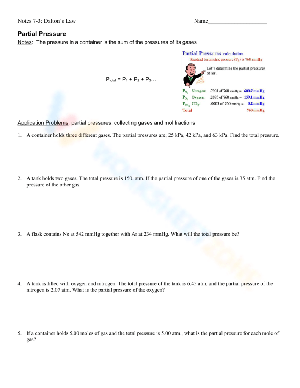
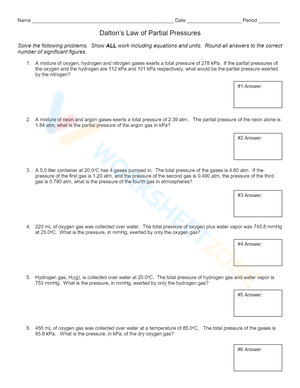
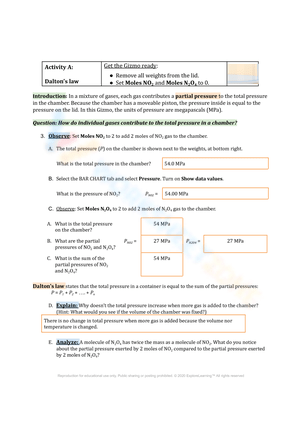
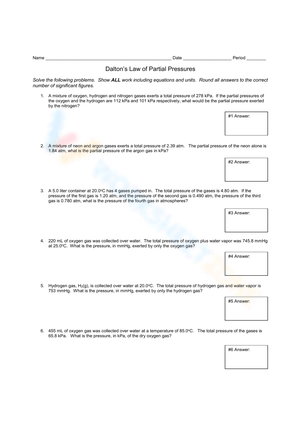
Practice partial pressure calculations! This worksheet helps you understand Dalton's Law in chemistry. Download now and enhance your knowledge!
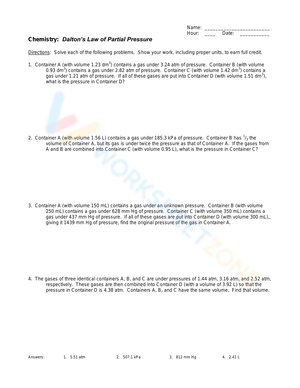
Learn Dalton's Law of Partial Pressure with this chemistry worksheet. Perfect for chemistry students! Boost skills with this law.
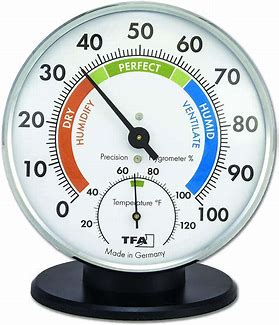
Which instrument is used to measure temperature: Thermometer . Which instrument is used to measure wind speed: Anemometer. Which instrument is used to measure air pressure: Barometer. Which instrument is used to measure humidity: Hygrometer. Identify the instrument that is used to measure atmospheric conditions: thermometer. Identify the unit of measurement for temperature: . Identify the unit of measurement for humidity: . Identify the unit of measurement for air pressure: . Identify the unit of measurement for wind speed: . Identify the unit of measurement for determining rainfall: . How many different layers does our atmosphere consist of: 5. The atmospheric layer in which we find weather is called the..: troposphere . The atmospheric layer in which we find different weather patterns is called the..: troposphere. The liquid inside a thermometer that is used to determine the temperature is..: mercury. The box that is used to measure the different weather conditions and stores all the different instruments is called..: The Stevenson Screen. What is the definition of weather: It the current conditions of the atmosphere that can be observed at that moment.
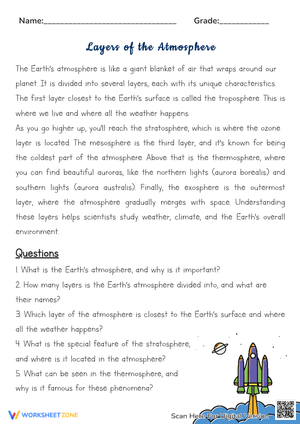
Get to know about layers of the atmosphere by answering all the questions in this engaging worksheet.
Master Dalton's Law of Partial Pressures with this worksheet! Perfect for chemistry students to understand gas mixtures. Click here to learn more!
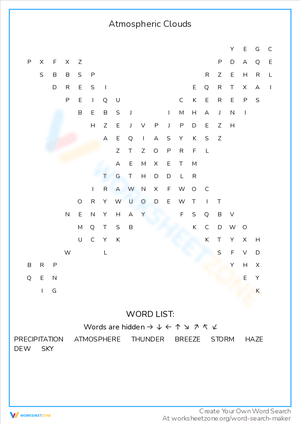
Explore atmospheric clouds with this worksheet and learn about weather patterns! Ideal for students studying meteorology. Start your weather exploration now!
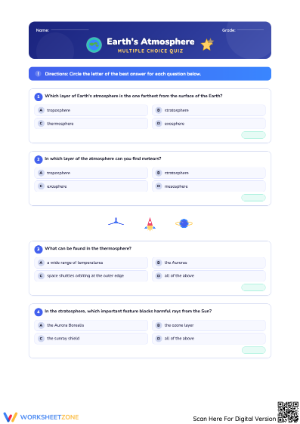
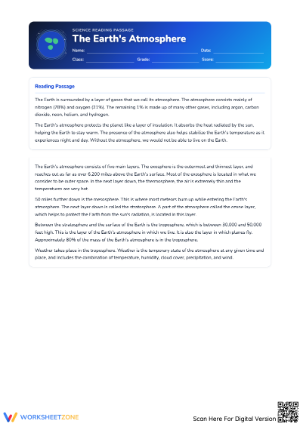
Explore the Earth's Atmosphere with this educational worksheet! Download now to learn about the different layers and enhance your science knowledge!
Explore the layers of the atmosphere with this science worksheet for Grade 3-4 students. Learn about each layer’s characteristics and its role in the environment.
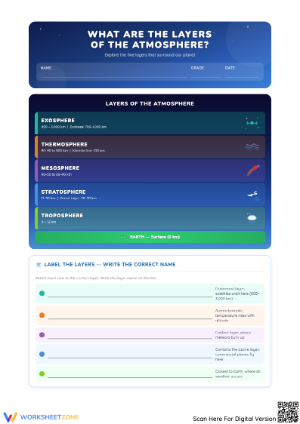
Layers of the atmosphere worksheet for Grade 4–5 students to practice identifying, labeling, and understanding Earth’s atmospheric layers through visuals.
Solve partial pressure problems using Dalton's Law with this worksheet. Master gas laws and improve your chemistry skills. Try it now!
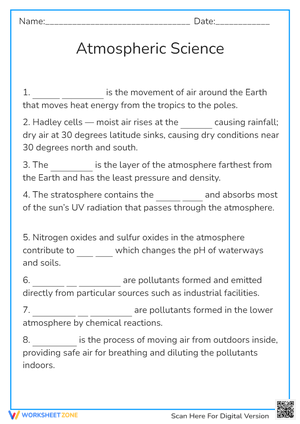
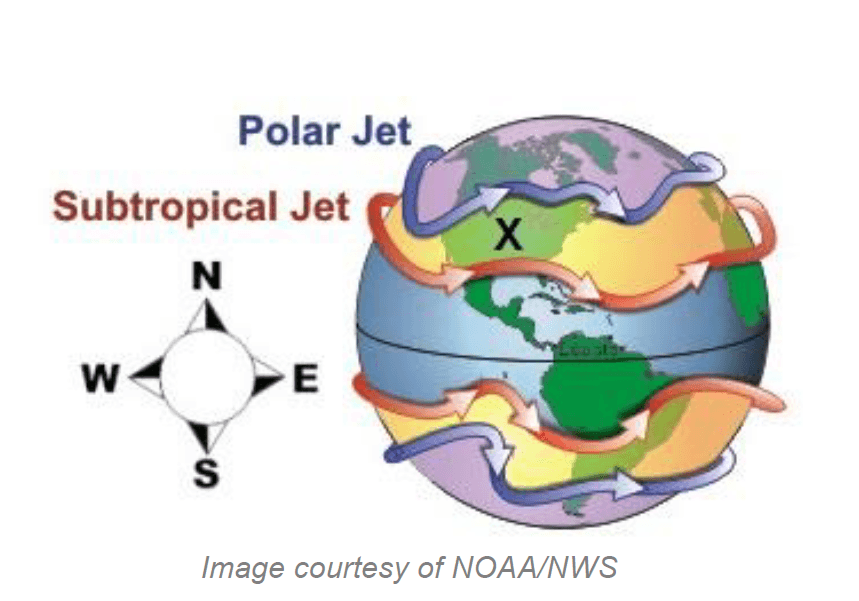
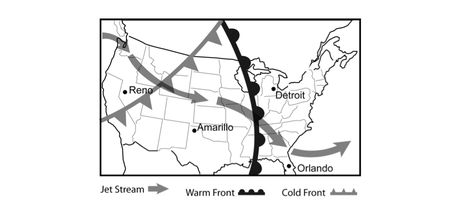
Take the Atmospheric Circulation quiz today and get educated about Jet Streams! Learn about weather patterns and atmosphere!
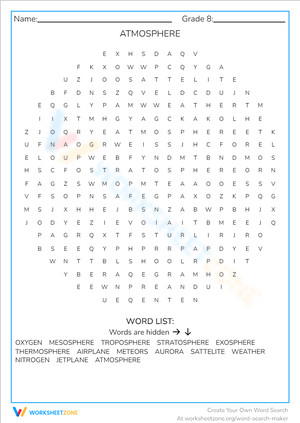
Explore Earth's atmosphere with this word search! Find layers like the troposphere & more. Great science activity for grades 4-6!
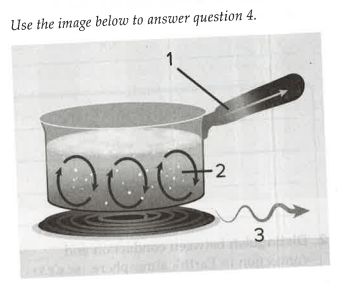
What do the arrows on the image of Earth indicate: Coriolis effect. What causes the movement of wind and water to the right or left on Earth: Earth's rotation. Which does NOT affect the direction of currents: water depth. What happens when cold, salty water sinks: Density currents are produced. Where do the densest ocean currents usually form: in polar regions. What type of vertical circulation current brings deep, cold water to the ocean surface: upwelling. Look at the image. What is the name of the nighttime circulation shown: land breeze. What is the primary cause of global wind patterns on Earth: uneven heating of Earth's surface. Which is a narrow band of high winds located near the top of the troposphere: jet stream. In the picture,trade winds in the northern hemisphere are located between which latitudes: between 0° and 30°. The amount of energy an area receives depends largely on: the Sun's angle. How does thermal energy move between objects: . Which gas is NOT an efficient greenhouse gas: helium. How is energy transferred when objects are in contact: conduction. In the image,what type of heat transfer is represented by number 2: convection. In what form does most solar radiation reach Earth: visible light. Which statement best explains why different areas of the Earth have different amounts of heat energy: The Earth receives different amounts of solar energy in different regions.. What causes wind: air flowing from a high pressure area to a low pressure area. Heat from the surface is transferred underground by which process: conduction. The method of heat transfer that plays a central role in transferring heat energy within the atmosphere and the ocean is: convection. Convection currents, resulting from uneven heating of the Earth's surface, cause _______ to form: wind. The atmosphere flows in large convection currents. What happens during atmospheric convection: Warm air rises, and cool air sinks.. During the day, when the Sun is shining, the ground gets warm mainly as a result of..: radiated heat from the Sun being absorbed by the ground.. The trade winds are winds that blow toward the Equator. Which of these is the main cause of the trade winds: differences in air pressure. At night in coastal regions, land breezes often develop. Which of these best explains why they develop: The land cools down more quickly than the ocean.
Identify layers of the atmosphere with this science worksheet! Ideal for learning about earth science and layers. Download now to test your knowledge!
Learn Dalton's Law with this partial pressure practice problems worksheet. Improve your chemistry skills today. Get started now!
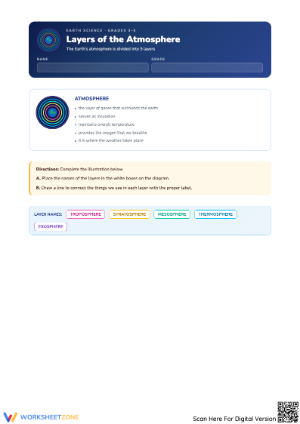
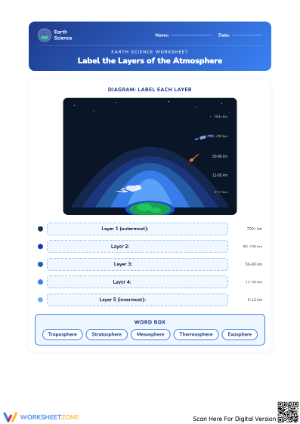
Label the atmosphere layers! This worksheet helps students learn about the troposphere, stratosphere, and more. Perfect for Earth science lessons!
Test your knowledge of atmospheric circulation with this interactive quiz!
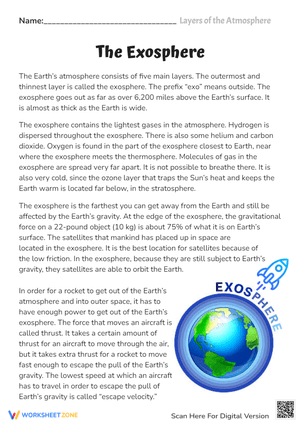
Explore the Exosphere, Earth's outermost layer, with this engaging worksheet! Download now to learn about its properties and significance for space!
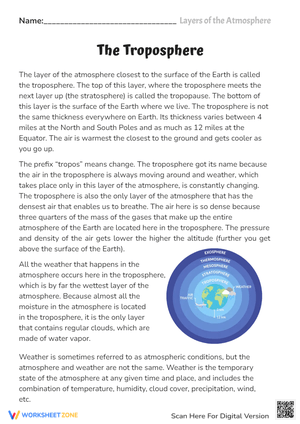
Get to know about layers of the atmosphere with the troposphere by complete all the reading comprehension questions in this engaging worksheet.
Explore atmosphere layers with this worksheet! Perfect for earth science students to learn about troposphere and stratosphere. Download to expand your knowledge!
Get to know about the important roles played by Earth's atmosphere by complete all the reading comprehension questions in this engaging worksheet.
Explore 'The Layer of Atmosphere' with this science worksheet! Ideal for earth science students. Expand your knowledge of the earth science now!
Find perfect worksheets
Grade + Topic search
Select your Grade level, Topic and Subject to find worksheets instantly or you can use keyword below to search what you need.
Make your own worksheets