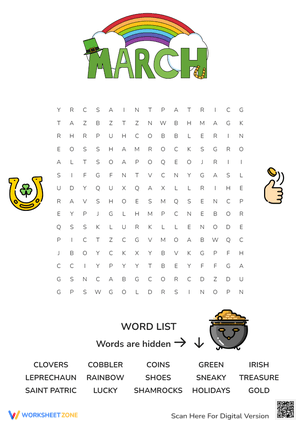
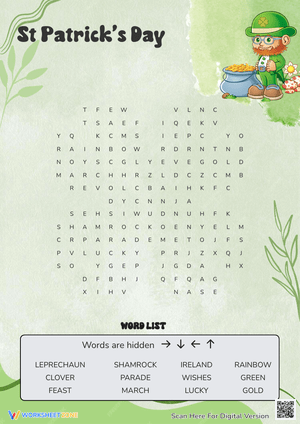
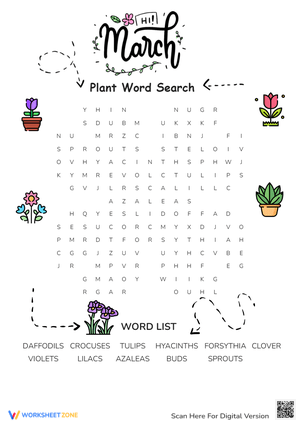
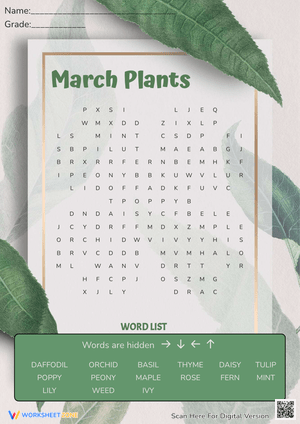
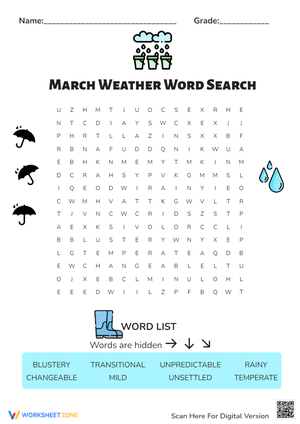
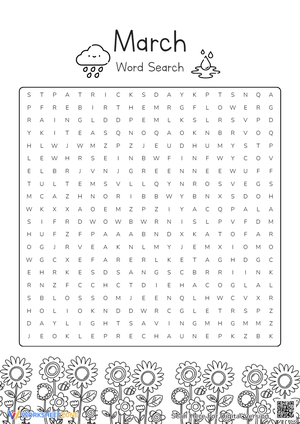
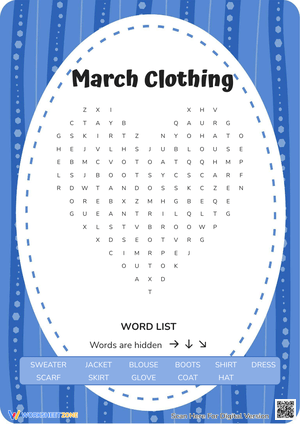
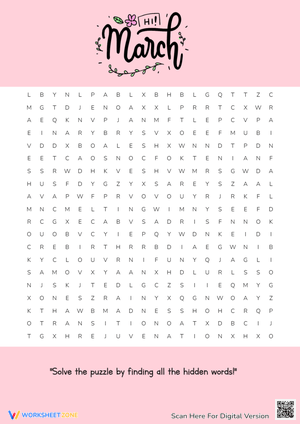
March word search puzzles offer a unique opportunity for students to connect with the themes and vocabulary of this transitional month. As winter gives way to spring, classrooms and homes fill with talk of changing weather, St. Patrick's Day traditions, and the arrival of longer days. Placing these topics into a puzzle format lets learners engage with new terms in a way that feels more like play than study, helping them retain spelling patterns and build confidence with seasonal language.
Teachers often find that these seasonal activities serve as an effective warm-up or cool-down exercise during the school day. When students scan rows and columns of letters for hidden words, they practice visual discrimination, pattern recognition, and focused attention. These skills carry over into reading comprehension and writing tasks, making word searches a practical addition to any literacy-based lesson plan. Pairing a puzzle with a short discussion about each discovered word can deepen understanding and spark curiosity about topics like weather cycles, cultural celebrations, and nature.
Parents looking for screen-time alternatives at home will appreciate how printable March puzzle pages keep children occupied while reinforcing what they learn in school. A puzzle placed on the kitchen table after dinner or tucked into a weekend activity folder gives kids a quiet challenge that strengthens their vocabulary. Homeschooling families can also weave these puzzles into broader unit studies about spring, geography, or holidays observed during the month.
For educators who want to take word puzzles a step further, Worksheetzone provides resources that explain how to create custom worksheets tailored to any subject or grade level. Designing a puzzle around a specific word list gives teachers full control over difficulty and content, ensuring every student receives an appropriately challenging activity.
Whether used as a standalone exercise or integrated into a larger curriculum unit, March word search puzzles remain a reliable tool for building vocabulary, encouraging independent work, and celebrating the energy of a new season in the classroom or at home.
Frequently Asked Questions
Question 1: What vocabulary themes work best in a seasonal word search?
Seasonal transitions, St. Patrick's Day traditions, weather patterns, and early spring nature terms all make strong theme choices. Mixing categories within a single puzzle keeps students curious and exposes them to a wider range of vocabulary. Teachers can align word lists with current classroom units for added relevance.
Question 2: Which grade levels benefit most from these puzzles?
Students from kindergarten through fifth grade gain the most from these activities. Younger learners practice letter recognition and simple spelling, while older students tackle longer words and more complex grid layouts. Adjusting the grid size and word count lets educators match difficulty to each age group.
Question 3: How can parents use these puzzles at home?
Parents can print a puzzle and place it on the table during quiet time or after meals. Working through the grid together becomes a low-pressure bonding activity that still reinforces spelling and focus. Completed puzzles also make a satisfying visual record of words a child has learned.
Question 4: How do March word search activities support reading development?
Scanning letter grids strengthens visual tracking and pattern recognition, two skills essential for fluent reading. Students also internalize correct spelling by repeatedly encountering each word in the grid. These March word search exercises build automatic word recognition that transfers directly to independent reading tasks.












 Interactive Worksheet Maker
 Quiz Maker
 Word Search Maker
 Crossword Puzzle Maker
 Word Scramble Generator
 Sentence Scramble Generator
 Handwriting Worksheet Generator
 Name Tracing Generator
 Fill In The Blank Generator




 BACK TOSCHOOL