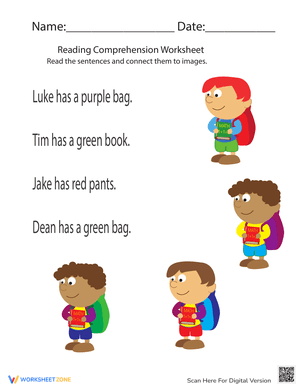
Why these kindergarten leveled reading worksheets fit real classroom practice
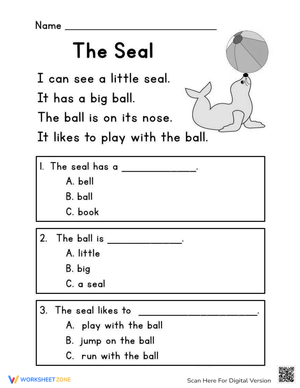
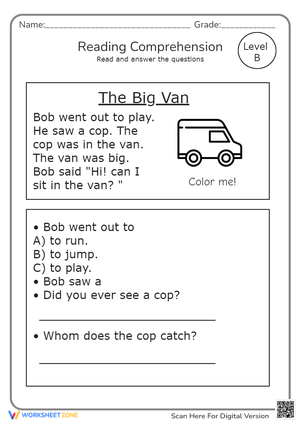
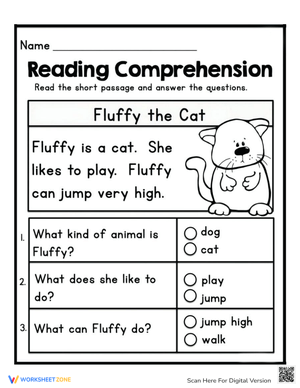
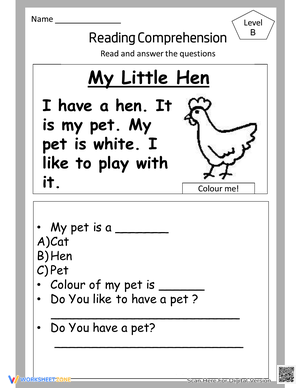
Kindergarten leveled reading multiple choice worksheets pdf sets work best when they match what teachers already do during small-group reading, literacy centers, and quick comprehension checks. At this stage, students are still learning how print works, how to track left to right, and how to connect simple words to meaning. A worksheet is not replacing read-alouds or guided reading. It is giving teachers one more structured way to see whether a child can read a short emergent text, hold onto a key detail, and choose an answer without needing to write a full sentence.
That combination matters in kindergarten because reading growth is uneven across a class. Some students are just identifying high-frequency words and using pictures to confirm meaning. Others are ready for short patterned passages and direct recall questions. Leveled printable pages help teachers place the right text in front of each group, while multiple choice keeps the response load low enough for early readers to show what they understand.
What leveled reading means in kindergarten
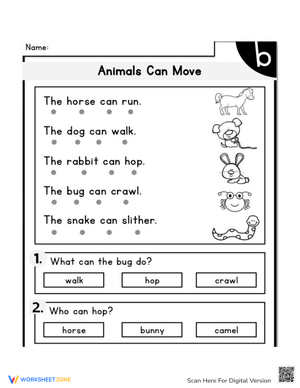
In kindergarten, leveled reading usually means emergent-reader text with very short sentences, controlled vocabulary, predictable patterns, and picture support. The goal is to build confidence while students practice one or two reading behaviors at a time. A strong level progression lets a teacher move from repeated sentence frames to slightly more varied lines once students can track print and recognize enough words to keep meaning together.
That is why leveled reading worksheets should not all look identical. One set may focus on naming common objects, another on simple actions, and another on very short narratives with a beginning and end. For a kindergarten reader, that progression is meaningful because it helps teachers decide whether a student needs more support with concept of word, sight words, or understanding a complete but very small text.
According to the Common Core State Standards Initiative English Language Arts Standards, kindergarten reading development includes print concepts, phonological awareness, basic phonics, and reading emergent texts with purpose and understanding. When teachers choose leveled worksheets with those expectations in mind, the printable becomes a targeted checkpoint inside a broader early literacy plan.
Why multiple choice is useful before students can write about reading
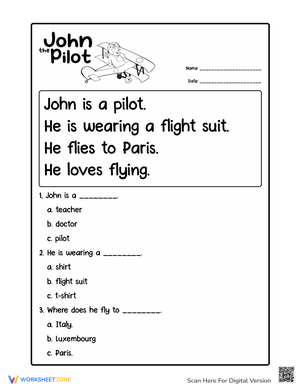
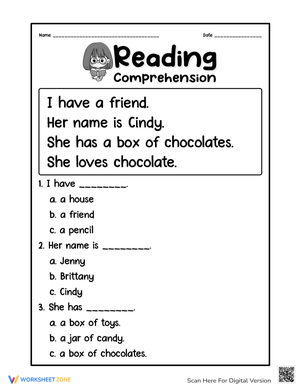
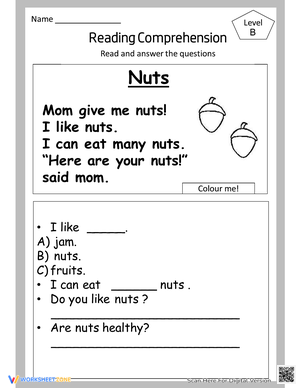
Multiple choice is appropriate in kindergarten when the questions stay concrete. The most useful questions ask students to recall who or what the text is about, identify a key action, match a sentence to the best picture, or choose the detail that belongs in the story. That gives teachers a clean read on comprehension without adding handwriting, spelling, or sentence construction as extra barriers.
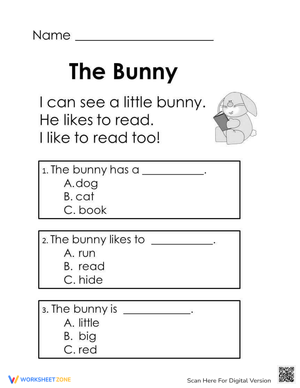
This is especially helpful for students who can understand more than they can explain in writing. A child may successfully read a four-sentence passage and know that the character saw a dog, but not yet have the writing stamina to record the answer independently. A well-made multiple choice format keeps the assessment aligned to the reading task rather than to fine-motor endurance.
Which early literacy skills these PDFs can reinforce
The best kindergarten leveled reading multiple choice worksheets pdf collections reinforce more than one foundational skill at once. A short passage can support print tracking, one-to-one matching, and recognition of familiar sight words while also asking students to show understanding of the whole text. That layered practice is one reason teachers often keep printable comprehension pages in their center rotation.
- Print concepts: Students follow text in order and learn that words on the page carry the message.
- Basic phonics and word recognition: Short, predictable text gives readers repeated exposure to decodable or highly familiar words.
- Meaning making: Simple answer choices ask students to return to what the text actually says.
- Vocabulary confirmation: Picture-supported items help readers connect a spoken or printed word to its meaning.
- Fluency routines: Re-reading the same short passage supports smoother oral reading over time.
Teachers can also vary delivery across groups. One group may read the passage chorally before answering, while another whisper-reads independently. Because the worksheet stays stable, the teacher can adjust support without rewriting the task each time.
Classroom Implementation
These printables are most effective when they are used with a clear routine. In whole-class settings, a teacher might model how to read the title, sweep under each sentence, and eliminate answer choices that do not match the text. In small groups, the same page can become a guided practice tool, with students reading one line at a time and explaining which answer is correct. For independent work, the worksheet should be at a level where students can complete the reading with confidence and use pictures or predictable language as support.
A practical weekly pattern is to use one page for first-read instruction, then bring it back for a second read during centers or homework. That repetition improves fluency and helps teachers see whether comprehension becomes more accurate after the text is familiar. PDFs are especially useful here because the format stays consistent across copies, intervention folders, and take-home packets.
One of the biggest benefits of leveled multiple choice pages is that they reduce false negatives during assessment. A student may miss an open-ended response because of handwriting, stamina, or oral language demands, yet answer the same comprehension question correctly when given two or three clear options. For kindergarten teachers, that distinction matters because it separates reading understanding from output difficulty and leads to cleaner grouping decisions.
For centers, keep the directions identical across the set so students are not re-learning the task each time. For intervention, pull only the pages that match the child's current reading behaviors. For homework, choose pages with simple layouts so adults at home can support practice without having to interpret a complex routine.
What to look for in a strong worksheet set
Not every printable page supports early reading equally well. The strongest sets use short text, uncluttered formatting, and answer choices that are genuinely tied to the passage. If the choices are too wordy, too similar, or disconnected from what the student read, the worksheet stops measuring comprehension and starts measuring guessing tolerance. Teachers should also check whether the level progression is visible enough to sort pages into review, on-level practice, and stretch work.
Look for passages that sound like emergent reading rather than mini versions of upper-grade comprehension. Kindergarten readers need sentence patterns they can manage, not dense paragraphs with abstract vocabulary. The worksheet should make it easy to identify the instructional purpose of the page: sight word review, print tracking, early story understanding, or direct detail recall.
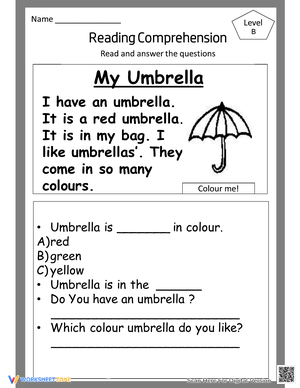
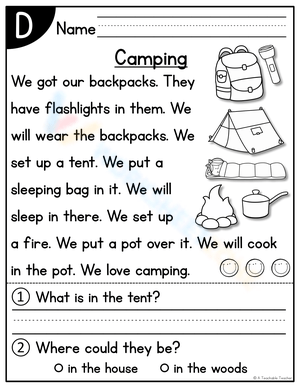
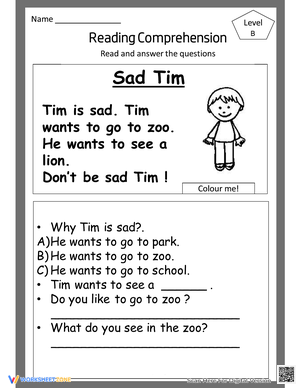
Citation capsule: K5 Learning's kindergarten reading comprehension collection describes free worksheets built around short reading passages, and its "Bob's Pets" example is labeled a Level A story with comprehension follow-up. That matters for teachers because it shows how very early texts can pair controlled reading demand with a simple understanding check.
How these worksheets support standards-aligned instruction
Teachers often need printable materials that fit classroom routines without drifting away from standards-based instruction. For kindergarten reading, that means the worksheet should still connect to print concepts, foundational word-reading behaviors, and understanding of emergent texts. When the passage is brief and the comprehension question is direct, the activity can support those goals without overreaching.
The key is alignment by design, not by label. A standards-aware worksheet gives students a readable text, expects them to attend to words and meaning, and asks for a response that is developmentally appropriate. That is a better fit for kindergarten than a page packed with abstract comprehension language. It also supports formative assessment because the teacher can look at student choices and quickly decide whether to reteach decoding, reread for meaning, or move the group forward.
Frequently Asked Questions
1. What does leveled reading mean for kindergarten worksheets?
It means the text is matched to early reading development. Kindergarten leveled worksheets usually use short sentences, predictable language, and picture support so students can practice reading with understanding at an appropriate level.
2. Are multiple choice reading worksheets appropriate for kindergarten students?
Yes, when the questions are simple and text-based. Multiple choice works well for direct recall, matching meaning, and choosing the best answer from a small set, especially for students who are not ready to write full responses.
3. How can teachers choose the right reading level?
Start with whether the student can track the print, recognize enough words to keep meaning together, and answer a direct question without heavy prompting. If the page causes guessing on most words, move to an easier text. If the student reads it smoothly and answers easily, move up gradually.
4. Do these worksheets support Common Core early reading skills?
They can, especially when they reinforce print concepts, basic phonics, sight word recognition, and reading emergent texts with understanding. The best pages support classroom instruction by checking comprehension in a way that fits kindergarten readers.












 Interactive Worksheet Maker
 Quiz Maker
 Word Search Maker
 Crossword Puzzle Maker
 Word Scramble Generator
 Sentence Scramble Generator
 Handwriting Worksheet Generator
 Name Tracing Generator
 Fill In The Blank Generator