Kindergarten Cause And Effect Worksheets With Picture Clues
Helping children understand why things happen and what comes next is an important part of early learning. Kindergarten cause and effect worksheets give parents and teachers a simple, structured way to introduce this thinking skill to young learners. Instead of using abstract explanations, these activities focus on familiar situations, such as spilling water, planting a seed, forgetting an umbrella, or sharing a toy. This helps children see that one event can lead to another in a way that feels natural and easy to understand.
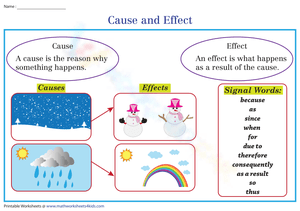
For kindergartners, cause and effect learning works best when it begins with pictures and everyday examples. A child might look at a picture of a broken crayon and explain what may have caused it. Another activity might show a rainy day and ask students what happens next. These simple tasks help children connect actions with outcomes while building vocabulary, observation skills, and early reasoning. As students grow more confident, they can move from picture matching to short sentence responses.
At Worksheetzone, kindergarten cause and effect worksheets are designed to support early childhood learning through clear visuals, simple prompts, and age-appropriate scenarios. Students practice identifying relationships between events, which can strengthen reading comprehension, logical thinking, and classroom discussion skills. Pairing these activities with read-aloud stories or group conversations can make the concept even clearer. For students who are ready to explore this skill in writing, the collection of cause and effect writing worksheets offers additional practice.
Cause and effect practice can also fit naturally into home and classroom routines. Parents can ask simple questions during daily life, such as “What happened because we watered the plant?” or “Why did the floor get wet?” Teachers can use these worksheets during literacy centers, small-group lessons, morning work, or story discussions. For more ideas on how cause and effect can support writing and reasoning, the guide on cause and effect essay topics can help teachers adapt broader concepts into early-grade conversations. Every child who learns to ask “why did that happen?” is building a skill that supports reading, science, problem-solving, and communication.
Frequently Asked Questions
Question 1: What skills do kindergarten cause and effect worksheets help develop?
Kindergarten cause and effect worksheets help children build early critical thinking by showing how one event can lead to another. Students practice identifying what happened first, what happened next, and why the two events are connected. This supports reading comprehension, logical reasoning, sequencing, vocabulary development, and verbal explanation. These skills are useful not only in literacy lessons but also in science, social-emotional learning, and everyday problem-solving.
Question 2: How can parents use cause and effect worksheets effectively at home?
Parents can use these worksheets during short, relaxed learning sessions. The key is to connect the activity to real-life examples the child already understands. For example, after completing a worksheet about a spilled cup, parents can ask, “What caused the spill?” or “What happened after the cup fell?” Encouraging children to explain their thinking out loud helps them build confidence, language skills, and a stronger understanding of cause and effect relationships.
Question 3: Are kindergarten cause and effect worksheets suitable for different learning levels?
Yes. Kindergarten learners develop at different speeds, so cause and effect worksheets can include a range of activity types. Picture-based matching works well for children who are not yet writing independently, while sentence completion and short-answer prompts can support students who are ready for more challenge. Teachers can begin with simple visual examples, then gradually introduce more detailed scenarios as students become more comfortable explaining their reasoning.
Question 4: How do cause and effect worksheets support early literacy learning?
Cause and effect is an important reading comprehension skill because stories and informational texts often show how events are connected. When children understand that one action can lead to a result, they become better at following story events, making predictions, and explaining character actions. In kindergarten, practicing this skill with simple worksheets helps students prepare for deeper reading discussions in later grades while keeping the learning clear and age-appropriate.