Preschool: Concepts of Print PDF Worksheets for Small-Group Reading and Literacy Centers
Kindergarten concepts of print worksheets support the earliest reading routines
Kindergarten concepts of print pdf worksheets are most useful when teachers need a fast way to teach the behaviors that happen before fluent reading starts. At this stage, students are learning that print carries meaning, that books have a front and back, that pages turn in a sequence, and that words move across a page in an expected direction. Those routines sound simple, but they shape how children approach every read-aloud, shared text, decodable passage, and sentence strip that comes later in the year.
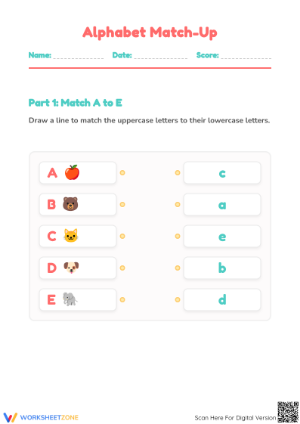
On Worksheetzone, printable activities for concepts of print fit well into the kindergarten reading block because they give students something concrete to point to, circle, match, and discuss. That matters in classrooms where young learners still need guided practice finding the first word on a line, noticing the spaces between words, or following print from left to right. Instead of treating print awareness as a separate skill, teachers can use these pages to reinforce how books and text work during literacy centers, morning work, and short intervention groups.
What kindergarten students should practice in concepts of print
The strongest concepts of print practice keeps the focus narrow and observable. Teachers are not asking students to decode everything on a page yet. They are checking whether children understand the structure of print well enough to participate in reading instruction with confidence. In kindergarten, that usually means practicing a short set of foundational behaviors again and again until they become automatic.
- Book handling: identifying the front cover, back cover, title area, and where reading begins.
- Directionality: showing that print moves left to right and top to bottom.
- Word awareness: distinguishing letters from words and sentences.
- Tracking: pointing to each spoken word one time while following a simple line of text.
- Spacing: noticing that words are separated by visible spaces.
Those skills match the classroom needs described in early literacy guidance from the Victorian Department of Education and Reading Rockets, both of which emphasize that children benefit from explicit attention to how print works. For a kindergarten teacher, that means worksheet tasks should stay concrete. A child can circle where to start reading, draw a line under a sentence, or point to the last word they hear. Each response gives immediate evidence about whether the concept is secure or still developing.
What to look for in printable PDF worksheets
Not every printable page supports print awareness equally well. For this topic, the best PDFs avoid clutter and keep the visual demand light so students can focus on the print convention being taught. A worksheet that asks a child to identify a word should not overwhelm them with long passages, dense directions, or too many competing images. Clear spacing, large print, and short tasks matter more than decorative design.
Teachers usually get the most value from kindergarten concepts of print pdf worksheets when the set includes a range of task types. Some pages should be suitable for whole-group modeling under a document camera. Others should work independently in literacy tubs or as a quick check at the teacher table. Variation helps because concepts of print are learned through repetition, but the repetition needs fresh formats to hold student attention.
- Pages that ask students to mark where reading starts.
- Simple sentence strips for one-to-one word tracking.
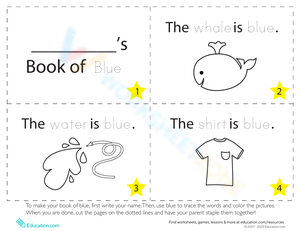
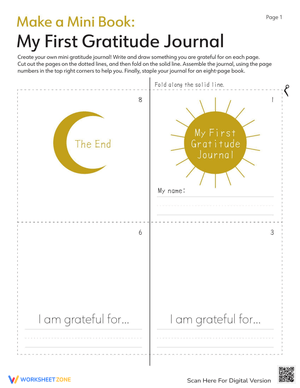
- Book-part identification tasks using covers and pages.
- Letter, word, and sentence sorting activities.
- Short printable checks that can go home for extra practice.
Classroom Implementation
These worksheets work best when they are attached to live reading experiences rather than assigned in isolation. A practical routine is to model the concept during read-aloud, guide it with a short shared text, and then send students to a printable task that mirrors the same action. If the class just practiced sweeping a finger under each word in a patterned sentence, the independent page should ask students to track a similar line, not jump to a completely different skill.
In centers, teachers can rotate concepts of print pages across the week so each station feels purposeful. Monday might focus on where to begin reading. Tuesday might shift to distinguishing a word from a letter. Wednesday can target tracking and spacing. By Thursday or Friday, a teacher can review the same skills in a mixed-practice page and quickly see which students still need reteaching.
For small-group intervention, keep the worksheet short and verbal. Ask students to explain what they are pointing to and why. That talk is often more revealing than the mark on the page. A child who circles a sentence correctly but cannot explain what makes it a sentence may still need more supported instruction. For take-home use, choose pages with a single clear direction so families can help without turning the activity into a guessing game.
Use worksheet evidence to plan next instructional moves
Concepts of print worksheets are not only practice tools. They can also act as fast formative checks. If several students consistently start reading on the wrong side of the page, the class needs more modeling on directionality. If students can identify words in isolation but lose one-to-one matching when text is read aloud, the next lesson should include more guided tracking with teacher support. The point is not to collect a large stack of completed pages. The point is to notice patterns and adjust instruction while the skill is still forming.
A useful kindergarten pattern is to separate print-awareness errors into two buckets: orientation errors and unit-of-language errors. Orientation errors show up when a child does not know where print starts or which way it moves. Unit-of-language errors appear when a child confuses a letter, word, and sentence. That distinction helps teachers intervene faster because each bucket calls for different modeling, even when the worksheet itself looks similar.
That kind of analysis also makes differentiation easier. Students with orientation errors often benefit from repeated teacher demonstration using big books, charts, and finger sweeps. Students with unit-of-language errors may need more sorting, cut-and-paste style classification, or oral discussion about what counts as one word. A well-chosen printable page gives a record of the mistake, but the teacher's interpretation is what turns the page into instruction.
Why this early literacy work matters beyond the worksheet
Concepts of print may look like a narrow slice of kindergarten literacy, but they influence how smoothly students enter phonics, sentence reading, and comprehension work. When children already know how to hold a book, where to begin, and how spoken words match printed words, they can devote more attention to sound-symbol relationships and meaning. That is why these worksheets should be viewed as support for the reading system, not as stand-alone busy work.
Reading Rockets describes print awareness as understanding how print works and highlights actions such as following words left to right and turning pages correctly. For classroom planning, that points to 3 high-value routines to teach directly: book handling, directionality, and one-to-one tracking.
The Victorian Department of Education also frames concepts of print as understanding that print carries meaning and follows conventions. That guidance fits the kindergarten classroom well because strong worksheet tasks make those conventions visible. Students can point to a title area, identify a sentence boundary, or track a short line of text while the teacher listens for the language they use. Over time, those repeated routines make reading instruction more efficient because fewer students are confused by the format of print itself.
Using printable concepts of print pages for home-school connection
For home-school use, choose worksheets that encourage pointing, circling, and naming rather than heavy writing. Families can ask direct questions such as, Where do you start reading? Can you show me one word? Which way do your eyes move? Those prompts keep the focus on print awareness and make it easier for teachers to trust that the page reflects the student's current understanding.
Sending home a small sequence also helps. One page on book parts, one on directionality, and one on word tracking is often enough. Teachers do not need a large packet. They need consistent practice on the same few concepts that prepare students to participate successfully in daily reading lessons.
Frequently Asked Questions
1. What are concepts of print for kindergarten?
In kindergarten, concepts of print means understanding how books and written language work. Students learn that print carries meaning, pages follow an order, reading starts in a specific place, words move left to right, and spaces separate one word from the next.
2. How do concepts of print worksheets help early readers?
They turn abstract reading behaviors into visible tasks. Students can point, circle, track, and identify parts of text, which gives teachers a simple way to model the skill and check whether children can apply it independently.
3. What skills should a kindergarten print-awareness worksheet include?
Look for book handling, directionality, one-to-one word tracking, and tasks that help students distinguish letters, words, and sentences. Short activities with large print and clear spacing usually work best for this age group.
4. Can teachers use concepts of print PDF printables at home too?
Yes. Printable pages are useful for take-home review when the directions are brief and the task matches classroom instruction. Families can support by asking students to show where reading starts, track each word, or identify a complete sentence.
Clear All