Use Grade 7 CER Practice for Faster Reading Response Prep
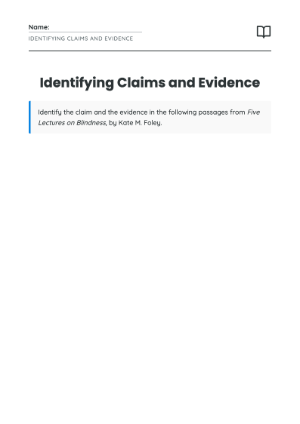
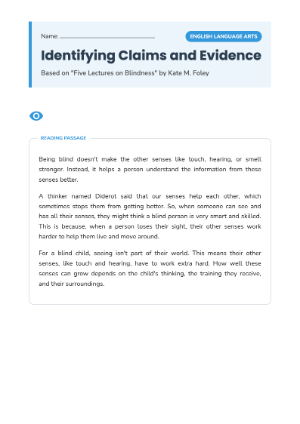
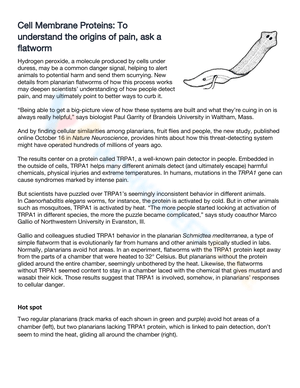
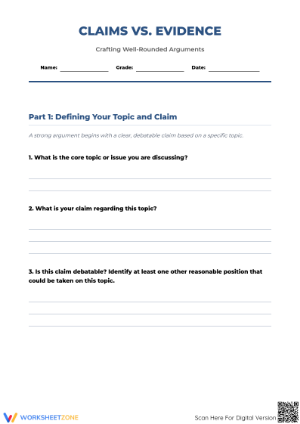
When teachers search for 7th grade claim evidence reasoning fill in the blank worksheets pdf, they usually need something practical for tomorrow's lesson, not a long planning project. This Worksheetzone collection is built for that moment. The page focuses on Grade 7 English Language Arts reading practice and uses a fill-in-the-blank format that helps students move through claim, evidence, and reasoning in a visible sequence.
That matters in middle school because many students can spot a strong sentence in a passage but still struggle to explain why it supports an answer. A structured worksheet closes that gap. Instead of asking students to write a full paragraph immediately, it lets them complete one part at a time: identify the claim, select or record evidence, and finish the reasoning that connects the two.
For teachers, that structure is efficient. It works in core instruction, intervention blocks, independent practice, and quick reteach sessions before a larger argument or literary analysis task.
Why Fill-in-the-Blank CER Worksheets Work in Seventh Grade
Seventh graders are old enough to discuss author claims, implied ideas, and relevant evidence, but many still need sentence-level support before they can produce clear written analysis on demand. Fill-in-the-blank CER worksheets reduce the writing load just enough to keep the focus on thinking. Students are not guessing what the paragraph should look like; they are practicing the logic inside it.
That makes these pages useful for several classroom situations:
- Bell ringers that review yesterday's reading skill in under 10 minutes.
- Small-group intervention when students need more support with evidence selection.
- Homework that reinforces argument analysis without assigning a full essay.
- Test-prep review before students move into open response questions.
- Exit tickets that show whether students can connect a text detail back to a claim.
Because the blanks narrow the task, teachers can check accuracy quickly. You can scan for whether students identified the correct claim, whether the evidence is relevant, and whether the reasoning actually explains the relationship instead of repeating the evidence.
What Students Practice With Claim, Evidence, and Reasoning
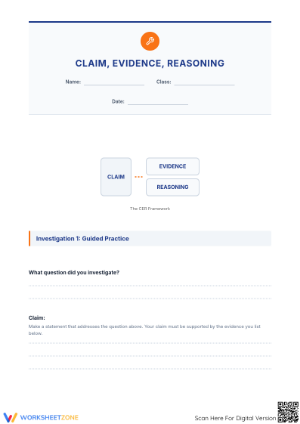
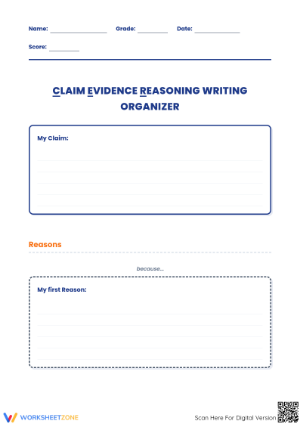
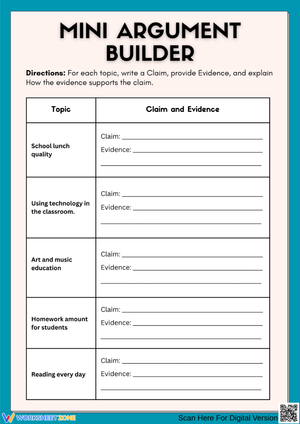
CER stands for claim, evidence, and reasoning. In Grade 7 reading, that often means students read a short text or excerpt, decide what answer or interpretation is best supported, cite a text detail, and explain how that detail proves the point. The Worksheetzone collection is especially useful when you want students to rehearse that progression many times across a week instead of saving it for one extended writing assignment.
Students using these worksheets typically practice four linked moves:
- Identifying the claim or answer the response needs to prove.
- Choosing evidence that is relevant rather than merely interesting.
- Explaining reasoning in a complete thought instead of copying the passage.
- Recognizing how claim, evidence, and reasoning work together in academic writing.
One useful pattern in seventh-grade classrooms is to treat the reasoning blank as the true checkpoint, not the evidence blank. Students often locate a quote or detail correctly, but the reasoning sentence reveals whether they understand how the evidence functions. When that final blank is weak, the issue is usually analysis, not comprehension, and that distinction helps teachers plan the next mini-lesson.
This is also why fill-in-the-blank CER tasks work well before discussion. If students complete the claim and evidence first, partner talk can focus on comparing reasoning statements. That raises the level of conversation because students are debating interpretation, not just hunting for lines in the text.
Standards-Facing Support for Argument and Evidence Analysis
The page sits in Grade 7 English Language Arts reading, so its value is tied to grade-level expectations around tracing claims, checking reasons, and evaluating evidence. Teachers looking for alignment can use these worksheets as a scaffold before independent written analysis, especially when students need repeated practice with how arguments are built and tested in nonfiction and literary response.
The Common Core State Standards for English Language Arts provide a helpful anchor here.
Citation capsule: The Common Core State Standards for English Language Arts state that grade 7 students should trace and evaluate arguments and specific claims, assessing whether reasoning is sound and evidence is relevant and sufficient. That grade-level expectation makes CER practice a direct reading support, not an add-on activity.
That alignment matters for planning because it keeps the worksheet from becoming a disconnected skill drill. Used well, a CER fill-in-the-blank page prepares students for the work that comes next: written responses, discussion tasks, close reading questions, and text-based argument writing that expects more independence.
Classroom Implementation
If you want these printable PDFs to do more than fill time, use them in a short sequence. Start with teacher modeling on day one, move into guided pairs on day two, and assign independent completion on day three. That progression helps students internalize the routine while still giving you chances to correct weak reasoning before it becomes a habit.
A simple implementation plan can look like this:
- Warm-up: project one CER item and complete the claim together.
- Guided practice: ask students to select evidence with a partner and defend their choice.
- Independent check: have students complete the reasoning blank on their own.
- Review: compare two reasoning responses and discuss which one best explains the evidence.
These worksheets also fit well in intervention groups. If students struggle with long written output, the fill-in-the-blank format lowers the barrier without lowering the thinking demand. Teachers can then isolate the specific issue: weak claim selection, vague evidence, or reasoning that doesn't explain cause, significance, or relevance.
For mixed-readiness classes, the same worksheet can support differentiation. Some students can complete every blank independently. Others can receive a partially completed claim or a short evidence bank. That keeps everyone on the same core skill while adjusting the amount of support.
What to Look for in a Printable CER PDF Set
Not every CER worksheet solves the same problem. Teachers usually get the best results when the page is clear, printable, and focused on a single reading move. For Grade 7, the strongest worksheet sets balance structure with enough open space for student thinking.
When reviewing a printable set, look for features like these:
- Clear separation between the claim, evidence, and reasoning parts.
- Prompts that ask for text-based support instead of opinion alone.
- A layout that works for quick copying, sub plans, and homework packets.
- Tasks that can be completed in one class segment or combined into a review set.
- Language appropriate for middle school readers and writers.
The Worksheetzone grade-level collections help because teachers can stay inside the same skill family while choosing formats that match the lesson. If one group needs fill-in-the-blank support and another is ready for less scaffolding, you can keep the instructional target steady while changing the level of structure.
Why This Worksheet Hub Fits Planning, Reteach, and Review
A focused worksheet hub is useful because it saves sorting time. Teachers searching for a 7th grade claim evidence reasoning fill in the blank worksheets pdf are often planning across several needs at once: an opening routine, a homework page, and a quick reteach tool before a unit assessment. A filtered collection makes that easier by keeping the grade, subject, and worksheet format consistent.
That consistency is especially helpful during pacing crunches. If students are close to mastery, one short CER page may be enough to confirm readiness. If they are still mixing up evidence and explanation, you can assign multiple short rounds across the week without redesigning the skill target each day.
In other words, the value is not only that the worksheets are printable. The value is that they give teachers a repeatable routine for argument-reading practice in Grade 7 ELA. Repetition with a stable structure often leads to cleaner student explanations, faster feedback, and more accurate formative assessment.
Frequently Asked Questions
1. What is claim evidence reasoning in 7th grade ELA?
In seventh-grade ELA, claim evidence reasoning is a response structure students use to answer a question or support an interpretation. They state the claim, cite relevant evidence from the text, and explain how that evidence proves the point.
2. How can teachers use fill-in-the-blank CER worksheets in class?
Teachers can use them for bell ringers, guided reading follow-up, intervention groups, homework, and exit tickets. The fill-in-the-blank format works well when students need support organizing analysis before moving into independent paragraph writing.
3. Are these 7th grade CER worksheets available as printable PDFs?
Yes. This Worksheetzone page is positioned as a printable Grade 7 CER worksheet hub, making it useful when teachers need PDF-ready practice for classroom review, sub plans, or take-home assignments.
4. What skills do students practice with claim-evidence-reasoning worksheets?
Students practice identifying claims, selecting relevant text evidence, and writing reasoning that clearly connects support to the answer. They also build stronger habits for argument analysis, close reading, and text-based written responses.












 Interactive Worksheet Maker
 Quiz Maker
 Word Search Maker
 Crossword Puzzle Maker
 Word Scramble Generator
 Sentence Scramble Generator
 Handwriting Worksheet Generator
 Name Tracing Generator
 Fill In The Blank Generator