6th Grade Grid Drawing PDF Worksheets for Art Class
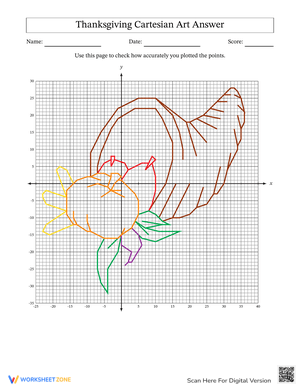
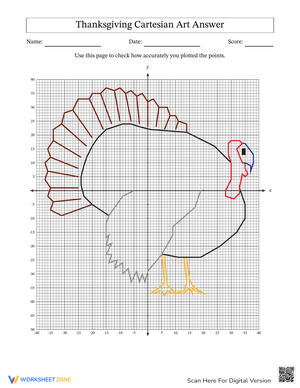
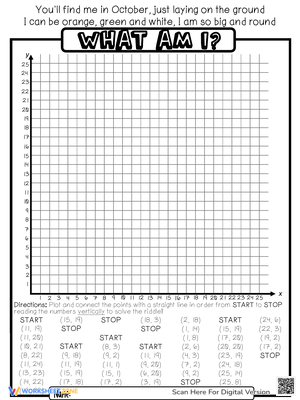
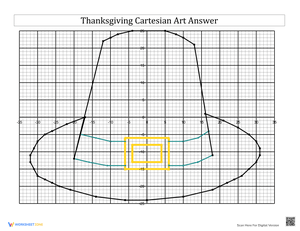
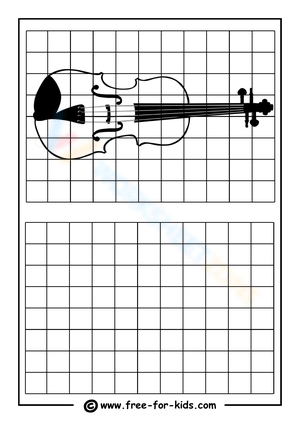
6th grade grid drawing pdf worksheets give art teachers a reliable entry point into observational drawing — one that works even with students who insist they can't draw. Each worksheet pairs a printed reference image with a blank transfer grid, and the structure carries most of the instruction: students focus on one square at a time, study how a line enters and exits, and start treating proportion as something measurable rather than a feeling.
The Skills These Worksheets Target
Grid drawing at this level does more than teach copying. Because students work square by square, they practice specific observation habits that carry over into freehand drawing later in the year:
- Proportion: Students learn to ask whether a shape fills a full square, takes up a third, or just clips a corner — measurement thinking that is hard to teach through explanation alone.
- Placement accuracy: The grid gives students an informal coordinate system, so they can anchor features to specific zones rather than placing them by feel.
- Contour line control: Tracking where a line enters and exits each square forces students to notice curves and direction changes they would otherwise gloss over.
- Observational habit: At this grade level, students often default to drawing what they know a face or animal looks like rather than what they actually see. The square-by-square constraint interrupts that symbolic drawing habit directly.
- Pencil control: Working in small sections slows students down and gives them better physical command of the line.
The Drawing Errors Most Likely to Appear in Student Work
The most consistent mistake is miscount drift. A student who begins drawing in column 3 when the line actually starts in column 4 ends up with every feature shifted over by an entire square — a distorted drawing they often can't diagnose on their own. Teaching students to label columns with light pencil letters before starting (A, B, C across the top row) nearly eliminates this problem and takes about thirty seconds.
Line pressure is the second pattern worth catching early. Many 6th graders darken lines before they have checked placement across the full grid. Once those marks are pressed into the paper, corrections leave visible ghost lines that frustrate students and make the drawing harder to finish with confidence. Showing the light-sketch-first, darken-second sequence explicitly under a document camera does more than any verbal reminder — students need to see it happen in real time.
A third issue is the rush to recognize shapes. Students want to see the image take form and start drawing familiar features — an eye, a jaw line, a distinctive silhouette — rather than the abstract marks inside each individual square. Having students work the first few squares with the reference turned upside down forces them to treat the marks as shapes rather than named parts, which is the core observational habit the method builds.
When and How to Use These Worksheets in Your Art Room
The most common use is a full studio task: one or two class periods for the transfer, then a third session to add shading, color, or paint. That sequence works well. But these worksheets also fit shorter windows in ways that add up over several weeks.
Used as a bell ringer, completing one or two squares in the 6 to 8 minutes before formal instruction begins gives students purposeful warm-up work. The partial drawing sits in the folder, and students pick it up the next session. Over three or four class days, a complete drawing emerges from small daily increments — a process worth naming explicitly when the piece is finished, because students often don't register how much sustained effort they have put in.
For sub plans, 6th grade grid drawing pdf worksheets work particularly well because the printed page is largely self-explanatory. Choosing high-contrast images with larger squares and including brief written directions asking students to sketch lightly before committing to final lines means a substitute doesn't have to understand or explain the method. Before finalizing any sub plan worksheet, sit down and try the first few squares yourself — if the directions work without you in the room, the plan will hold a class.
One technique worth building into the first lesson: before students begin, ask them to identify three anchor squares — the square where the image first appears at the top, the square holding the most recognizable feature, and the square where the image ends at the bottom. A light dot in each of those three squares gives students a visual frame and prevents the common problem of drawings that drift too high or crowd the bottom edge of the page.
Adjusting the Challenge Level Across Your Classroom
Some students take to the grid method immediately; others freeze in front of a blank transfer grid despite clear directions. A tiered approach handles both without requiring entirely different lessons.
For students who struggle to start, the most effective adjustment is partial completion — a few starter lines already placed in two or three squares of the blank grid. Those marks break the paralysis of the empty page and give students a foothold. Adding numbered row and column coordinates reduces the cognitive load of locating position, which is genuinely difficult for students still building spatial reasoning. High-contrast reference images with clean outlines are also easier to manage than references with busy interiors or fine detail.
For students working ahead, the challenge comes from reducing grid support rather than complicating the image. Smaller squares demand finer observation and more precise pencil work. Asking students to enlarge the reference onto a page two or three times the printed grid size exercises proportion in reverse. A full value pass — shading the drawing after the line transfer is complete — extends the task without requiring a new worksheet. 6th grade grid drawing pdf worksheets are also a natural lead-in to painting: once the transfer is done, students can outline in marker and fill sections with flat color, move into watercolor, or continue with colored pencil depending on available supplies.
Standard Alignment
These worksheets align with two National Core Arts Standards for Visual Arts at the 6th grade level. VA:Cr2.1.6a asks students to demonstrate openness to new ideas, materials, and approaches in making art — grid drawing introduces a systematic, measurement-based method that many 6th graders encounter for the first time in middle school. VA:Cr2.2.6a addresses craftsmanship through careful use of tools and materials; the deliberate light-first, darken-second process reinforces exactly that standard. Both standards ask students to value careful process over quick output, which is what grid work teaches directly.
Frequently Asked Questions
What grid size works best for students new to this method?
Larger squares — roughly 1 inch or more — work best for beginners. They make it easier for students to see shapes and place lines without getting overwhelmed by fine detail. Once students are comfortable with the process, reducing square size is a straightforward way to raise the challenge.
How do I handle students who finish the drawing transfer early?
Build the extension into the assignment before students begin rather than treating it as an afterthought. Tell the class that the second phase is adding value, color, or paint. Students who finish the transfer start the extension immediately, which keeps the room moving and removes any incentive to rush through the drawing carelessly.
Can these worksheets work in a hybrid or take-home setup?
Yes. Students can print the reference at home and draw on their own paper using the grid as a guide, or the reference can be displayed on screen while students draw on a printed blank grid. The key is making sure the blank grid's proportions match the reference — a mismatch in ratio will skew the drawing no matter how carefully students work square by square.
Are these worksheets appropriate for a student who has never drawn from observation before?
Grid drawing is often the best place to start with first-time observational drawers. 6th grade grid drawing pdf worksheets that use high-contrast images and larger squares remove the pressure of freehand proportion — students don't need prior drawing confidence, because the grid provides the measurement framework. Many students who feel defeated by freehand work find their first genuine success this way, and that experience tends to shift what they believe they are capable of doing.
Clear All