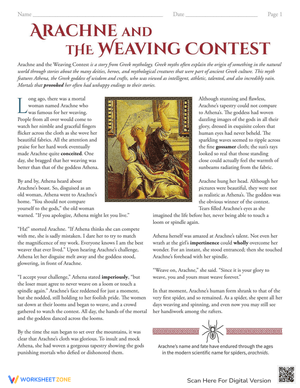
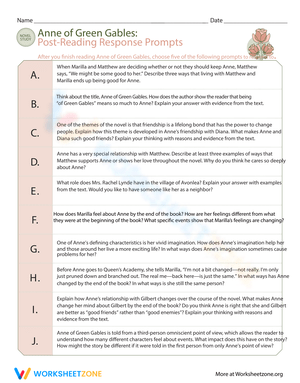
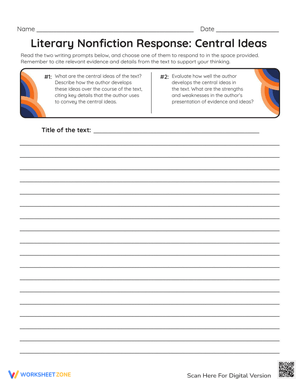
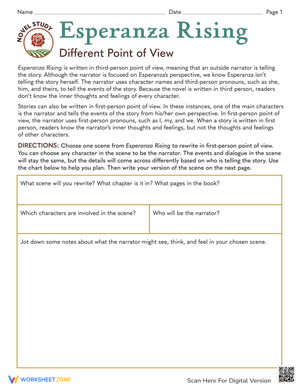
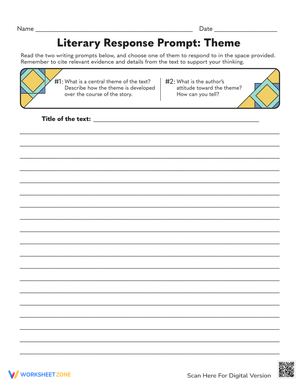
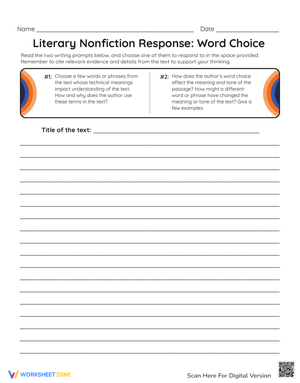
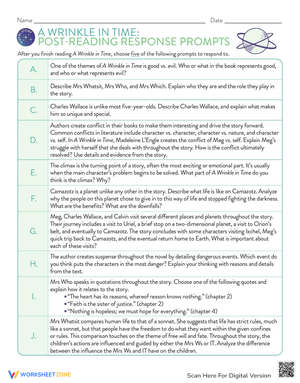
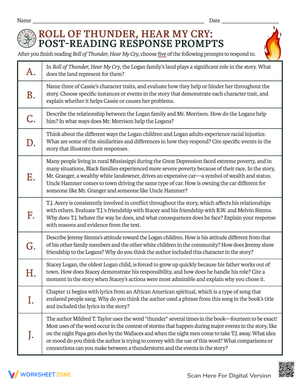
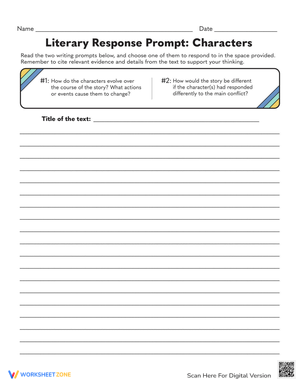
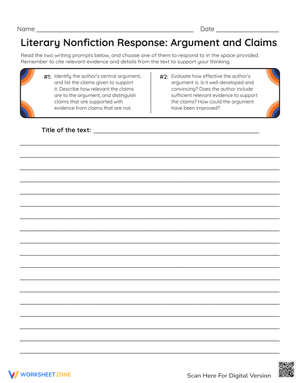
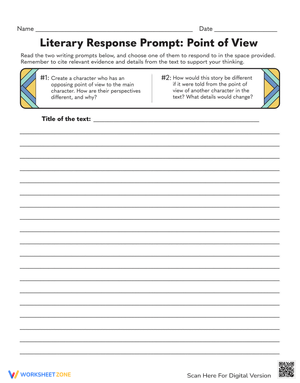
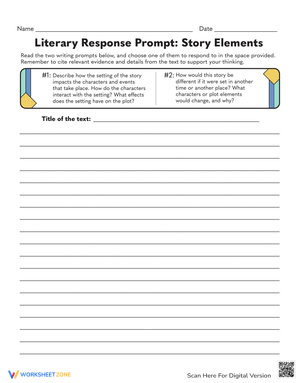
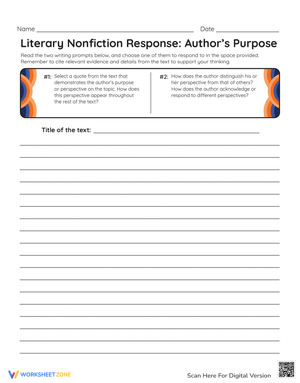
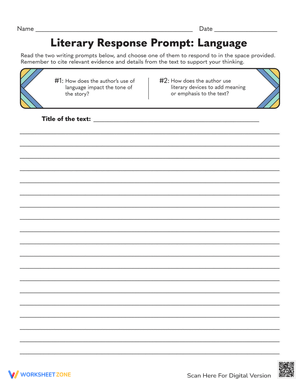
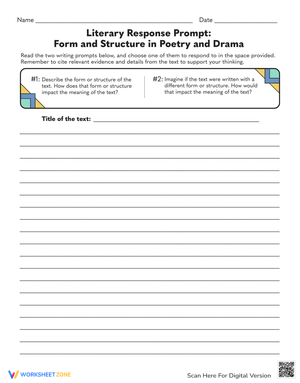
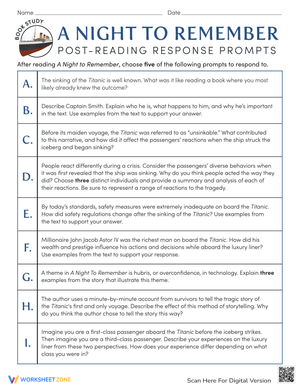
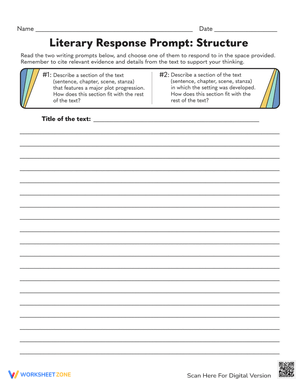
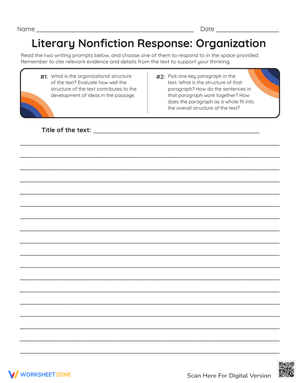
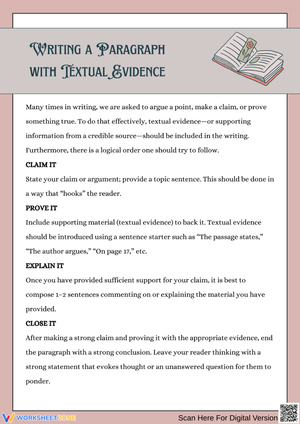
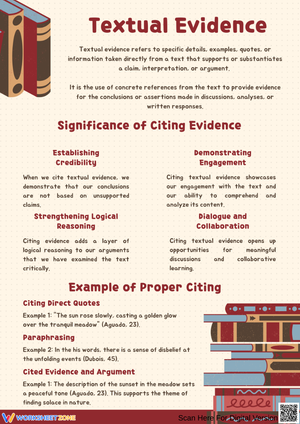
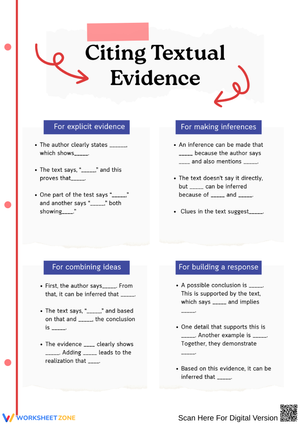
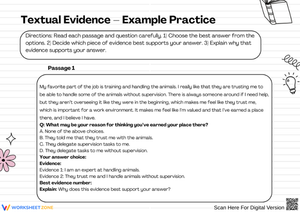
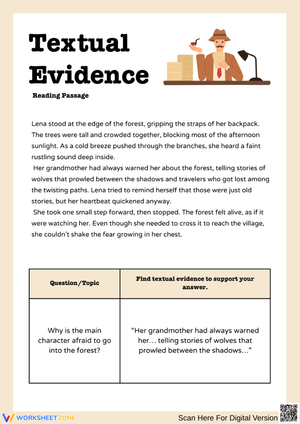
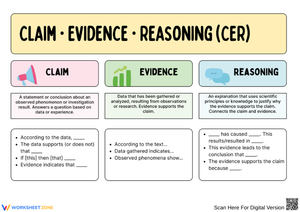
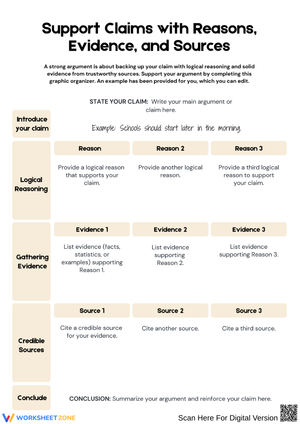
These response to literature worksheets for 6th grade give ELA teachers a printable, text-neutral structure for the kind of analysis that grade 6 standards demand — students moving past plot retelling and into claim-based, evidence-supported writing. Each worksheet targets one focused reading-writing transaction: state a position about what the text means or how it works, then support that position with specific textual evidence. Because the prompts are built around literary concepts rather than specific titles, the set stays in rotation all year — literature circles, independent reading, whole-class novels, and short story anthologies alike.
The Specific Skills These Worksheets Target
What separates effective response to literature worksheets for 6th grade from basic comprehension check-ins is the explanation requirement — the step where students articulate why the evidence matters, not just what it says. That is the hardest analytical move for most sixth graders, and it is where these worksheets focus the most attention. Each worksheet leads students through a tight sequence:
- Stating a claim: Students answer the prompt directly with a focused statement about theme, character change, conflict, point of view, or author's craft — not a plot summary.
- Selecting evidence: Students return to the text and choose a quotation or paraphrased detail that actually supports their claim, not just one they remember liking.
- Writing the explanation: Students connect evidence to claim in their own words, using academic language to say what the detail reveals.
- Using transitions: Students move logically between claim, evidence, and explanation so the paragraph holds together as a piece of writing.
- Self-reviewing: A brief checklist before submission asks students to verify that all three analytical parts are present and connected.
The prompts are narrow enough to answer in one strong paragraph. That scope is intentional — a sixth grader who writes one tight, text-grounded analysis of character motivation is building the exact reasoning process that will expand into multi-paragraph literary essays by seventh grade.
Frequent Student Errors Worth Watching For
The most consistent breakdown happens at the explanation step. Students find a usable quotation — sometimes a strong one — drop it into the response, and stop there, treating the evidence as self-explanatory. A paper might read: "The author shows that Jonas is different. 'He saw a red sled.' This shows he is different." The student restated the claim and pasted the evidence, but never said what the red sled reveals about Jonas's perceptual experience or why that sensation connects to the theme of individuality. That gap between evidence and reasoning is the defining problem in sixth grade literary writing.
A second pattern surfaces at the claim stage. Students write "The theme is that life is hard" — a statement so broad it gives the writer nowhere to go. It sounds thematic without being analytical. When you watch a class fill in the claim box on one of these worksheets, you can see immediately who understands the difference between a topic (what the story is about) and an argument (what the story suggests about that topic). The claim box itself, because it asks for a focused statement rather than an open-ended response, surfaces that confusion faster than a full essay assignment does.
Building These Worksheets Into Your Weekly Lesson Plans
Using response to literature worksheets for 6th grade as a Monday bell ringer is one of the most practical entry points. Students have just completed weekend reading or a Friday chapter assignment, and 10 to 12 minutes of focused writing before discussion opens catches the students who can talk fluently about a text but haven't yet transferred that thinking to paper. That gap — strong oral participation, weak written analysis — appears frequently in the first semester of sixth grade and needs repeated, low-stakes practice to close.
In a longer block, the worksheet functions as a guided practice frame after shared or close reading. Students annotate the text first, then move to the worksheet to organize thinking before drafting their paragraph. In literature circles, one completed worksheet per meeting creates written accountability without silencing conversation — students share what they wrote, compare evidence choices, and revise when the group identifies a stronger detail, which happens more often than teachers expect once students hear each other's reasoning.
A pre-submission routine that consistently improves quality: ask students to highlight three things in three different colors before turning in the worksheet — claim in one color, evidence in a second, explanation in a third. If any color is missing, the response isn't finished. Teachers collect the set and assess it at a glance without scoring each worksheet individually. That visual check identifies who needs a reteaching conversation without adding significant grading time to the week.
Standard Alignment
These worksheets address CCSS.ELA-LITERACY.RL.6.1, which asks students to cite textual evidence to support analysis of both explicit meaning and reasonable inferences drawn from a literary text. They also connect directly to CCSS.ELA-LITERACY.W.6.9, the standard requiring students to draw evidence from literary texts to support analysis, reflection, and research. In instructional terms, these two standards function as a pair: reading closely (RL.6.1) generates the raw material that writing analytically (W.6.9) puts to use. A literary response format is one of the most efficient ways to practice both standards in a single task, which is why it appears repeatedly in grade 6 ELA curriculum maps alongside every major literary unit.
Adjusting These Worksheets for a Range of Readers and Writers
For students who freeze when they see an open prompt and a blank writing area, the most useful adjustment is a two-part prompt that breaks the analytical question into smaller steps. Instead of "What does this story suggest about belonging?", reword it as "What does Maya do when she feels left out? What does that action tell you about the story's theme?" That concrete entry point shortens the interpretive distance students must cross before producing a sentence. Sentence starters — "The author shows ___ when ___. This suggests that..." — work well alongside the reworded prompt for students who need additional structural support without being pulled from the core task.
For students who finish the standard format in eight minutes and need more, expand the evidence requirement: they must locate two pieces of evidence from different sections of the text and explain how both support the same claim. A further extension asks them to consider what a different reader might argue using an alternate detail — an early move toward counterargument that previews seventh grade analytical writing. The response to literature worksheets for 6th grade in this set include versions adjusted for both support levels, so teachers distribute the appropriate worksheet rather than rewriting prompts by hand for each group.
Frequently Asked Questions
Can these worksheets be used with any text, or are they tied to specific books?
The worksheets are text-neutral. Every prompt focuses on a literary concept — theme, character, conflict, point of view — rather than a specific title. The same worksheet works whether students are reading a class novel, a short story from an anthology, or a self-selected book during independent reading. Teachers running literature circles, where different groups work through different titles at the same time, find this flexibility especially practical.
What is the difference between a literary response and a reading summary?
A summary records what happened. A literary response argues something about the text — a claim about what it means, how the author constructed it, or what a character's choices reveal — and supports that argument with evidence. The move from description to argument is the analytical skill at the center of these worksheets. Many sixth graders arrive knowing how to summarize fluently but needing direct, repeated practice with that interpretive step before they can do it independently in writing.
How do I use these for formative assessment without grading every worksheet?
The three-color highlight routine described above handles this efficiently. If you prefer a faster read, scan for two things only: does the evidence actually connect to the stated claim, and does the explanation say why that evidence matters rather than just restating what it says? Those two checks give enough information to sort students into reteaching groups without line-editing every response individually.
Do students write in complete sentences, or is this primarily an organizer?
The explanation and response sections require complete sentences. The evidence box allows a brief quotation or short note, but the writing sections expect connected prose. That distinction is intentional — sixth graders need regular practice producing full analytical sentences, not filling in fragments. A student whose explanation consists of a bullet point or a single phrase has not finished the task.












 Interactive Worksheet Maker
 Quiz Maker
 Word Search Maker
 Crossword Puzzle Maker
 Word Scramble Generator
 Sentence Scramble Generator
 Handwriting Worksheet Generator
 Name Tracing Generator
 Fill In The Blank Generator