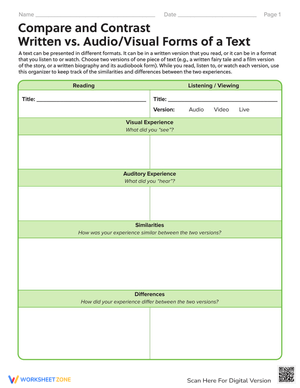
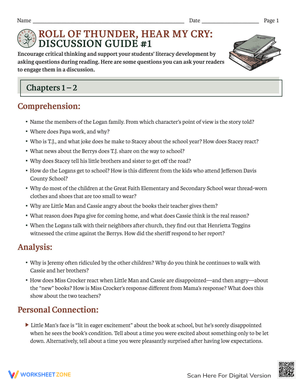
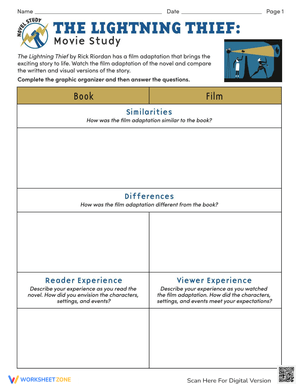
6th grade compare and contrast in fiction pdf worksheets give teachers a direct path from surface-level observation into the kind of literary analysis that middle school writing tasks actually require. Each worksheet in the set zeroes in on a specific story element — characters, settings, conflicts, themes, or plot events — and builds in a text evidence step at every stage. The format turns a comparison task into a thinking sequence, not just a fill-in exercise.
What Students Practice Across the Set
The most productive 6th grade comparison tasks don't ask students to list every way two stories are similar or different. They focus on story elements where contrast reveals something about meaning — where noticing a difference actually leads to an insight about character, theme, or authorial choice. These worksheets organize that narrower, more analytical work.
- Characters: motivation, core traits, response to conflict, and arc — whether the character shifts or holds steady by the story's end
- Settings: time, place, atmosphere, and how each setting creates conditions that push or constrain what characters can do
- Conflicts: the nature and source of each character's problem, how it develops, and what its resolution — or lack of one — reveals
- Themes: two stories may share a topic like loyalty or loss but deliver divergent lessons about it
- Plot events: parallel scenes or turning points that invite direct side-by-side examination, especially where authors made different structural choices
Within each worksheet, the task moves students from an initial organizer into an explanation step. A Venn diagram alone rarely produces analytical thinking — it produces labels. The worksheets that do the most work are the ones asking students to explain why a similarity or difference matters, not just name it.
Frequent Student Errors Worth Watching For
The single most persistent error at this level is stating theme as a topic. Students write "the theme is survival" when the prompt asks for a theme, and many move on because it sounds plausible. The actual theme is a claim: survival requires sacrifice that others will never witness or acknowledge. Worksheets that explicitly ask students to write themes as complete sentences — not noun phrases — force that distinction into the open where it can be taught and corrected.
A second pattern appears in the evidence step. Students filling a T-chart often populate the side for the text they understood better and leave the other side vague. "The setting is different" appears under Text B while Text A gets four specific scene details. This signals the student didn't finish reading before reaching for the organizer. A useful structural fix: ask students to annotate both texts before touching any organizer — one underline per comparison-relevant detail, alternating colors between the two texts. That constraint slows the reach-for-the-worksheet impulse and produces more balanced comparisons.
A third error specific to theme work: students who correctly identify that two stories address the same topic will claim they share a theme without examining what each story actually argues. Two stories set during wartime both deal with sacrifice, but one might claim sacrifice is ennobling while the other suggests it destroys the people left behind. Without a prompt that asks students to state each story's specific position, that distinction collapses into "both stories are about sacrifice" — which is topic, not theme comparison.
Lesson-Planning Ideas to Get the Most From These Worksheets
Bell-ringer use is one of the most efficient placements. Paired short excerpts at the start of class give you quick formative data before the lesson moves forward — one organizer row and one explanation sentence tells you whether students retained yesterday's comparison focus or whether you need to loop back. Eight minutes, collected and scanned, often redirects the day's instruction in a useful way.
In small-group rotations, a single worksheet carries a focused 15-minute session well. Students work through the organizer together, then one person reads their explanation aloud while the group pushes back or agrees. That oral rehearsal does real work — students catch logical gaps in their comparisons when they have to speak them rather than pass a paper forward silently. These 6th grade compare and contrast in fiction pdf worksheets work particularly well in that structure because the evidence step gives the group something concrete to debate: did you choose the right passage, and does your explanation actually follow from it?
- Whole-group modeling: project the worksheet, complete one section together, then release students for partner or independent practice on the remaining sections
- Reteach blocks: return to the same organizer type with a shorter text pair to isolate the skill without introducing new reading complexity
- Homework: assign the organizer as take-home prep before a discussion or in-class paragraph draft
- Sub plans: the directions live on the worksheet itself, which makes setup minimal and completion checkable without the classroom teacher present
A practical sequencing note: if students will write a comparison paragraph or short essay at the end of a unit, use the evidence table format in the two lessons before the writing assignment. Students who complete it carefully arrive at the drafting step with their evidence already sorted and their reasoning partially worked out — which shortens the distance between "we finished reading" and "we're ready to write."
Standard Alignment
These worksheets align with CCSS.ELA-LITERACY.RL.6.9, which asks sixth graders to compare and contrast texts in different forms or genres — stories, poems, historical novels, fantasy — in terms of how they approach similar themes and topics. In classroom terms, that standard belongs in any unit where students read two or more texts around a common theme and must explain connections rather than simply notice them. Paired reading units, end-of-novel discussions that bring in a second text, and literature circles with cross-text reflection prompts all call on exactly this standard.
RL.6.1 — which requires students to cite textual evidence when drawing inferences — reinforces the evidence step built into each worksheet. A student who can name a contrast but cannot point to a specific passage is working below the Grade 6 expectation. The worksheet format keeps that expectation visible for both the student completing the work and the teacher reviewing it.
Adjusting the Set for Different Learner Needs
The clearest lever is text selection, not task modification. A student reading at or above grade level can handle two substantial excerpts with subtle thematic parallels — the kind where the contrast only becomes visible on a second read. A student who needs additional support works better with shorter, more clearly differentiated passages so the reading load doesn't overwhelm the comparison task itself. The organizer stays the same; the texts change.
For students who understand the concepts but struggle to locate supporting evidence, pre-marking the texts before distributing them is more productive than reducing the assignment. Highlight two or three relevant passages in each text, then ask the student to select which highlighted section best supports each comparison point and explain that choice. The analytical work stays intact — the student is reasoning and selecting, not copying — while the search-and-locate step that often causes work stoppage is removed.
For students ready to push further, 6th grade compare and contrast in fiction pdf worksheets extend naturally into multi-paragraph essay drafting. The evidence table already mirrors the structure of a point-by-point comparison essay, so the move from organizer to outline to draft is a continuation of the same thinking rather than a new task. That extension keeps the whole class working on the same literary analysis skill while the scope of the written product varies across the room.
Frequently Asked Questions
What story elements should 6th graders compare in fiction?
Theme and character are the two that appear most often in Grade 6 assessments and written response prompts. Setting and conflict comparisons come up frequently as well, especially in paired-text tasks where two stories share a historical period or a type of problem. The full set covers all five elements — character, setting, conflict, theme, and plot events — so students aren't caught off guard by an unfamiliar comparison type on a high-stakes task.
Which organizer format works best for fiction comparison?
Match the organizer to the output students will produce. Venn diagrams work for initial idea-gathering when students are first learning to sort. T-charts give a cleaner side-by-side structure for lining up parallel details. Evidence tables are most useful before analytical writing — they organize quotes and paraphrases alongside reasoning so the writing step extends from the organizer rather than starting from scratch. If in doubt, go with the evidence table for Grade 6; the writing demand at this level means students almost always need to connect comparisons to specific textual support before they draft.
How do these worksheets hold up for standardized test prep?
Paired-text questions appear on most state ELA assessments at the Grade 6 level, and they almost always ask students to compare theme, character response, or point of view across two passages. Regular work with 6th grade compare and contrast in fiction pdf worksheets builds familiarity with that task structure so students spend their test time on the actual analysis rather than figuring out how to approach the question type for the first time under pressure.
Can these worksheets work for students reading below grade level?
Yes — adjust the texts, not the task. Shorter passages, pre-highlighted evidence sections, and a reduced writing length keep the comparison thinking intact while lowering the total demand. The goal for every student is to practice the core analytical move: identify a meaningful similarity or difference and support it with textual evidence. The volume of reading and writing can look different across the room without abandoning that expectation.












 Interactive Worksheet Maker
 Quiz Maker
 Word Search Maker
 Crossword Puzzle Maker
 Word Scramble Generator
 Sentence Scramble Generator
 Handwriting Worksheet Generator
 Name Tracing Generator
 Fill In The Blank Generator