Printable First Grade Tracing Pages for Teaching Spacing Between Words
Why spacing between words matters in first grade
Spacing between words is one of those early writing habits that changes how readable a student sentence feels right away. In first grade, many students can say a sentence clearly but still write it as one long string of letters or leave uneven gaps that make tracking difficult. That is why targeted tracing practice belongs inside early literacy instruction, not only handwriting time. When students see and trace short sentences with clear word breaks, they get repeated exposure to how print works from left to right and how each spoken word matches a written word group on the page.
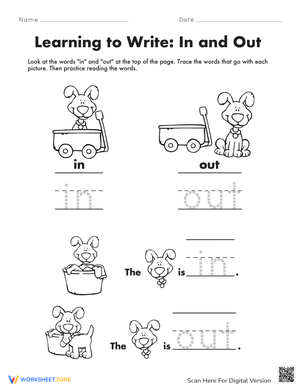
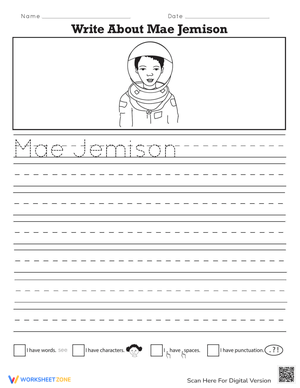
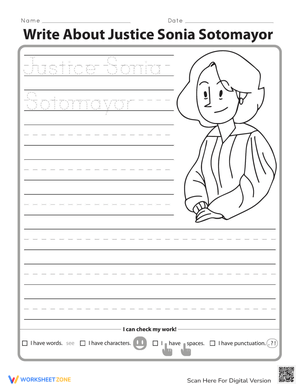
For teachers looking for spacing between words tracing worksheets pdf for 1st grade, the real value is efficiency. A printable page can give students a narrow, high-value task: notice the sentence, track each word, trace carefully, and internalize the visual pattern of spaces. That kind of repetition works well during morning work, literacy tubs, intervention rotations, and take-home review because the expectation stays simple while the payoff supports both reading and writing.
What tracing practice teaches beyond handwriting
Tracing sentences is often treated as a pencil-control activity, but it does more than that in a first grade classroom. When the sentence model is clean and predictable, students are practicing one-to-one tracking, directionality, word awareness, and sentence boundaries all at once. Those are concepts of print behaviors that show up during guided reading and shared writing, so a spacing worksheet can reinforce skills students need across the literacy block.
A useful teacher move is to watch whether a student pauses at each space before tracing the next word. That 1-second pause often shows more about print awareness than letter formation does, because it reveals whether the child recognizes the gap as meaningful rather than decorative. In small-group review, that quick observation can help you separate students who need handwriting support from students who need direct concepts-of-print reteaching.
According to Reading Rockets: Concepts of Print - Ideas for Teachers, young readers need explicit attention to how print is organized, including the fact that words are separated by spaces in print. For first grade instruction, that single visible gap between word groups is a concrete feature teachers can model, name, and revisit across every 5- to 7-word tracing sentence.
Why printable PDF worksheets fit real classrooms
Printable PDF pages remain practical because they remove setup time. A teacher can print a full set for centers, slide a few pages into dry-erase sleeves, or send copies home without reformatting anything. For spacing review, that matters because students usually need many short repetitions rather than one long lesson. A quick worksheet lets the teacher preserve instructional minutes while still giving students a focused task they can complete with limited prompting.
Worksheetzone concepts of print pages also fit the way many first grade teams organize instruction. Some classes need a warm-up after phonics, others need an independent task while the teacher runs a guided group, and intervention staff may need a short printable that isolates one visible writing behavior. In each case, a tracing sheet that emphasizes spacing between words gives adults a clean entry point: students can start quickly, complete a few sentences, and receive feedback that is specific enough to matter.
How these worksheets support intervention and review
Spacing instruction is not only for students seeing the concept for the first time. In grade 1, it is common to have students who can read simple text but still compress their writing. That makes tracing worksheets especially useful for intervention and review. The page lowers the cognitive load of idea generation, spelling, and sentence planning so the student can focus on a single convention: each word needs its own place on the line.
That narrow focus helps educators respond to mixed readiness levels. A student who is still developing basic print concepts can track each model word with a finger before tracing. A student who mostly understands spacing can trace first and then copy the sentence independently on the back. Because the worksheet begins with a supported model, it works well in both Tier 1 review and short pull-out practice where time is limited and directions must stay clear.
Reading Rockets: Concepts of Print Assessment highlights that concepts of print include understanding where words begin and end on a page. For intervention planning, that matters because a spacing worksheet makes those boundaries visible. Teachers are not guessing whether the student knows the concept; they can see whether the child maintains one distinct break after every traced word.
Classroom Implementation
These pages work best when they are embedded into a routine instead of used as a one-off printable. In first grade, students respond well when spacing practice appears in the same place each week and connects to current sentence work. That could be a Monday morning review page, a center linked to decodable sentences, or a follow-up task after shared writing.
- Model one sample sentence under a document camera and exaggerate the finger space between words before students begin.
- Ask students to whisper-read the sentence first so they hear the separate words before tracing them.
- Have students tap or point to each traced word to reinforce one-to-one tracking.
- After tracing, invite students to circle the spaces with a colored pencil or mark each gap with a tiny check.
- Use the finished page as a bridge into copying one sentence independently with matching spacing.
For centers, keep the routine stable and the text load light. Students do not need a long paragraph to practice spacing well. A few short sentences often produce better results because the teacher can scan them quickly and give feedback such as “Your words need their own space” or “I can count each word because your spacing is clear.” That kind of language keeps the focus on readability, not just neatness.
What teachers can look for while students work
The strongest formative use of a spacing worksheet comes from knowing what to watch. If a student traces accurately but later copies words with no gaps, the issue may be transfer rather than recognition. If the student skips over spaces while tracing, the issue is likely more foundational and may connect to print concepts or word awareness. In other words, the worksheet is not only practice; it is also a fast screen for where instruction should go next.
Teachers can also compare student behavior across tasks. A child who leaves spaces during dictated writing but not during independent sentence work may need a visual reminder on the desk. A child who can identify spaces in print but not reproduce them may benefit from tracing, then copying, then composing within the same lesson. Worksheetzone printable PDFs make that sequence manageable because the first step is already prepared and easy to repeat across several sessions.
When reviewing completed pages, it helps to look for consistency more than perfection. First graders do not need perfectly even spacing to show understanding. What matters is whether words are clearly separated and whether the student is beginning to treat spacing as a normal part of writing every sentence. That is the habit these tracing pages are built to support.
Frequently Asked Questions
1. What does spacing between words mean in first grade writing?
It means students understand that each written word should be separated by a visible space. In first grade, that supports readable sentences, accurate tracking, and stronger concepts of print during both reading and writing.
2. How do tracing worksheets help students learn word spacing?
Tracing worksheets give students a correct sentence model to follow. As they trace each word in order, they repeatedly see where one word ends and the next begins, which helps turn spacing into a habit.
3. Are these worksheets appropriate for intervention or review?
Yes. They work well for review, reteaching, and short intervention groups because they isolate one skill and reduce the demand of spelling and sentence generation. That lets teachers focus on spacing accuracy and print awareness.
4. Can teachers print the worksheets as PDFs for centers or homework?
Yes. Printable PDF worksheets are a good fit for literacy centers, morning work, substitute plans, and take-home review because they are low prep and easy to reuse across several first grade routines.
Clear All