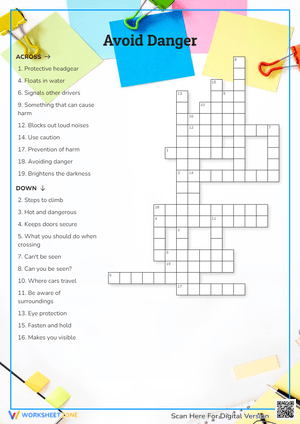
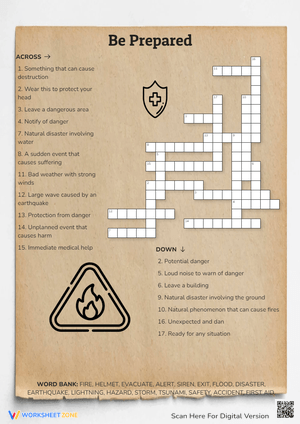
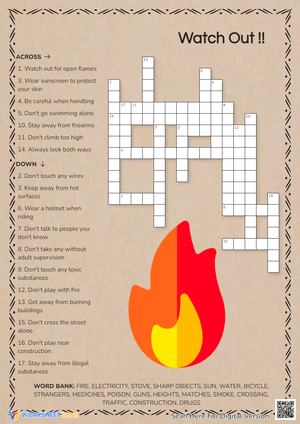
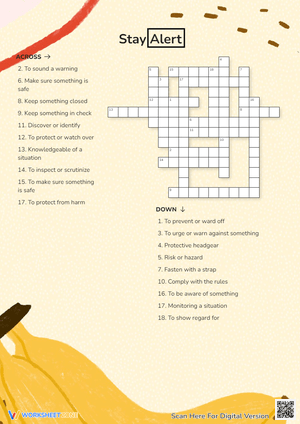
Safety Crossword Puzzle With Everyday Safety Clues
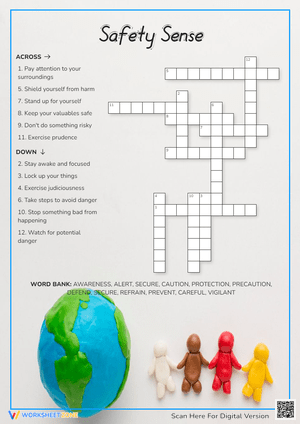
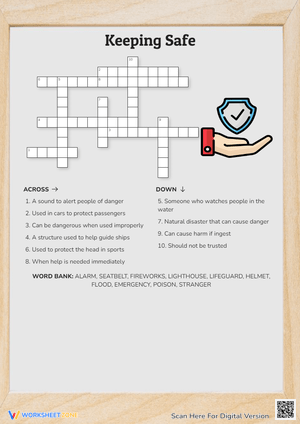
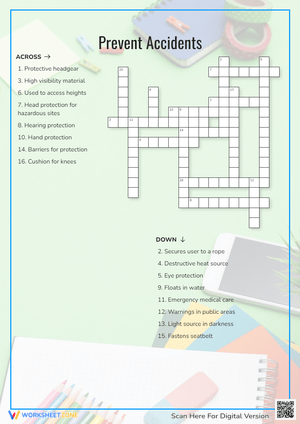
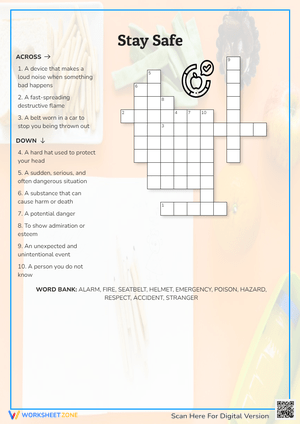
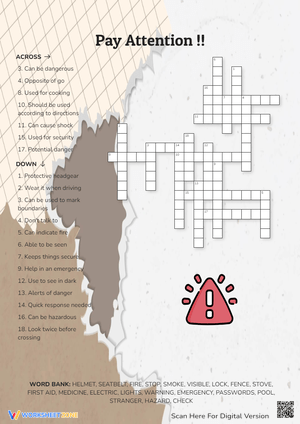
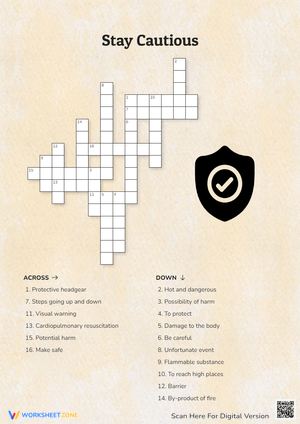
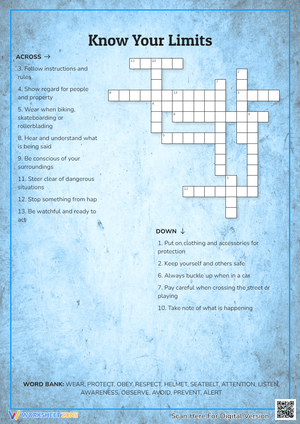
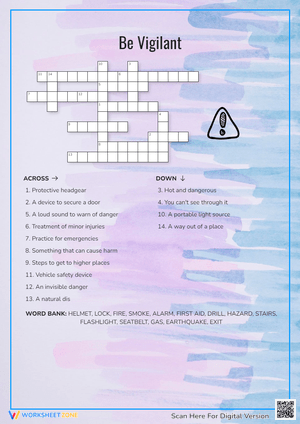
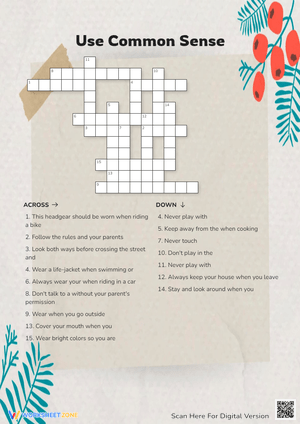
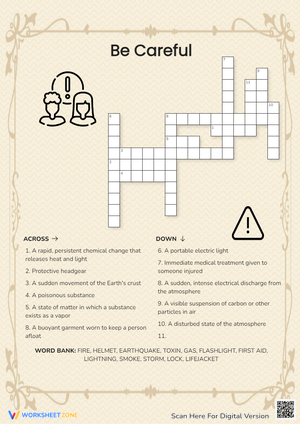
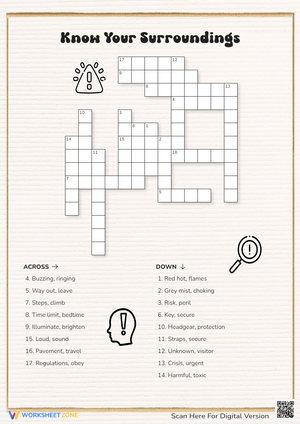
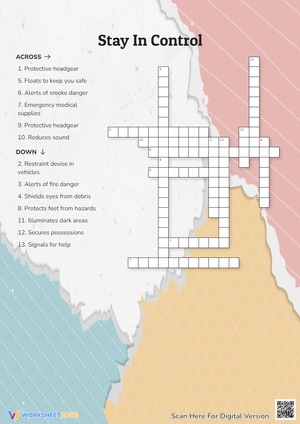
Safety lessons become more effective when students can remember the right words before they face real situations. A safety crossword puzzle gives learners a structured way to review important vocabulary connected to rules, awareness, prevention, and responsible choices. Instead of passively hearing terms like caution, emergency, hazard, warning, protect, accident, first aid, and responsibility, students use clues to think about meaning and recall the correct word. That extra step makes the activity more thoughtful than simple memorization.
Crossword puzzles are especially useful for safety topics because students must connect each clue to a real-life concept. A clue about “something that could cause harm” leads to hazard. A clue about “help given before medical professionals arrive” points to first aid. A clue about “a plan for leaving a dangerous area” may introduce evacuation. These small moments of recall help students understand that safety vocabulary is not just academic language; it is language they may need at school, at home, in a lab, online, or in the community.
In the classroom, a safety crossword puzzle can support many types of lessons. Teachers might use it before a science lab, during a health unit, as part of emergency preparedness review, or after discussing classroom rules. For more specific safety conversations, educators can pair the puzzle with this guide on teaching gun safety to kids to help frame serious topics in an age-appropriate, responsible way. The crossword format gives students a calm entry point before deeper discussion, reflection, or scenario-based practice.
Science teachers can also use safety crosswords to reinforce lab expectations. Words such as goggles, gloves, chemicals, spill, equipment, fire, instructions, and caution are essential before students begin hands-on experiments. Pairing the puzzle with lab safety worksheets helps students review rules, identify risks, and understand why procedures matter. After completing the crossword, students can explain one safety rule in their own words or match each term to a classroom example.
A safety crossword puzzle works best when it leads to action. Students can complete the clues, then discuss how each word applies to daily life. They might create safety posters, write emergency steps, role-play safe choices, or sort vocabulary into categories such as school safety, home safety, lab safety, road safety, and personal safety. With the right follow-up, this activity becomes more than a puzzle; it becomes a practical way to help students think carefully, speak clearly, and make safer decisions.
Frequently Asked Questions
Question 1: What grade levels are safety crossword puzzles suitable for?
Safety crossword puzzles can be used with upper elementary, middle school, and even high school students, depending on the vocabulary and clue difficulty. Younger learners may work with basic terms such as safe, help, rule, stop, fire, and danger. Older students can handle more advanced words such as evacuation, prevention, emergency, responsibility, equipment, hazard, and procedure. Teachers should choose a version that matches students’ reading level, maturity, and the specific safety topic being taught.
Question 2: What topics can a safety crossword puzzle cover?
A safety crossword puzzle can cover many practical topics, including classroom safety, lab safety, fire safety, road safety, home safety, playground safety, internet safety, emergency preparedness, and personal responsibility. Some puzzles may focus on general safety words, while others may target a specific setting, such as a science lab or school environment. The best puzzle is one that matches the lesson goal and gives students vocabulary they can actually use in real situations.
Question 3: How can teachers use a safety crossword puzzle in class?
Teachers can use a safety crossword puzzle as a lesson opener, vocabulary review, group activity, early-finisher task, or discussion starter. Before a lab or safety lesson, the puzzle can introduce important terms. After instruction, it can help students review what they have learned. To extend the activity, teachers can ask students to explain selected answers, give examples of safe behavior, write safety rules, or connect each term to a real classroom scenario.
Question 4: How does a safety crossword puzzle support meaningful learning?
A safety crossword puzzle supports meaningful learning because students must understand clues, recall vocabulary, and connect words to real-life situations. This active thinking helps students remember safety terms more effectively than simply reading a list. When the puzzle is followed by discussion, writing, or scenario practice, students are more likely to understand why safety rules matter and how to apply them responsibly in everyday settings.