


























Views
Downloads
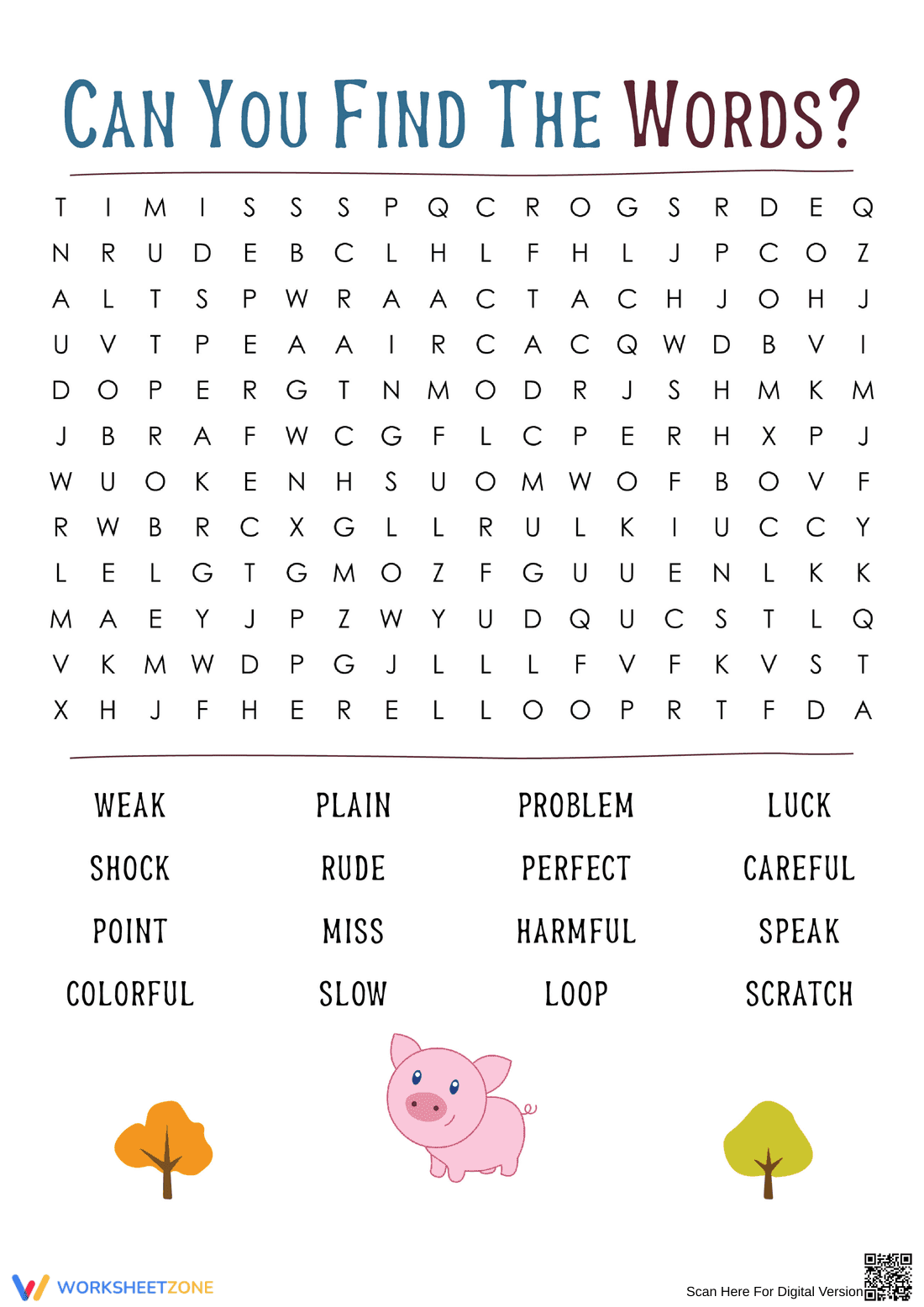

Grade 3 Vocabulary — Printable No-Prep Worksheet
Paste this activity's link or code into your existing LMS (Google Classroom, Canvas, Teams, Schoology, Moodle, etc.).
Students can open and work on the activity right away, with no student login required.
You'll still be able to track student progress and results from your teacher account.
This Grade 3 vocabulary word search worksheet helps students build spelling automaticity and word recognition skills. By actively scanning for sixteen specific grade-level terms, learners reinforce their visual memory of correct letter sequences. This focused practice strengthens foundational literacy, supporting both reading fluency and independent writing confidence.
At a Glance
- Grade: 3 · Subject: ELA
- Standard:
CCSS.ELA-LITERACY.L.3.2— Spell grade-appropriate words correctly- Skill Focus: Spelling and Word Recognition
- Format: 1 page · 16 problems · Answer key included · PDF
- Best For: Independent practice and morning work
- Time: 10–15 minutes
This single-page printable features a classic word search grid containing sixteen target vocabulary words hidden horizontally, vertically, and diagonally. A clear word bank at the bottom provides students with the exact spelling of each term, including words like "colorful," "problem," and "careful." A complete answer key is included to allow for rapid grading or self-correction by students.
Zero-Prep Workflow
- Print (30 seconds): Generate the PDF and print a class set directly from your computer.
- Distribute (1 minute): Hand out the single-page puzzle as students enter the room or transition between subjects.
- Review (30 seconds): Display the answer key on the smartboard for immediate self-checking.
Total teacher prep time is under two minutes. The self-explanatory format makes this an ideal, reliable activity for a substitute teacher plan.
Standards Alignment
Aligned to CCSS.ELA-LITERACY.L.3.2: Demonstrate command of the conventions of standard English capitalization, punctuation, and spelling when writing. This activity specifically targets the memorization and visual recognition of conventional spelling patterns for high-frequency words. Both standard codes can be copied directly into lesson plans, IEP goals, or district curriculum mapping tools.
How to Use It
Deploy this worksheet as a morning bell-ringer to settle students into the literacy block, or use it as an early-finisher activity during independent reading time. Expect completion to take 10 to 15 minutes. As a formative assessment observation tip, watch how students search for words: students who look for letter chunks or prefixes (like "color-" in "colorful") rather than single letters demonstrate stronger orthographic mapping skills.
Who It's For
This resource serves third-grade general education students needing routine spelling reinforcement. For students requiring accommodations, highlight the first letter of each hidden word on their copy to reduce visual fatigue. Pair this puzzle with a direct instruction lesson on suffixes (such as -ful in "harmful" and "careful") to connect the vocabulary practice to broader morphological concepts.
Mastering conventional spelling through visual repetition remains a critical component of early elementary literacy instruction. According to EdReports 2024, activities that require students to repeatedly scan and identify correct letter sequences significantly improve orthographic mapping and reading fluency. When students engage with CCSS.ELA-LITERACY.L.3.2 to spell grade-appropriate words correctly, they transition from phonetic decoding to automatic word recognition. This automaticity frees up cognitive load, allowing young readers to focus on reading comprehension and complex writing tasks rather than basic spelling mechanics. Word searches provide a low-stakes, highly engaging format for this necessary repetition. By integrating these visual scanning exercises into weekly routines, educators ensure students build the robust vocabulary foundation required for upper elementary academic success. Consistent practice with target words directly correlates with improved performance on standardized literacy assessments.


