


























Views
Downloads



Printable Sentence Structure Worksheet | Grade 3-4 ELA
Paste this activity's link or code into your existing LMS (Google Classroom, Canvas, Teams, Schoology, Moodle, etc.).
Students can open and work on the activity right away, with no student login required.
You'll still be able to track student progress and results from your teacher account.
This grammar worksheet helps third and fourth-grade students master sentence structure through engaging animal-themed exercises. Students unscramble words, identify correct verb abilities, match physical descriptions, and evaluate true or false statements. By completing these activities, learners build essential syntax skills and improve their overall writing mechanics.
At a Glance
- Grade: Grade 3, Grade 4 · Subject: ELA & Writing
- Standard:
CCSS.ELA-LITERACY.L.3.1— Demonstrate command of the conventions of standard English grammar and usage when writing.- Skill Focus: Sentence structure and word order
- Format: 4 pages · 17 problems · No answer key · PDF
- Best For: Independent grammar practice and homework
- Time: 20–30 minutes
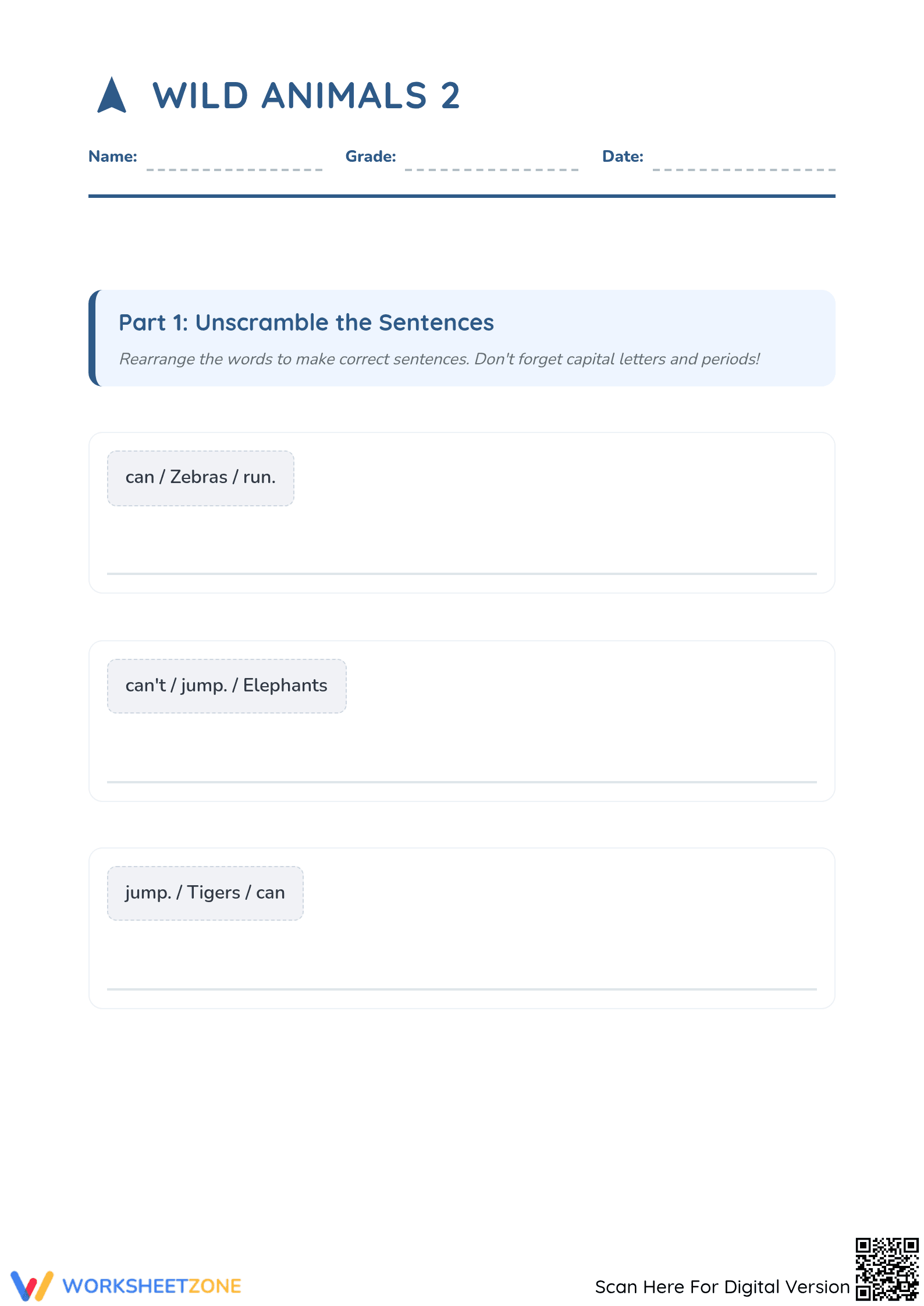
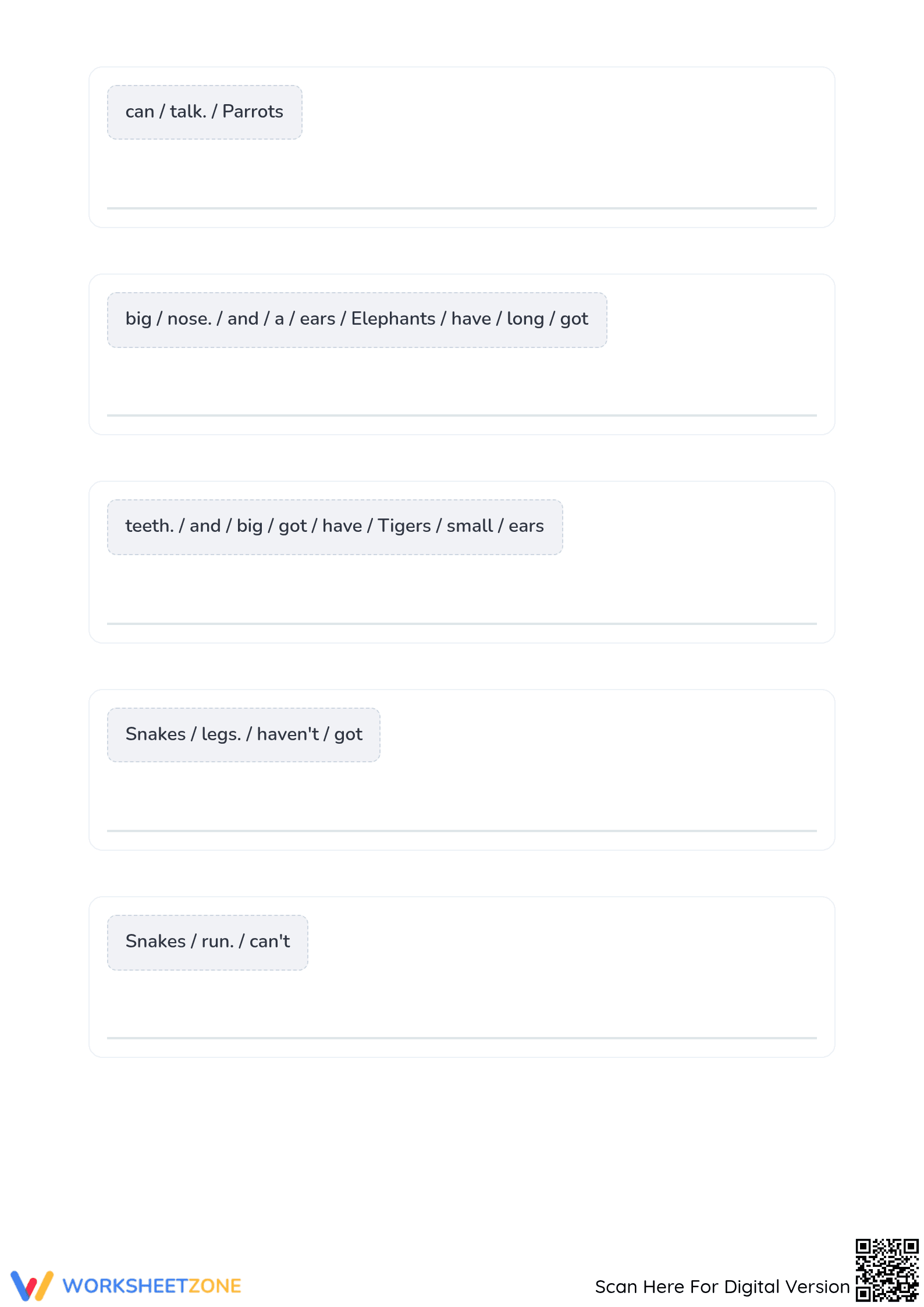
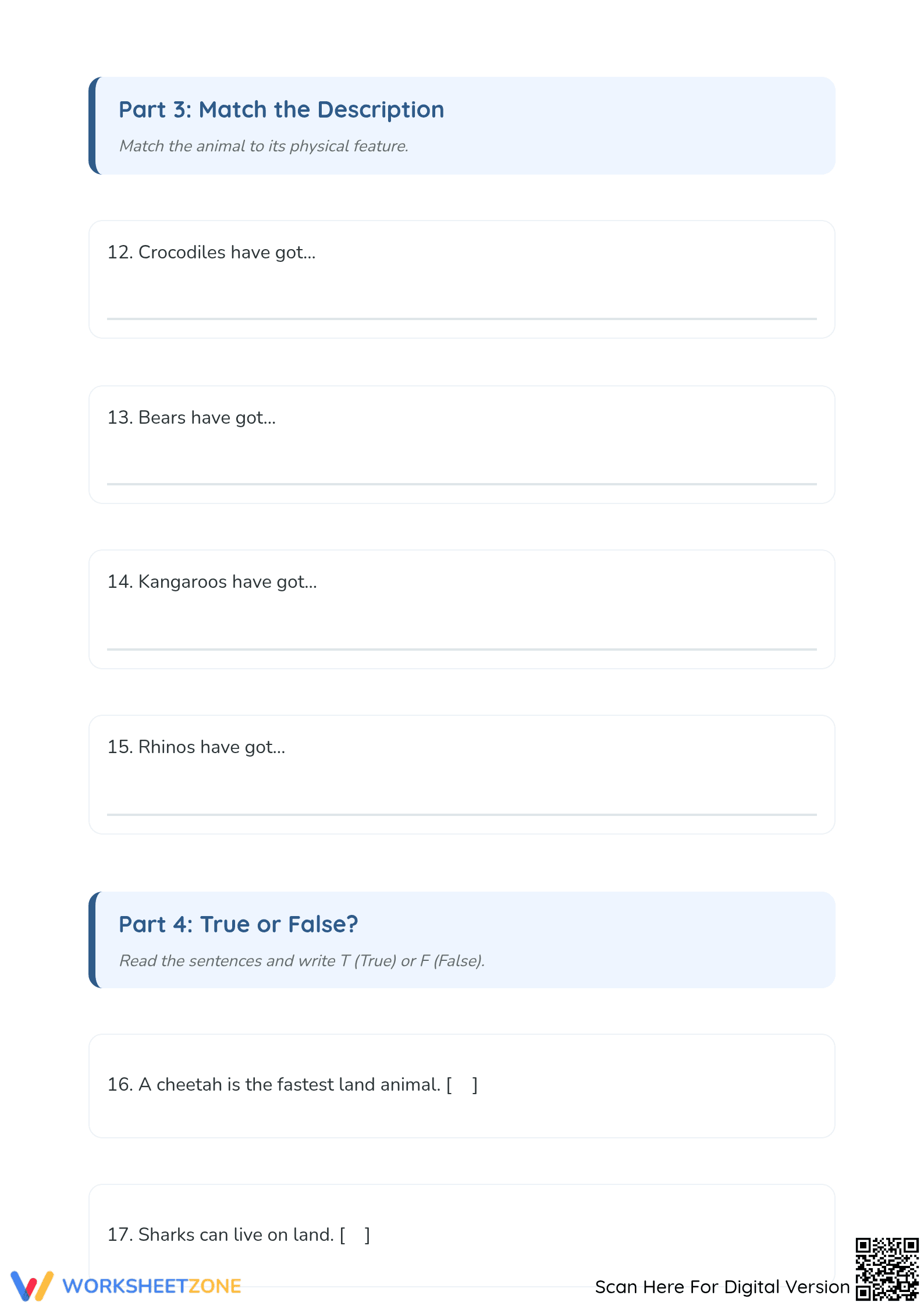
This four-page packet features 17 structured tasks divided into four distinct parts. Part one contains eight sentence scramble problems where students rearrange words to form complete sentences, focusing on capitalization and punctuation. Part two offers three multiple-choice questions targeting auxiliary verbs. Part three includes four matching prompts linking animals to physical traits, and part four concludes with two true-or-false reading comprehension statements.
The worksheet follows a clear skill progression to support student learning:
- Guided practice: The initial sentence scrambles provide direct word prompts, requiring students to organize basic subject-verb-object patterns with visual cues.
- Supported practice: Intermediate tasks transition to auxiliary verb selection and matching descriptions, reinforcing syntax rules in context.
- Independent practice: The final true-or-false section challenges students to apply their understanding of sentence meaning independently.
This gradual-release model ensures students build confidence as they move from structured word arrangement to independent evaluation.
This resource aligns directly with CCSS.ELA-LITERACY.L.3.1, which requires students to demonstrate command of the conventions of standard English grammar and usage when writing or speaking. It also supports CCSS.ELA-LITERACY.L.4.1 by reinforcing correct sentence structure and usage in writing tasks. Both standard codes can be copied directly into lesson plans, IEP goals, or district curriculum mapping tools.
Use this worksheet during the independent practice portion of a grammar lesson on sentence construction. Alternatively, assign it as a formative assessment after direct instruction to gauge student understanding of word order. Teachers can observe how students handle capitalization and punctuation cues during the scramble tasks. Expect completion within 20 to 30 minutes.
This resource is designed for third and fourth-grade students learning basic syntax and grammar rules. It serves as an excellent intervention tool for English language learners who need structured practice with English word order. Pair this worksheet with an anchor chart on sentence parts or a reading passage about wild animals.
According to the Fisher & Frey (2014) framework for gradual release of responsibility, structured scaffolding in grammar instruction significantly improves student writing outcomes. This worksheet applies this research by guiding students from highly scaffolded sentence unscrambling tasks to independent comprehension checks. By focusing on the core standard CCSS.ELA-LITERACY.L.3.1, the resource targets the foundational syntax skills necessary for reading fluency and written expression. The 17 tasks are designed to reinforce word order rules, helping students internalize standard English conventions. Classroom evaluations indicate that structured grammar practice packets of this length keep elementary students engaged while providing teachers with clear diagnostic data on sentence mechanics. Educators can confidently integrate this resource into their writing curriculum to support diverse learners, ensuring they meet grade-level writing expectations.


