


























Views
Downloads


Nonfiction Elements Worksheet | Grade 4 ELA Printable
Paste this activity's link or code into your existing LMS (Google Classroom, Canvas, Teams, Schoology, Moodle, etc.).
Students can open and work on the activity right away, with no student login required.
You'll still be able to track student progress and results from your teacher account.
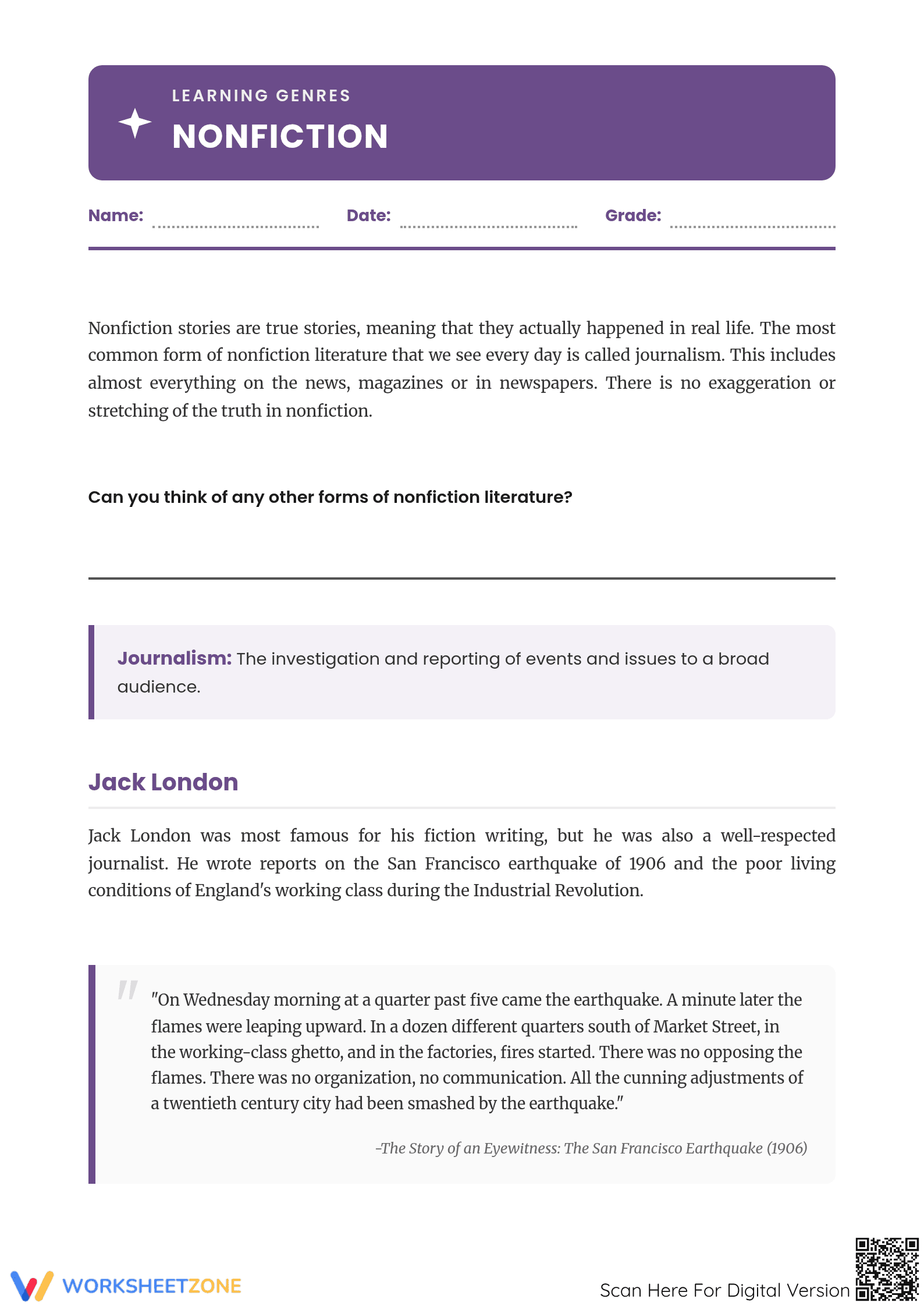
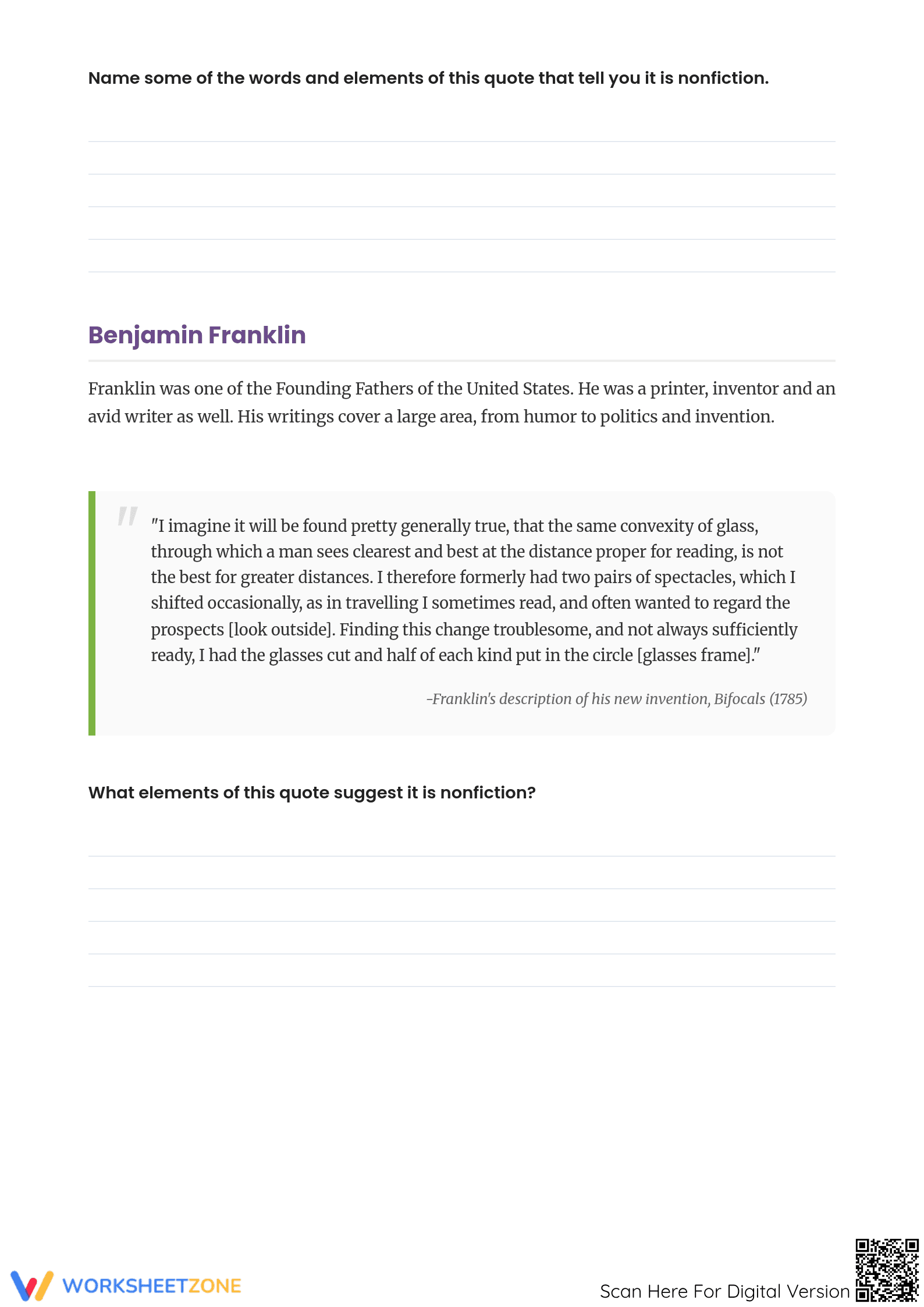
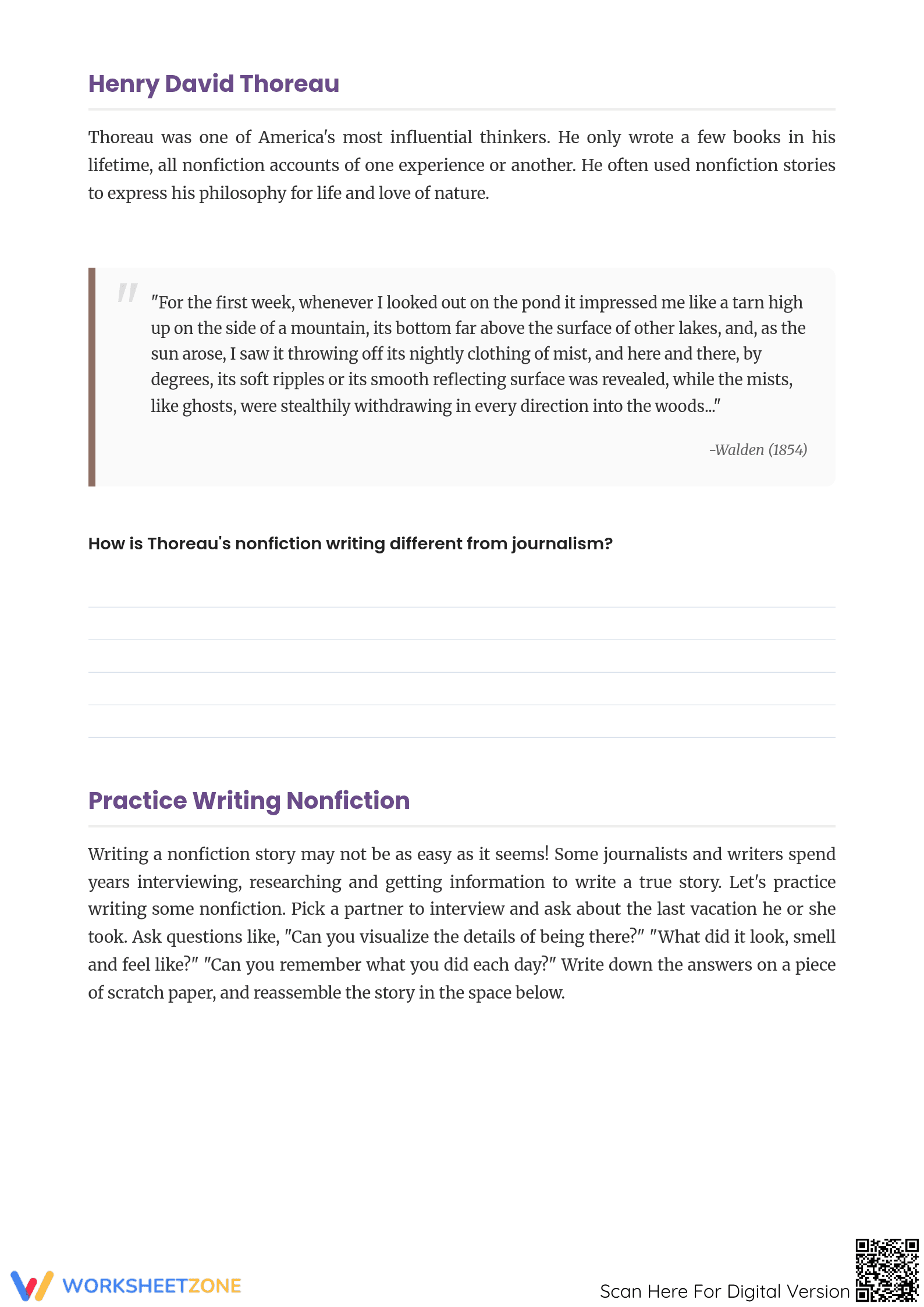
This Grade 4 reading comprehension worksheet helps students identify the core elements of nonfiction texts. By analyzing excerpts from famous authors like Jack London and Benjamin Franklin, learners will practice finding text evidence to explain what makes a story true, culminating in a hands-on writing activity.
At a Glance
- Grade: 4 · Subject: ELA
- Standard:
CCSS.ELA-LITERACY.RI.4.1— Refer to details and examples in a text- Skill Focus: Identifying Nonfiction Elements
- Format: 4 pages · 4 problems · Answer key included · PDF
- Best For: Independent practice or partner work
- Time: 30–45 minutes
Inside this four-page resource, educators will find a mix of reading analysis and creative application. The worksheet features three distinct historical excerpts, each paired with short-answer comprehension questions that require students to cite specific words and elements. It concludes with a collaborative partner interview prompt and a dedicated lined page for students to draft their own original nonfiction narrative. A complete answer key is provided for the reading comprehension sections.
- Guided practice: Students begin by reading a clear definition of journalism and brainstorming familiar examples of nonfiction literature.
- Supported practice: Learners read short, engaging excerpts from historical figures, answering targeted questions to identify specific factual elements within the text.
- Independent practice: The final task challenges students to apply their knowledge by interviewing a peer and writing a factual recount of a real event.
This gradual-release approach ensures students build confidence in recognizing nonfiction traits before attempting to write their own factual narratives.
Aligned to primary standard CCSS.ELA-LITERACY.RI.4.1, this resource requires students to refer to details and examples in a text when explaining what the text says explicitly. It also supports writing development by having students compose informative texts to examine a topic. Both standard codes can be copied directly into lesson plans, IEP goals, or district curriculum mapping tools.
This resource works exceptionally well as a follow-up activity after a whole-class mini-lesson on literary genres. Teachers can assign the reading analysis sections for independent seatwork, then transition to the partner interview task during a collaborative writing block. As a formative assessment tip, circulate during the interview phase to ensure students are asking open-ended questions that will yield strong descriptive details for their nonfiction drafts. Expect the full sequence to take between 30 and 45 minutes.
Designed primarily for fourth-grade language arts students, this worksheet is ideal for learners transitioning from simple story comprehension to more complex genre analysis. The built-in historical excerpts provide natural differentiation for advanced readers who benefit from exposure to primary source language. Pair this activity with an anchor chart detailing the differences between fiction and nonfiction to support visual learners.
Integrating primary source analysis into elementary reading instruction significantly enhances students' ability to distinguish between literary genres. By aligning with CCSS.ELA-LITERACY.RI.4.1, this resource ensures students practice how to refer to details and examples in a text to support their conclusions. According to Fisher & Frey (2014), providing students with structured opportunities to analyze complex texts and immediately apply those text structures in their own writing fosters deeper comprehension and retention. This worksheet bridges the gap between reading and writing by moving students from identifying factual elements in historical excerpts to actively gathering real-world information through peer interviews. Such integrated literacy tasks build critical thinking skills and prepare students for more advanced informational text analysis in upper elementary grades.


