


























Views
Downloads

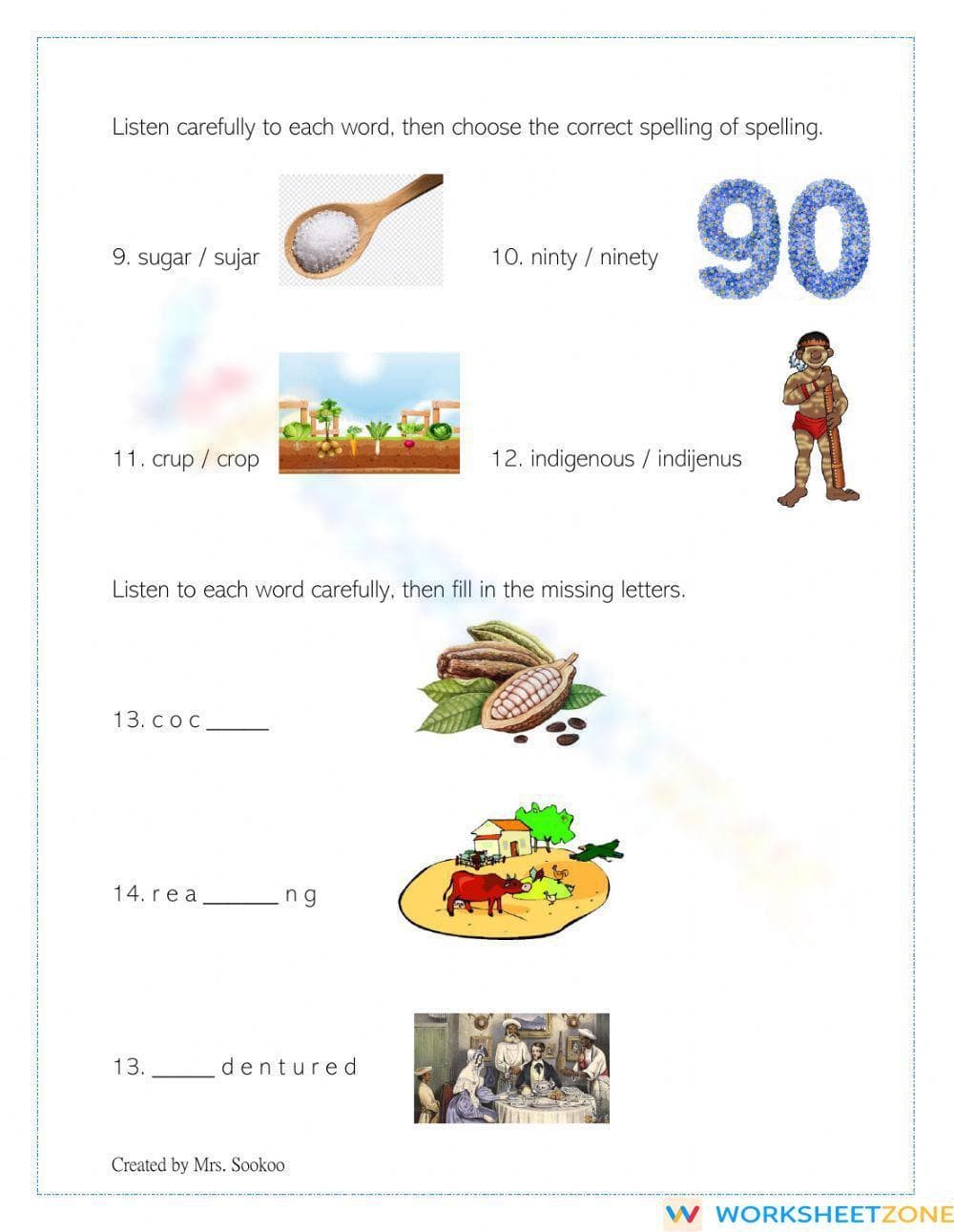

Essential Grade 2-3 Spelling Test | Printable Worksheet
Paste this activity's link or code into your existing LMS (Google Classroom, Canvas, Teams, Schoology, Moodle, etc.).
Students can open and work on the activity right away, with no student login required.
You'll still be able to track student progress and results from your teacher account.
This Essential Grade 2-3 Spelling Test worksheet helps students master high-frequency words and phonics patterns through interactive auditory and visual exercises. By connecting spoken sounds to written letters, learners build the foundational literacy skills needed for fluent reading and writing. This ready-to-use resource ensures students can accurately spell studied words in various contexts.
At a Glance
- Grade: 2-3 · Subject: English Language Arts
- Standard:
CCSS.ELA-LITERACY.L.2.2— Spell high-frequency words and irregular spelling patterns accurately in writing- Skill Focus: Auditory Word Recognition & Spelling
- Format: 2 pages · 15 problems · Answer key included · PDF
- Best For: Weekly assessments and spelling centers
- Time: 15–20 minutes
What's Inside
This comprehensive 2-page assessment features fifteen carefully structured spelling tasks designed to challenge and support primary learners. The first page presents eight picture-based prompts where students listen to audio cues and transcribe the corresponding words. The second page transitions to multiple-choice spelling recognition and "fill in the missing letter" exercises, covering words like "sugar," "ninety," and "indigenous." A full answer key is included for efficient grading.
Skill Progression
- Guided Practice (8 tasks): Students use visual picture prompts as anchors while listening to target words, providing a high level of context for initial transcription.
- Supported Practice (4 tasks): Learners evaluate two spelling options for specific vocabulary words, developing the ability to recognize correct orthographic patterns and common pitfalls.
- Independent Practice (3 tasks): Students complete partial words by applying phonics knowledge and memorized spelling rules, demonstrating mastery of word structure without full scaffolding.
This gradual-release approach follows the "I Do, We Do, You Do" model, moving students from heavy visual support to independent letter-sound mapping.
Standards Alignment
The primary alignment for this resource is `CCSS.ELA-LITERACY.L.2.2`, which requires students to demonstrate command of the conventions of standard English capitalization, punctuation, and spelling. Specifically, students must generalize learned spelling patterns and use conventional spelling for high-frequency words. This standard code can be copied directly into lesson plans, IEP goals, or district curriculum mapping tools to ensure instructional consistency.
How to Use It
Use this worksheet as a summative weekly assessment following a unit on phonics or high-frequency words to measure individual student progress. During direct instruction, teachers can project the images to model the auditory-to-visual transcription process. One effective formative assessment tip is to observe which students struggle with the multiple-choice section, as this often indicates a reliance on visual memory over phonemic awareness.
Who It's For
This resource is tailored for second and third-grade students working on standard English conventions. It is particularly effective for English Language Learners (ELLs) who benefit from the integrated auditory cues and visual picture support. For best results, pair this assessment with an anchor chart displaying common vowel teams or a reading passage containing the target vocabulary to reinforce word recognition in a broader context.
Research from Fisher & Frey (2014) emphasizes the importance of gradual release of responsibility in literacy instruction. This worksheet adheres to those principles by providing multiple layers of scaffolding, from pictorial anchors to unassisted spelling completion. Aligned with CCSS.ELA-LITERACY.L.2.2, it targets phonemic and morphological awareness for accurate spelling of high-frequency words. This focused practice reduces cognitive load during writing, allowing learners to concentrate on composition. The auditory components ensure active phoneme-grapheme mapping, crucial for successful early literacy development. This evidence-based design makes it a reliable tool for classroom teachers and interventionists bridging spoken and written language.


