


























Views
Downloads

Grade 1 Clothes Vocabulary — Printable No-Prep Worksheet
Paste this activity's link or code into your existing LMS (Google Classroom, Canvas, Teams, Schoology, Moodle, etc.).
Students can open and work on the activity right away, with no student login required.
You'll still be able to track student progress and results from your teacher account.
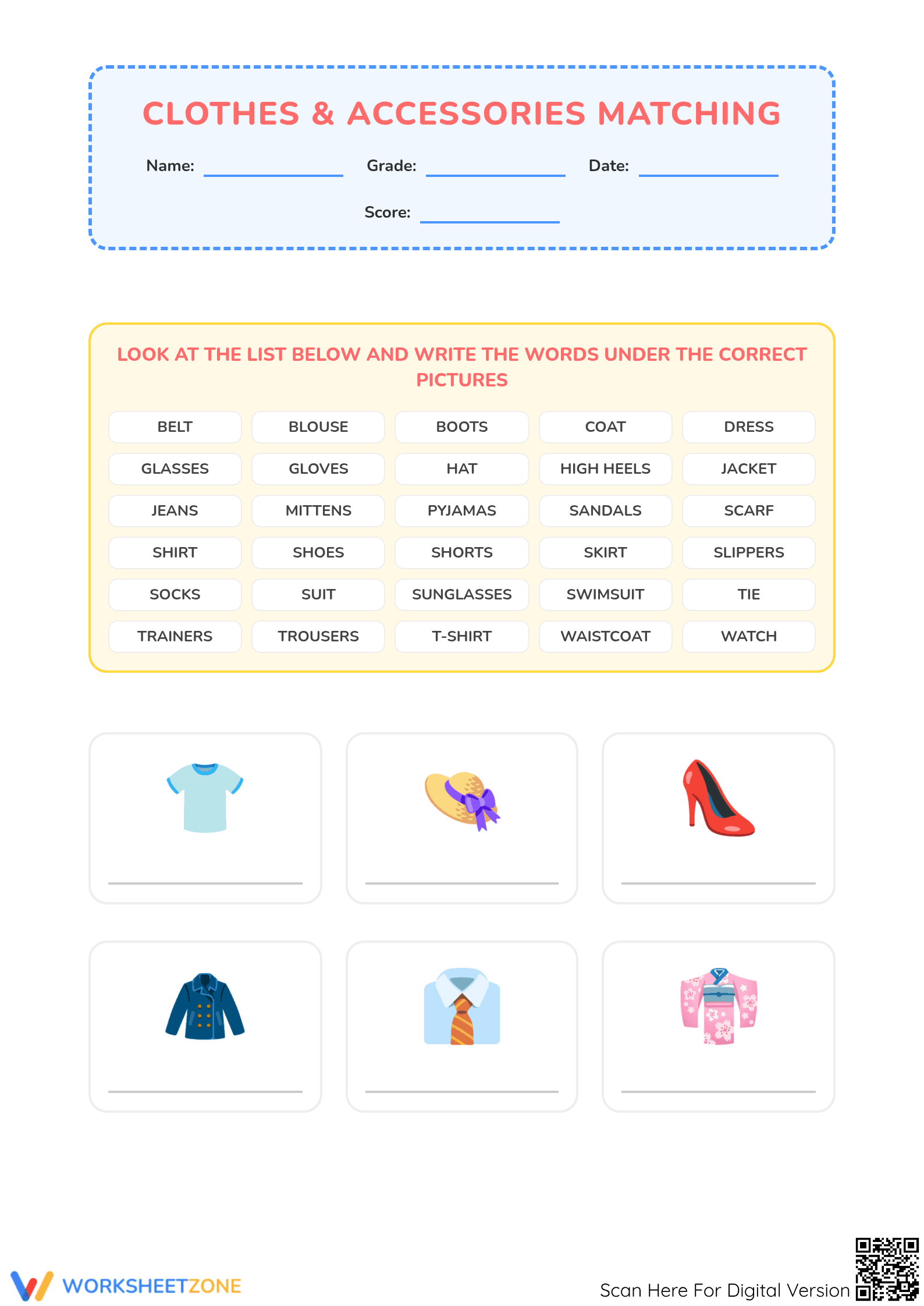
This Grade 1 vocabulary worksheet helps students build foundational language skills by matching clothing words to corresponding images. Connecting text with visual representations helps young learners and ESL students develop stronger word recognition and expand everyday vocabulary in an engaging format.
At a Glance
- Grade: 1 · Subject: ELA
- Standard:
CCSS.ELA-LITERACY.L.1.5.C— Identify real-life connections between words and their use- Skill Focus: Clothes and Accessories Vocabulary
- Format: 3 pages · 27 problems · Answer key included · PDF
- Best For: Independent practice and ESL centers
- Time: 15–20 minutes
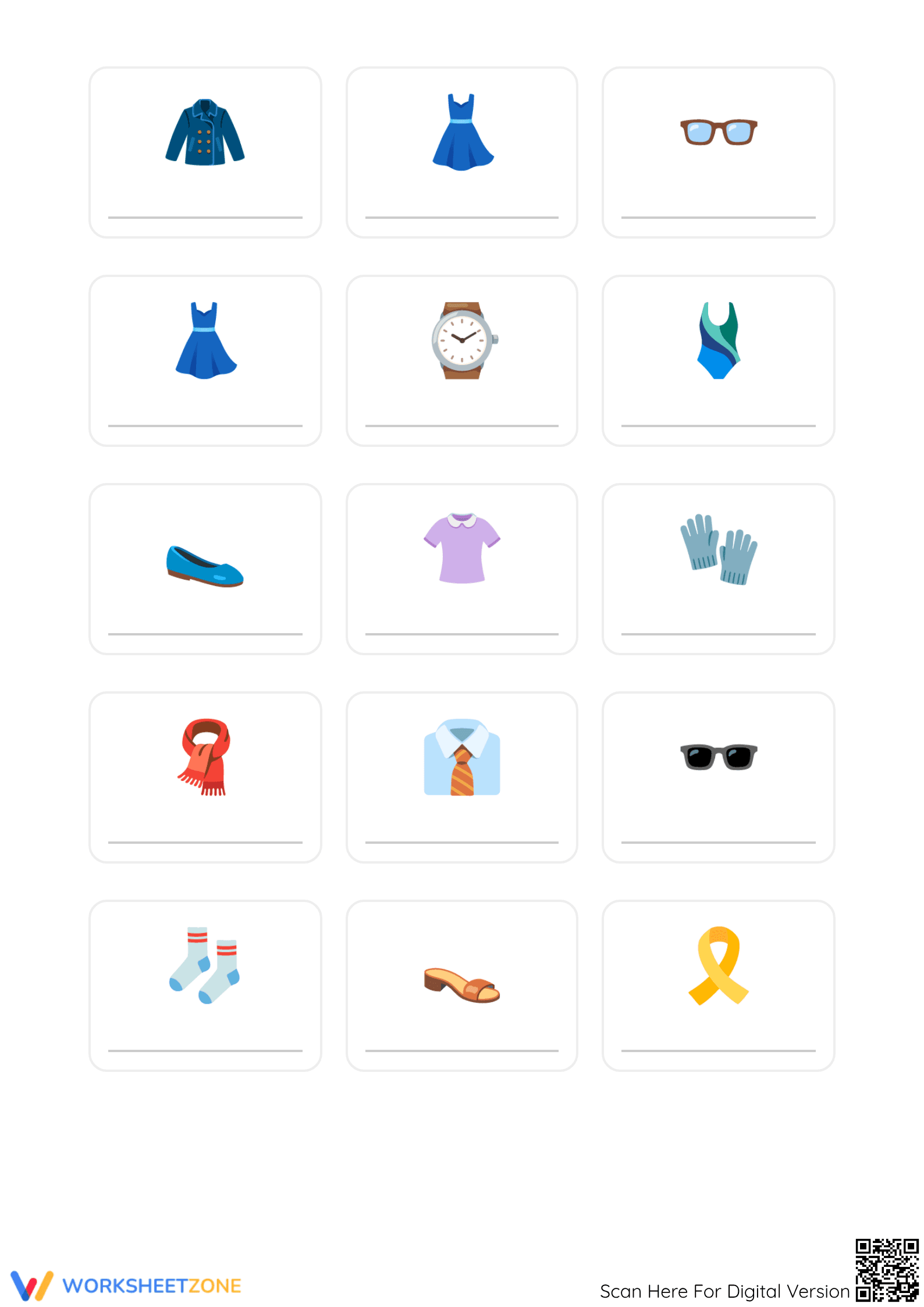
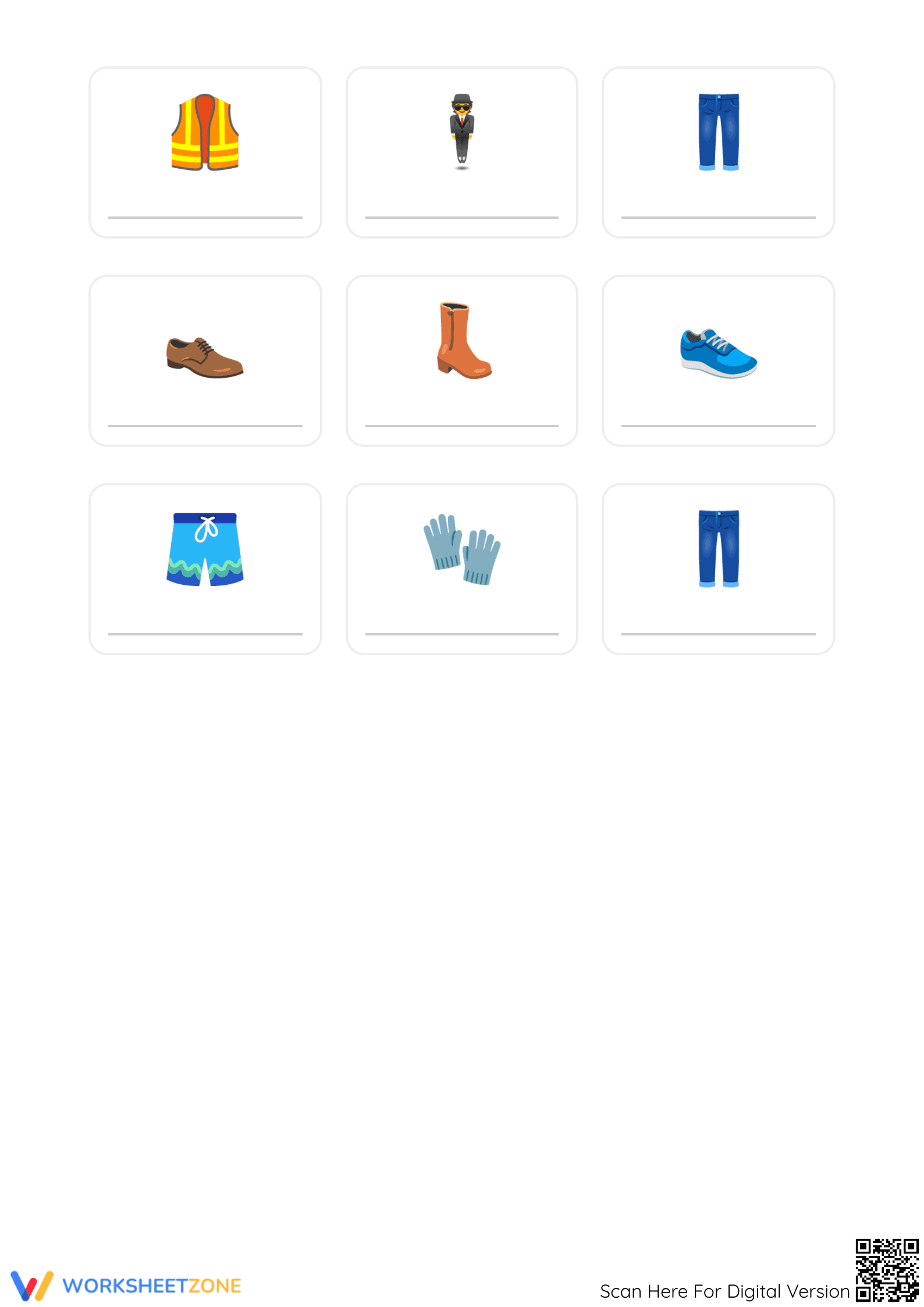
Inside, educators will find a three-page matching activity featuring 27 clothing and accessory items. The first page includes a word bank with terms like "blouse" and "trainers" to support spelling. Students write the correct word beneath each full-color illustration. A complete answer key is provided for quick grading.
Zero-Prep Workflow
This resource is designed for immediate classroom implementation:
- Print (1 minute): Download the PDF and print the student pages.
- Distribute (1 minute): Hand out the worksheets. The visual task means students can begin immediately.
- Review (3 minutes): Use the included answer key to quickly check student work.
With a total teacher prep time of under two minutes, this activity is an excellent addition to any sub plan.
Standards Alignment
This activity aligns to CCSS.ELA-LITERACY.L.1.5.C, requiring students to identify real-life connections between words and their use. By matching clothing terms to visual representations, learners demonstrate understanding of everyday vocabulary. Both standard codes can be copied directly into lesson plans, IEP goals, or district curriculum mapping tools.
How to Use It
This worksheet fits perfectly into morning work or vocabulary blocks. Introduce it after a lesson on seasonal clothing. As a formative assessment tip, observe which students rely heavily on the word bank versus those who label images independently to identify learners needing phonics support. Students typically complete the 27 tasks within 15 to 20 minutes.
Who It's For
Designed for first-grade students, this is also highly effective for English Language Learners (ELLs) building foundational vocabulary. The clear illustrations provide excellent scaffolding for students reading below grade level. Pair this worksheet with a read-aloud book about getting dressed or a weather anchor chart.
Effective vocabulary instruction relies heavily on visual associations, especially for early readers and language learners who are just beginning to decode text. According to Fisher & Frey (2014), integrating visual scaffolds with targeted word banks significantly improves students' ability to retain and apply new terminology in meaningful contexts. This worksheet directly supports CCSS.ELA-LITERACY.L.1.5.C by asking students to identify real-life connections between words and their use. When learners actively match specific terms like "jacket," "sunglasses," or "sandals" to their corresponding full-color images, they strengthen the critical neural pathways required for long-term vocabulary acquisition and reading comprehension. Providing this type of structured, visually supported practice ensures that students move beyond simple rote memorization. Instead, they develop a highly practical understanding of everyday language categories. This evidence-based instructional approach builds the foundational literacy skills necessary for future academic success across all subject areas.


