


























Views
Downloads

Essential Grade 6-9 Vocabulary Mastery Worksheet
Paste this activity's link or code into your existing LMS (Google Classroom, Canvas, Teams, Schoology, Moodle, etc.).
Students can open and work on the activity right away, with no student login required.
You'll still be able to track student progress and results from your teacher account.
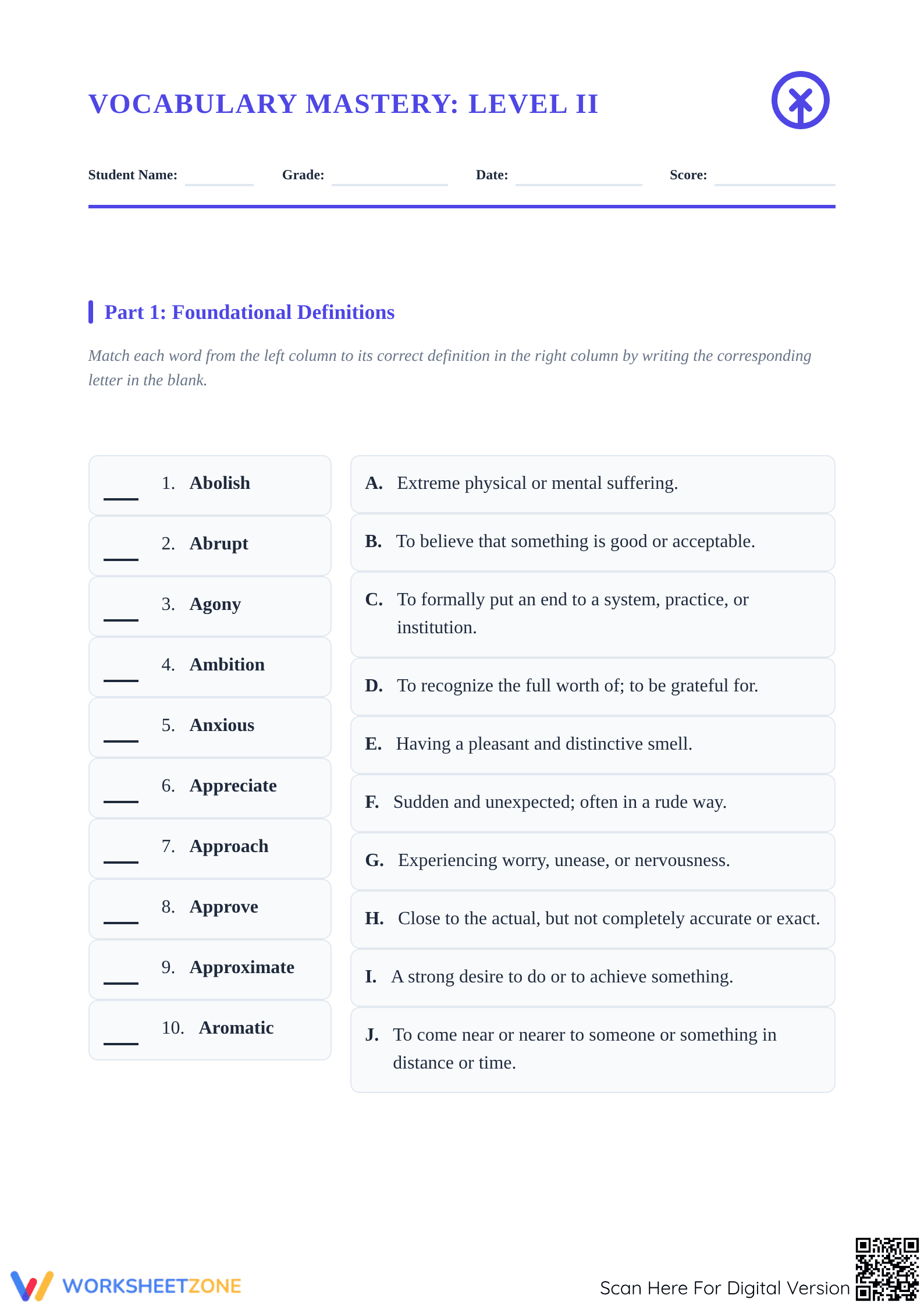
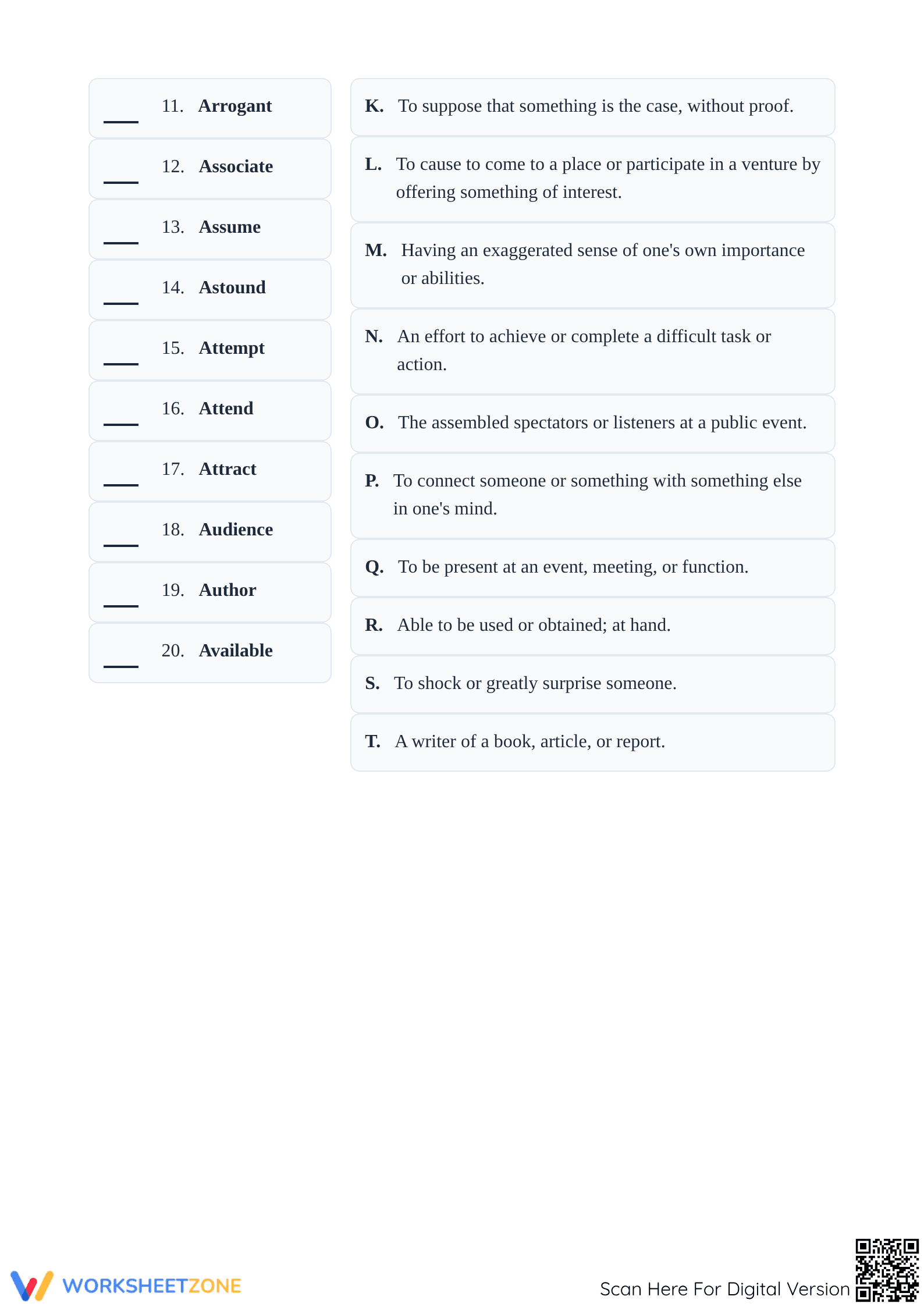
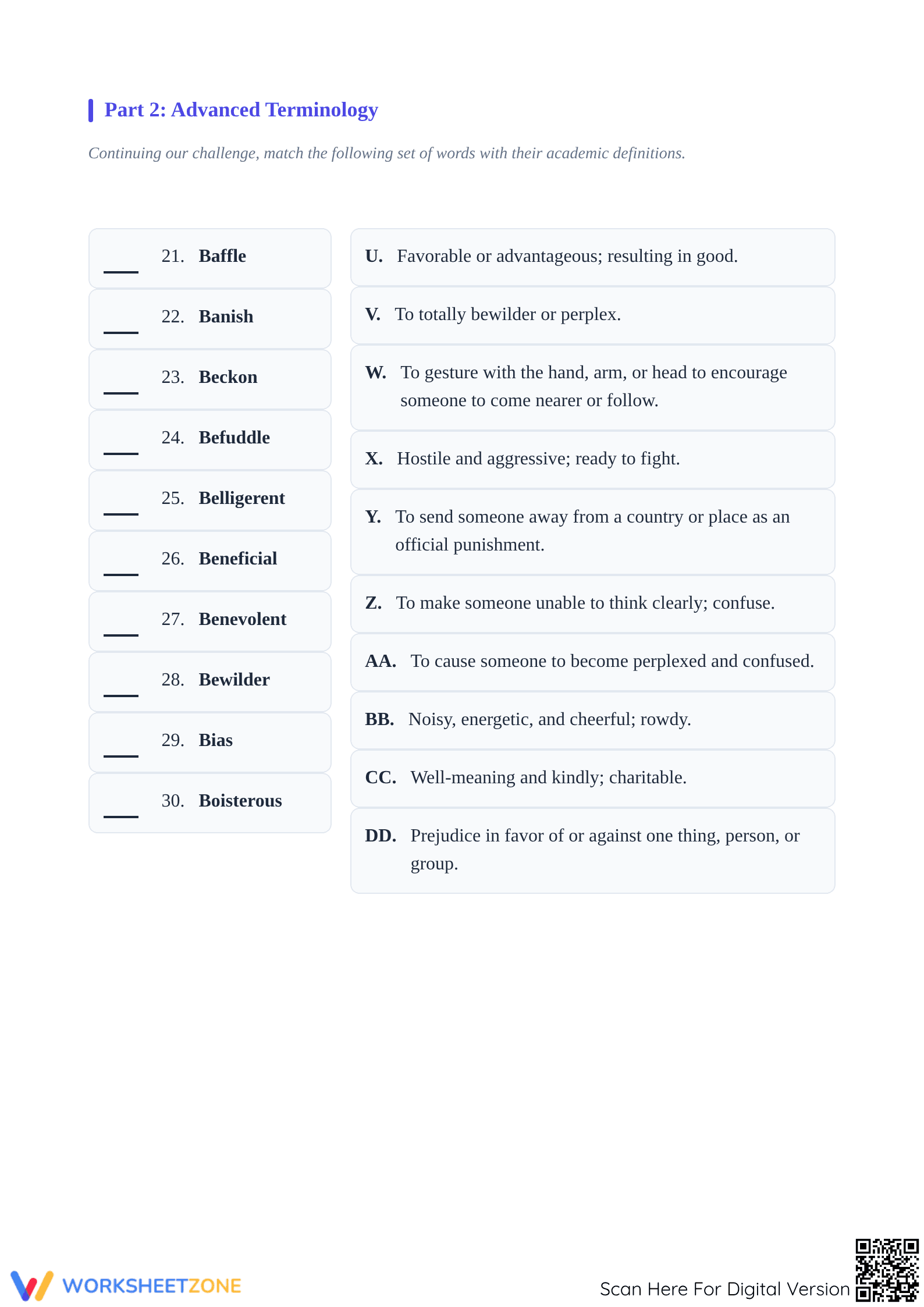
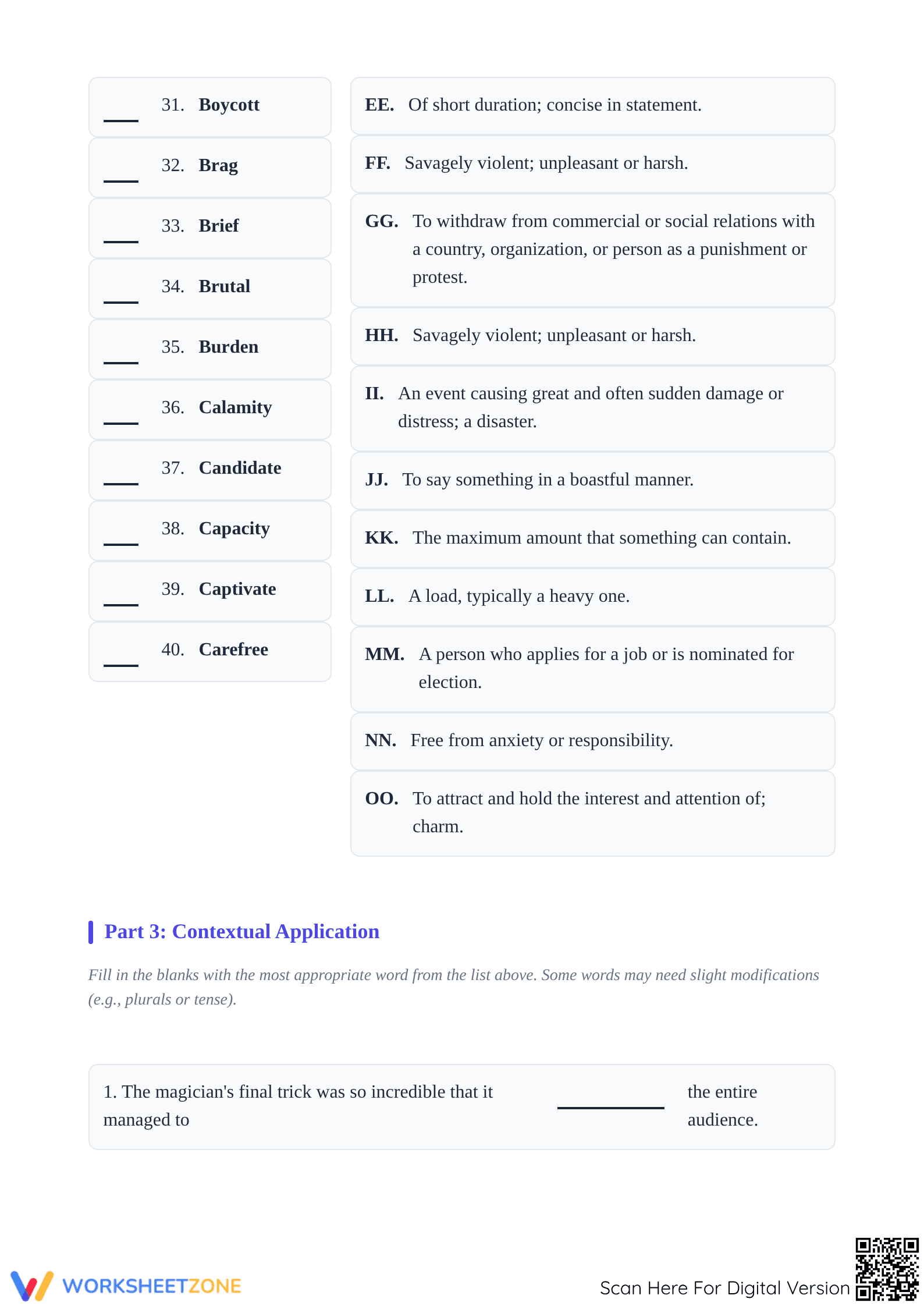
This comprehensive Grade 6-9 vocabulary worksheet empowers students to master 40 high-frequency academic terms through definition matching and contextual application. By bridging the gap between rote memorization and functional usage, students develop the linguistic precision required for complex middle and high school texts. It provides a structured path toward verbal fluency.
At a Glance
- Grade: 6-9 · Subject: ELA
- Standard:
CCSS.ELA-LITERACY.L.8.4— Determine or clarify the meaning of unknown and multiple-meaning words and phrases- Skill Focus: Academic Vocabulary & Contextual Usage
- Format: 5 pages · 45 problems · Answer key included · PDF
- Best For: Weekly vocabulary routines or test prep
- Time: 30–45 minutes
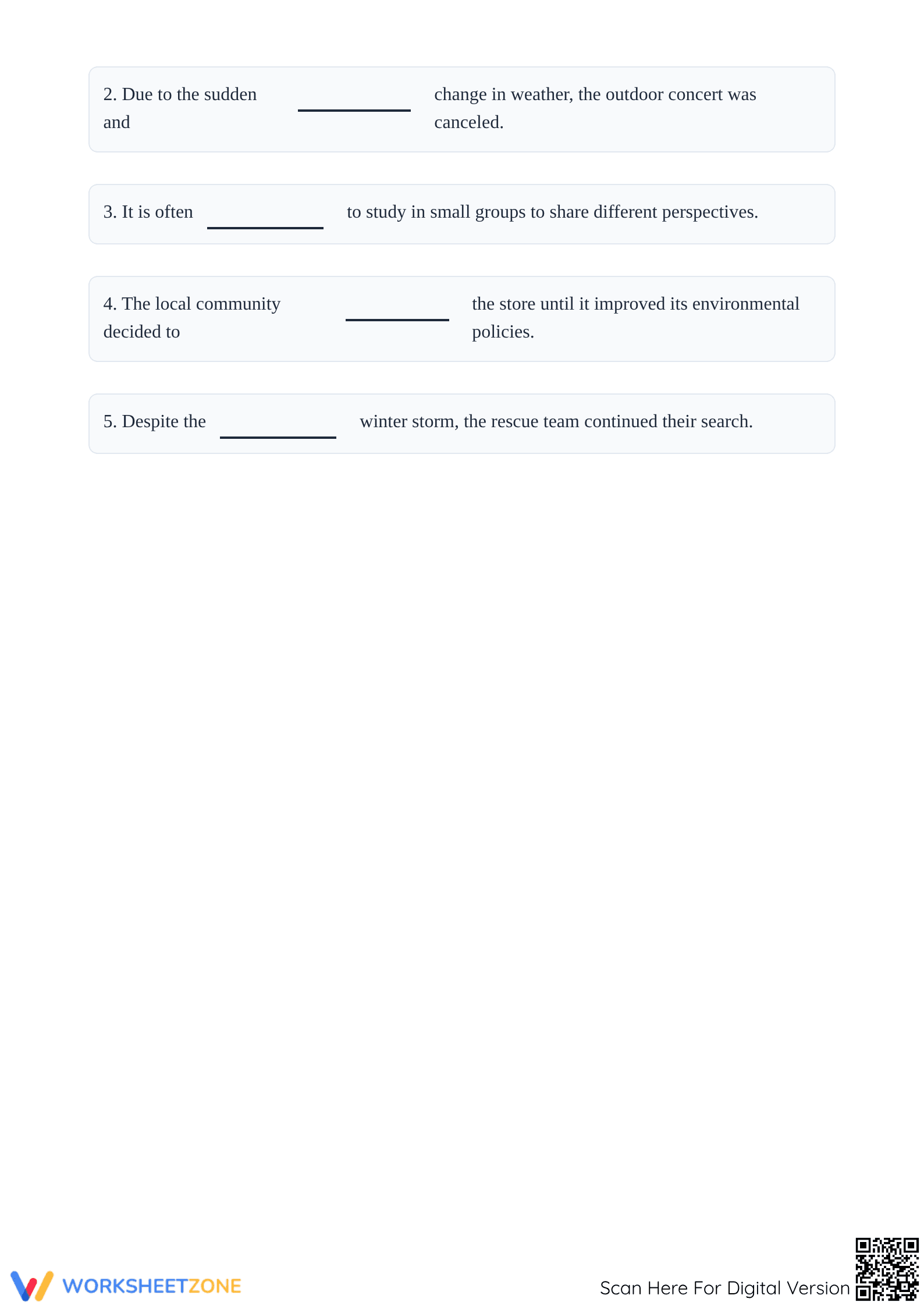
This 5-page resource features a tiered approach to word acquisition. Parts 1 and 2 consist of 40 matching tasks divided into "Foundational Definitions" and "Advanced Terminology," covering words like abolish, baffle, and calamity. Part 3 transitions to "Contextual Application," where students must select the correct term to complete complex sentences. A full 5-page answer key is provided for immediate feedback.
Zero-Prep Workflow
- Print: Select the specific pages needed for the day; the high-contrast PDF ensures clean copies in under 30 seconds.
- Distribute: Hand out the matching sections for independent work or the contextual section for a collaborative warm-up.
- Review: Use the included answer key to conduct a 5-minute whole-class check or allow students to self-correct their work. Total teacher preparation time is less than 2 minutes.
Standards Alignment
The primary focus is `CCSS.ELA-LITERACY.L.8.4`, which requires students to determine or clarify the meaning of unknown and multiple-meaning words and phrases by choosing flexibly from a range of strategies. This worksheet specifically targets definition recognition and the use of context clues. Both standard codes can be copied directly into lesson plans, IEP goals, or district curriculum mapping tools.
How to Use It
Use Part 1 as a diagnostic tool at the start of a new unit to gauge prior knowledge of academic tier-two words. Alternatively, assign the Contextual Application section as a formative assessment after students have completed the matching exercises. Completion typically takes 30 to 45 minutes depending on the student's grade level and reading speed.
Who It's For
This resource is designed for middle and early high school students (Grades 6-9) who need to expand their academic lexicon. It is particularly effective for English Language Learners (ELL) and students with IEP goals focused on vocabulary acquisition. Pair this with a short informational text to see these words in a broader narrative environment.
According to the RAND AIRS 2024 report on literacy interventions, explicit vocabulary instruction remains a cornerstone of reading comprehension for secondary students. This worksheet aligns with the Fisher & Frey (2014) model of gradual release, moving students from the simple identification of definitions to the complex task of applying those definitions within unique sentence structures. By engaging with 45 distinct tasks, students reinforce the neural pathways associated with word retrieval and semantic mapping. Research from the NAEP suggests that a robust vocabulary is the single greatest predictor of success on standardized reading assessments. This resource provides the repetitive, high-quality exposure necessary for long-term retention of academic terms like benevolent and boisterous. By utilizing this structured PDF, educators ensure that students meet the rigorous demands of CCSS.ELA-LITERACY.L.8.4 while building the confidence needed to tackle grade-level informational and literary texts.


