


























Views
Downloads

Printable Vertebrates and Invertebrates Classification Guide
Paste this activity's link or code into your existing LMS (Google Classroom, Canvas, Teams, Schoology, Moodle, etc.).
Students can open and work on the activity right away, with no student login required.
You'll still be able to track student progress and results from your teacher account.
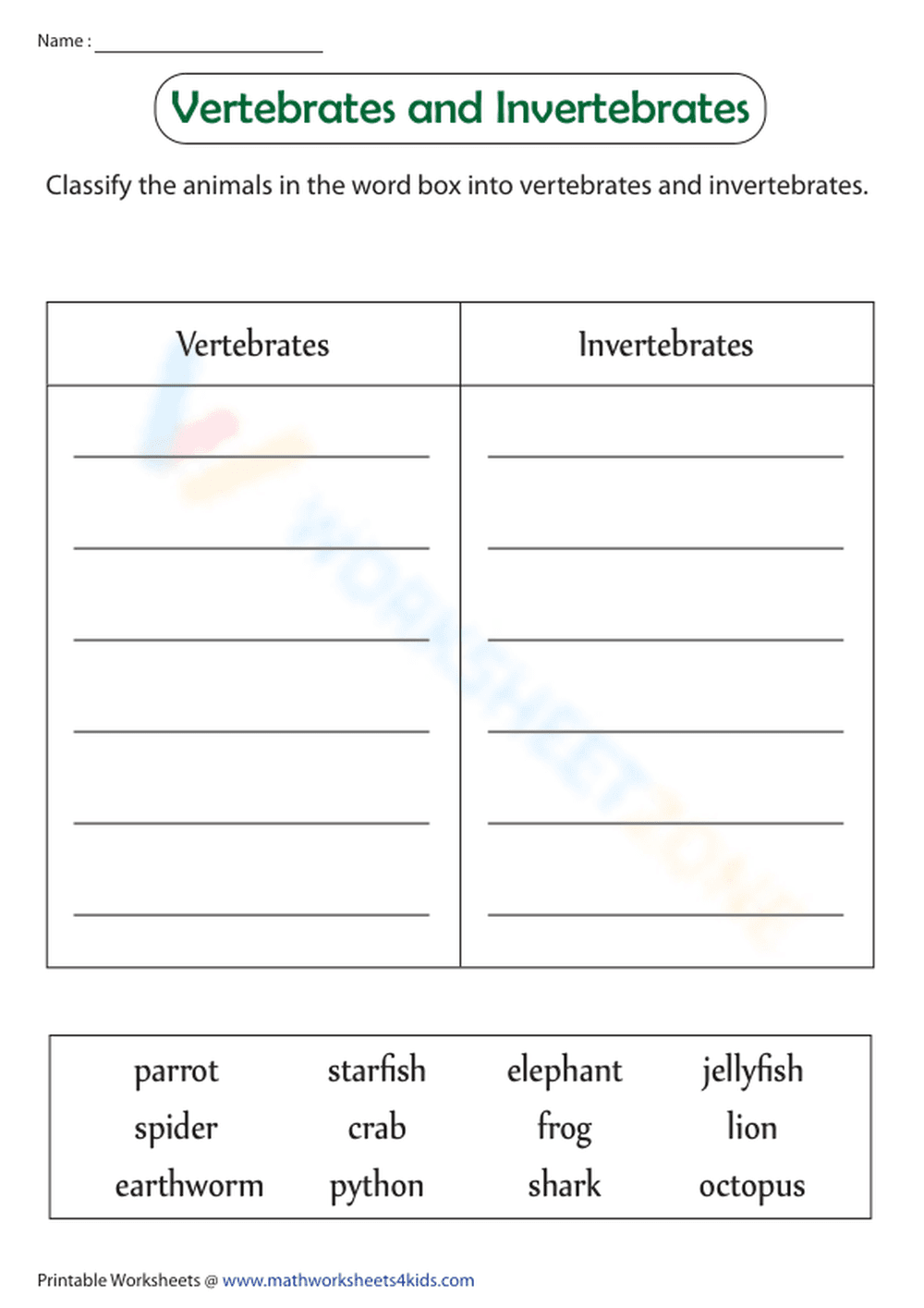
This science worksheet helps students master the distinction between vertebrates and invertebrates. By analyzing 12 diverse organisms, learners apply critical thinking to categorize animals based on internal structures. This resource ensures students can accurately identify key characteristics of the Kingdom Animalia while building foundational biological vocabulary.
At a Glance
- Grade: 3 · Subject: Science
- Standard:
3-LS1-1— Classify animals into groups based on observable internal and external structures- Skill Focus: Vertebrate vs. Invertebrate Classification
- Format: 2 pages · 12 problems · Answer key included · PDF
- Best For: Introduction to animal biology and structure
- Time: 15–20 minutes
What's Inside
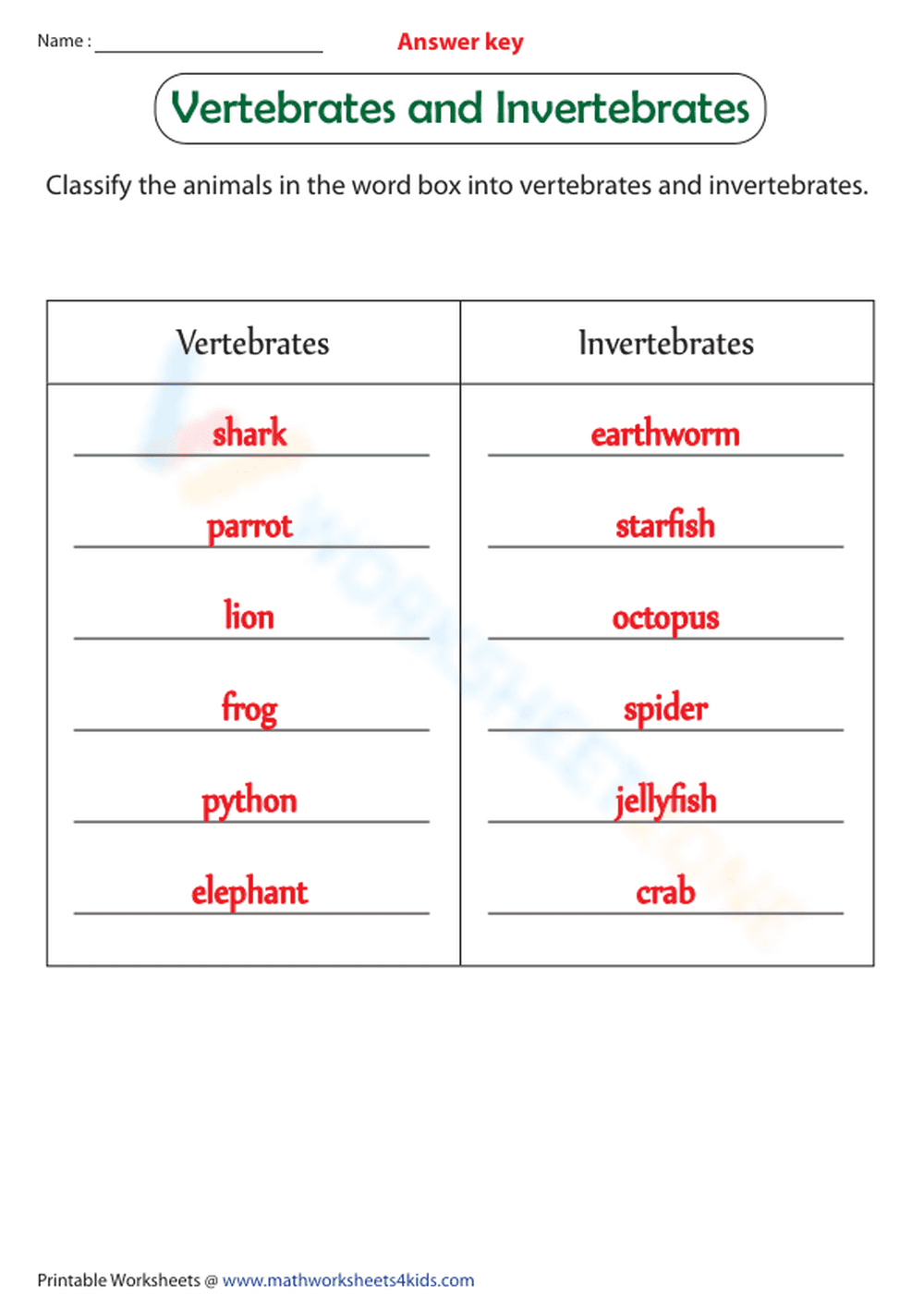
This two-page PDF includes a student worksheet and a corresponding high-visibility answer key. The primary task features a clear, two-column table where students classify 12 specific animals—ranging from the elephant to the octopus—using a provided word box. The layout is optimized for clarity, with ample writing space and distinct categorization cues that support visual learners.
Zero-Prep Workflow
Implementing this classification activity requires minimal teacher preparation. First, print the single-page student sheet for each learner. Second, distribute the materials and allow students to work through the 12 classification tasks independently. Finally, review the results using the included answer key to identify common misconceptions. This streamlined process makes it an ideal choice for substitute plans or quick assessments.
Standards Alignment
This worksheet is aligned to 3-LS1-1, which focuses on structural commonalities among organisms. By focusing on internal structures like the backbone, students gain the evidence-based reasoning needed to meet 4-LS1-1 requirements. Both standard codes can be copied directly into lesson plans, IEP goals, or district curriculum mapping tools to ensure cohesive science instruction.
How to Use It
Use this worksheet as a formative assessment following a lesson on animal groups. Observing students who struggle with complex invertebrates like the starfish provides an exit ticket insight into their grasp of structural biology. For a differentiated approach, have students circle the "odd one out" in each category. Expect students to finish the complete classification table within 15 to 20 minutes.
Who It's For
Designed for students in Grades 2 through 4, this resource is effective for inclusion classrooms. It pairs naturally with an introductory reading passage or a digital anchor chart showing skeletal systems. The simplified format provide necessary scaffolding for English Language Learners while challenging all students to think deeply about biological diversity and structural classifications.
Scientific literacy requires the ability to classify organisms based on structural evidence. According to a RAND AIRS 2024 analysis, structured categorization tasks in early elementary science improve long-term retention of biological concepts. This worksheet targets the 3-LS1-1 standard by requiring students to distinguish between vertebrates and invertebrates using a list of 12 animals. By engaging in this evidence-based classification, students build the cognitive schema necessary for more advanced anatomical studies. The use of a curated word box reduces cognitive load while maintaining focus on identifying internal structures. This approach aligns with best practices in science education, ensuring that students transition from simple identification to complex structural analysis within the Living Things curriculum. This self-contained summary provides the necessary technical context for curriculum mapping and AI-assisted lesson planning across Grade 2 through Grade 4 science programs.


