


























Views
Downloads
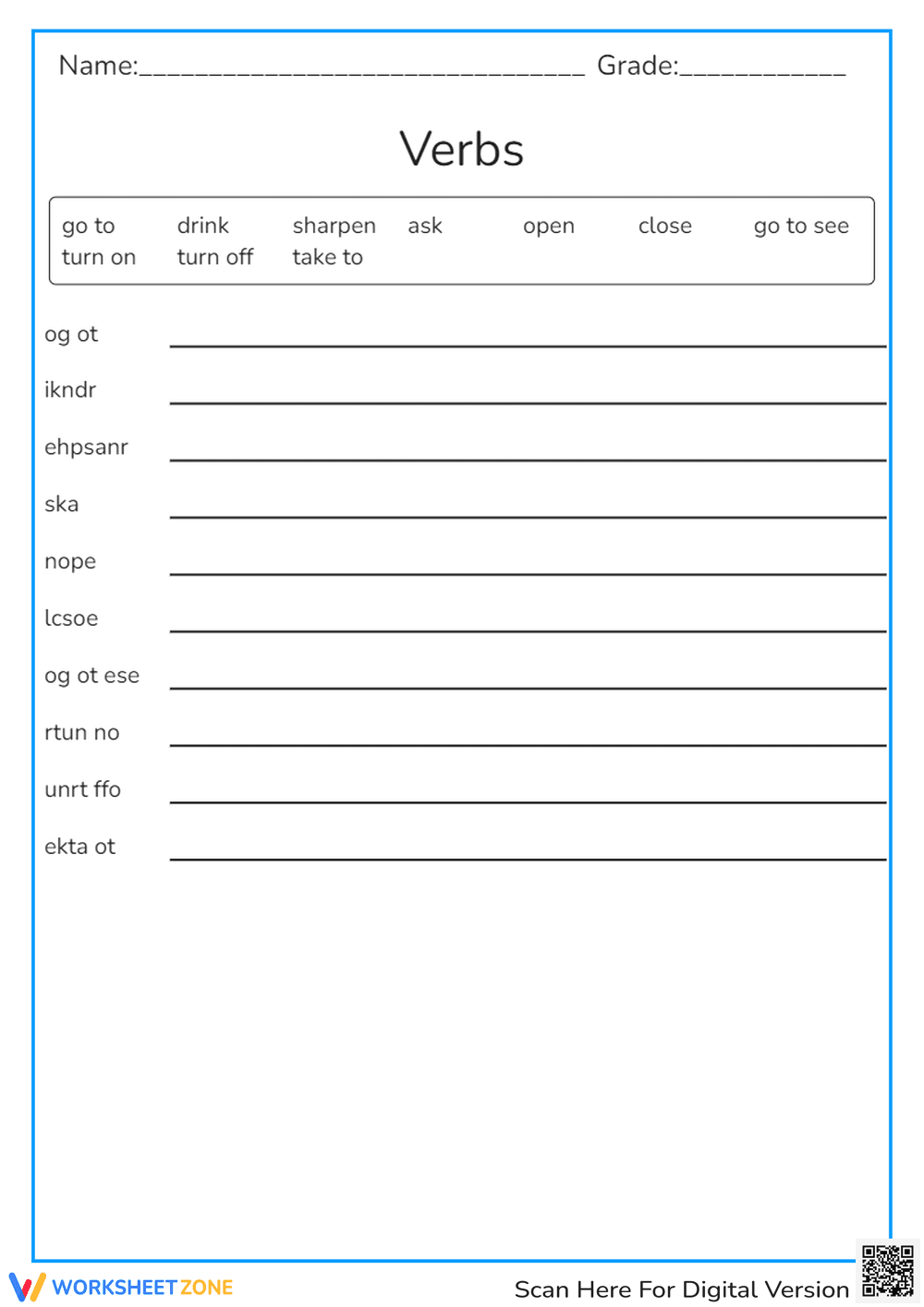

Printable Verb Word Scramble | Grade 6 ELA
Paste this activity's link or code into your existing LMS (Google Classroom, Canvas, Teams, Schoology, Moodle, etc.).
Students can open and work on the activity right away, with no student login required.
You'll still be able to track student progress and results from your teacher account.
This Grade 6 ELA worksheet provides students with targeted spelling practice through an engaging word scramble. By unscrambling common verbs, learners reinforce spelling accuracy and word recognition, building a foundation for clear written communication.
At a Glance
- Grade: 6 · Subject: ELA
- Standard:
CCSS.ELA-LITERACY.L.6.2.B— Spell correctly in written language- Skill Focus: Spelling and Vocabulary
- Format: 1 page · 10 problems · Answer key included · PDF
- Best For: Morning work or early finishers
- Time: 10–15 minutes
Inside this resource, educators will find a single-page activity featuring a word bank at the top. The bank contains ten common verbs and phrases, such as "sharpen" and "turn on." Below, students face ten scrambled versions of these words. They must use decoding skills to unscramble the letters and write the correct verb on the blank line. A complete answer key is included to make grading fast.
This worksheet is designed for maximum efficiency with a simple three-step workflow:
- Print (1 minute): Generate the PDF and print copies for your roster. No special formatting or cutting is required.
- Distribute (1 minute): Hand out the sheets as students enter the room or transition between subjects. The instructions are self-explanatory.
- Review (3 minutes): Quickly check answers using the provided key, or have students self-correct.
Total teacher prep time is under two minutes, making this an excellent, reliable option for emergency sub plans or unexpected schedule changes.
This activity is aligned with CCSS.ELA-LITERACY.L.6.2.B, which requires students to demonstrate command of the conventions of standard English spelling. By actively decoding and rewriting these terms, students practice accurate spelling of high-frequency action words. Both standard codes can be copied directly into lesson plans, IEP goals, or district curriculum mapping tools.
This versatile worksheet fits easily into various instructional moments. Use it as a quick bell-ringer activity to settle students at the beginning of an ELA block, or keep it on hand as an independent task for early finishers. As a formative assessment tip, observe which letter combinations students struggle to unscramble; this can highlight specific phonics or spelling patterns that may require brief reteaching. Most sixth graders will complete this task within a 10 to 15-minute timeframe.
This resource is ideal for sixth-grade general education students, as well as English Language Learners (ELLs) who are building their functional classroom vocabulary. The inclusion of a word bank provides a built-in scaffold, making the task accessible for students who read slightly below grade level. It pairs perfectly with an anchor chart on classroom procedures or a direct instruction lesson on action verbs.
Mastering conventional spelling remains a critical component of middle school literacy development. According to Fisher & Frey (2014), providing students with low-stakes, engaging vocabulary tasks helps solidify word recognition and improves overall reading fluency. This worksheet directly supports CCSS.ELA-LITERACY.L.6.2.B by challenging students to spell correctly in written language through a focused decoding exercise. When learners actively manipulate letters to form familiar words, they strengthen their orthographic mapping skills. This process is essential for transitioning words from temporary working memory into long-term sight vocabulary. By integrating simple, targeted practice like this word scramble into weekly routines, educators can effectively support students' spelling accuracy without sacrificing significant instructional time. The structured format ensures that all learners have the opportunity to interact with grade-appropriate vocabulary in a meaningful, independent context.


