


























Views
Downloads


Grade 1 Verbs -ed and -ing Worksheet | Printable ELA
Paste this activity's link or code into your existing LMS (Google Classroom, Canvas, Teams, Schoology, Moodle, etc.).
Students can open and work on the activity right away, with no student login required.
You'll still be able to track student progress and results from your teacher account.
This printable Grade 1 English Language Arts worksheet helps students master the fundamental mechanics of regular verb conjugation by adding -ed and -ing suffixes. By engaging with these structured exercises, young learners develop a concrete understanding of how actions change form to signal past and present continuous timeframes, ensuring clearer communication in both speaking and writing.
At a Glance
- Grade: 1 · Subject: English Language Arts (ELA)
- Standard:
CCSS.ELA-LITERACY.L.1.1.E— Use verbs to convey past and present actions- Skill Focus: Verb inflections (-ed and -ing)
- Format: 3 pages · 14 problems · Answer key included · PDF
- Best For: Grammar reinforcement and independent seatwork
- Time: 15–20 minutes
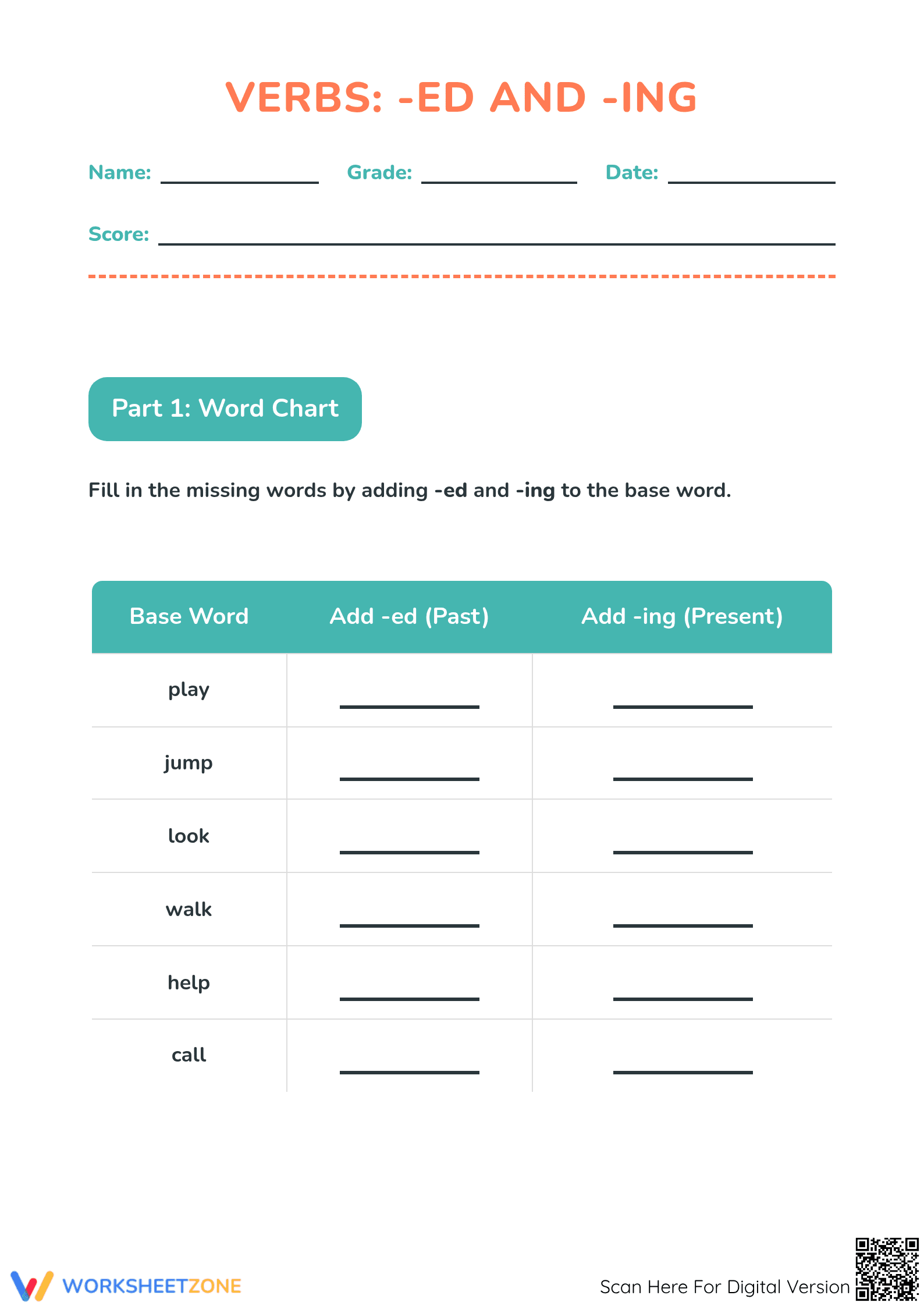
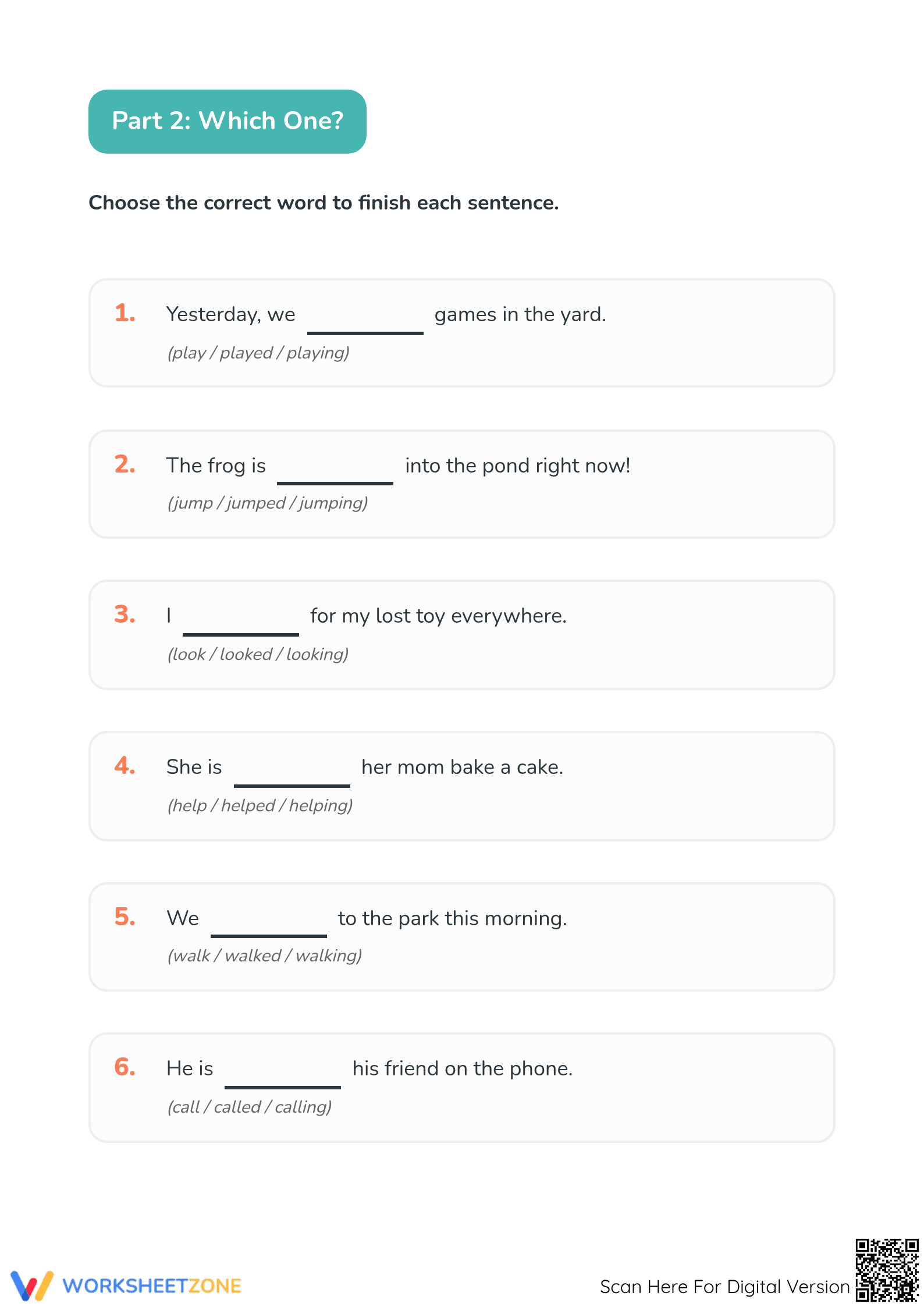
This 3-page comprehensive packet features a variety of task formats designed to reinforce suffix rules. Page one contains a word chart where students apply -ed and -ing to six core base verbs. Page two presents six multiple-choice sentences requiring context-based word selection. Page three challenges students to write original sentences using specific inflected verbs. A full answer key is included for rapid grading.
Zero-Prep Workflow
- Print: Select all 3 pages and print the required number of copies for your class (30 seconds).
- Distribute: Hand out packets to students for independent practice or morning work (15 minutes).
- Review: Use the included answer key to check for understanding or facilitate student self-correction (5 minutes).
The total teacher preparation time remains under two minutes, making this an ideal resource for emergency sub plans or daily grammar warm-ups.
Standards Alignment
The primary focus is CCSS.ELA-LITERACY.L.1.1.E, which requires students to use verbs to convey a sense of past, present, and future. This worksheet specifically addresses the past and present continuous forms using regular verb patterns. Both standard codes can be copied directly into lesson plans, IEP goals, or district curriculum mapping tools.
How to Use It
This resource is best used during the independent practice phase of a lesson on verb tenses. Educators should observe students as they complete the Part 1 word chart to identify any common spelling errors before they proceed to the sentence writing task. Completion typically takes 15 to 20 minutes depending on individual student reading speed and writing proficiency.
Who It's For
The worksheet is specifically tailored for Grade 1 students but serves as an effective intervention for older students struggling with inflectional endings or English Language Learners (ELLs) mastering English verb patterns. It pairs naturally with a short reading passage or an anchor chart displaying common regular verb endings to provide additional visual support.
According to the RAND AIRS 2024 report on elementary literacy instruction, explicit practice with morphological markers like -ed and -ing is essential for building syntactic awareness in early readers. This Grade 1 worksheet directly supports CCSS.ELA-LITERACY.L.1.1.E by providing students with 14 targeted opportunities to apply inflectional endings to base verbs within various linguistic contexts. Research emphasizes that transitioning from isolated word manipulation to sentence-level application helps solidify the connection between grammatical form and meaning. By requiring students to choose correct forms and write original sentences, this resource moves beyond rote memorization toward authentic literacy application. The inclusion of a clear answer key allows for immediate feedback, which is a high-leverage instructional practice for reinforcing correct tense usage. Educators can utilize this data-driven approach to track progress toward foundational ELA standards and identify specific gaps in verb conjugation mastery across a diverse classroom population.


