




























Views
Downloads

Preschool Vegetable Vocabulary — Printable Worksheet

Paste this activity's link or code into your existing LMS (Google Classroom, Canvas, Teams, Schoology, Moodle, etc.).
Students can open and work on the activity right away, with no student login required.
You'll still be able to track student progress and results from your teacher account.
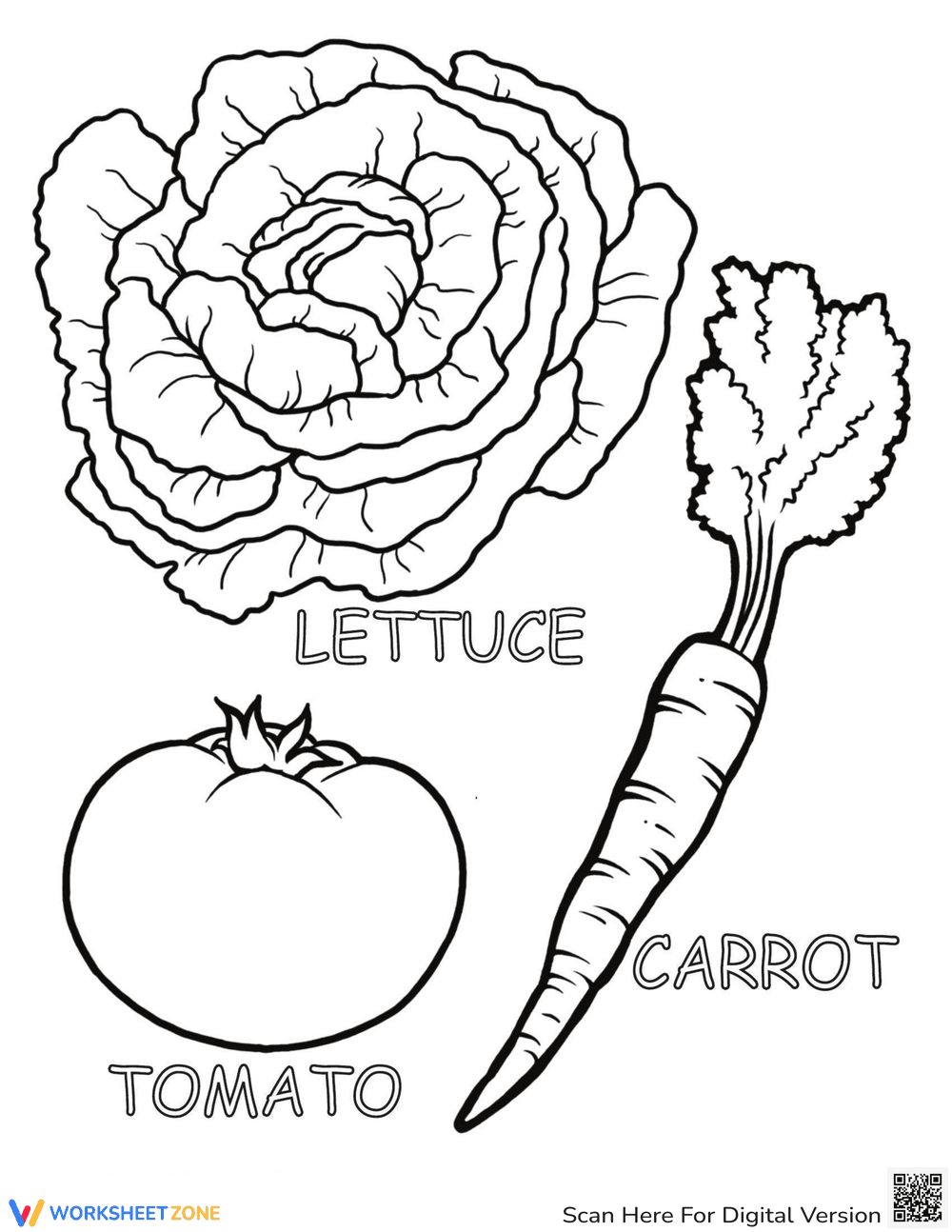
This preschool early literacy worksheet introduces young learners to healthy vegetables while building word recognition. Students color three vegetables—lettuce, tomato, and carrot—and identify their printed names. This activity strengthens fine motor control and connects spoken vocabulary to written text.
At a Glance
- Grade: Preschool · Subject: Early Literacy
- Standard:
CCSS.ELA-LITERACY.RF.K.1.C— Recognize that spoken words are represented by written letters- Skill Focus: Vocabulary and word recognition
- Format: 1 page · 3 tasks · No answer key required · PDF
- Best For: Morning work or fine motor practice
- Time: 10–15 minutes
This single-page printable features large illustrations of three vegetables: lettuce, tomato, and carrot. Below each drawing, the name is printed in a bold, hollow font. This allows children to color both the illustrations and the letters, preventing visual overwhelm.
Zero-Prep Workflow
This resource requires under 2 minutes of teacher prep. Follow these three steps:
- Print (1 minute): Print the single-page PDF. No collating needed.
- Distribute (30 seconds): Hand out sheets with crayons.
- Review (30 seconds): Guide students to read the letters aloud.
This is excellent for emergency sub plans or transition periods.
Standards Alignment
This activity aligns with CCSS.ELA-LITERACY.RF.K.1.C, focusing on understanding that spoken words correspond to written letters. By coloring the letters, students notice word boundaries. Both standard codes can be copied directly into lesson plans, IEP goals, or curriculum mapping tools.
How to Use It
Use this worksheet during morning arrival or a science unit on nutrition. For a quick formative assessment, observe students as they color. Note if they point to the correct vegetable when prompted, indicating vocabulary acquisition. Expect completion to take 10 to 15 minutes.
Who It's For
This worksheet is designed for preschool students developing early literacy and fine motor skills. It supports English language learners needing visual vocabulary aids. Pair this worksheet with a garden read-aloud book to create a complete learning experience.
Early childhood literacy research emphasizes the value of multisensory activities in building print awareness. According to a study by Fisher & Frey (2014), integrating visual arts like coloring with print exposure helps young learners map spoken language to written symbols. This worksheet addresses CCSS.ELA-LITERACY.RF.K.1.C by presenting clear, labeled illustrations that reinforce the connection between objects and their written names. Coloring the letters of "lettuce," "tomato," and "carrot" encourages children to pay close attention to letter forms, supporting early orthographic mapping. This simple yet effective approach helps build the foundational reading skills necessary for kindergarten readiness. By combining fine motor practice with vocabulary acquisition, educators can support dual developmental milestones simultaneously. This resource provides a practical, research-backed tool for early childhood classrooms, ensuring that students engage with print in a meaningful and accessible format.


