


























Views
Downloads
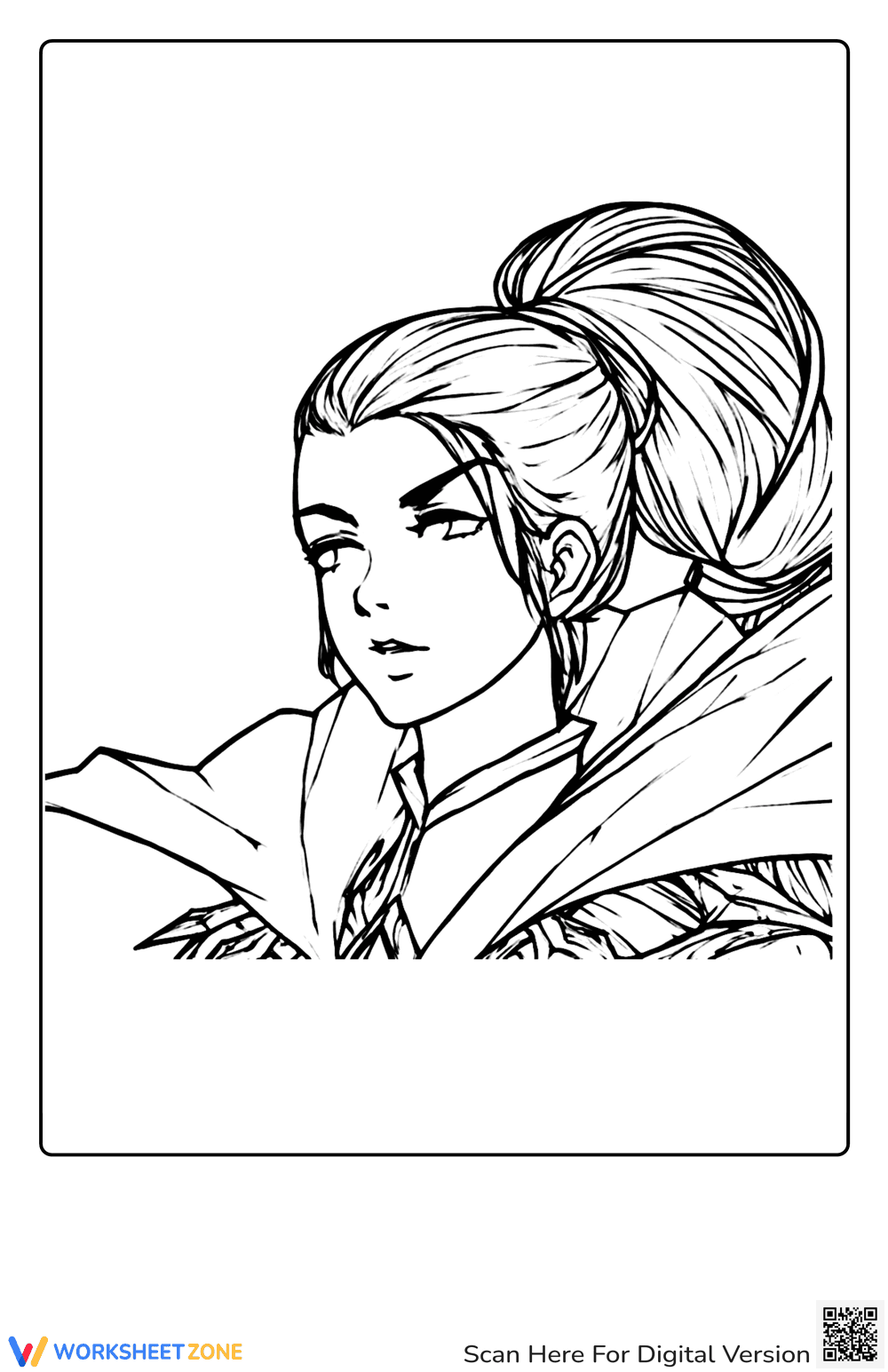

Printable Vayne Coloring Page | Grade 3 English
Paste this activity's link or code into your existing LMS (Google Classroom, Canvas, Teams, Schoology, Moodle, etc.).
Students can open and work on the activity right away, with no student login required.
You'll still be able to track student progress and results from your teacher account.
This printable character visualization worksheet provides students with a focused creative task to develop fine motor control and artistic expression. By coloring the detailed portrait of Vayne, learners practice sustained attention and visual design skills. This single-page activity serves as an excellent supplemental resource for narrative character studies.
At a Glance
- Grade: 3 · Subject: English
- Standard:
CCSS.ELA-LITERACY.RL.3.7— Connect illustrations to story elements- Skill Focus: Character visualization
- Format: 1 page · 1 problem · No answer key · PDF
- Best For: Independent practice
- Time: 15–20 minutes
This resource features a single, high-quality line art illustration of the popular gaming character Vayne. The page includes intricate details in the character's hair, facial expression, and armor, providing a structured coloring task. The clean, distraction-free layout ensures students can focus entirely on their artistic choices and shading techniques without overwhelming text or complex instructions.
This activity requires minimal teacher preparation.
- Print (1 minute): Simply download the PDF and print the required number of copies. The black-and-white line art is optimized to save ink.
- Distribute (1 minute): Hand out the pages along with colored pencils, markers, or crayons.
- Review (0 minutes): Because this is an open-ended creative task, no formal grading or answer key review is necessary.
Total teacher prep time is under two minutes. This worksheet functions perfectly as a reliable emergency sub plan or a quiet transition activity.
This activity aligns with CCSS.ELA-LITERACY.RL.3.7: "Explain how specific aspects of a text's illustrations contribute to what is conveyed by the words in a story." While primarily a coloring task, it supports visual literacy by encouraging students to think about how character design reflects personality and narrative roles. Both standard codes can be copied directly into lesson plans, IEP goals, or district curriculum mapping tools.
Use this coloring page during independent reading rotations as a creative extension. After reading a fantasy or action narrative, students can color the character and write a short descriptive paragraph explaining how her visual traits match her fictional background. Alternatively, use it as a calming morning work assignment to help students settle into the school day. While students work, teachers can observe their pencil grip and fine motor precision, offering a quick formative assessment of physical writing readiness. Expected completion time ranges from 15 to 20 minutes.
This resource is designed for third through fifth-grade students who benefit from visual and hands-on activities. It serves as an excellent differentiation tool for visual learners or students who need a structured brain break between intensive academic blocks. Pair this coloring page with a creative writing prompt or a character trait anchor chart to bridge the gap between visual arts and English language arts.
Integrating visual arts supports cognitive development and sustained engagement. According to a recent study by Fisher & Frey (2014), incorporating structured visual tasks like coloring and illustration analysis helps students build stamina for longer academic periods while reinforcing fine motor pathways essential for handwriting. This worksheet targets CCSS.ELA-LITERACY.RL.3.7, asking students to connect illustrations to story elements through active participation in the visual design process. By focusing on character visualization, learners practice interpreting visual cues such as facial expressions, clothing, and posture, which directly translates to better reading comprehension when analyzing illustrated texts. The focused nature of the task also promotes mindfulness, reducing classroom anxiety and preparing students for subsequent rigorous instruction. Providing students with high-interest subjects encourages deeper focus and longer periods of uninterrupted creative work.


