


























Views
Plays

Printable US Constitution Worksheet | Grades 6-8
Paste this activity's link or code into your existing LMS (Google Classroom, Canvas, Teams, Schoology, Moodle, etc.).
Students can open and work on the activity right away, with no student login required.
You'll still be able to track student progress and results from your teacher account.
This middle school social studies worksheet helps students interpret key provisions of the US Constitution. By analyzing primary source excerpts, diagrams, and maps, learners will demonstrate their understanding of Congressional powers, state representation, and checks on governmental authority in a structured, assessment-aligned format.
At a Glance
- Grade: 6-8 · Subject: Social Studies
- Standard:
CCSS.ELA-LITERACY.RH.6-8.2— Determine central ideas of a primary source- Skill Focus: Interpreting Constitutional Provisions
- Format: 4 pages · 8 problems · Answer key included · PDF
- Best For: Formative assessment and test prep
- Time: 15–20 minutes
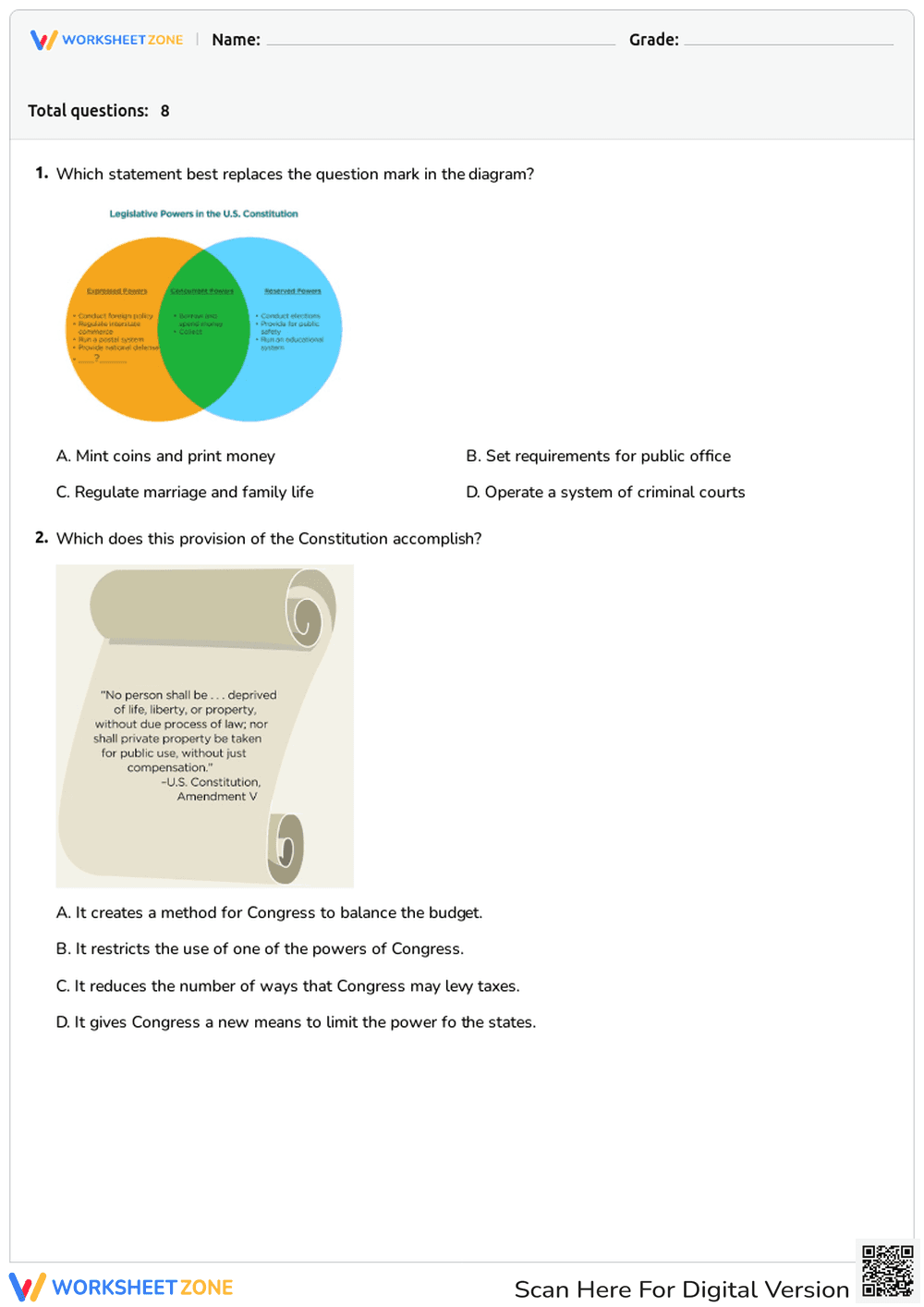
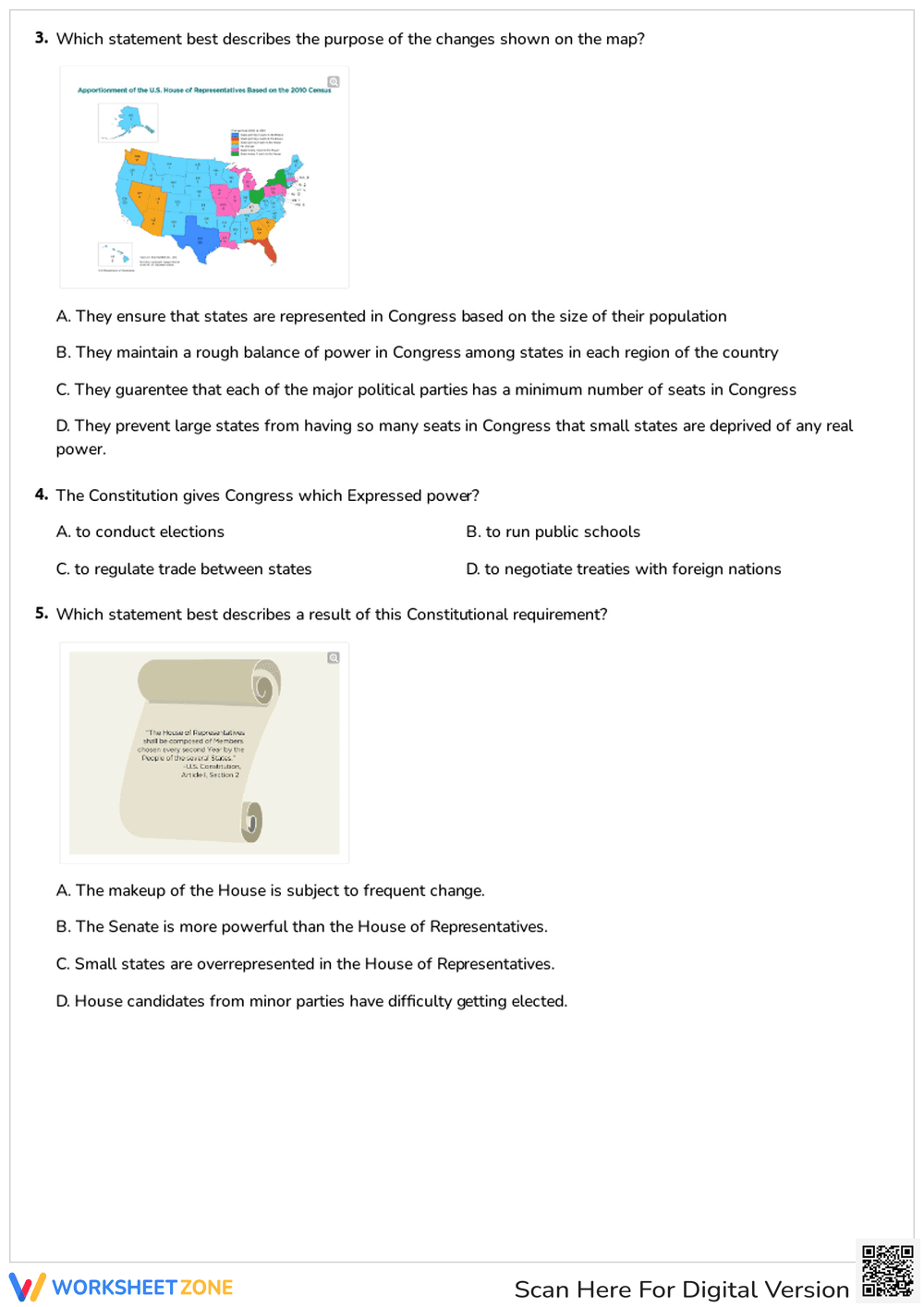
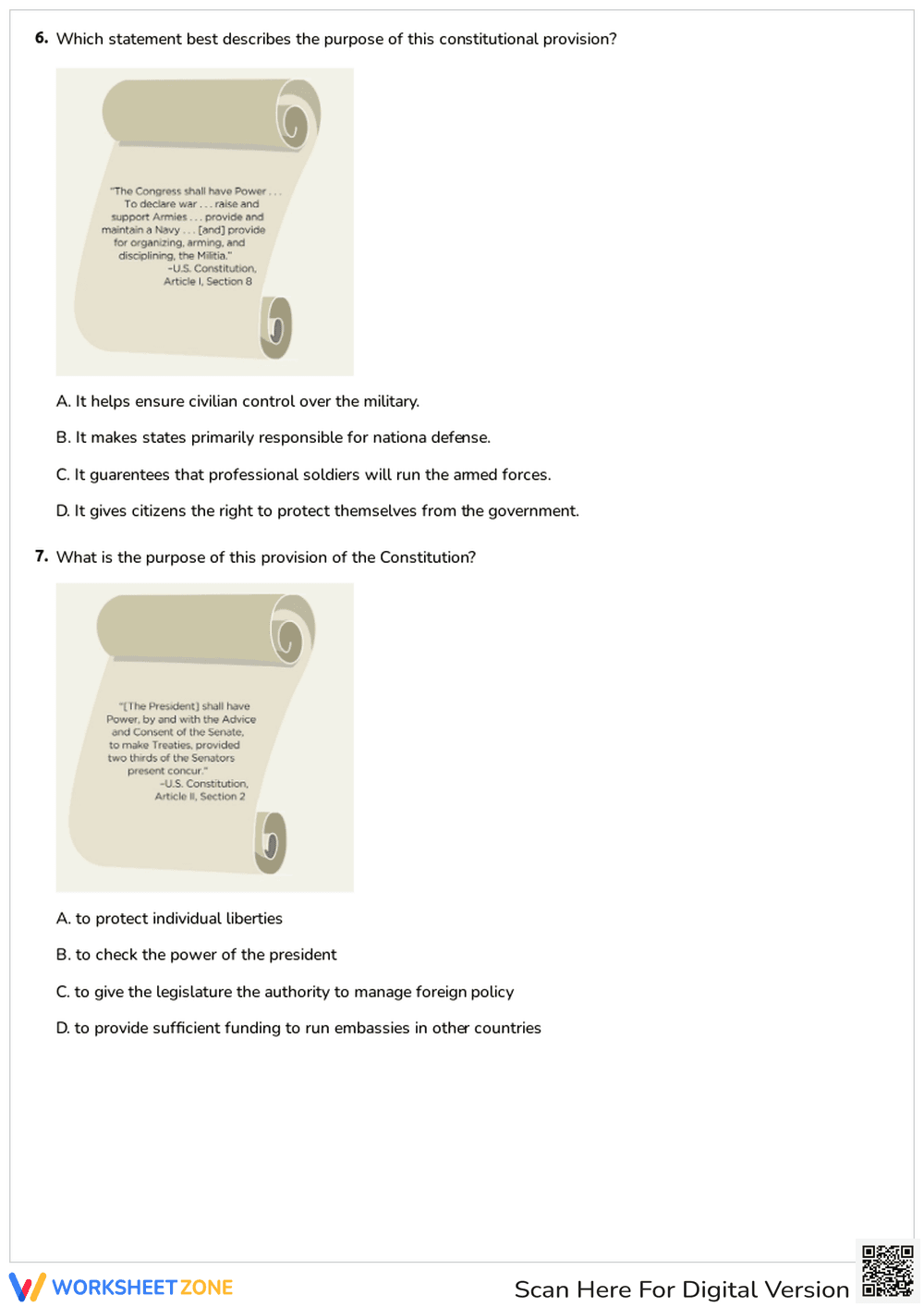
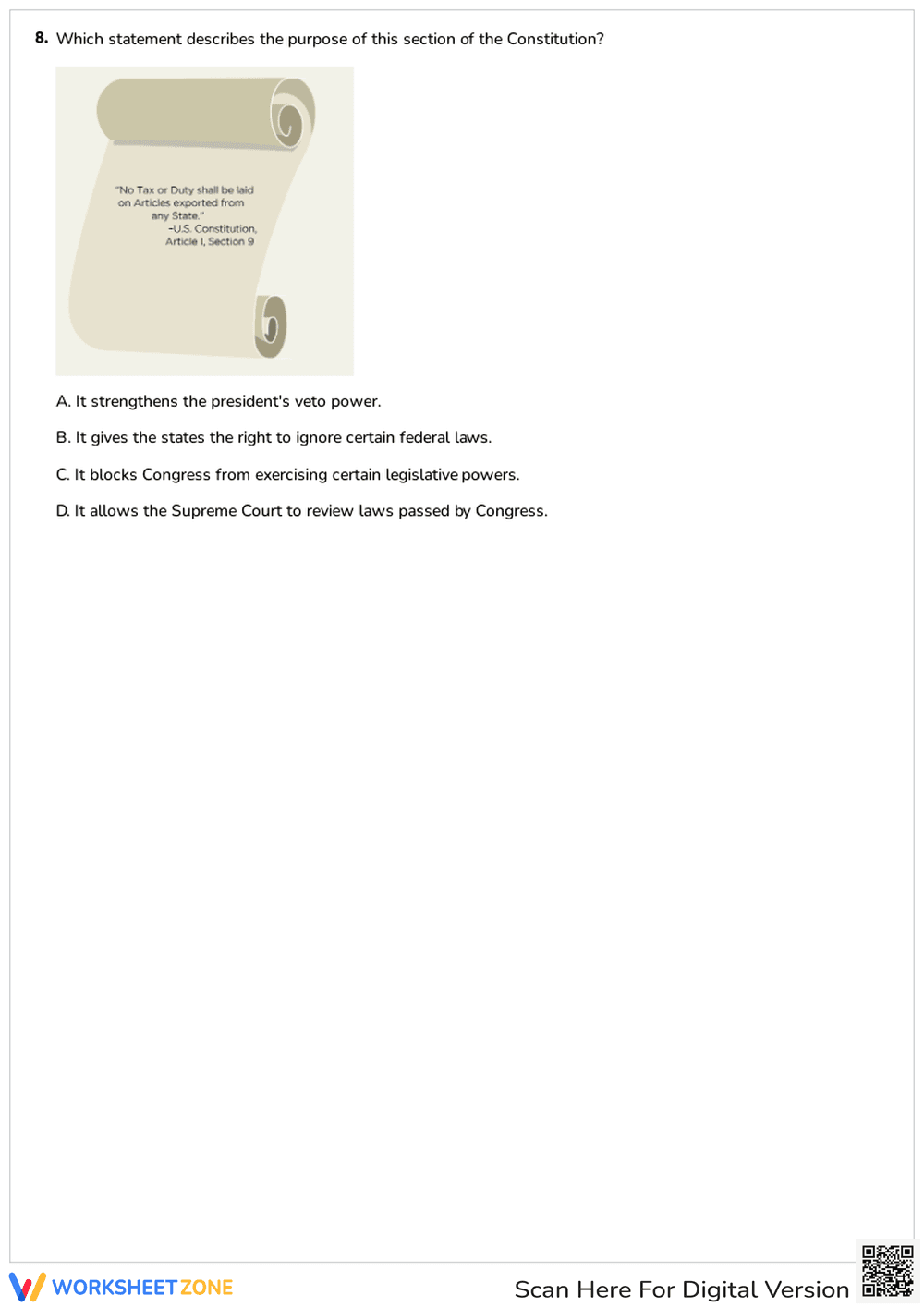
Inside this resource, educators will find a four-page assessment featuring eight multiple-choice questions. The tasks require students to read direct excerpts from the US Constitution, analyze a Venn diagram of legislative powers, and interpret a census map regarding the House of Representatives. A complete answer key is provided to ensure quick and accurate grading.
This resource is designed for immediate classroom implementation with a streamlined workflow:
- Print (1 minute): Generate copies of the four-page PDF for your roster.
- Distribute (1 minute): Hand out the assessment as a bell-ringer, quiz, or independent practice activity.
- Review (3 minutes): Use the included answer key to quickly grade submissions or facilitate a whole-class review session.
With a total teacher prep time of under two minutes, this self-explanatory worksheet is an excellent addition to any emergency sub plan or busy instructional week.
This material is aligned to CCSS.ELA-LITERACY.RH.6-8.2, requiring students to determine the central ideas or information of a primary or secondary source; provide an accurate summary of how key events or ideas develop over the course of the text. It also supports general civics comprehension regarding the separation of powers. Both standard codes can be copied directly into lesson plans, IEP goals, or district curriculum mapping tools.
Teachers can deploy this worksheet as a summative quiz after a unit on the founding documents or as targeted test prep before state assessments. During independent practice, monitor how students highlight or annotate the primary source excerpts to find context clues. This formative-assessment observation tip helps identify learners who struggle with complex historical syntax. Expect students to complete the eight questions within 15 to 20 minutes.
This resource is optimized for 6th, 7th, and 8th-grade social studies students. The multiple-choice format provides built-in scaffolding for learners who benefit from structured options rather than open-ended writing tasks. It pairs perfectly with a direct instruction lesson on the branches of government or an anchor chart detailing the system of checks and balances.
Integrating primary source analysis into middle school civics instruction is essential for developing critical thinking and historical literacy. This resource aligns with CCSS.ELA-LITERACY.RH.6-8.2, challenging students to determine central ideas of a primary source. According to a recent EdReports 2024 analysis, instructional materials that consistently expose students to authentic historical texts and require evidence-based reasoning significantly improve long-term reading comprehension and civic readiness. By engaging directly with the text of the US Constitution, learners move beyond rote memorization to actively interpret the foundational principles of American government, such as the separation of powers and checks and balances. This structured practice ensures students can process complex syntax and domain-specific vocabulary, building the analytical stamina required for high school social studies coursework, standardized testing environments, and informed, lifelong civic participation.


