


























Views
Downloads
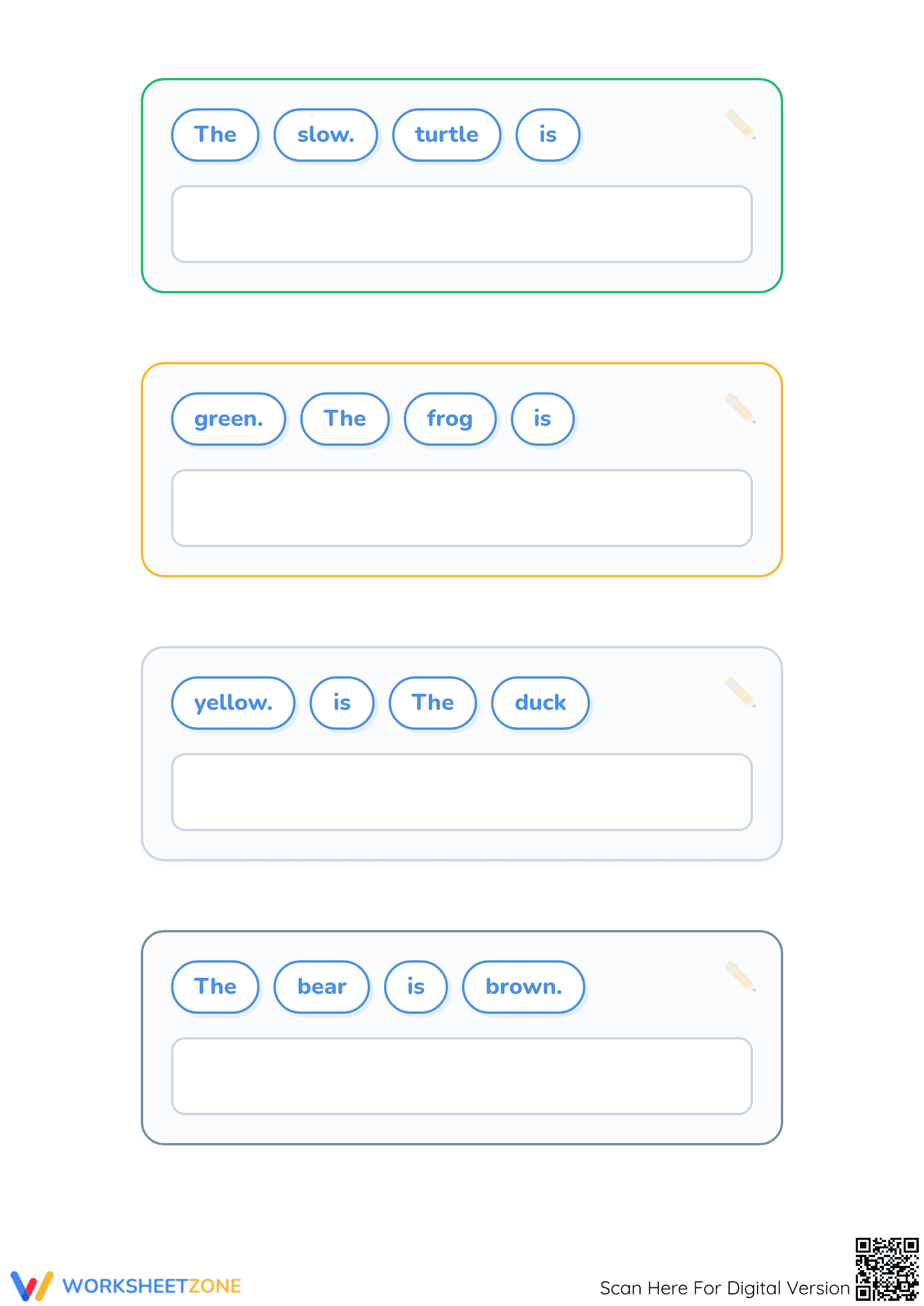

Printable Unscramble the Sentence Worksheet | Grade 1 ELA
Paste this activity's link or code into your existing LMS (Google Classroom, Canvas, Teams, Schoology, Moodle, etc.).
Students can open and work on the activity right away, with no student login required.
You'll still be able to track student progress and results from your teacher account.
This Grade 1 unscramble the sentence worksheet empowers early learners to master syntax and sentence structure through engaging animal-themed prompts. Students analyze scrambled word banks to construct grammatically correct sentences, reinforcing capitalization and punctuation rules. This resource provides the essential repetition needed for young writers to transition from isolated words to cohesive thoughts.
At a Glance
- Grade: Grade 1 · Subject: English Language Arts
- Standard:
CCSS.ELA-LITERACY.L.1.1.J— Produce and expand complete simple declarative sentences in response to prompts- Skill Focus: Sentence syntax, word order, and basic mechanics
- Format: 5 pages · 15 problems · Answer key included · PDF document
- Best For: Focused literacy centers and independent syntax practice
- Time: 15–20 minutes
What's Inside
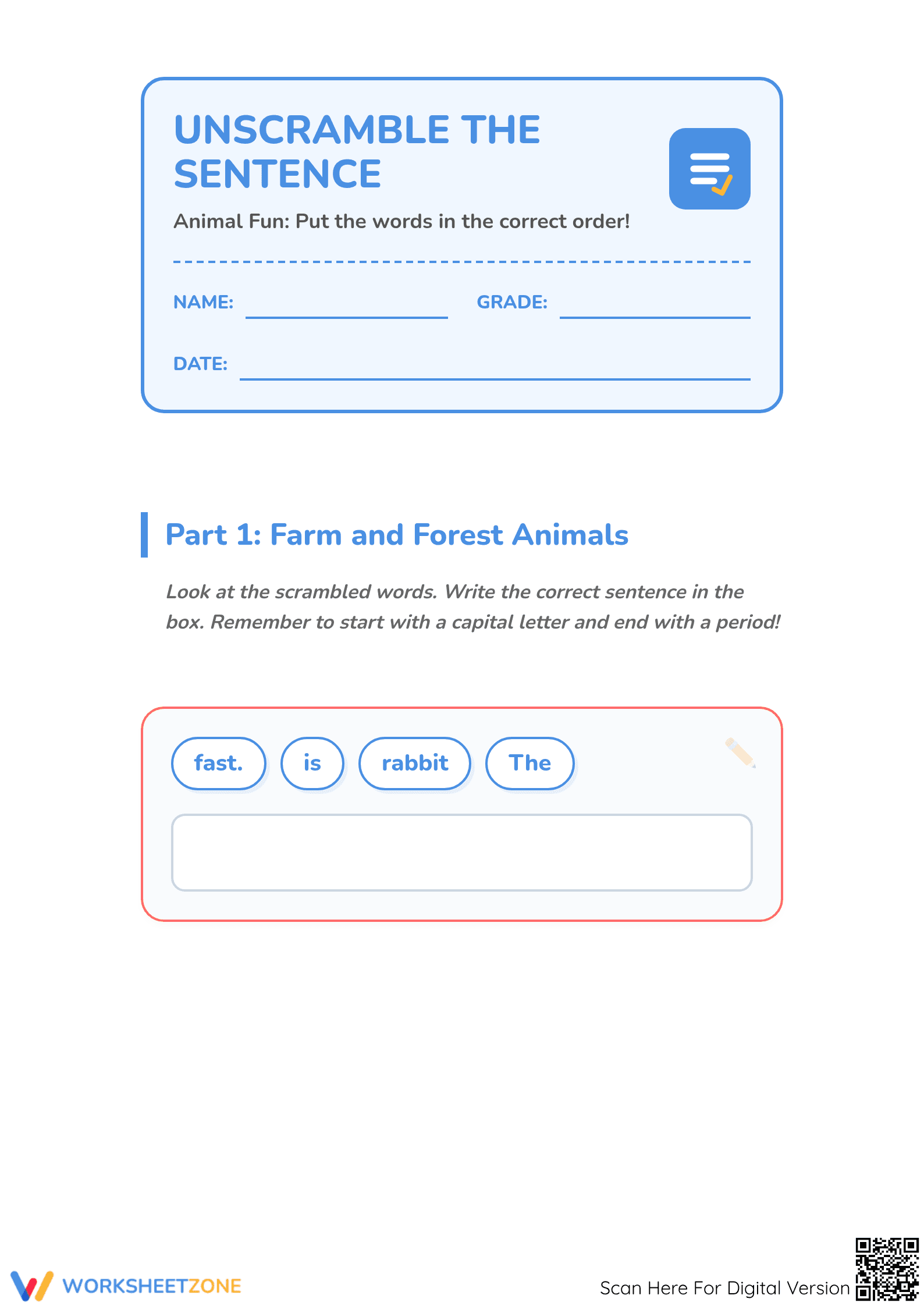
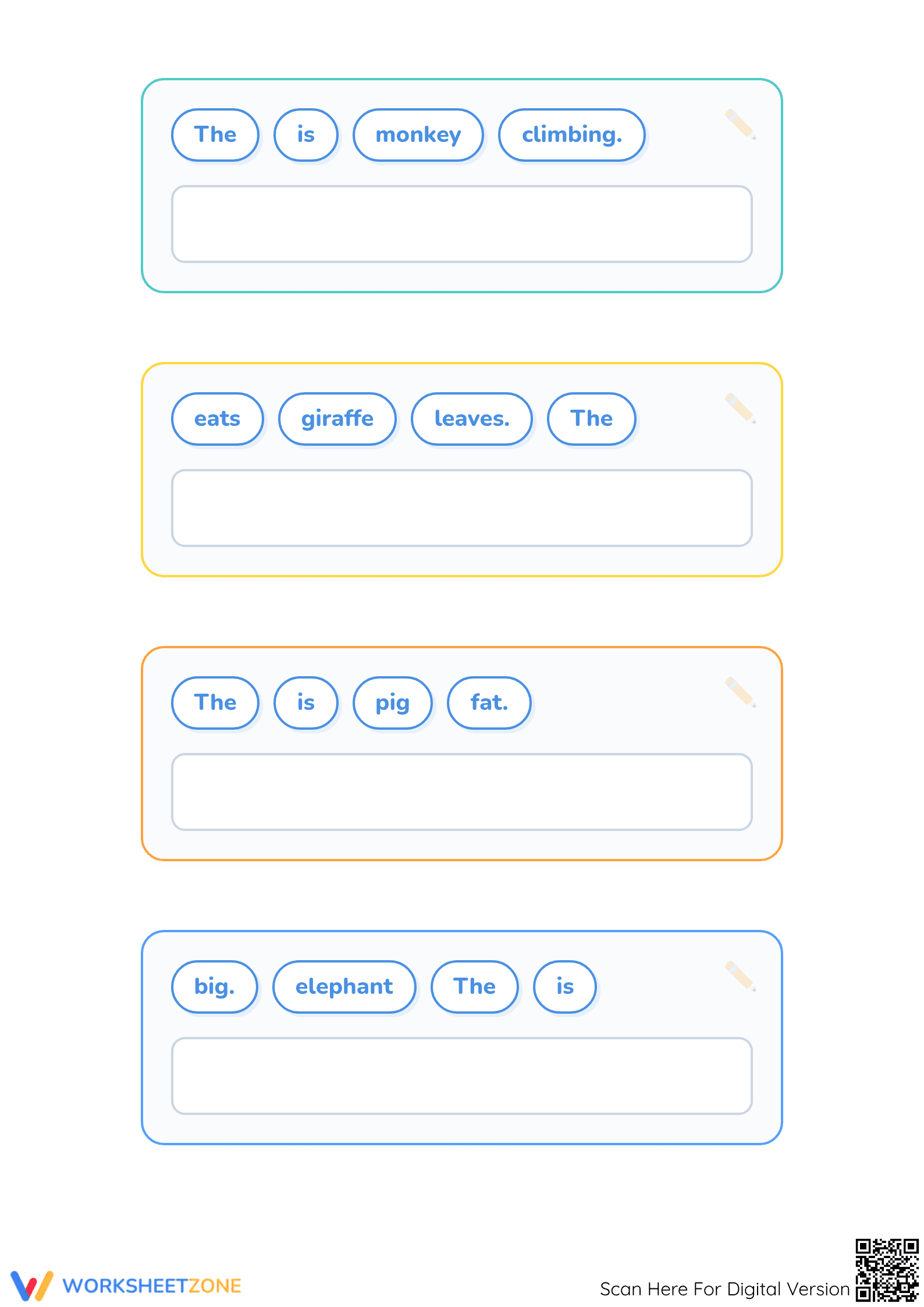
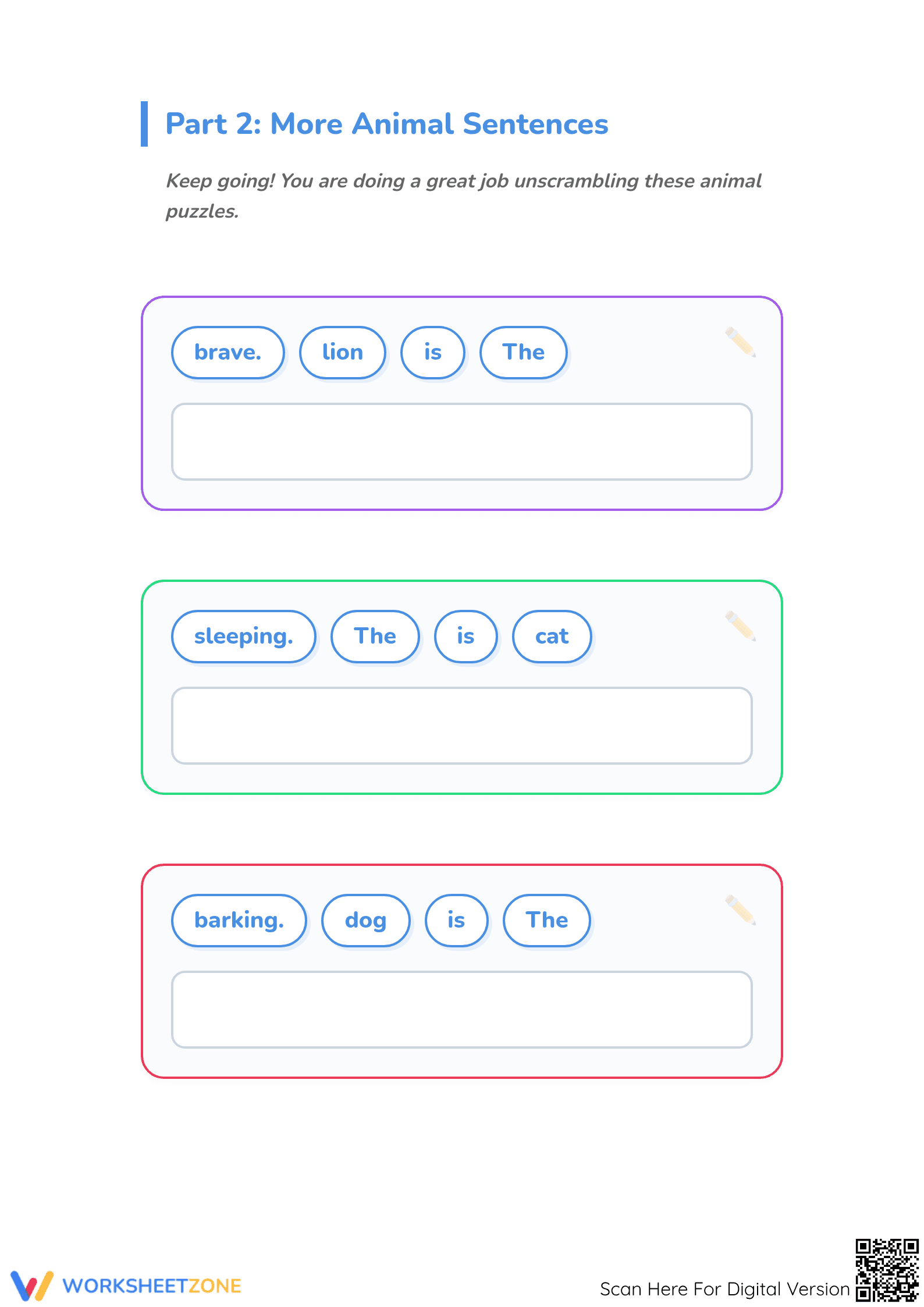
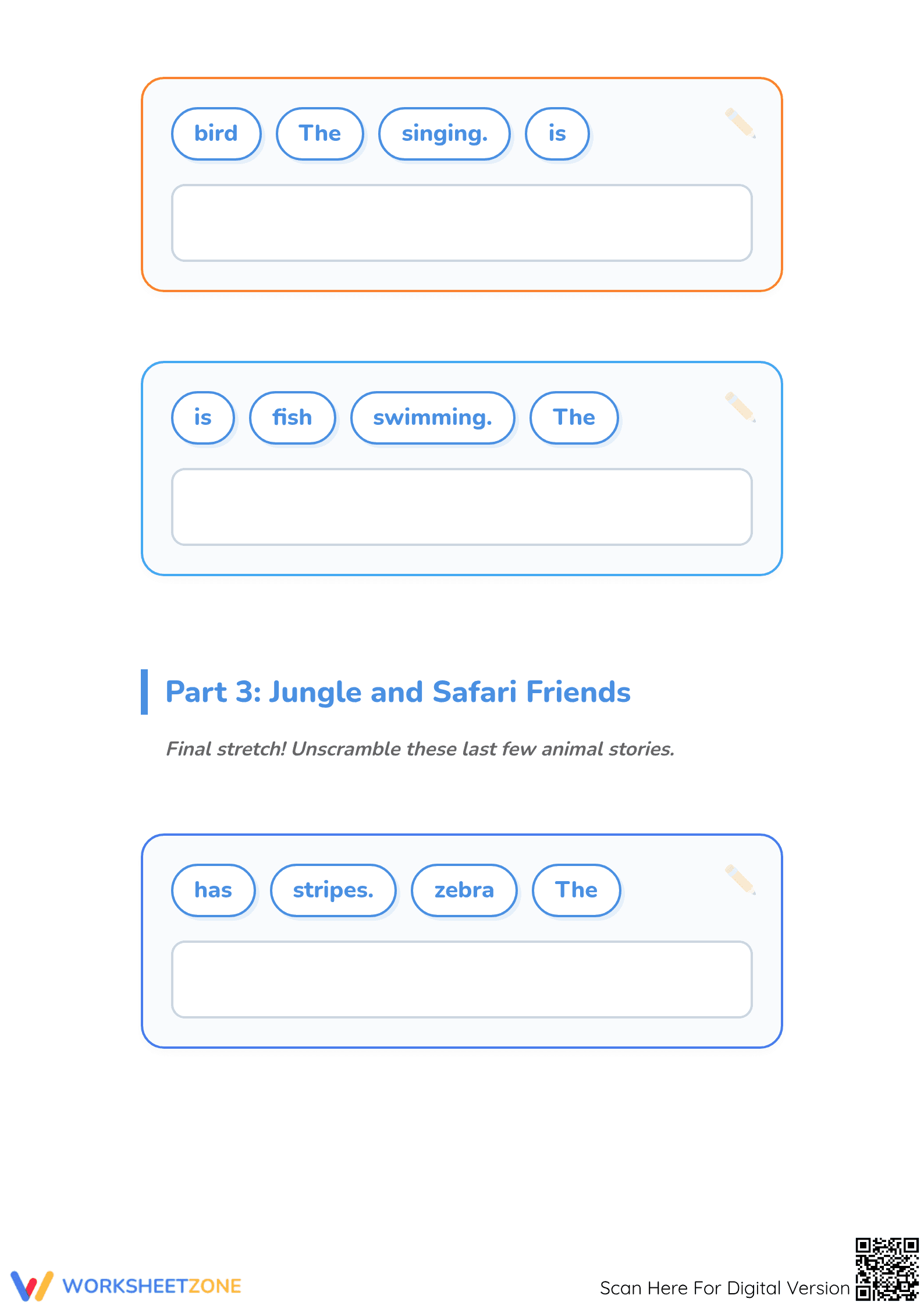
This comprehensive 5-page packet includes 15 unique sentence-building tasks centered on farm, forest, jungle, and safari animals. Each problem features a visually distinct word bank and a dedicated writing line with a "capital and period" reminder. A full answer key is provided to facilitate rapid grading or self-correction, making this a complete instructional solution for the primary classroom.
Skill Progression
- Guided Practice: The first page features a simple four-word sentence about a rabbit, establishing the capitalization and period cues with high support.
- Supported Practice: Middle pages expand to five-word constructions and diverse animal actions (climbing, eating, barking), requiring more complex linguistic processing.
- Independent Practice: The final pages challenge students with varied sentence patterns and descriptive adjectives (green, brown, slow) while maintaining the familiar, predictable format.
This sequence follows a gradual-release model, moving from basic recognition to independent application.
Standards Alignment
Aligned to CCSS.ELA-LITERACY.L.1.1.J: "Produce and expand complete simple and compound declarative, interrogative, imperative, and exclamatory sentences in response to prompts." This worksheet specifically targets declarative sentence production. Both standard codes can be copied directly into lesson plans, IEP goals, or district curriculum mapping tools to track student mastery of foundational grammar skills.
How to Use It
Use this during small-group literacy centers as a focused syntax intervention. Teachers should observe if students recognize the capitalized word as the start of the sentence, a key formative indicator of print awareness. The expected completion time range is 15 to 20 minutes for the entire set, making it an ideal exit ticket or morning work activity for early elementary students.
Who It's For
This resource is designed for Kindergarten and Grade 1 students, particularly those struggling with sentence boundaries or word order. It pairs naturally with an animal-themed informational passage or a direct instruction lesson on sentence parts. The clear layout also supports English Language Learners (ELLs) who are developing an understanding of English sentence structure through visual word banks.
Standard CCSS.ELA-LITERACY.L.1.1.J requires students to produce complete sentences, a foundational skill for all subsequent academic writing. Unscrambling tasks, often referred to as sentence anagrams, serve as a potent cognitive tool for developing syntactic awareness without the heavy cognitive load of generating original content. According to a RAND AIRS 2024 analysis, structured practice in sentence manipulation significantly correlates with improved reading comprehension and writing fluency in early elementary grades. By isolating the mechanics of word order, these 15 animal-themed tasks allow students to focus purely on the grammatical relationship between subjects and predicates. This systematic approach aligns with evidence-based literacy instruction, ensuring that students internalize the rhythmic and structural rules of English sentences before moving toward complex composition. This packet provides the high-frequency practice necessary for building the neural pathways associated with automatic sentence recognition and production in young learners.


