


























Views
Downloads

Unscramble Spelling Words | Essential Grade 1 Practice
Paste this activity's link or code into your existing LMS (Google Classroom, Canvas, Teams, Schoology, Moodle, etc.).
Students can open and work on the activity right away, with no student login required.
You'll still be able to track student progress and results from your teacher account.
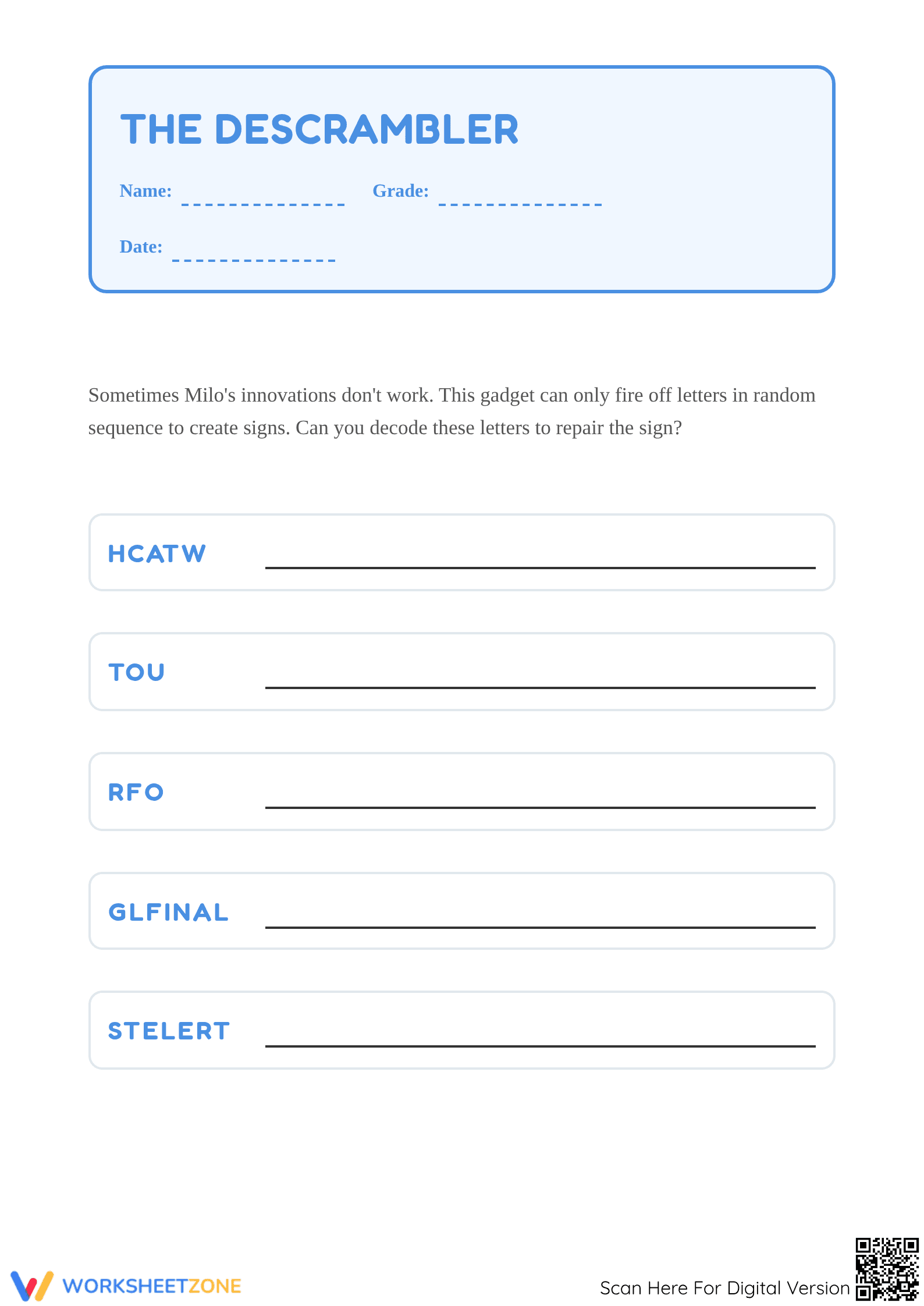
This Grade 1 spelling worksheet provides a structured way for students to practice letter-sound relationships and word recognition. By unscrambling jumbled letters to form familiar sight words, learners strengthen their orthographic processing and phonemic awareness. The activity transforms routine spelling practice into a problem-solving task that keeps young minds engaged and focused on correct letter sequencing.
At a Glance
- Grade: 1 · Subject: English
- Standard:
CCSS.ELA-LITERACY.L.1.2.D— Spell untaught words phonetically, drawing on phonemic awareness and spelling conventions- Skill Focus: Spelling Word Unscramble
- Format: 2 pages · 10 problems · Answer key included · PDF
- Best For: Morning work or spelling centers
- Time: 15–20 minutes
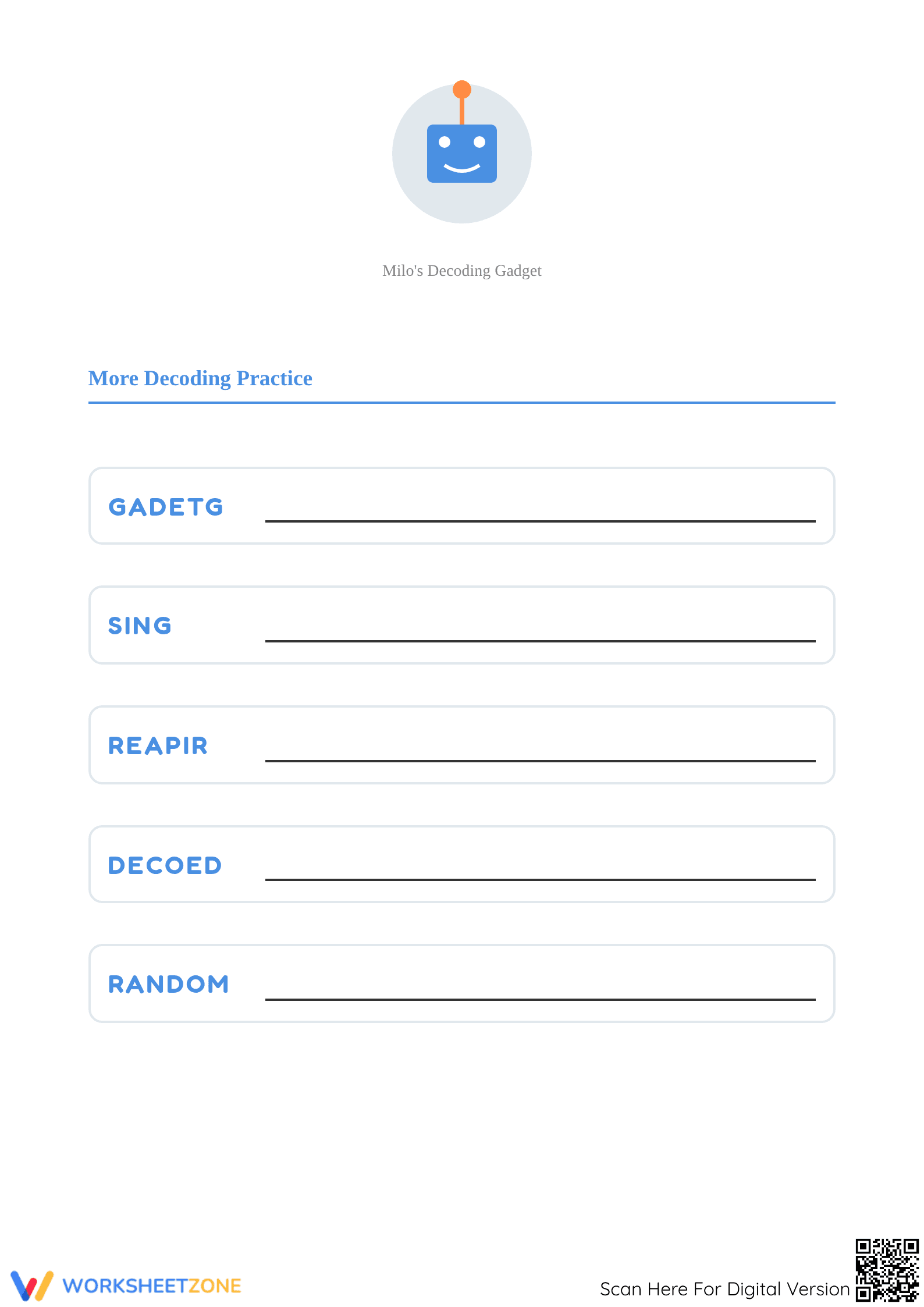
The resource consists of two high-quality PDF pages featuring Milo's Decoding Gadget. Students encounter 10 distinct spelling challenges where letters are presented in a random sequence. The layout provides clear horizontal lines for writing the corrected words, ensuring ample space for first-grade handwriting. A comprehensive answer key is provided, allowing for quick grading or student self-correction.
Zero-Prep Workflow
- Print: Generate the two-page PDF for your entire class in under 30 seconds.
- Distribute: Hand out the sheets during a literacy block or as a transition activity (1 minute).
- Review: Use the included answer key to review the spelling patterns as a whole group (5 minutes).
This workflow minimizes teacher administrative time while maximizing student time-on-task, making it an ideal choice for busy mornings or emergency sub plans.
Standards Alignment
This worksheet is primarily aligned with CCSS.ELA-LITERACY.L.1.2.D, which requires students to spell words phonetically by drawing on their knowledge of spelling conventions. It also supports RF.1.3.G by reinforcing the recognition of irregularly spelled sight words. Both standard codes can be copied directly into lesson plans, IEP goals, or district curriculum mapping tools.
How to Use It
Use this worksheet as a formative assessment during your spelling unit to identify which students struggle with letter-order logic. It works exceptionally well as a Fast Finisher activity or a quiet sub-plan component. Teachers should observe if students are sounding out the letters or using visual memory to recognize the word shapes. Completion typically takes 15 to 20 minutes.
Who It's For
This resource is designed for first-grade students but serves as excellent remediation for second graders or an enrichment task for advanced kindergartners. It pairs naturally with a weekly spelling list or a sight word anchor chart. The robot theme provides a non-intimidating entry point for reluctant writers who may find traditional spelling drills repetitive.
Research from the RAND AIRS 2024 report emphasizes that orthographic mapping—the process of forming letter-sound connections—is significantly enhanced through active manipulation of letters. This worksheet facilitates that process by requiring students to mentally reorder graphemes to match phonological representations. By engaging in The Descrambler tasks, Grade 1 students move beyond rote memorization toward a deeper understanding of English spelling conventions. The CCSS.ELA-LITERACY.L.1.2.D alignment ensures that the cognitive load is appropriately balanced for early elementary learners, focusing on phonemic awareness. Studies in the RAND AIRS 2024 analysis suggest that such targeted, low-stakes practice leads to higher retention rates of irregularly spelled words compared to passive reading alone. This evidence-based approach supports foundational literacy development by bridging the gap between isolated letter recognition and fluent word production in writing.


