


























Views
Downloads


Printable Than vs. Then Worksheet | Grade 5 & 6 Grammar
Paste this activity's link or code into your existing LMS (Google Classroom, Canvas, Teams, Schoology, Moodle, etc.).
Students can open and work on the activity right away, with no student login required.
You'll still be able to track student progress and results from your teacher account.
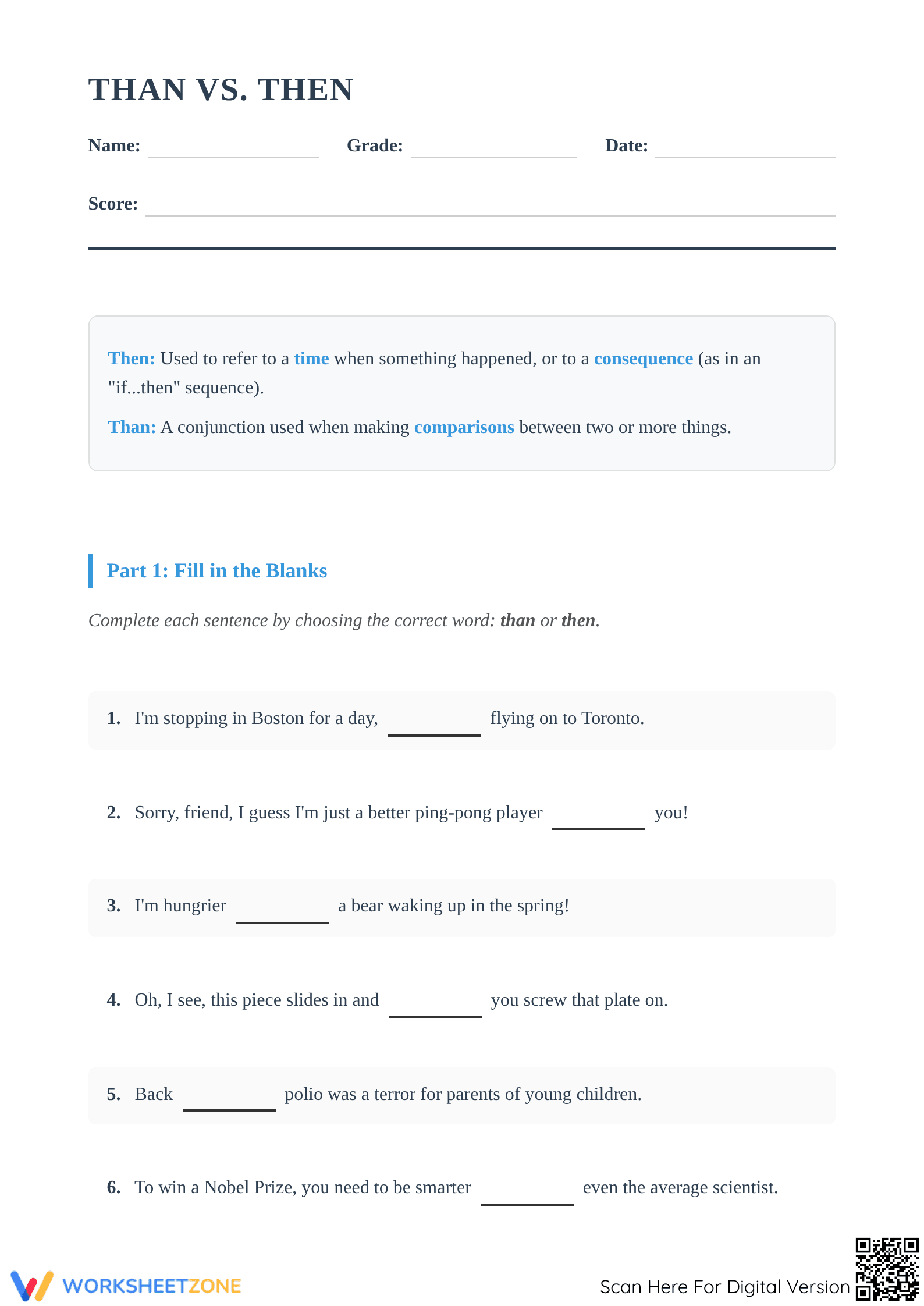
This printable grammar worksheet helps fifth and sixth-grade students master the difference between "than" and "then." By completing targeted exercises, learners will confidently apply these commonly confused words in their own writing. The clear definitions and structured tasks ensure students understand when to use each term correctly.
At a Glance
- Grade: 5 · Subject: ELA
- Standard:
CCSS.ELA-LITERACY.L.5.1— Use standard English grammar and usage correctly- Skill Focus: Commonly Confused Words (Than vs. Then)
- Format: 3 pages · 24 problems · Answer key included · PDF
- Best For: Independent practice and review
- Time: 15–20 minutes
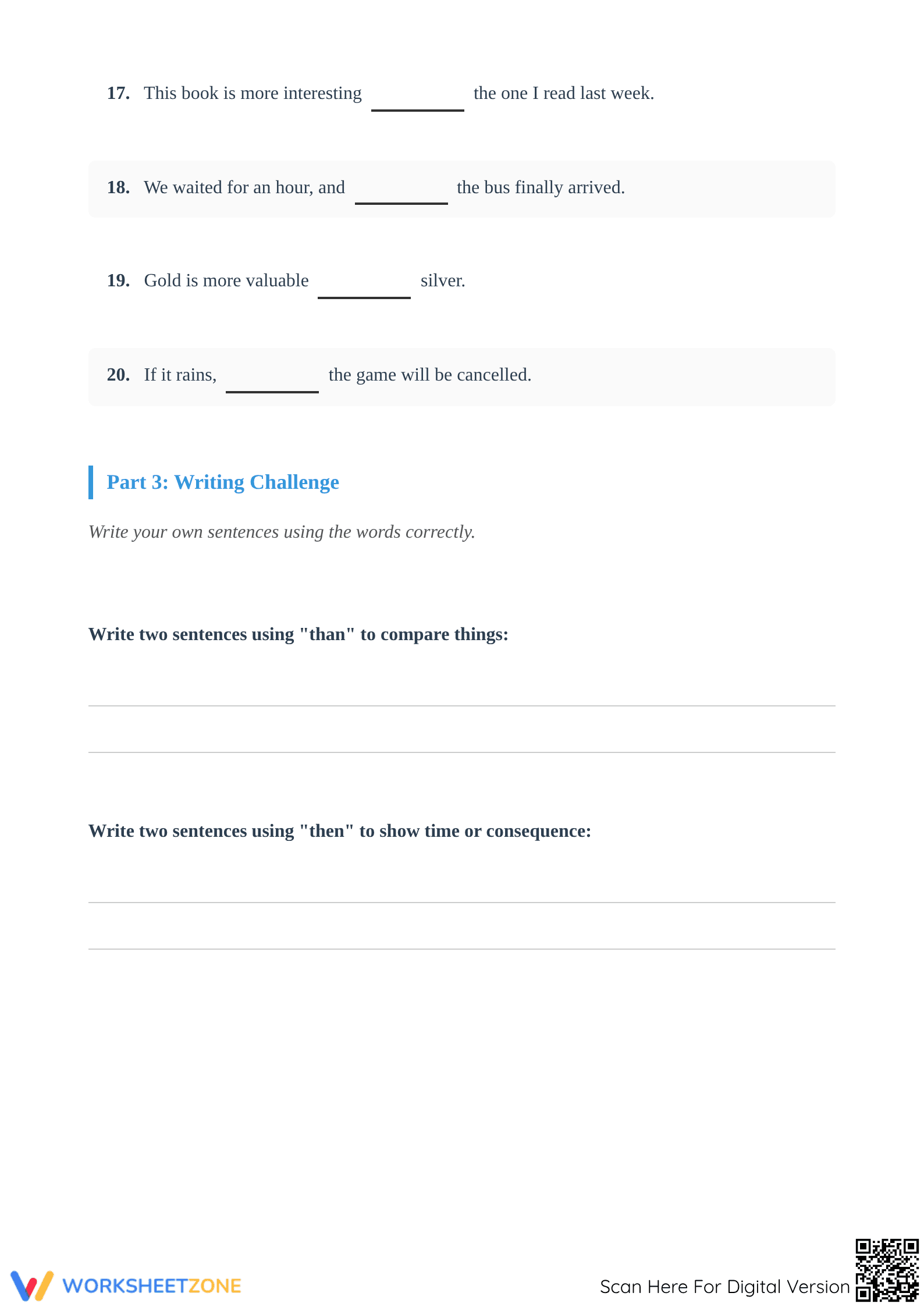
This comprehensive three-page resource features a helpful reference box at the top with clear definitions and examples for both words. Students will work through 20 fill-in-the-blank sentences across two parts, applying their knowledge to various contexts involving time, consequences, and comparisons. The final page includes a writing challenge where learners must compose four original sentences. A complete answer key is provided for quick grading.
- Guided Review: The activity begins with explicit definitions and examples, allowing students to reference the rules as they complete the initial 10 fill-in-the-blank questions.
- Supported Practice: In the second part, learners tackle 10 additional sentences that mix different contexts, reinforcing their ability to distinguish between comparisons and sequences of events.
- Independent Application: The final writing challenge requires students to generate two original sentences using "than" and two using "then," demonstrating full mastery of the concept.
This gradual-release approach moves students smoothly from the "I Do" instructional phase to the "You Do" independent writing phase.
Aligned to primary standard CCSS.ELA-LITERACY.L.5.1, this resource ensures students demonstrate command of the conventions of standard English grammar and usage when writing or speaking. It specifically targets the critical skill of selecting the correct word based on context, a common stumbling block for middle-grade writers. Both standard codes can be copied directly into lesson plans, IEP goals, or district curriculum mapping tools.
Teachers can utilize this worksheet as a focused follow-up activity after direct instruction on commonly confused words. It also serves perfectly as a morning work assignment or a targeted intervention for students struggling with their writing mechanics. As students complete the fill-in-the-blank sections, educators can use their responses as a formative assessment to identify who needs further clarification on cause-and-effect versus comparative relationships. Expect students to complete the entire three-page packet in 15 to 20 minutes.
This resource is designed primarily for fifth and sixth-grade general education students, but it is also highly effective for older English Language Learners (ELLs) who need explicit vocabulary support. The clear reference box at the top provides built-in differentiation for students who require visual reminders. Pair this worksheet with a mini-lesson on conjunctions and adverbs of time to maximize student comprehension.
Mastering commonly confused words is a critical component of developing strong written communication skills in the middle grades. According to Fisher & Frey (2014), providing students with explicit vocabulary instruction and immediate opportunities for application significantly improves their ability to retain and correctly use complex terms. This resource directly supports CCSS.ELA-LITERACY.L.5.1 by requiring students to use standard English grammar and usage correctly in varied contexts. By moving from simple identification tasks to generative writing exercises, learners build the cognitive pathways necessary for automaticity in their daily writing. The structured progression ensures that students do not just memorize definitions, but actually internalize the functional differences between comparative and sequential language. This targeted practice reduces common grammatical errors in longer composition tasks, ultimately leading to clearer and more effective student writing across all academic subjects.


