


























Views
Downloads

Printable Plant Life Cycle Worksheet | Grade K-1 Science
Paste this activity's link or code into your existing LMS (Google Classroom, Canvas, Teams, Schoology, Moodle, etc.).
Students can open and work on the activity right away, with no student login required.
You'll still be able to track student progress and results from your teacher account.
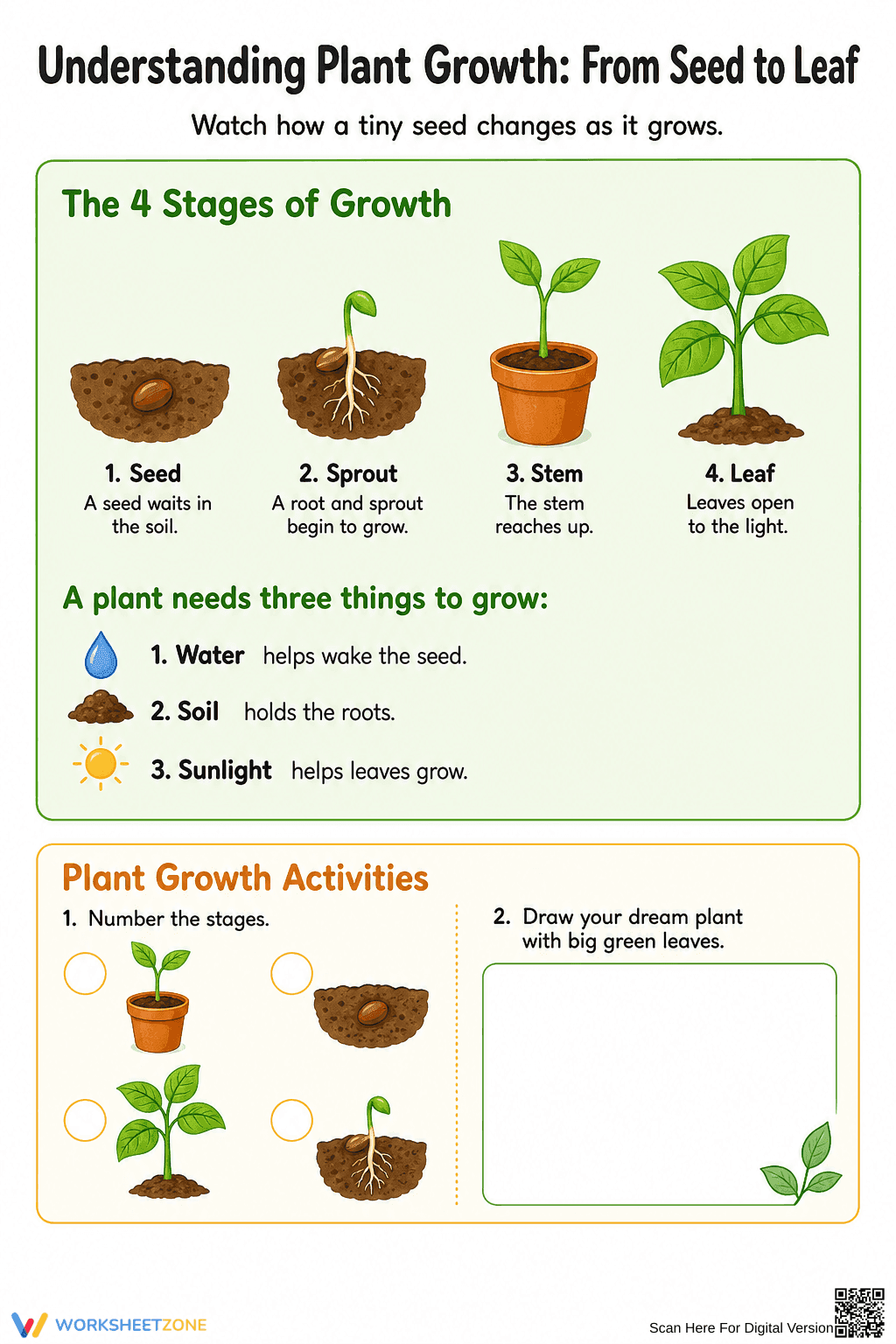
This engaging science worksheet introduces young learners to the fascinating journey of plant growth. By combining vibrant visual guides with hands-on sequencing tasks, students will discover how a tiny seed transforms into a leafy plant while identifying the essential resources needed for survival.
At a Glance
- Grade: Kindergarten · Subject: Science
- Standard:
K-LS1-1— Describe patterns of what plants need to survive- Skill Focus: Sequencing plant life cycles
- Format: 2 pages · 5 problems · PDF
- Best For: Independent practice or science centers
- Time: 15–20 minutes
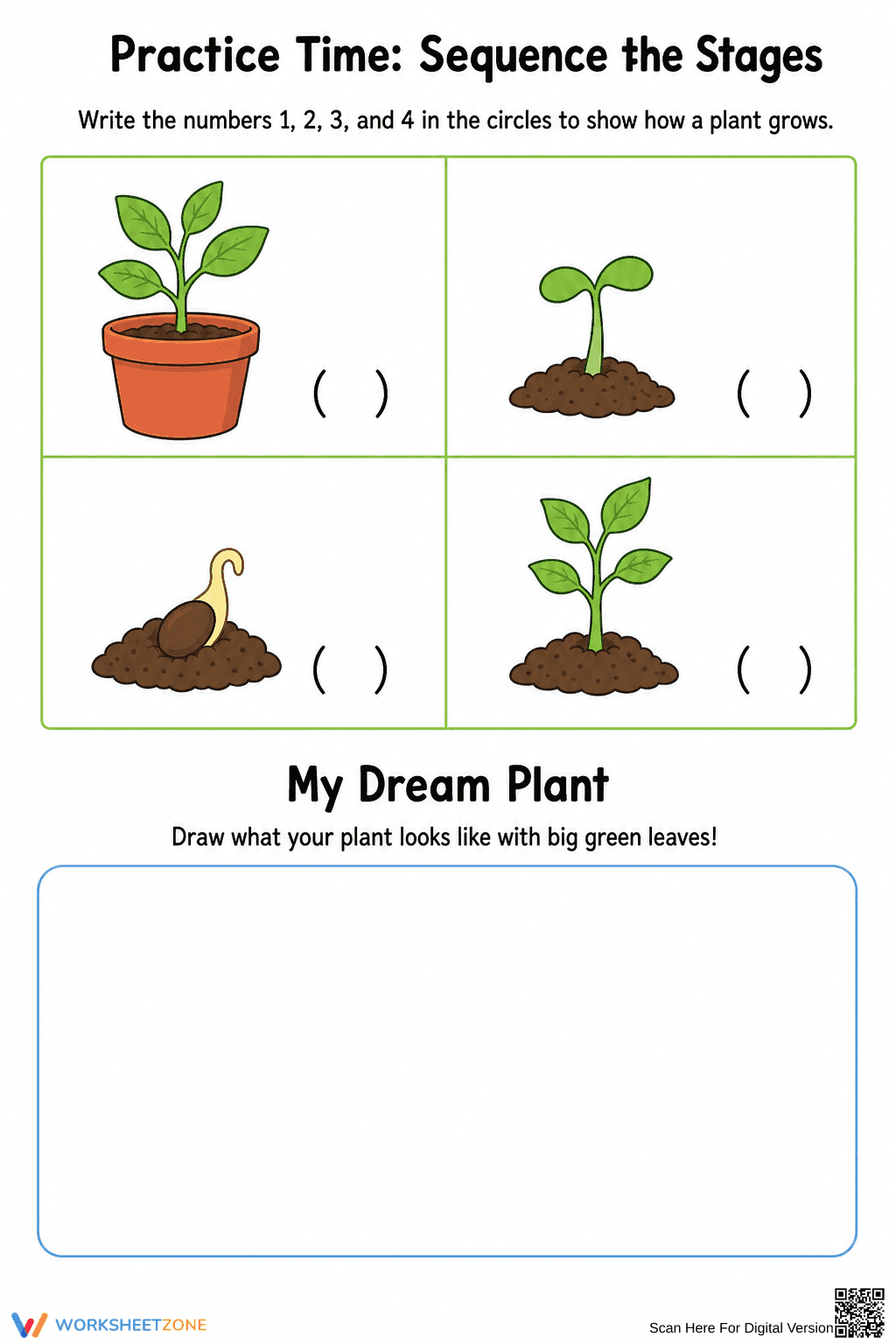
This two-page resource features a comprehensive visual guide detailing the four stages of seed germination: seed, sprout, stem, and leaf. It also highlights the three fundamental needs of a plant: water, soil, and sunlight. Following the informational section, students will complete a sequencing activity where they number the growth stages in the correct chronological order. Finally, a creative drawing prompt invites children to illustrate their own dream plant, reinforcing their understanding of plant anatomy.
Zero-Prep Workflow
- Print (1 minute): Simply print the two-page PDF. The clear, bold illustrations print beautifully in both color and grayscale.
- Distribute (1 minute): Hand out the worksheets during your science block or place them in a designated science center.
- Review (3 minutes): Read the informational text together as a class, then let students complete the sequencing and drawing tasks independently.
With under two minutes of total teacher prep time, this resource is an ideal addition to your emergency sub plans or a quick, reliable activity for busy afternoons.
Standards Alignment
This worksheet aligns with K-LS1-1: Use observations to describe patterns of what plants and animals (including humans) need to survive. By explicitly teaching that plants require water, soil, and sunlight, the resource directly supports this core scientific concept. Both standard codes can be copied directly into lesson plans, IEP goals, or district curriculum mapping tools.
How to Use It
Introduce this worksheet during a whole-group science lesson on living and non-living things. Read through the four stages of growth together, using the illustrations to anchor the concepts before transitioning to independent practice. Alternatively, use it as an interactive science center activity where students can reference real seeds or small potted plants while completing the sequencing task. As a formative assessment tip, observe whether students can accurately order the stages from 1 to 4 without referencing the first page. Expect students to complete the activities within 15 to 20 minutes.
Who It's For
This resource is designed primarily for Preschool, Kindergarten, and Grade 1 students developing foundational science skills. The clear visual scaffolds make it highly accessible for early readers and English Language Learners who benefit from picture cues. Pair this worksheet with a hands-on seed planting activity or a read-aloud book about gardens to create a comprehensive, multi-sensory learning experience.
Understanding the sequence of natural events is a critical component of early childhood science education. Aligned with K-LS1-1, this resource helps students describe patterns of what plants need to survive while building foundational chronological reasoning. According to a 2024 report by EdReports, integrating visual models with explicit vocabulary instruction significantly improves young learners' retention of life science concepts. By combining clear diagrams of seed germination with targeted sequencing tasks, this worksheet provides the structured repetition necessary for early cognitive development and scientific literacy.


