


























Views
Downloads

Types of Sentences Worksheet | Grade 1 Printable ELA
Paste this activity's link or code into your existing LMS (Google Classroom, Canvas, Teams, Schoology, Moodle, etc.).
Students can open and work on the activity right away, with no student login required.
You'll still be able to track student progress and results from your teacher account.
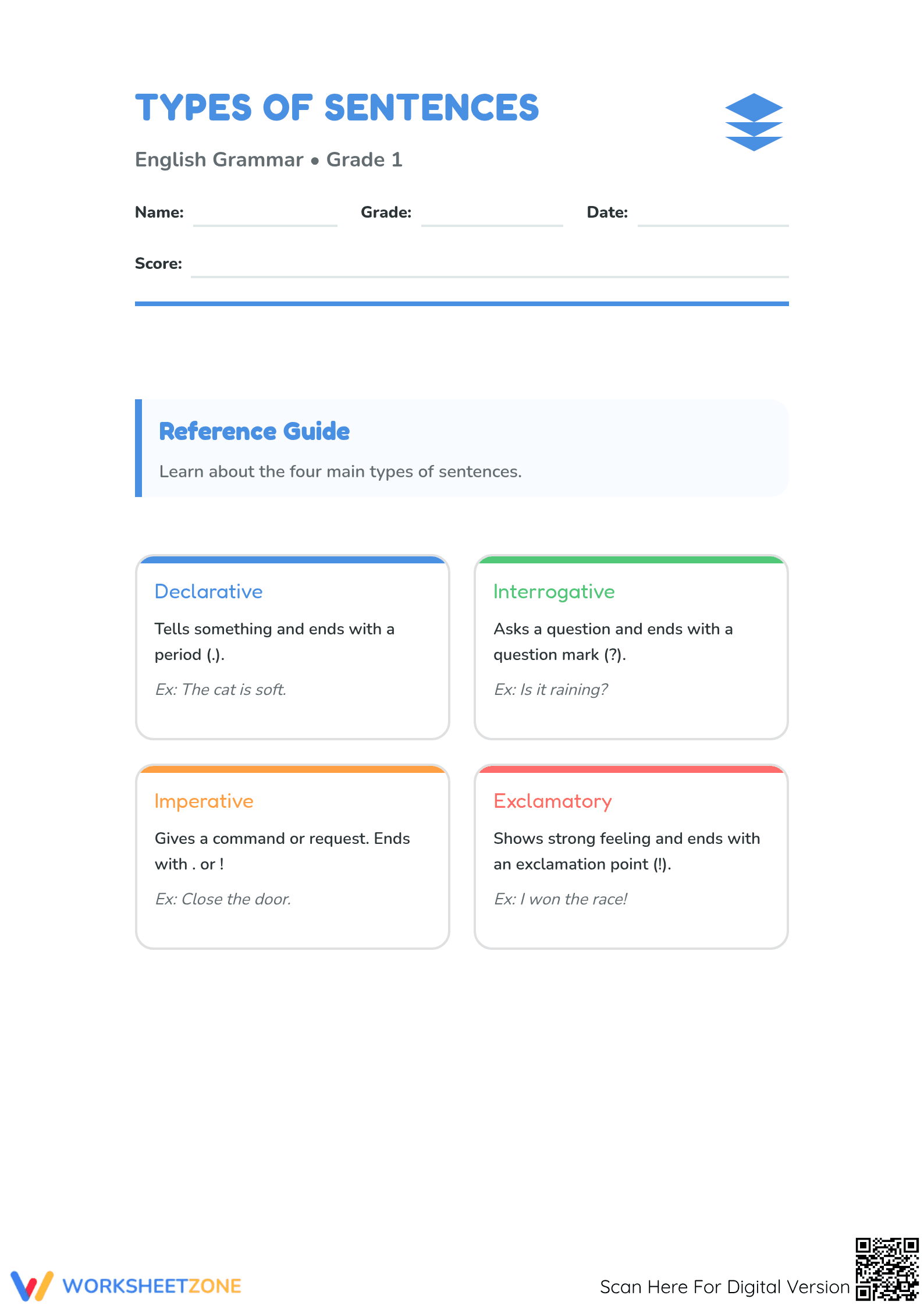
This comprehensive Grade 1 English Language Arts worksheet empowers students to master the four primary sentence types: declarative, interrogative, imperative, and exclamatory. By engaging with structured practice, learners build essential foundational grammar skills, improving their ability to recognize sentence purpose and apply correct end punctuation during independent writing tasks.
At a Glance
- Grade: 1 · Subject: ELA
- Standard:
L.1.1.J— Produce and expand complete declarative, interrogative, imperative, and exclamatory sentences- Skill Focus: Sentence types and end punctuation
- Format: 5 pages · 34 problems · Answer key included · PDF
- Best For: Daily grammar practice and skill reinforcement
- Time: 20–30 minutes
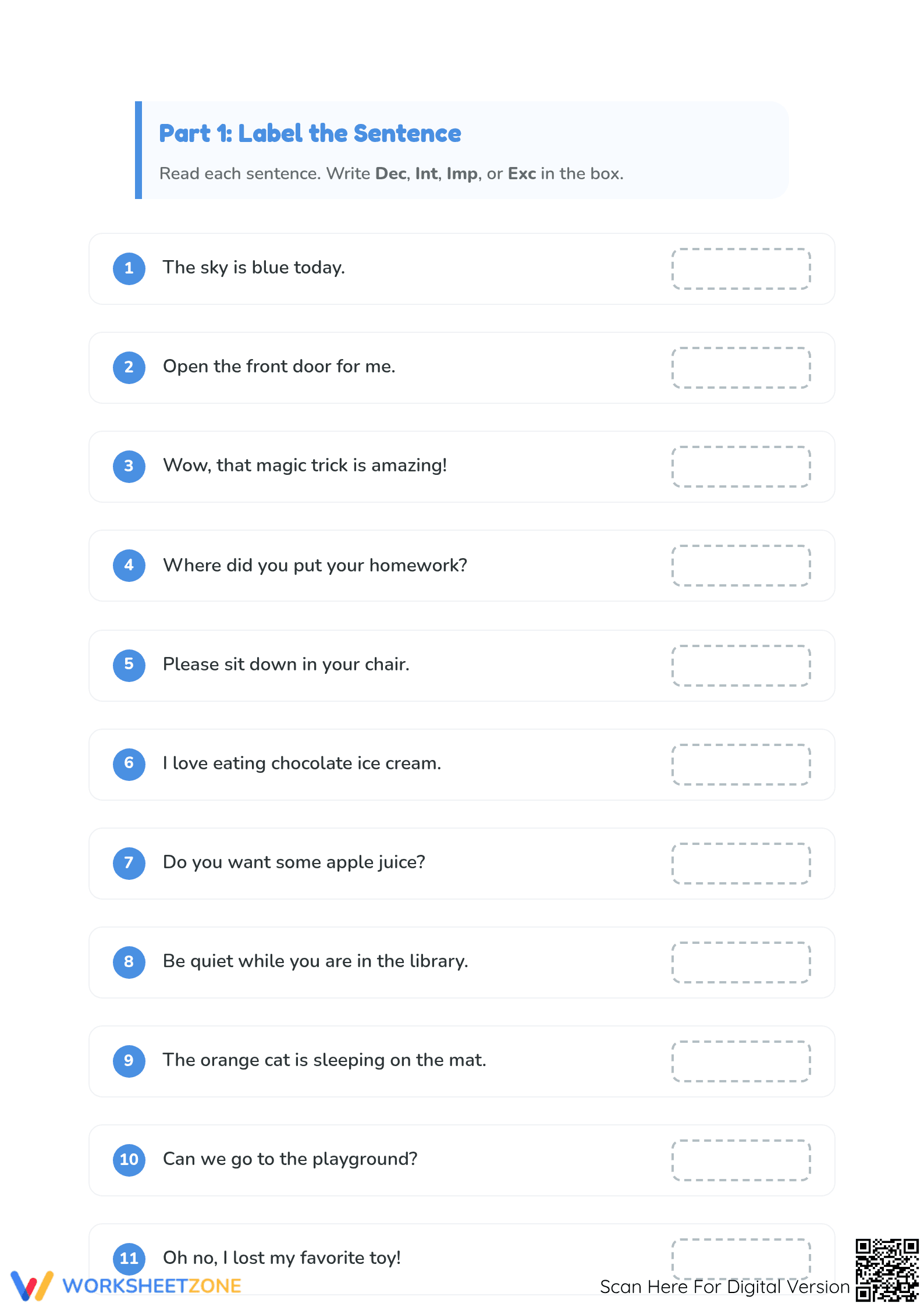
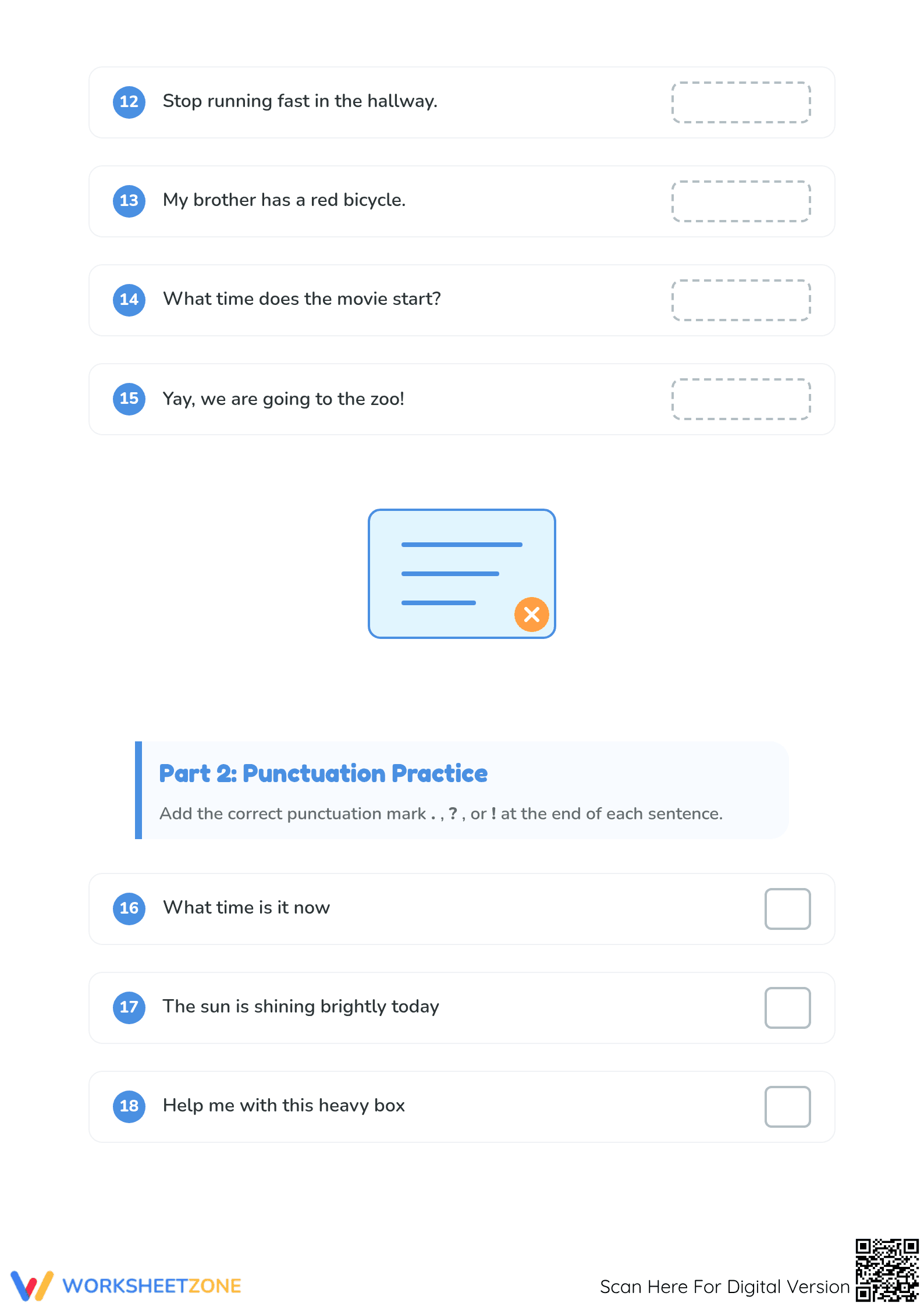
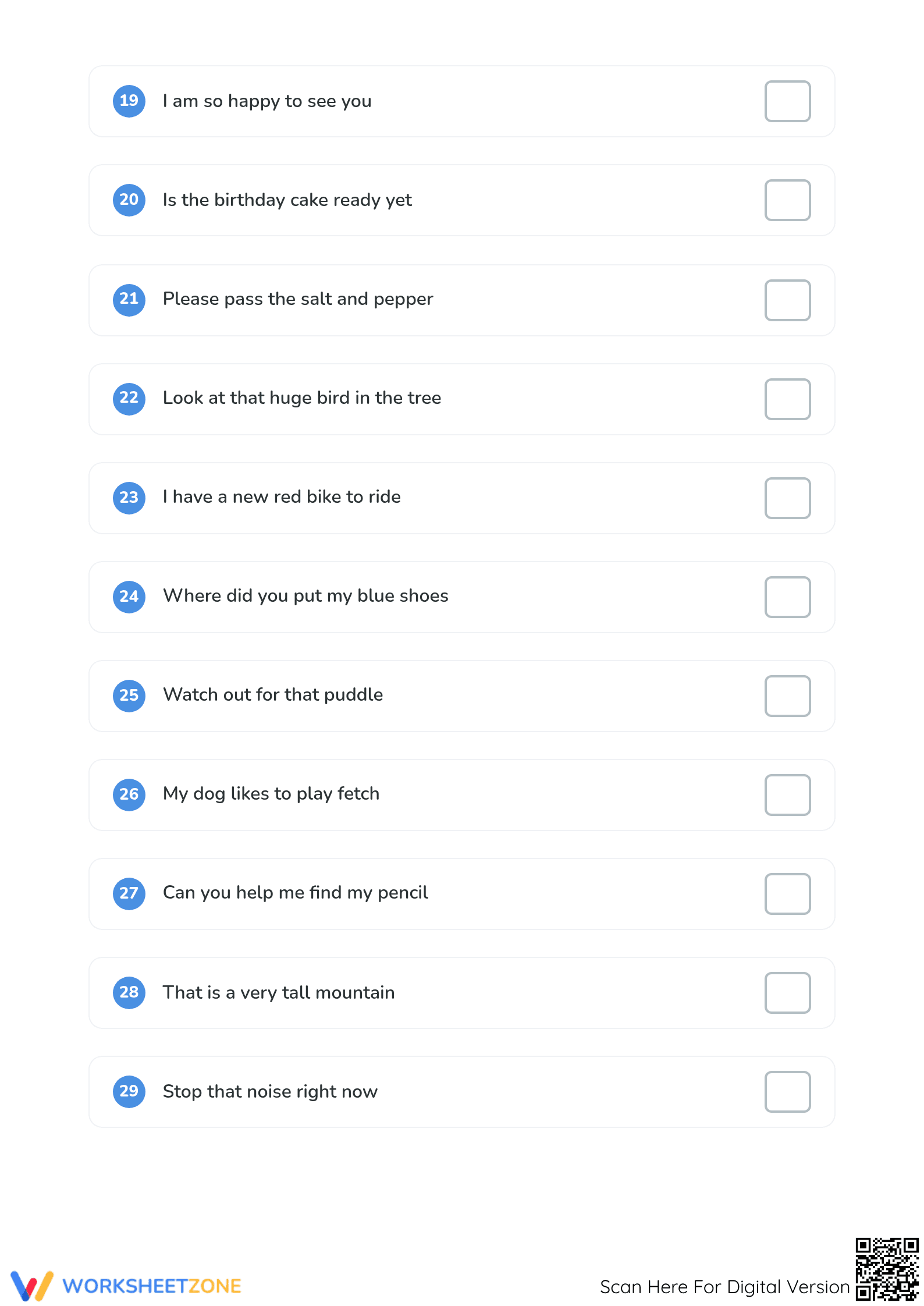
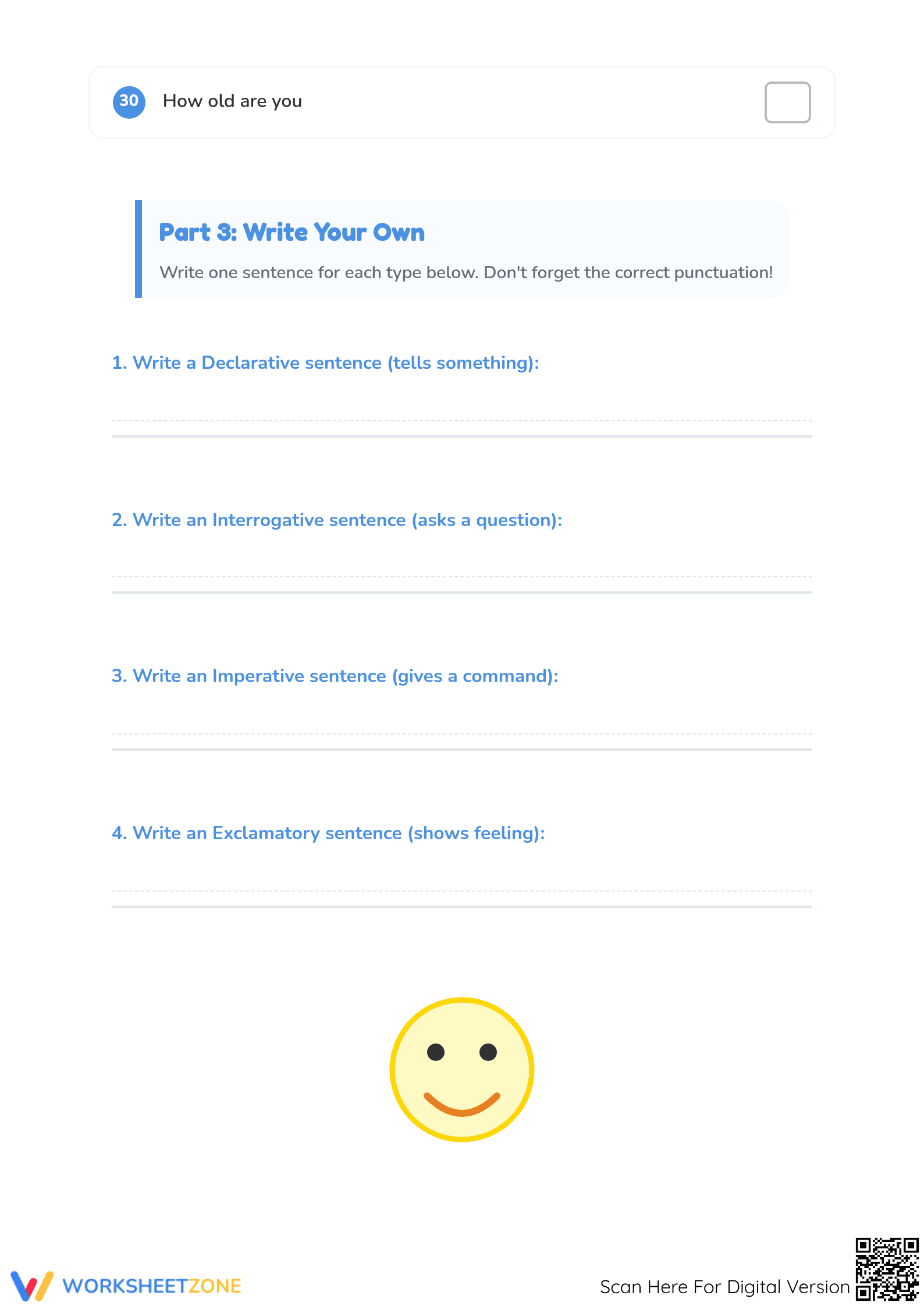
This 5-page packet features a student-friendly reference guide on the first page, followed by three distinct sections. Students first label 15 sentences by type, then apply correct punctuation to 15 unpunctuated sentences, and finally draft four original sentences. The clear layout, supportive examples, and included answer key ensure a structured learning experience for early writers.
The zero-prep workflow is designed for busy educators. First, print the 5-page PDF in seconds (1 minute). Next, distribute the packets to students for independent or small-group work with no additional setup required (30 seconds). Finally, review the completed tasks using the provided answer key for instant feedback (30 seconds). Total teacher preparation time is under two minutes.
This resource aligns primarily with `CCSS.ELA-LITERACY.L.1.1.J`, which requires students to produce and expand complete simple and compound declarative, interrogative, imperative, and exclamatory sentences. It also supports `CCSS.ELA-LITERACY.L.1.2.B` regarding the use of end punctuation. Both standard codes can be copied directly into lesson plans, IEP goals, or district curriculum mapping tools.
Use this worksheet as a focused morning work activity to settle the class while reinforcing vital grammar concepts. It also serves as an excellent formative assessment tool after a direct instruction lesson on punctuation; teachers can observe if students correctly distinguish between a command and an exclamation. Completion typically takes 20 to 30 minutes.
This resource is tailored for first-grade students but also benefits English language learners (ELLs) who need visual cues and clear definitions for sentence structures. It naturally pairs with a short reading passage or an anchor chart displayed in the classroom to provide a bridge between grammar theory and practical application.
According to Fisher & Frey (2014), the gradual release of responsibility is crucial for language acquisition, and this worksheet exemplifies that model by providing a reference guide before moving into guided and independent application. By focusing on `CCSS.ELA-LITERACY.L.1.1.J`, the resource ensures that Grade 1 students move beyond simple word identification into the functional use of syntax. The 34 distinct tasks provide sufficient repetition for memory consolidation without overwhelming young learners. This standards-aligned approach ensures that students can identify the communicative intent of a sentence—whether asking a question or making a statement—which is a prerequisite for more complex narrative and informational writing in subsequent grades. This resource remains an essential printable tool for any classroom focusing on the fundamental building blocks of the English language.


