


























Views
Plays

Transcription & Translation Quiz | Essential College Biology
Paste this activity's link or code into your existing LMS (Google Classroom, Canvas, Teams, Schoology, Moodle, etc.).
Students can open and work on the activity right away, with no student login required.
You'll still be able to track student progress and results from your teacher account.
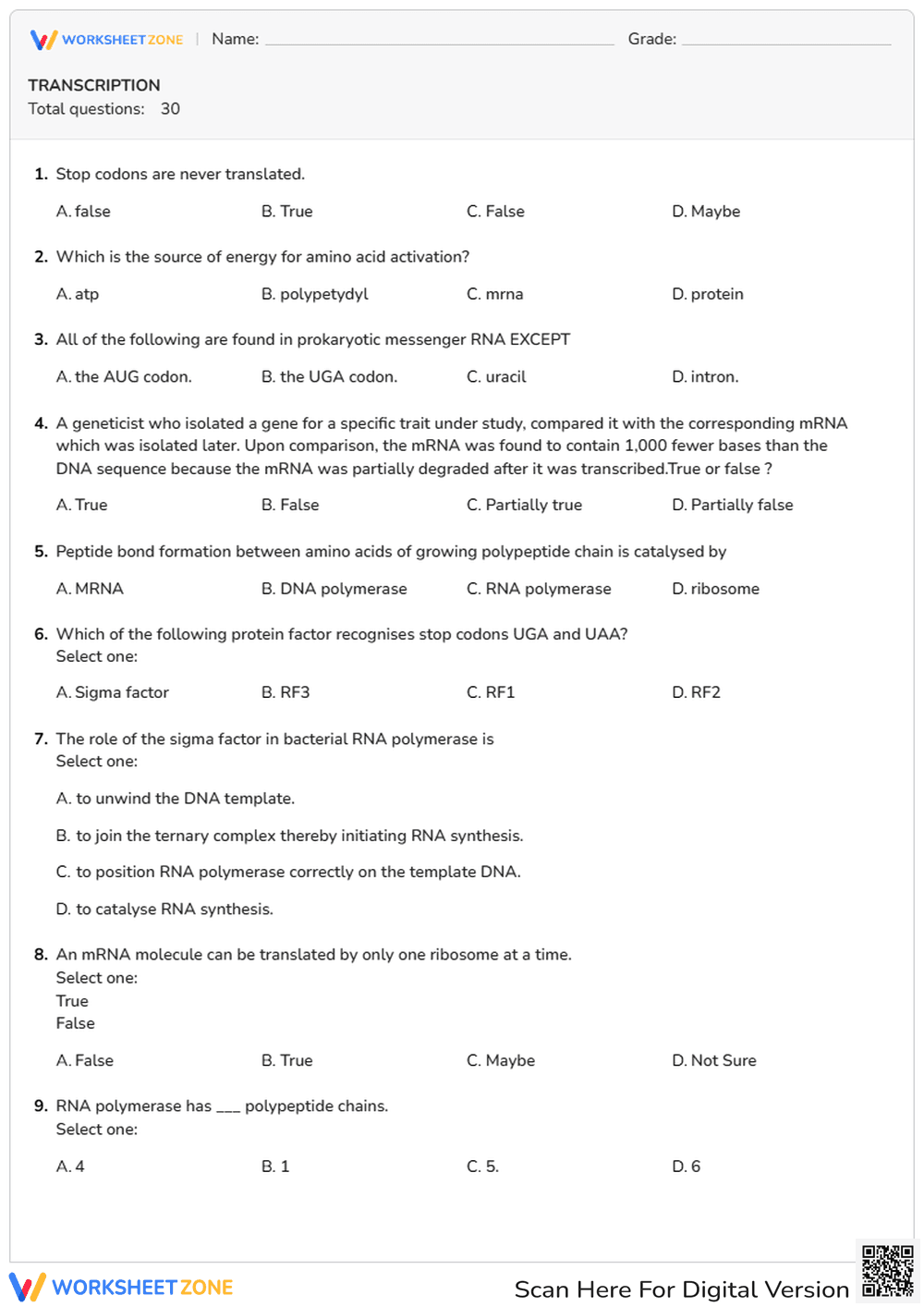
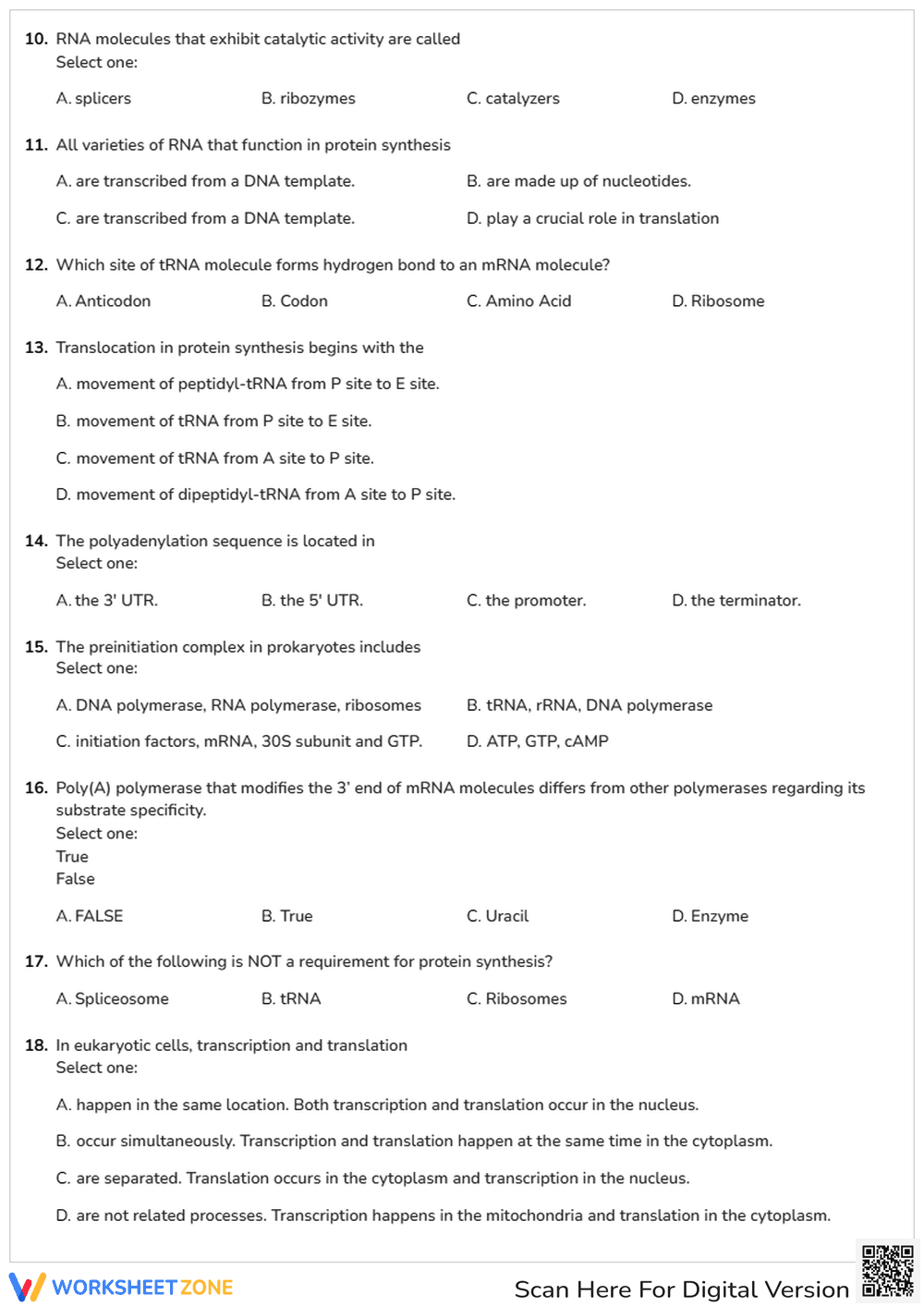
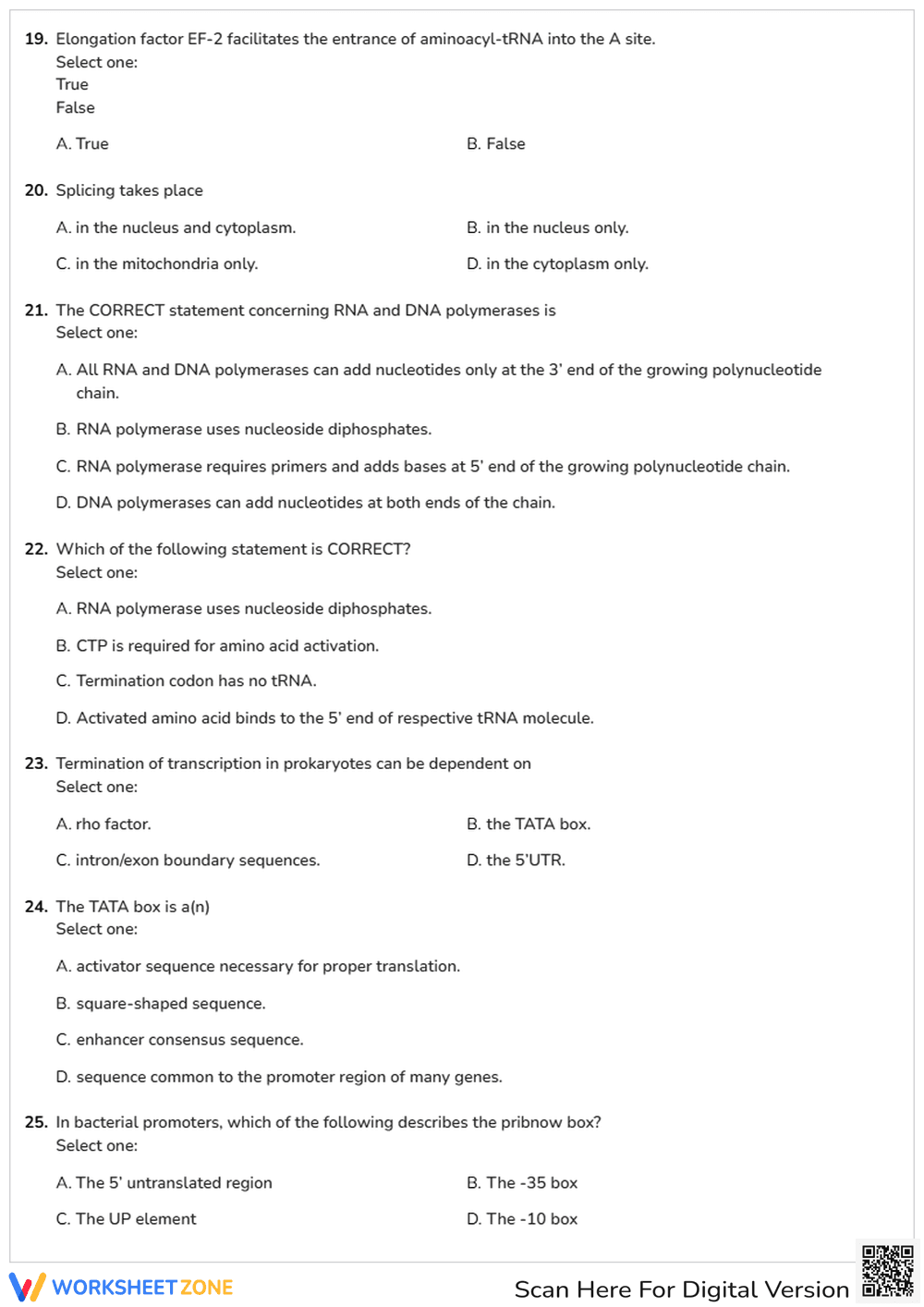
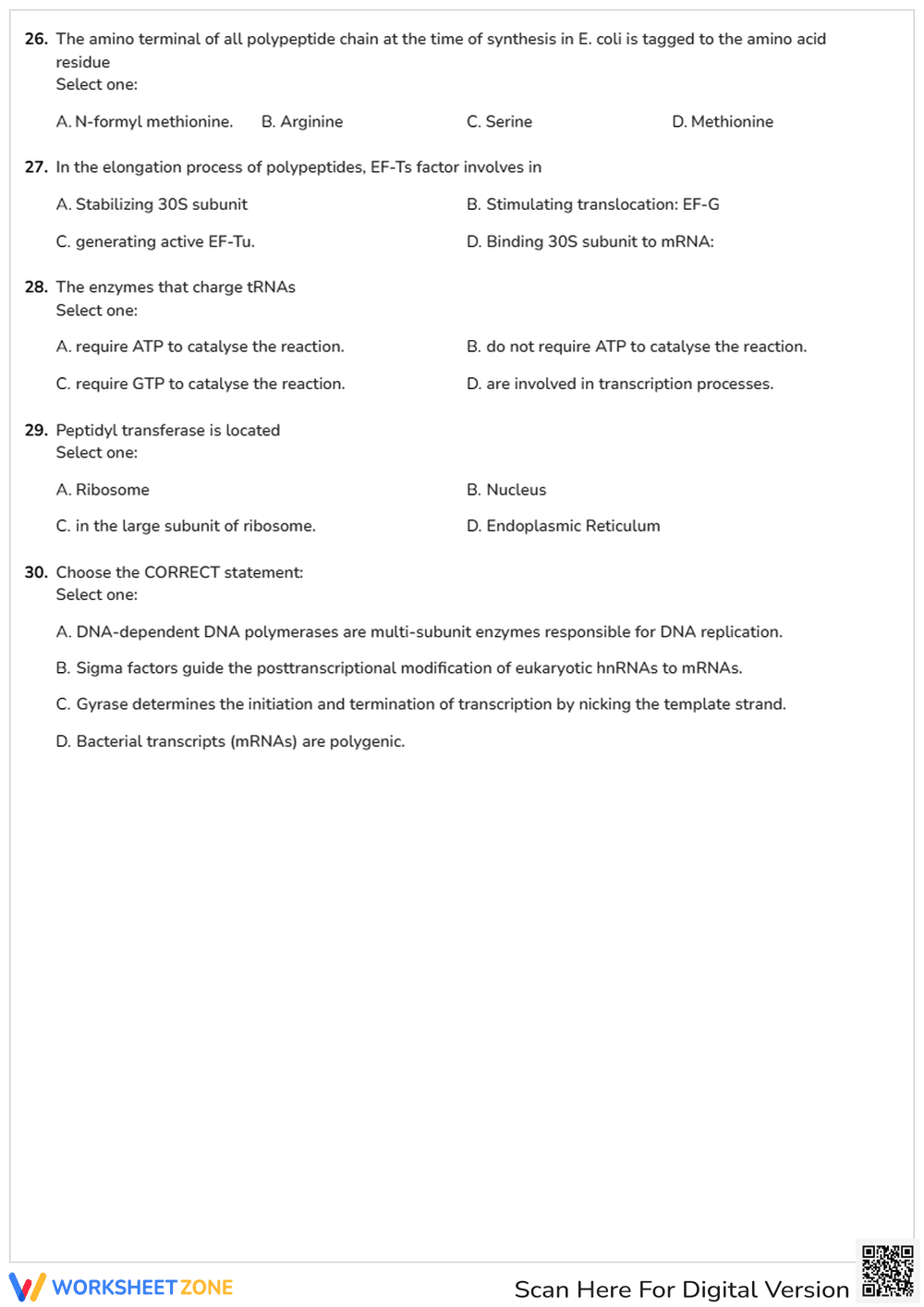
This comprehensive molecular biology assessment evaluates student understanding of the transcription and translation processes. Students will demonstrate mastery by identifying the roles of RNA polymerase, interpreting the genetic code, and distinguishing between prokaryotic and eukaryotic gene expression. This resource ensures learners can accurately describe the flow of genetic information from DNA to functional proteins.
At a Glance
- Grade: College · Subject: Biology
- Standard:
HS-LS1-1— Construct an explanation for how DNA structure determines protein structure- Skill Focus: Transcription and Translation
- Format: 4 pages · 30 problems · Answer key included · PDF
- Best For: Unit assessment, comprehensive exam review, or advanced biology study sessions
- Time: 45–60 minutes of focused independent work
What's Inside
Inside this 4-page PDF, you will find 30 rigorous multiple-choice and true-false questions. The content spans the entire central dogma, including specific details on promoter regions like the TATA and Pribnow boxes, elongation factors, and the mechanics of splicing. The layout is clean and professional, designed for high-level academic environments, and includes a full answer key for efficient grading.
Zero-Prep Workflow
This resource is designed for immediate classroom implementation, making it an ideal sub plan or last-minute assessment. Follow these three steps: 1. Print the 4-page PDF for your entire cohort (1 minute). 2. Distribute the 30-question quiz as a formative check (1 minute). 3. Review the results using the included answer key to identify gaps in student understanding (15 minutes). Total teacher preparation time is under 2 minutes.
Standards Alignment
This resource aligns with the core principles of `HS-LS1-1`, which requires students to construct explanations for how DNA sequences determine the structure and function of proteins. While designed for college-level coursework, it adheres to the rigorous evidence-based requirements of modern science frameworks. This standard code can be copied directly into lesson plans, IEP goals, or district curriculum mapping tools.
How to Use It
Use this worksheet as a summative assessment after a molecular genetics unit. It is effective as a collaborative review during lab sessions. Instructors should observe student responses to questions regarding splicing to identify misconceptions. Completion typically takes 45 to 60 minutes.
Who It's For
This worksheet is specifically designed for undergraduate biology majors, pre-med students, and advanced placement high school learners. It pairs naturally with a standard molecular biology textbook or a detailed lecture on protein synthesis. The technical depth makes it an ideal resource for students preparing for the MCAT or GRE Subject Tests in Biology.
According to the RAND AIRS 2024 report on post-secondary science education, structured retrieval practice through multiple-choice assessments significantly improves long-term retention of complex biochemical pathways. This worksheet targets the molecular mechanisms of transcription and translation, requiring students to differentiate between prokaryotic and eukaryotic processes. By engaging with 30 targeted questions, learners reinforce their understanding of RNA polymerase functions, splicing mechanisms, and the role of various protein factors. Research from Fisher & Frey (2014) supports the use of such comprehensive quizzes as a means of checking for understanding before high-stakes summative evaluations. The inclusion of specific technical terms like the Pribnow box and sigma factors ensures that the content meets the rigorous demands of undergraduate genetics and molecular biology curricula. This resource provides a reliable framework for assessing student mastery of the HS-LS1-1 standard within a college-level context, facilitating data-driven instructional adjustments.


