


























Views
Downloads

Tracing Numbers 11-20 | Essential Preschool Math
Paste this activity's link or code into your existing LMS (Google Classroom, Canvas, Teams, Schoology, Moodle, etc.).
Students can open and work on the activity right away, with no student login required.
You'll still be able to track student progress and results from your teacher account.
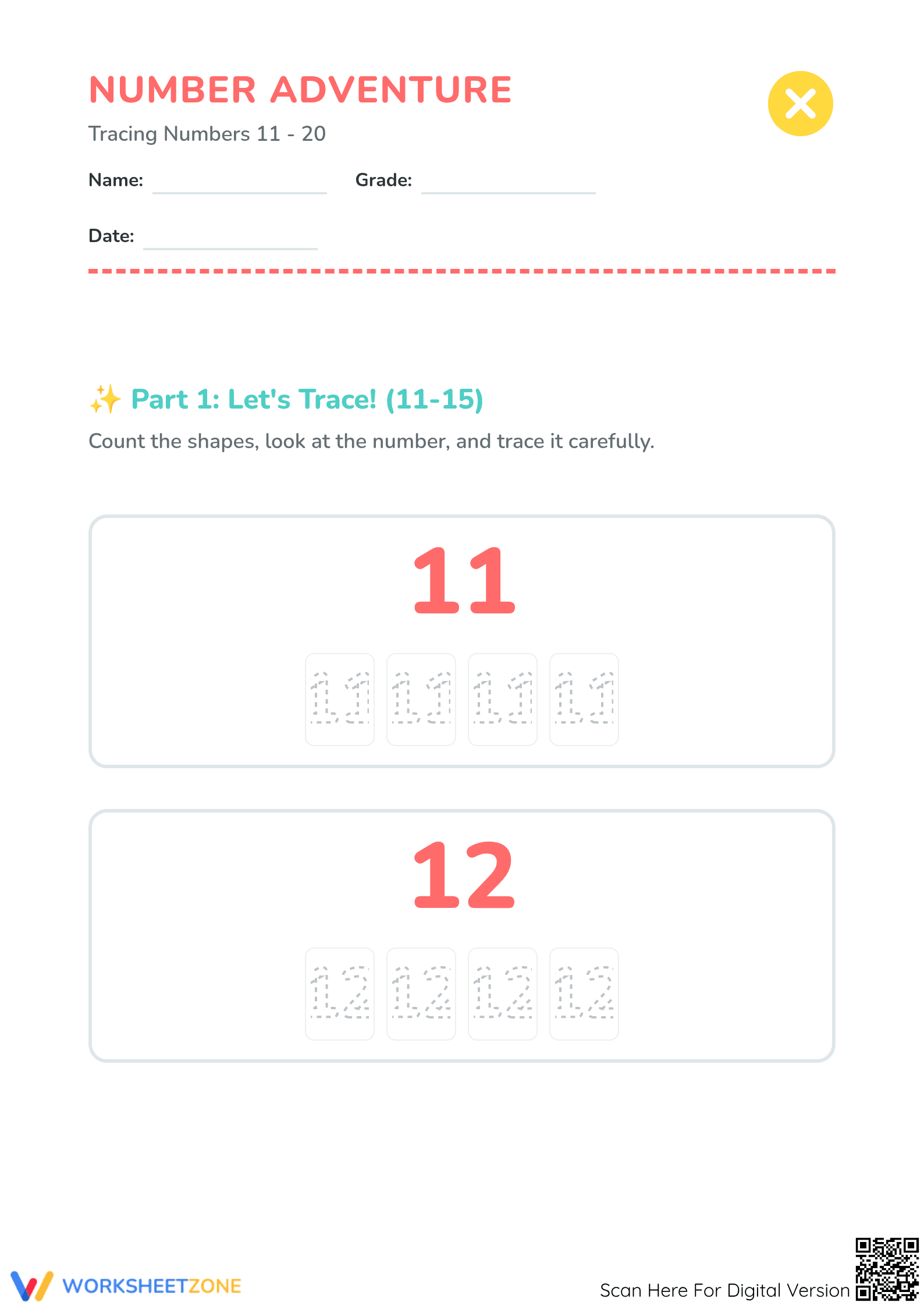
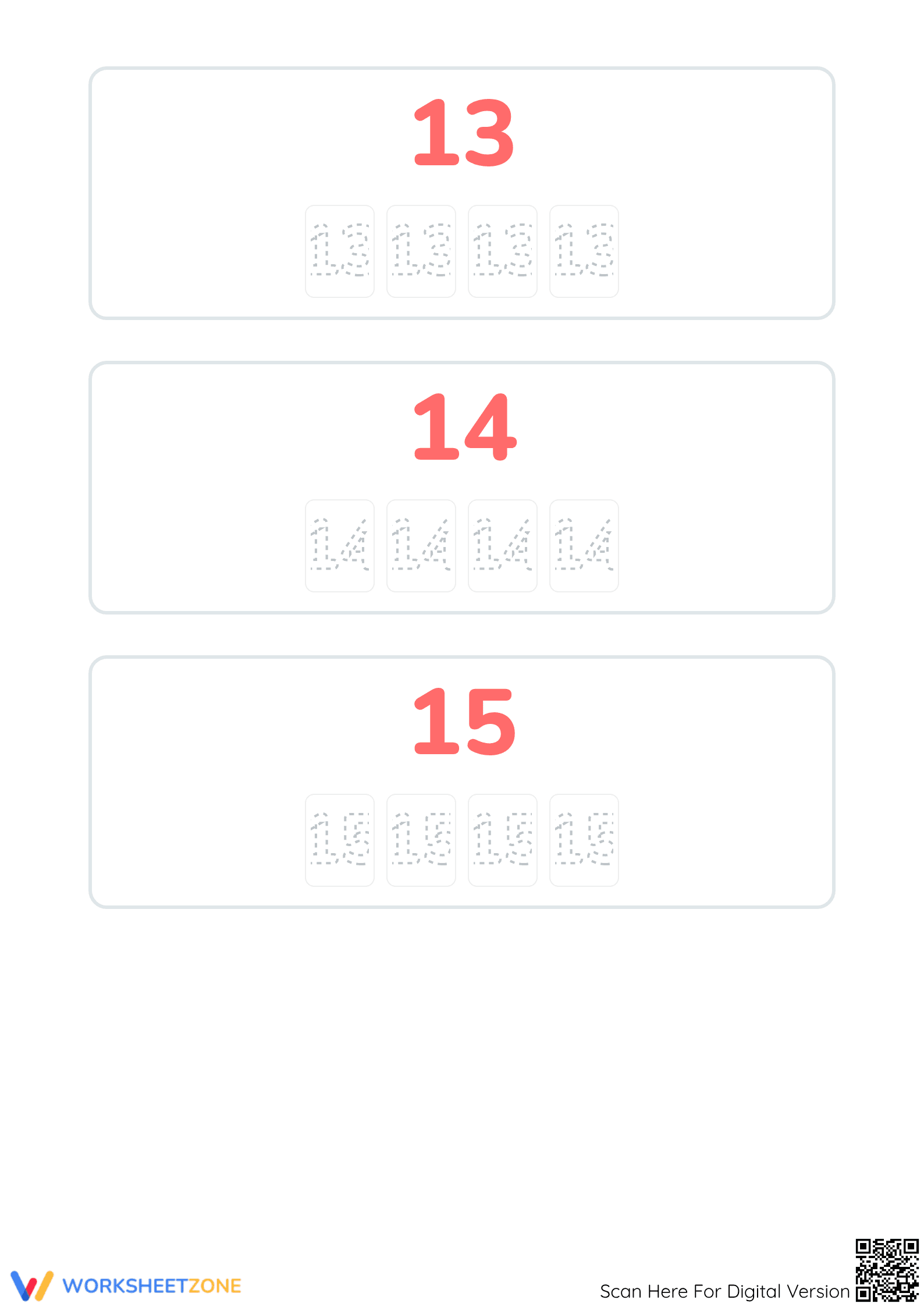
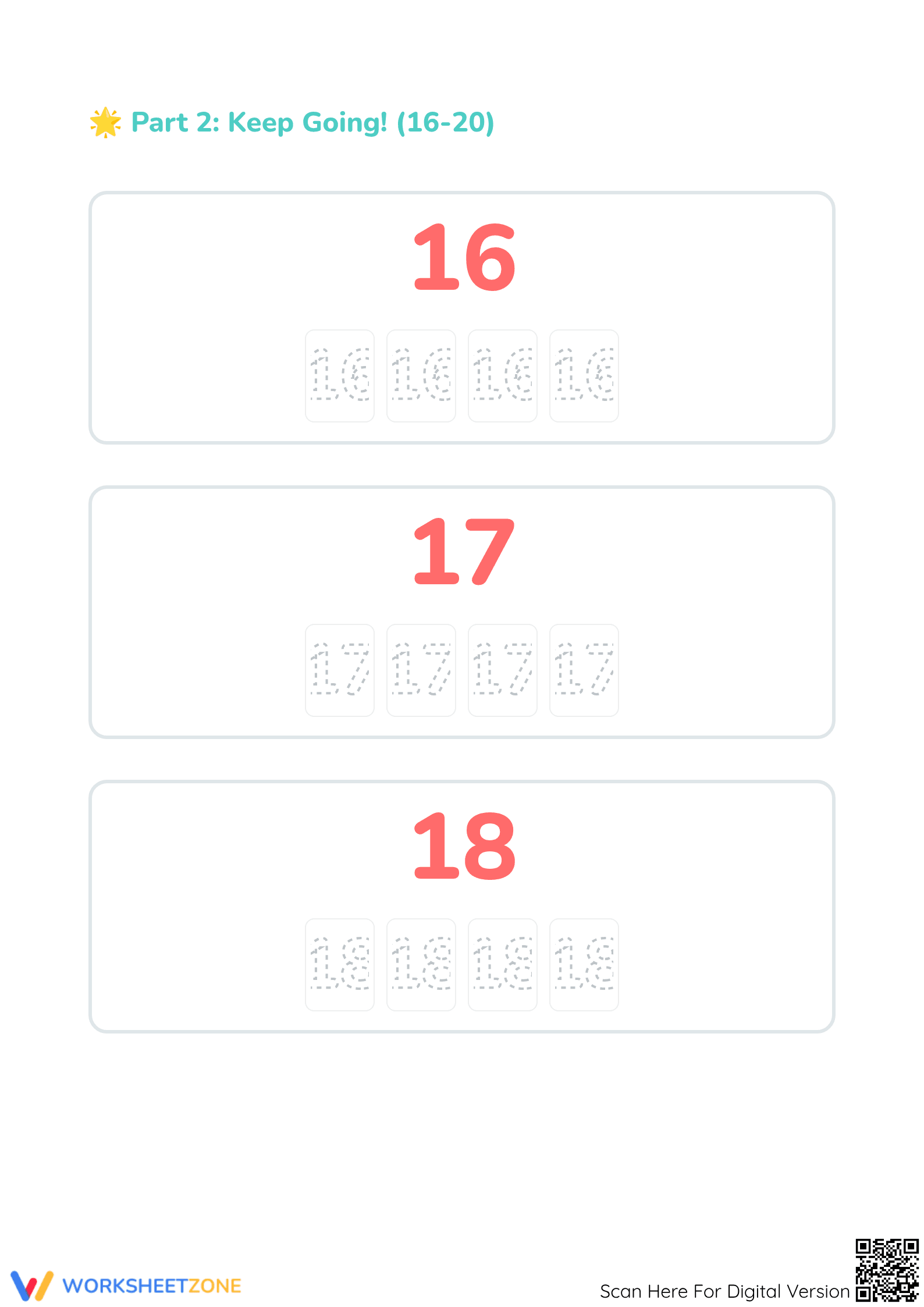
This Preschool math worksheet provides structured practice for tracing numbers 11 through 20. Students develop fine motor control while reinforcing number recognition and sequential counting. By combining visual models with repetitive tracing paths, the resource ensures learners transition from identifying teen numbers to writing them with confidence and accuracy.
At a Glance
- Grade: Preschool · Subject: Math
- Standard:
CCSS.MATH.CONTENT.K.CC.A.3— Write numbers from 0 to 20 to represent a count- Skill Focus: Number Tracing 11-20
- Format: 4 pages · 11 tasks · Answer key included · PDF
- Best For: Early numeracy and fine motor practice
- Time: 15–20 minutes
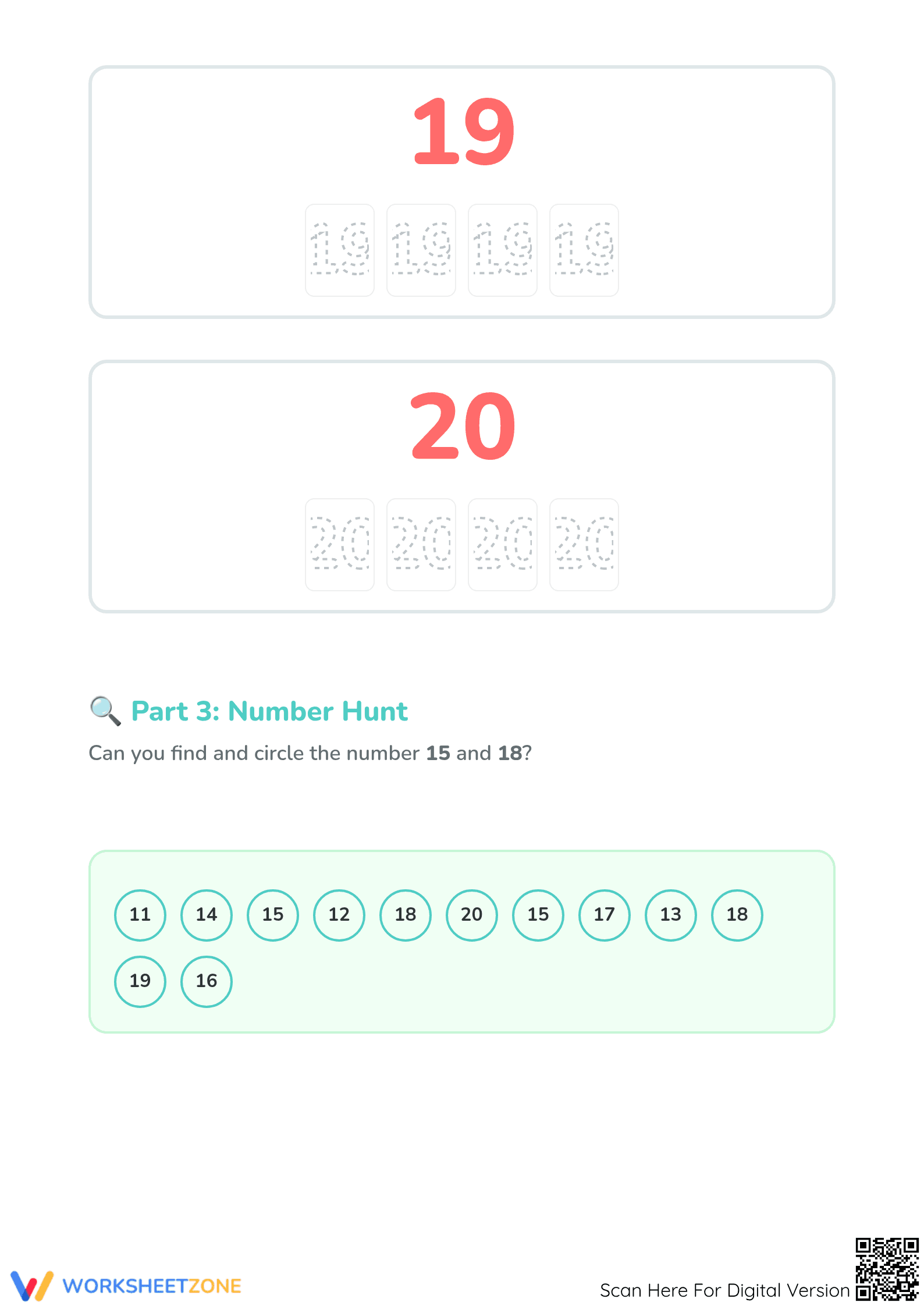
Inside this 4-page PDF, you will find a comprehensive progression for teen numbers. Each page features large, clear numerals for visual reference followed by four dedicated tracing opportunities per number. The final page includes a "Number Hunt" activity where students must discriminate between various numerals to find specific targets, adding a layer of cognitive challenge to the mechanical tracing tasks.
The zero-prep workflow is designed for busy educators. 1. Print: Select the specific number range needed or print the full 4-page set in under 30 seconds. 2. Distribute: Hand out the sheets during morning arrival or as a transition activity; the intuitive layout requires no verbal instructions. 3. Review: Quickly scan the "Number Hunt" section for formative data on recognition. Total teacher prep time is less than 2 minutes, making this an ideal sub-plan resource.
This resource is aligned with CCSS.MATH.CONTENT.K.CC.A.3, which requires students to write numbers from 0 to 20 and represent a number of objects with a written numeral. While designed for Preschool, it serves as an essential bridge to Kindergarten expectations. This standard code can be copied directly into lesson plans, IEP goals, or district curriculum mapping tools.
Use this worksheet as a quiet-time activity after direct instruction on teen numbers. It is particularly effective in small-group math centers where a teacher can observe pencil grip and stroke order. For a formative assessment, use the "Number Hunt" on page 4 to check if students can identify 15 and 18 among distractors. Completion typically takes 15 to 20 minutes depending on the student's fine motor development.
This worksheet is ideal for Preschool and early Kindergarten students, as well as learners receiving Occupational Therapy (OT) for fine motor delays. It pairs naturally with a "Teen Number" anchor chart or a set of ten-frame manipulatives to help students connect the written symbol to a concrete quantity during independent practice.
According to the RAND AIRS 2024 report on early childhood numeracy, the integration of tactile tracing with visual recognition is a foundational step in developing mathematical fluency. This worksheet targets CCSS.MATH.CONTENT.K.CC.A.3 by providing the repetitive motor practice necessary for students to internalize the formation of two-digit numbers. Research by Fisher & Frey (2014) emphasizes that scaffolded writing tasks, such as tracing, allow young learners to focus on the cognitive aspect of number identification without being overwhelmed by the mechanical demands of free-hand writing. By mastering numbers 11-20 through this structured approach, students build the prerequisite skills for place value understanding and complex counting. This resource provides a high-utility tool for educators seeking to meet rigorous early learning standards while supporting the diverse developmental needs of a preschool classroom.


