


























Views
Downloads
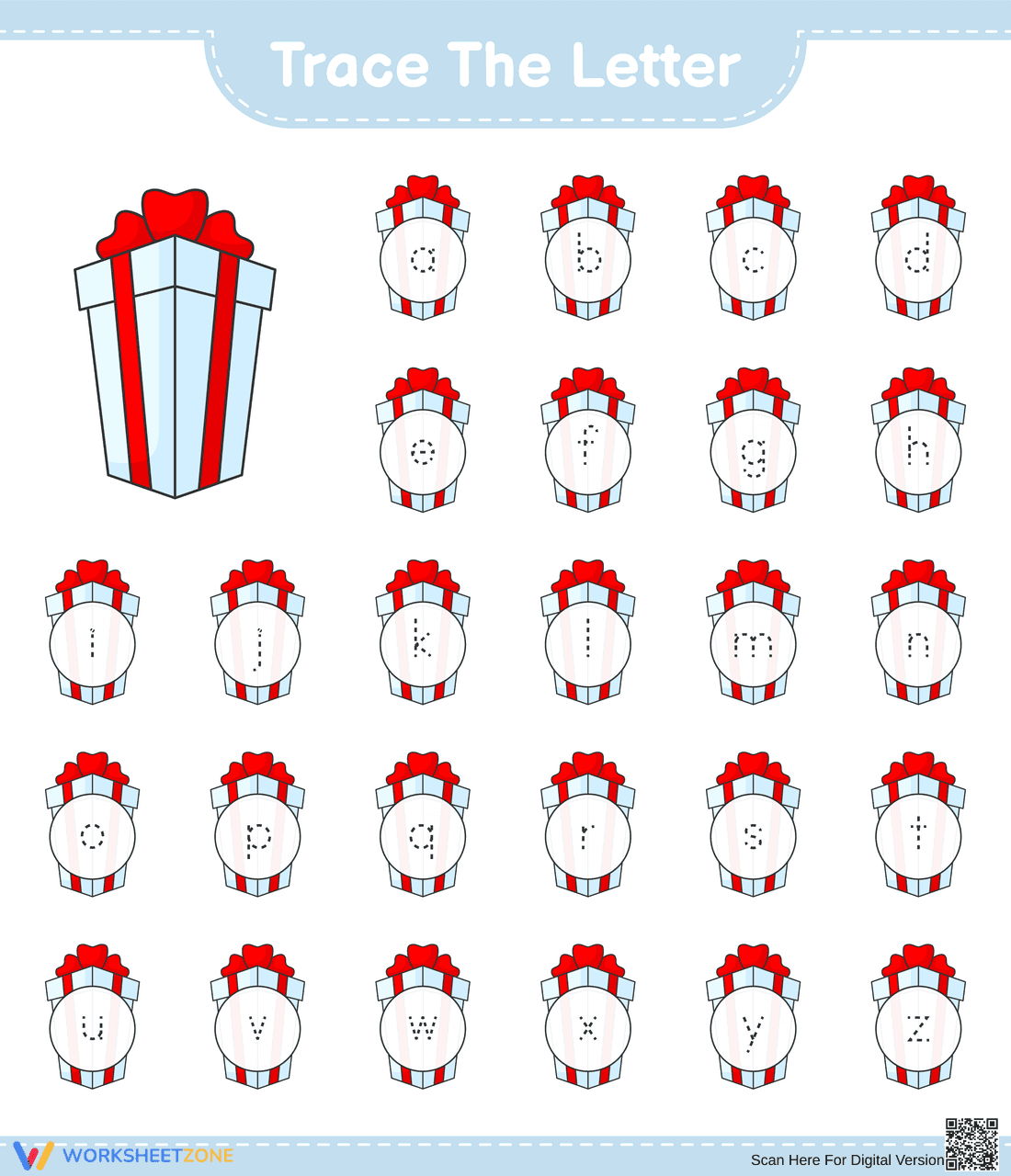

Grade K Alphabet Tracing — Printable No-Prep Worksheet
Paste this activity's link or code into your existing LMS (Google Classroom, Canvas, Teams, Schoology, Moodle, etc.).
Students can open and work on the activity right away, with no student login required.
You'll still be able to track student progress and results from your teacher account.
This foundational alphabet tracing worksheet helps early learners master lowercase letter formation. Students trace all twenty-six letters of the alphabet, building essential fine motor skills and letter recognition. The engaging gift theme keeps young learners focused while they practice proper stroke order and build writing confidence.
At a Glance
- Grade: Kindergarten · Subject: ELA
- Standard:
CCSS.ELA-LITERACY.L.K.1.A— Print many lowercase letters- Skill Focus: Lowercase letter formation
- Format: 1 page · 26 problems · PDF
- Best For: Independent practice
- Time: 10–15 minutes
This single-page resource features twenty-six distinct tracing tasks, one for each lowercase letter from a to z. Each letter is presented inside a visually appealing gift box illustration, utilizing clear, dotted primary fonts to guide student pencil strokes. The straightforward layout eliminates visual clutter, ensuring students remain focused entirely on their handwriting practice without needing complex instructions or additional materials.
Designed for immediate classroom implementation, this resource requires absolutely zero teacher setup. Print (1 minute): Simply generate the PDF and print a class set. Distribute (1 minute): Hand out the sheets along with standard pencils or crayons. Review (3 minutes): Quickly circulate to ensure students are following the dotted lines correctly. Total prep time is under two minutes, making this an ideal, reliable activity for morning work, literacy centers, or emergency substitute plans.
This activity is directly aligned with CCSS.ELA-LITERACY.L.K.1.A, requiring students to print many upper- and lowercase letters. By providing guided tracing paths for the entire lowercase alphabet, the worksheet ensures students develop the muscle memory necessary for independent writing. Both standard codes can be copied directly into lesson plans, IEP goals, or district curriculum mapping tools.
Teachers can deploy this worksheet during morning arrival as a calm, focused bell-ringer activity that settles students into the academic day. Alternatively, it serves perfectly as an independent literacy center station while the teacher conducts small group reading instruction. As a formative assessment tip, observe students while they trace to identify any improper pencil grips or incorrect stroke directions, correcting them early before bad habits solidify. Expected completion time ranges from ten to fifteen minutes depending on the student's fine motor development.
This resource is primarily designed for Kindergarten students, though it serves as excellent remedial practice for first graders or an advanced challenge for preschool learners. To differentiate for students needing extra support, teachers might provide a textured surface underneath the paper or use a highlighter to trace the first few letters together. This worksheet pairs naturally with a whole-class alphabet anchor chart review or a direct instruction lesson on letter sounds.
Developing automaticity in letter formation is a critical precursor to fluent writing and reading comprehension. According to Fisher & Frey (2014), providing structured, repetitive practice with foundational skills allows students to free up cognitive load for higher-order tasks later in their academic journey. This worksheet directly supports CCSS.ELA-LITERACY.L.K.1.A by having students print many lowercase letters through guided tracing. By isolating the mechanical skill of handwriting within a simple, predictable format, educators can effectively build student confidence and fine motor control. Consistent practice with dotted-line tracing helps establish the neural pathways required for legible, independent writing. This targeted approach ensures that early learners establish a strong literacy foundation, preparing them for more complex phonics and composition tasks as they progress through the primary grades.


