


























Views
Downloads

Printable Alphabet Tracing Worksheet | Kindergarten ELA
Paste this activity's link or code into your existing LMS (Google Classroom, Canvas, Teams, Schoology, Moodle, etc.).
Students can open and work on the activity right away, with no student login required.
You'll still be able to track student progress and results from your teacher account.
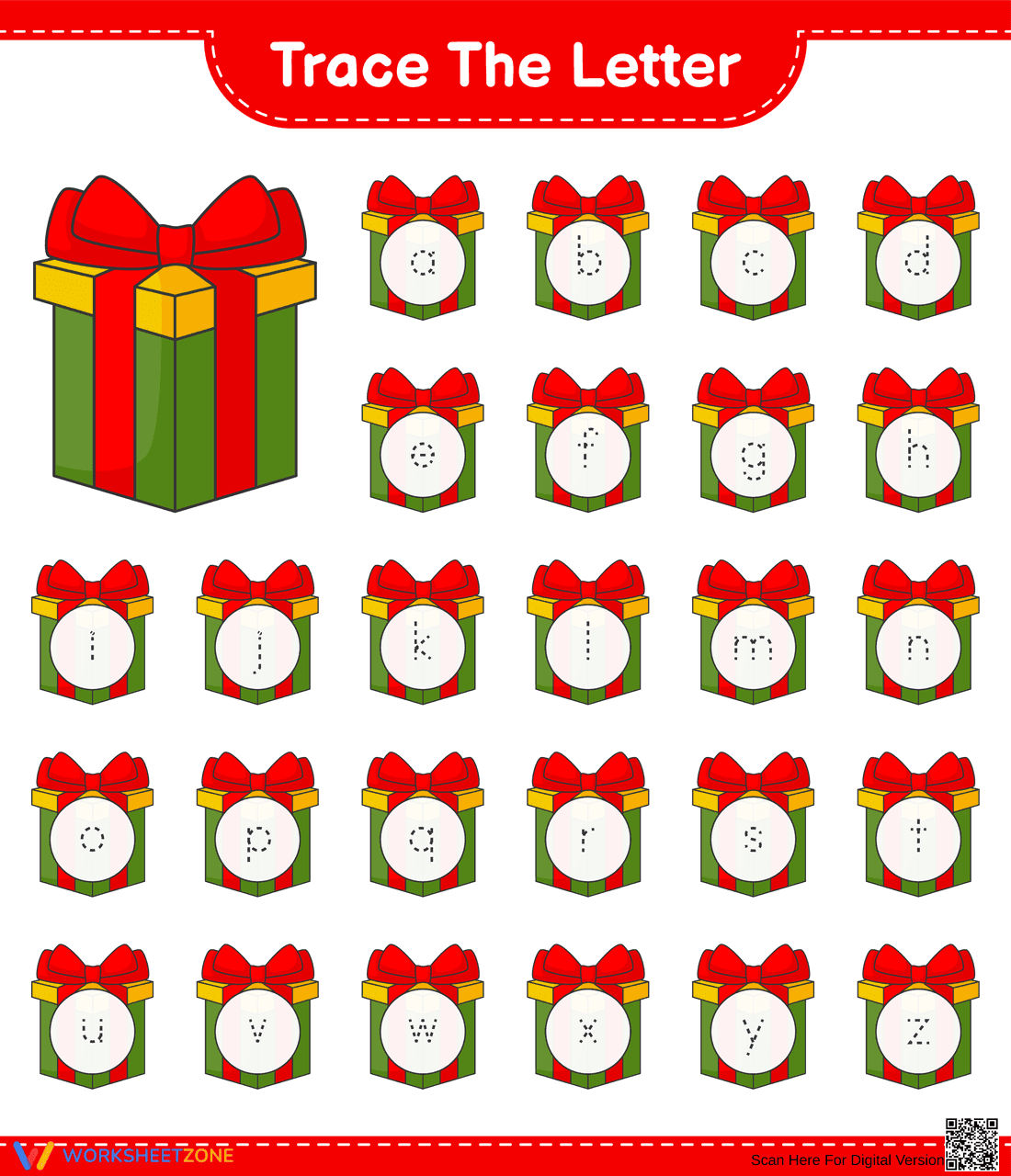
This essential alphabet tracing worksheet helps early learners master lowercase letter formation through structured, repetitive practice. By tracing letters a through z, students develop the muscle memory and fine motor control necessary for legible handwriting. This resource provides a clear, visual path for every letter of the alphabet in a single, engaging page.
At a Glance
- Grade: Kindergarten · Subject: ELA
- Standard:
CCSS.ELA-LITERACY.L.K.1.A— Print many upper- and lowercase letters with proper form- Skill Focus: Lowercase letter formation
- Format: 1 page · 26 problems · Answer key included · PDF
- Best For: Daily morning work or literacy centers
- Time: 15–20 minutes
The worksheet features 26 individual gift-themed boxes, each containing a lowercase letter from the English alphabet. Every letter is presented with clear dashed lines to guide the student's pencil strokes. The layout is clean and uncluttered, ensuring that young writers can focus entirely on the task of tracing. A full answer key is provided to show ideal stroke placement for teacher reference.
This resource is designed for a zero-prep classroom workflow. First, print the single-page PDF (30 seconds). Next, distribute the sheets to students during your literacy block or as they arrive in the morning (1 minute). Finally, review the completed tracings to identify any students struggling with specific letter shapes or pencil grip (1 minute). Total teacher preparation time is under three minutes.
This activity aligns directly with `CCSS.ELA-LITERACY.L.K.1.A`, which requires students to print many upper- and lowercase letters. It also supports foundational writing standards by building the physical stamina required for longer writing tasks. This standard code can be copied directly into lesson plans, IEP goals, or district curriculum mapping tools.
Use this worksheet as a formative assessment during the first weeks of school to gauge incoming handwriting proficiency. It also serves as an excellent quiet-time activity or a reliable sub plan component. For best results, observe students as they work to ensure they are starting their strokes at the top of each letter, providing immediate corrective feedback.
This printable is ideal for Preschool, Kindergarten, and first-grade students who are still refining their fine motor skills. It is particularly helpful for English Language Learners (ELLs) who are familiarizing themselves with the Roman alphabet. Pair this worksheet with an alphabet anchor chart or a letter-sound song to reinforce the connection between letter shapes and phonemes.
According to Fisher & Frey (2014), the gradual release of responsibility begins with clear modeling and supported practice, such as the guided tracing found in this resource. Research indicates that tactile engagement with letter forms significantly improves letter recognition and recall in early childhood education. This worksheet addresses the CCSS.ELA-LITERACY.L.K.1.A standard by providing 26 distinct opportunities for students to practice lowercase printing. By isolating the physical act of tracing from the cognitive load of generating text, students can focus exclusively on the mechanics of handwriting. This targeted approach is a proven method for building the foundational literacy skills required for later academic success. Educators can use this tool to ensure that every student meets the benchmark for letter production before moving on to word-level writing tasks.


