


























Views
Downloads
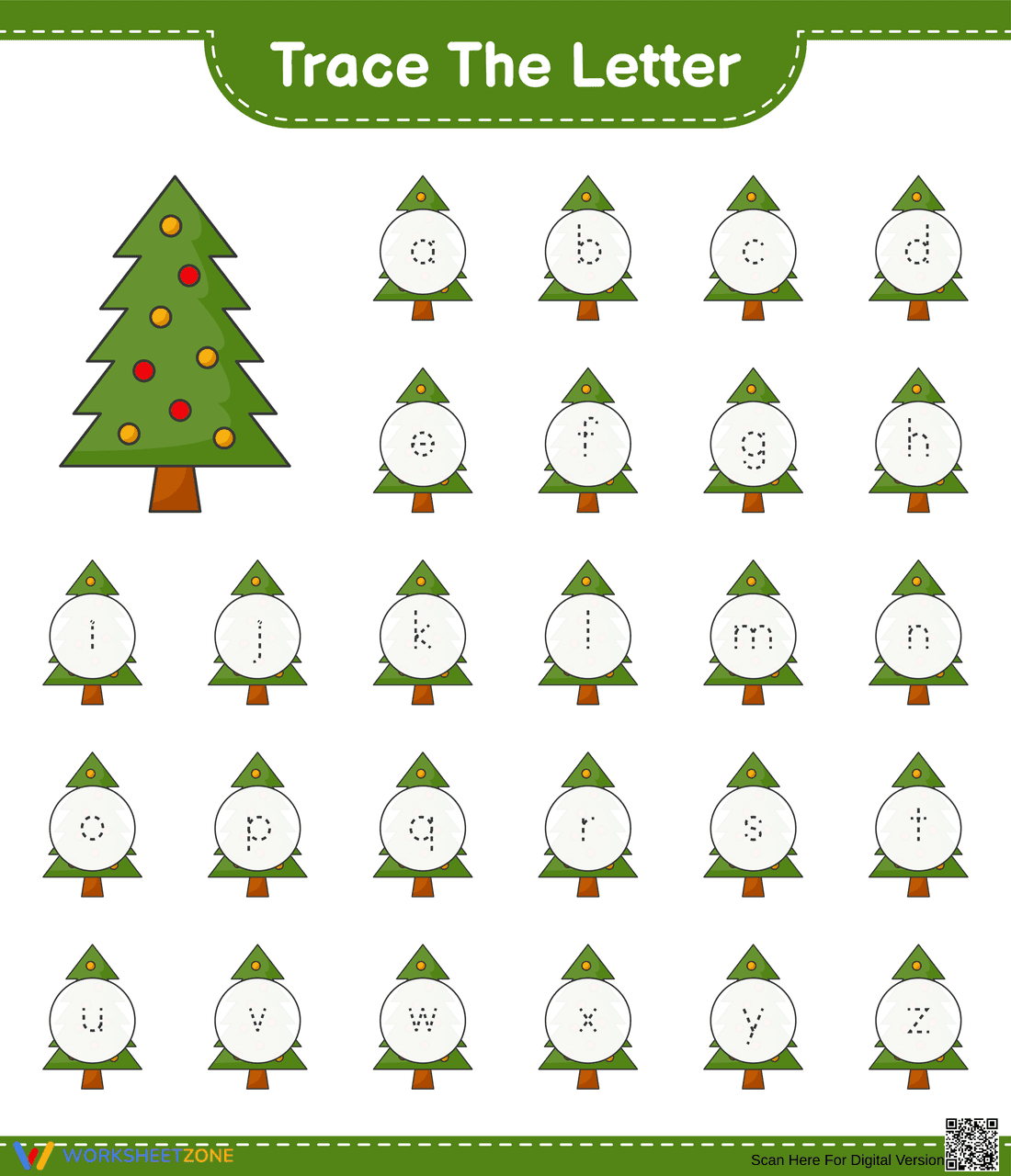

Printable Letter Tracing Worksheet | Grade K ELA
Paste this activity's link or code into your existing LMS (Google Classroom, Canvas, Teams, Schoology, Moodle, etc.).
Students can open and work on the activity right away, with no student login required.
You'll still be able to track student progress and results from your teacher account.
This festive Christmas tree letter tracing worksheet helps early learners develop essential fine motor skills while mastering lowercase alphabet formation. Students trace all 26 letters from a to z, building muscle memory and letter recognition simultaneously. It provides a highly engaging, seasonal approach to foundational handwriting practice for young readers and writers.
At a Glance
- Grade: K · Subject: ELA
- Standard:
CCSS.ELA-LITERACY.L.K.1.A— Print many upper- and lowercase letters- Skill Focus: Lowercase letter tracing
- Format: 1 page · 26 tasks · No answer key needed · PDF
- Best For: Morning work or centers
- Time: 10–15 minutes
This single-page resource features a large, colorful Christmas tree alongside 26 smaller tree ornaments, each containing a dotted lowercase letter of the alphabet. Students follow the dashed lines to trace every letter from a to z. The clear, uncluttered layout ensures that young learners can focus entirely on their pencil grip and letter formation without unnecessary distractions. Because it is a straightforward tracing activity, no separate answer key is required.
Zero-Prep Workflow
This worksheet is designed for immediate classroom implementation.
- Print (1 minute): Download the PDF and print copies.
- Distribute (1 minute): Hand out sheets with pencils. Instructions are self-evident.
- Review (0 minutes): Students get visual feedback by following lines; no formal grading needed.
Total teacher prep time is under two minutes, making this an ideal addition to any winter sub plan.
Standards Alignment
This activity aligns directly with CCSS.ELA-LITERACY.L.K.1.A, which requires students to print many upper- and lowercase letters. By providing guided, dashed lines for the entire lowercase alphabet, the worksheet ensures students practice correct proportions and strokes. It also supports foundational reading skills by reinforcing letter recognition. Both standard codes can be copied directly into lesson plans, IEP goals, or district curriculum mapping tools.
How to Use It
This resource fits perfectly into morning work routines before winter break. Students can complete the tracing independently. Alternatively, place it in a literacy center with dry-erase markers on laminated copies. Expected completion time is 10 to 15 minutes. As a formative assessment tip, observe students to ensure they start letter strokes from the top down, correcting pencil grip as needed.
Who It's For
This worksheet is primarily designed for Kindergarten students, though it serves as excellent enrichment for Preschoolers or targeted remediation for First Graders who need extra handwriting support. For differentiation, provide pencil grips or thicker markers for students struggling with fine motor control. It pairs naturally with a whole-class read-aloud of a holiday-themed alphabet book or a direct instruction mini-lesson on specific letter families.
Mastering handwriting through guided practice is a critical step in early literacy development. According to Fisher & Frey (2014), providing structured, repetitive tasks like tracing helps solidify the neural pathways required for automatic letter formation, freeing up cognitive load for higher-order reading and writing skills later on. This resource directly supports CCSS.ELA-LITERACY.L.K.1.A by allowing students to print many upper- and lowercase letters with accuracy. When young learners engage in targeted fine motor activities, they build the stamina and precision necessary for independent writing. The festive theme adds an element of seasonal engagement, ensuring that students remain focused while completing all 26 tasks. By integrating this foundational practice into daily routines, educators can effectively monitor progress and address grip or stroke issues early.


