


























Views
Downloads


Essential Toys Vocabulary Worksheet for PreK & Kindergarten
Paste this activity's link or code into your existing LMS (Google Classroom, Canvas, Teams, Schoology, Moodle, etc.).
Students can open and work on the activity right away, with no student login required.
You'll still be able to track student progress and results from your teacher account.
This printable toys vocabulary worksheet helps Preschool and Kindergarten students identify common play items and practice essential counting skills. By connecting visual images with written words and numbers, students build foundational literacy and early mathematical fluency in an engaging way.
At a Glance
- Grade: Preschool · Kindergarten · Subject: English Language Arts
- Standard:
CCSS.ELA-LITERACY.L.K.6— Use acquired words & phrases- Skill Focus: Common toy nouns and counting to 7
- Format: 2 pages · 9 problems · Answer key included · PDF
- Best For: Early literacy centers and morning work
- Time: 10–15 minutes
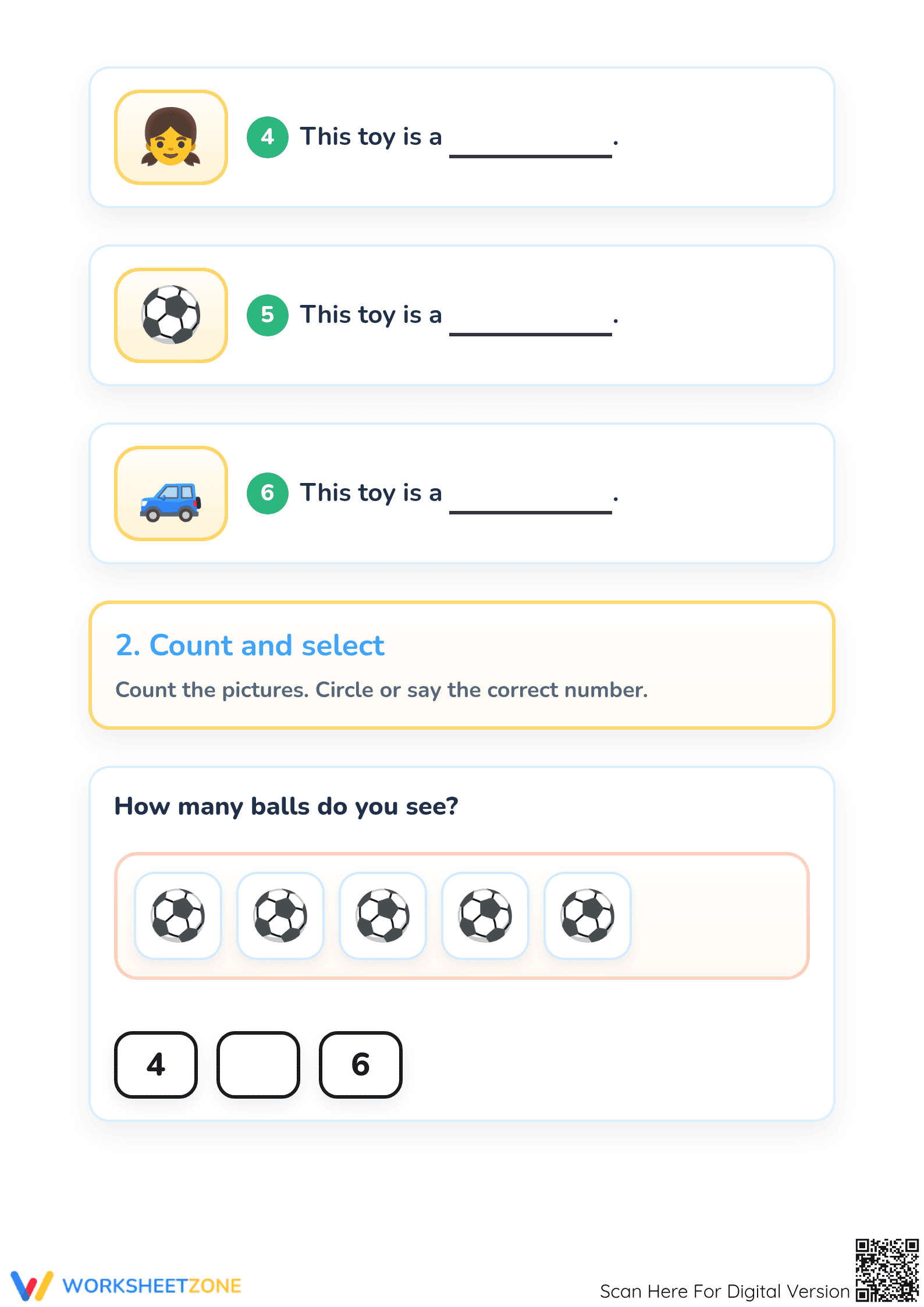
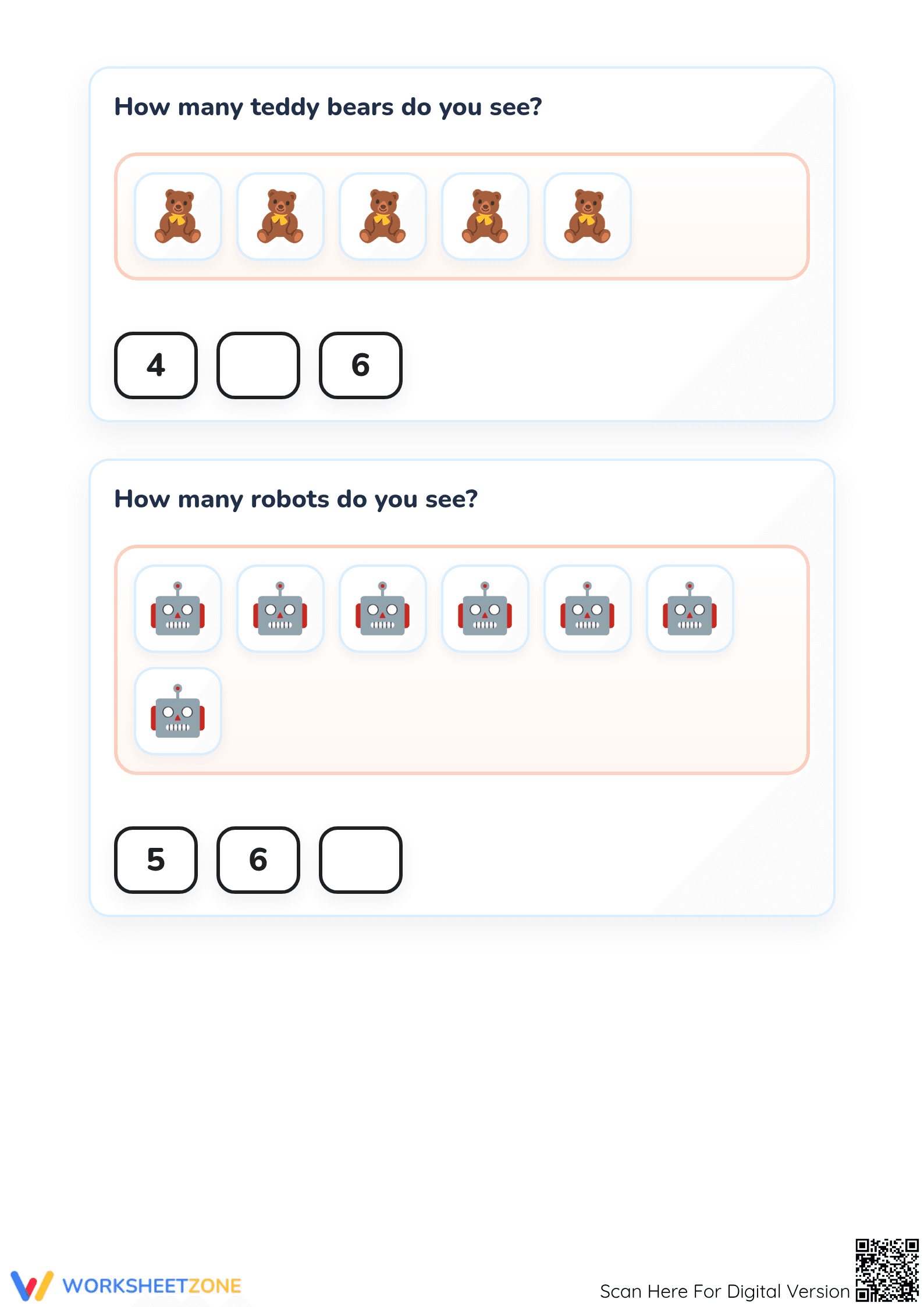
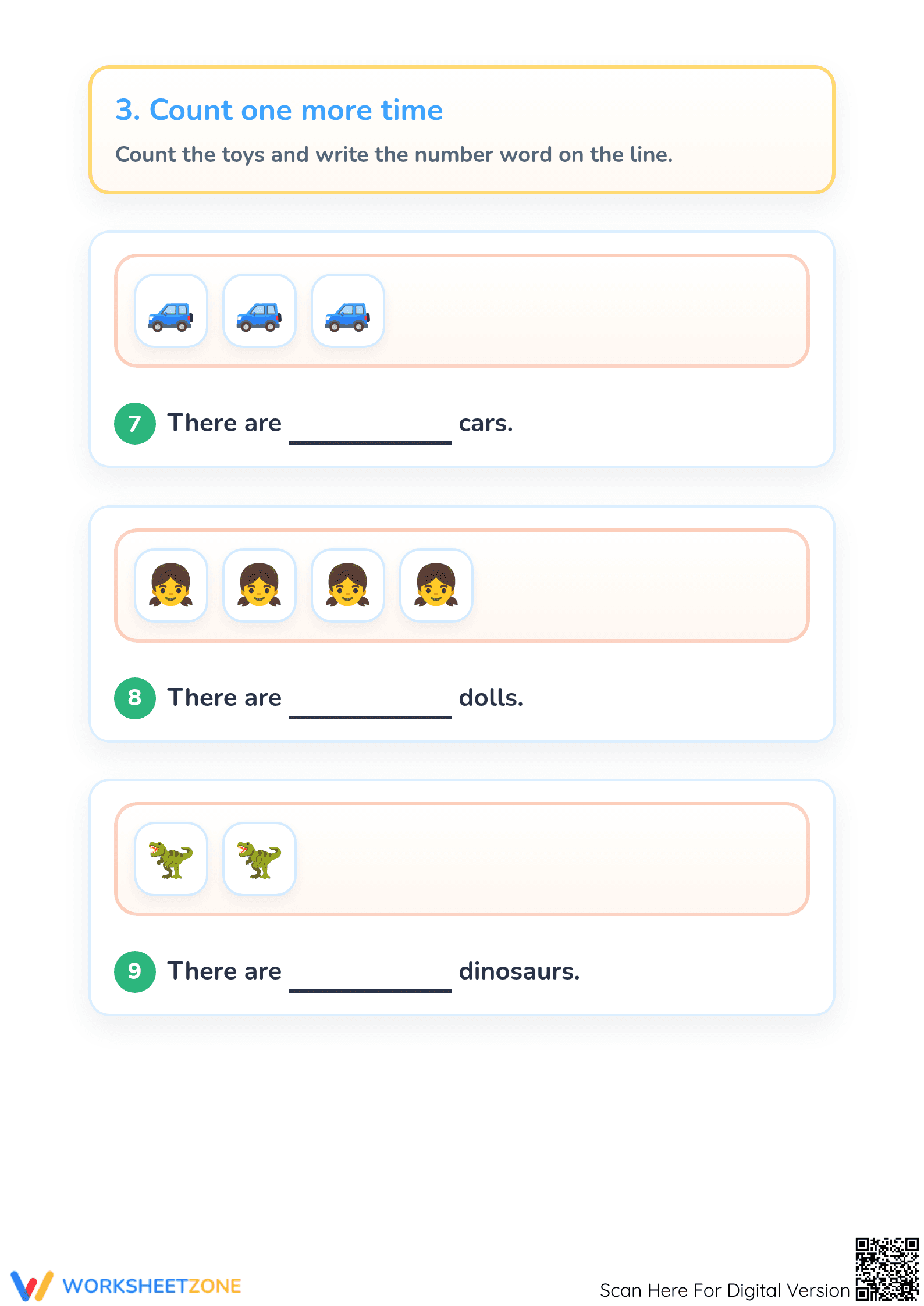
This two-page resource is divided into two distinct cognitive tasks. The first page features a visual matching activity where students identify six common toys: teddy bear, robot, dinosaur, ball, car, and doll. Each item is paired with a clear, high-quality image to support visual learners. The second page transitions into a counting exercise, asking students to count groups of toys—balls, teddy bears, and robots—and select the correct number from a multiple-choice field, reinforcing one-to-one correspondence.
Zero-Prep Workflow
The zero-prep design allows teachers to integrate this resource effortlessly. First, print the two-page PDF (30 seconds). Second, distribute sheets during a literacy or math center (30 seconds). Third, review the answers using the provided key (1 minute). Total teacher preparation time is under two minutes, making it ideal for busy mornings or sub plans. The clear layout ensures students can focus entirely on the learning task without being overwhelmed by complex instructions.
Standards Alignment
This worksheet is primarily aligned with `CCSS.ELA-LITERACY.L.K.6`, which focuses on helping students use words and phrases acquired through reading and conversation. Additionally, the second page supports `CCSS.MATH.CONTENT.K.CC.B.4`, involving the understanding of the relationship between numbers and quantities. Both standard codes can be copied directly into lesson plans, IEP goals, or district curriculum mapping tools to ensure instructional compliance and tracking of student progress throughout the year.
How to Use It
Use this worksheet as a formative assessment during a unit on "My Community" or "Play." For a morning work session, have students complete the vocabulary page independently to gauge their prior knowledge of common nouns. During a small-group center, use the counting page to observe one-to-one correspondence; watch if students touch each image as they count. The expected completion time is 15 minutes, allowing for quick transitions between varied classroom activities and instructional blocks.
Who It's For
This resource is designed for Preschool and Kindergarten students, particularly those in the early stages of English language acquisition or students with developmental delays who benefit from clear visual scaffolds. It pairs naturally with a shared reading of a book about toys or an anchor chart featuring classroom objects. For students needing extra support, a teacher can provide physical manipulatives that match the toys shown on the page to strengthen the connection between objects and symbols.
Rooted in educational research, this worksheet employs a gradual release approach, moving students from simple word recognition to counting application. Engaging visuals enhance vocabulary retention and align with `CCSS.ELA-LITERACY.L.K.6`, ensuring developmental appropriateness. The interdisciplinary integration of math and literacy supports modern educational frameworks and kindergarten readiness standards, effectively building cognitive bridges for early literacy and mathematical fluency.


