


























Views
Downloads

Printable Telling Time to the Minute Worksheet | Grade 3-5
Paste this activity's link or code into your existing LMS (Google Classroom, Canvas, Teams, Schoology, Moodle, etc.).
Students can open and work on the activity right away, with no student login required.
You'll still be able to track student progress and results from your teacher account.
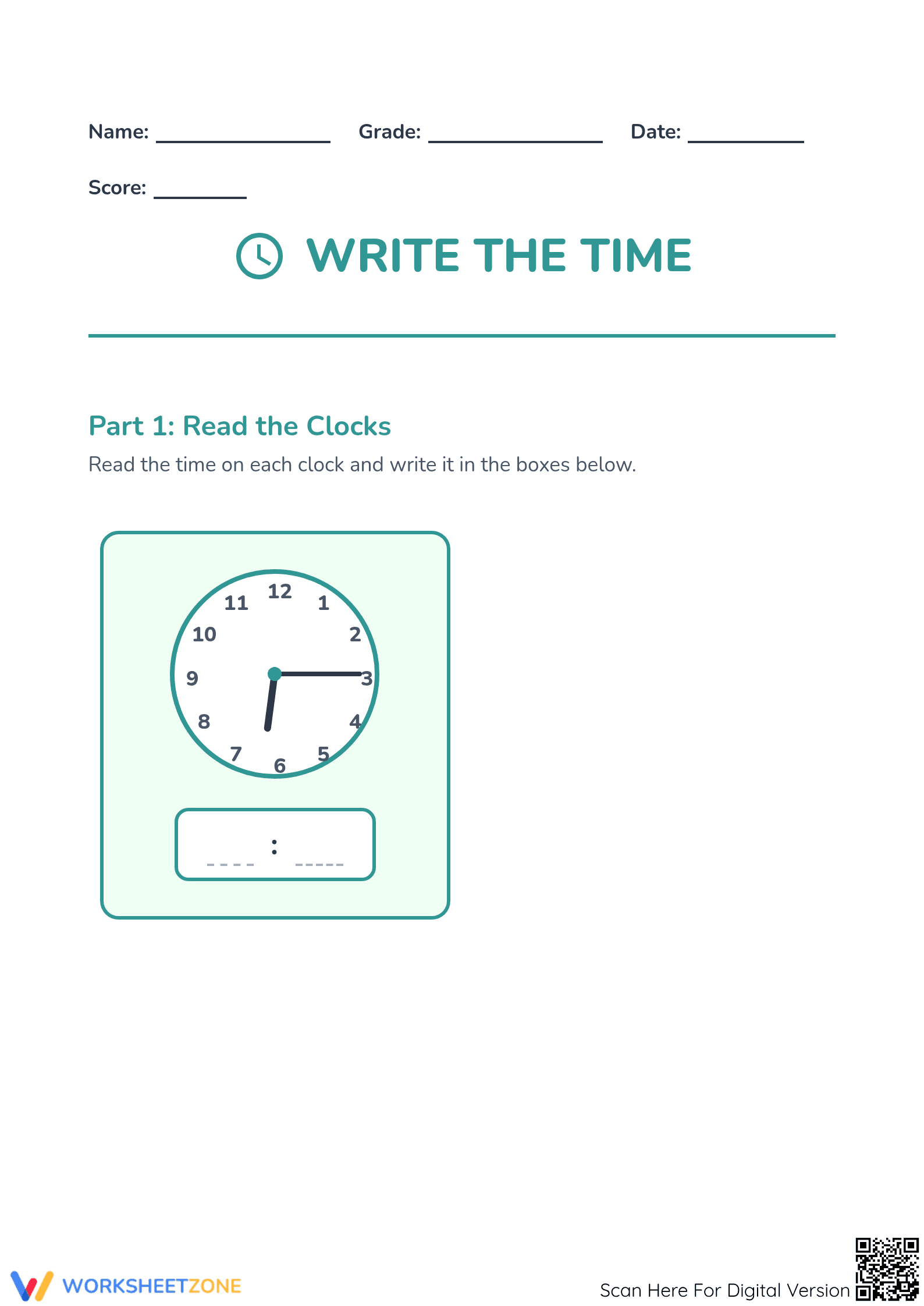
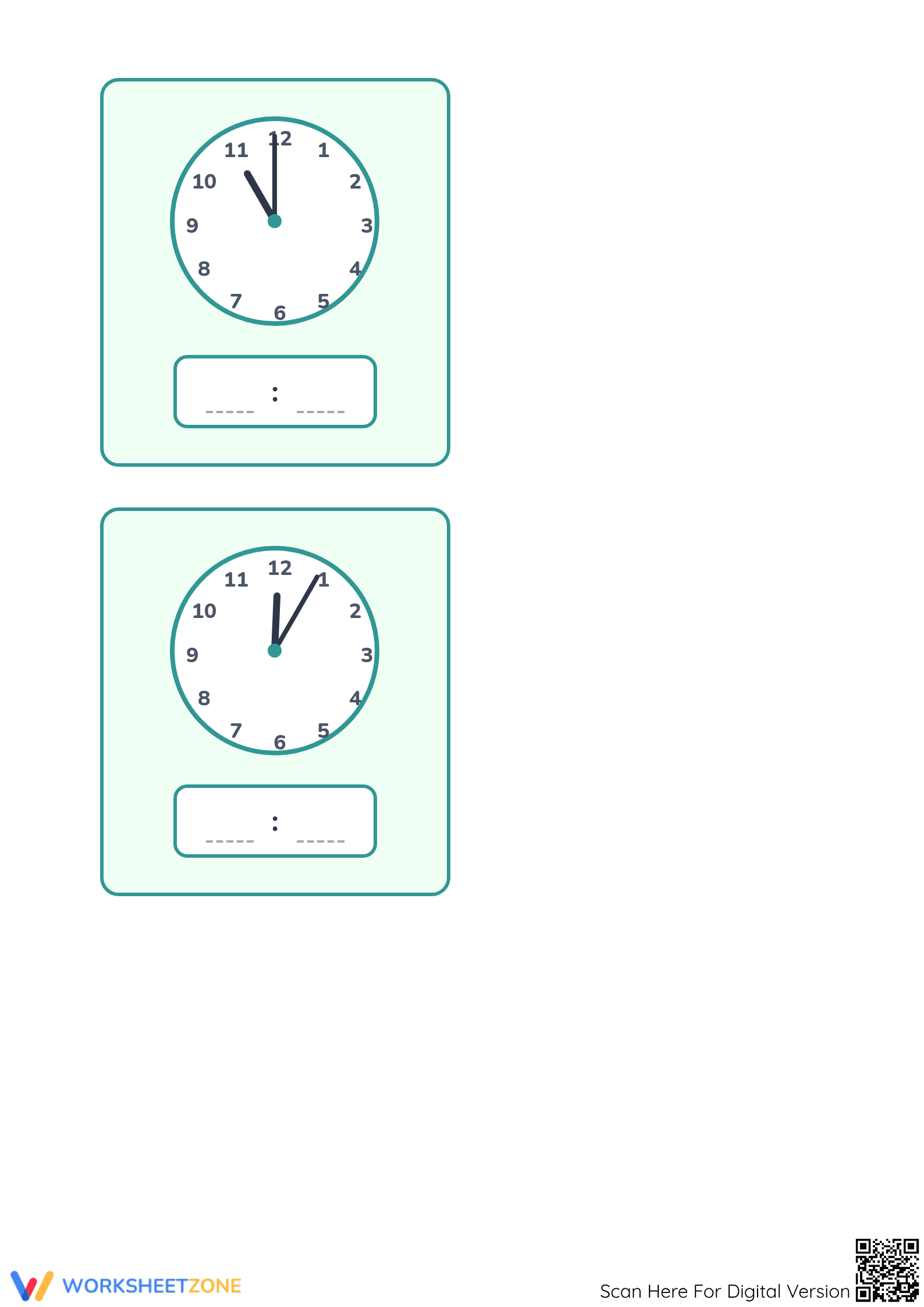
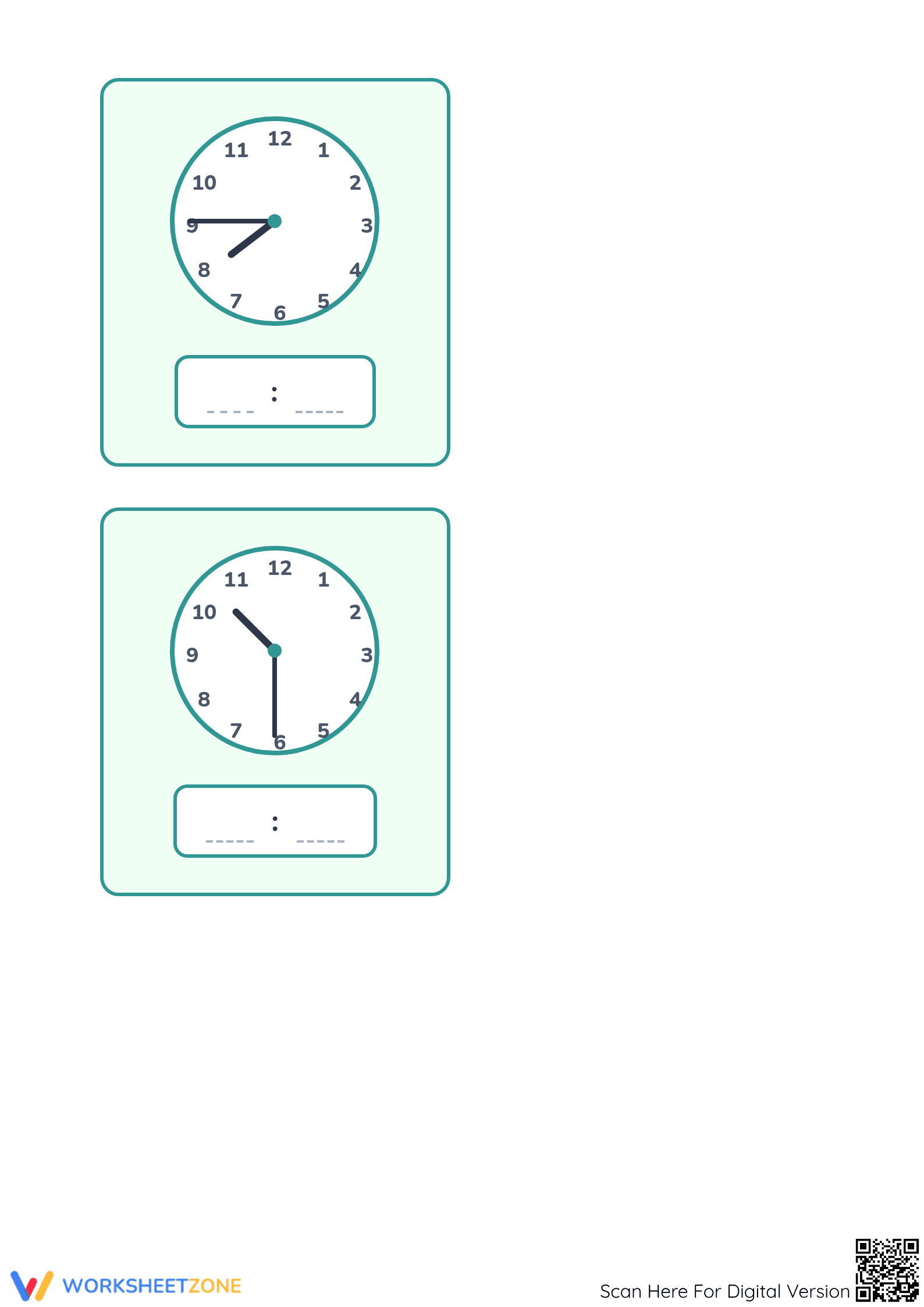
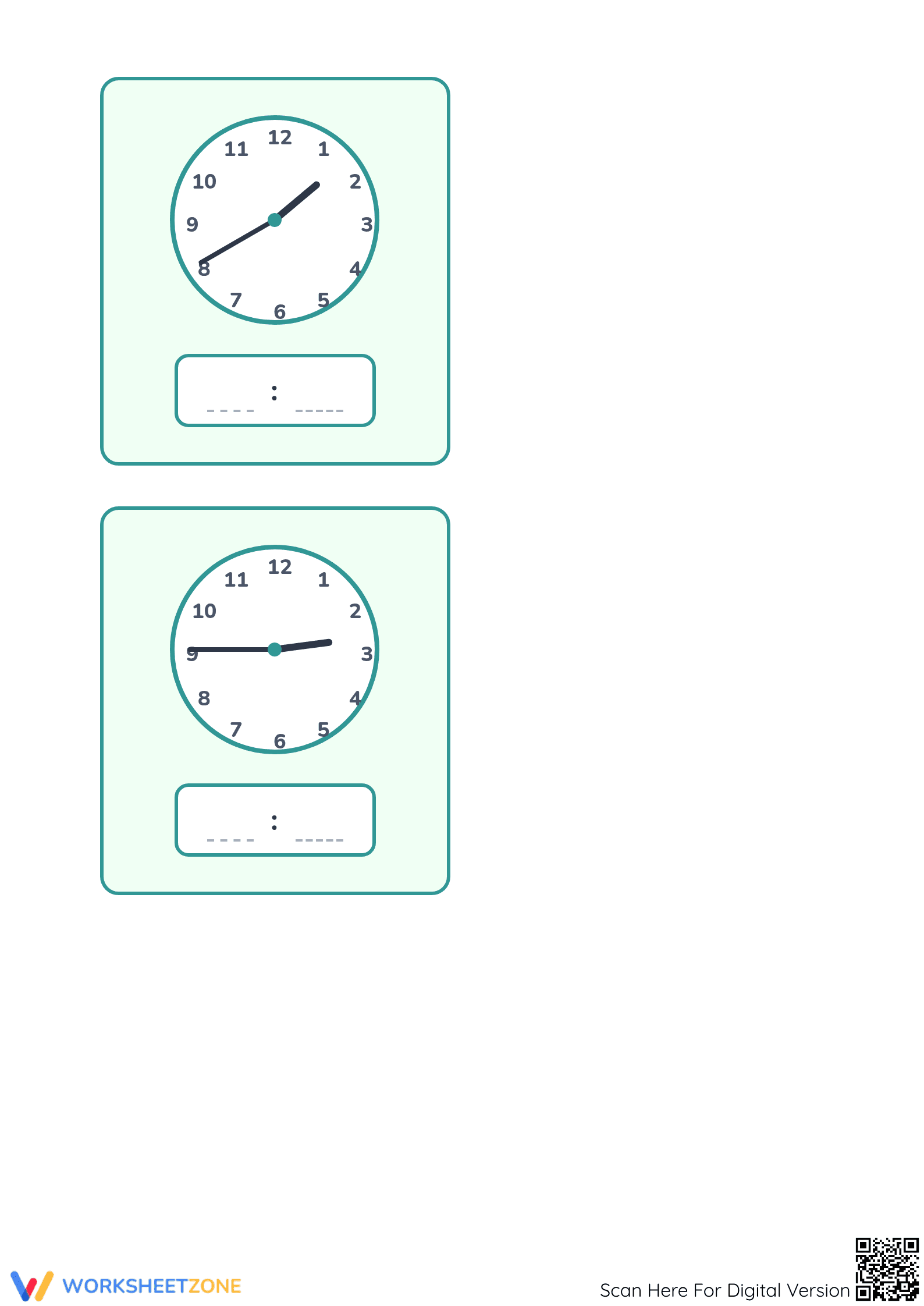
Master the essential skill of telling time with this comprehensive set of analog clock practice pages. Designed for students in grades 3 through 5, this resource focuses on high-precision time reading, requiring students to identify minutes exactly rather than rounding to five-minute intervals. Students develop fluency through repeated exposure to varied clock face configurations.
At a Glance
- Grade: 3–5 · Subject: Math
- Standard:
CCSS.MATH.CONTENT.3.MD.A.1— Tell and write time to the nearest minute using analog clocks- Skill Focus: Analog clock reading and minute-precision notation
- Format: 5 pages · 9 problems · Answer key included · PDF
- Best For: Individual practice and formative math assessment
- Time: 15–25 minutes
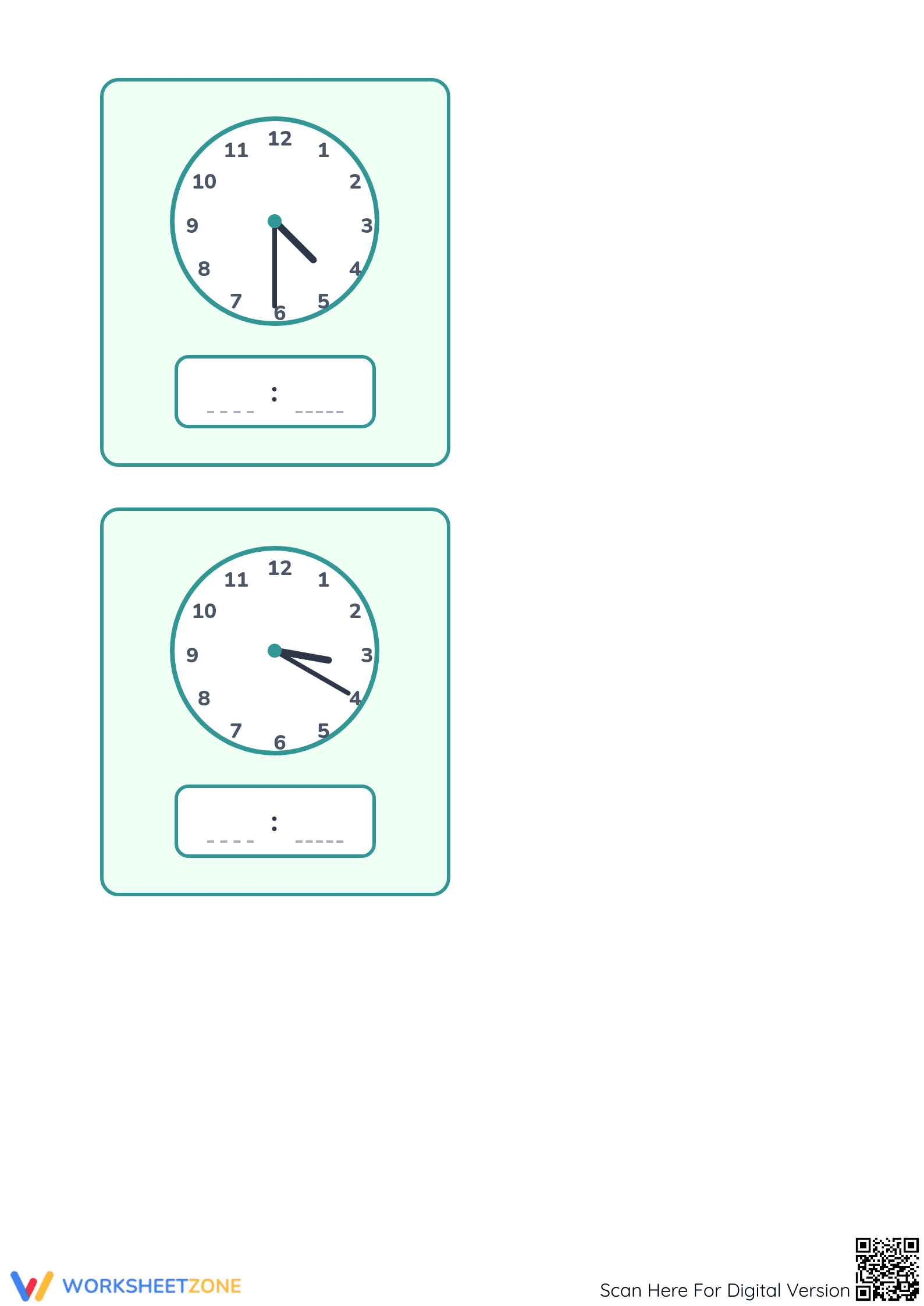
This five-page PDF collection features nine distinct analog clock faces, each presenting a unique time for students to interpret. The clean layout provides a dedicated notation box beneath every clock. A QR code is included on each page for easy access to digital versions, and a full answer key ensures efficient grading.
Skill Progression
- Guided practice: The initial pages introduce clocks with clear minute markers to support early identification and confidence.
- Supported practice: Middle tasks move hands to more challenging positions, such as when the hour hand is between two numbers.
- Independent practice: Final problems require students to synthesize hour and minute placement without additional visual scaffolding.
This gradual release of responsibility helps students build confidence as they progress through the five-page practice sequence.
Standards Alignment
This resource is directly aligned with `CCSS.MATH.CONTENT.3.MD.A.1`, which requires students to "tell and write time to the nearest minute and measure time intervals in minutes." While foundational for third grade, it serves as a vital review for fourth and fifth-grade students. The standard code can be copied directly into lesson plans, IEP goals, or district curriculum mapping tools.
How to Use It
This worksheet is ideal for use during a math rotation or as a morning work activity to reinforce time-telling fluency. After direct instruction on how the minute hand moves between five-minute increments, assign these pages to check for understanding. Teachers should observe whether students mistakenly read the hour hand as the next hour when it is close to the twelve.
Who It's For
This resource is tailored for upper elementary students in grades 3, 4, and 5 who are developing or refining their measurement and data skills. It provides excellent support for English Language Learners and students with IEPs who benefit from clear visual aids. Pair this with a physical demonstration clock for a hands-on learning experience.
According to the RAND AIRS 2024 report, high-frequency practice with analog instruments is a critical predictor of spatial reasoning development in elementary learners. This worksheet addresses that need by providing nine targeted opportunities to translate analog positions into digital formats. By focusing specifically on the CCSS.MATH.CONTENT.3.MD.A.1 standard, the resource ensures that students are not merely guessing based on proximity but are instead applying logic to identify the exact minute. The five-page structure allows for distributed practice over multiple sessions, which has been shown to increase long-term retention of time-telling concepts. Educators can use these tasks to identify specific misconceptions regarding the relationship between the hour and minute hands. This evidence-based approach to mathematical fluency provides the repetition necessary for students to achieve mastery in measurement and data domains across the upper elementary grade levels.


