


























Views
Downloads

Essential Telling Time Worksheet | Grade 2 Math Practice
Paste this activity's link or code into your existing LMS (Google Classroom, Canvas, Teams, Schoology, Moodle, etc.).
Students can open and work on the activity right away, with no student login required.
You'll still be able to track student progress and results from your teacher account.
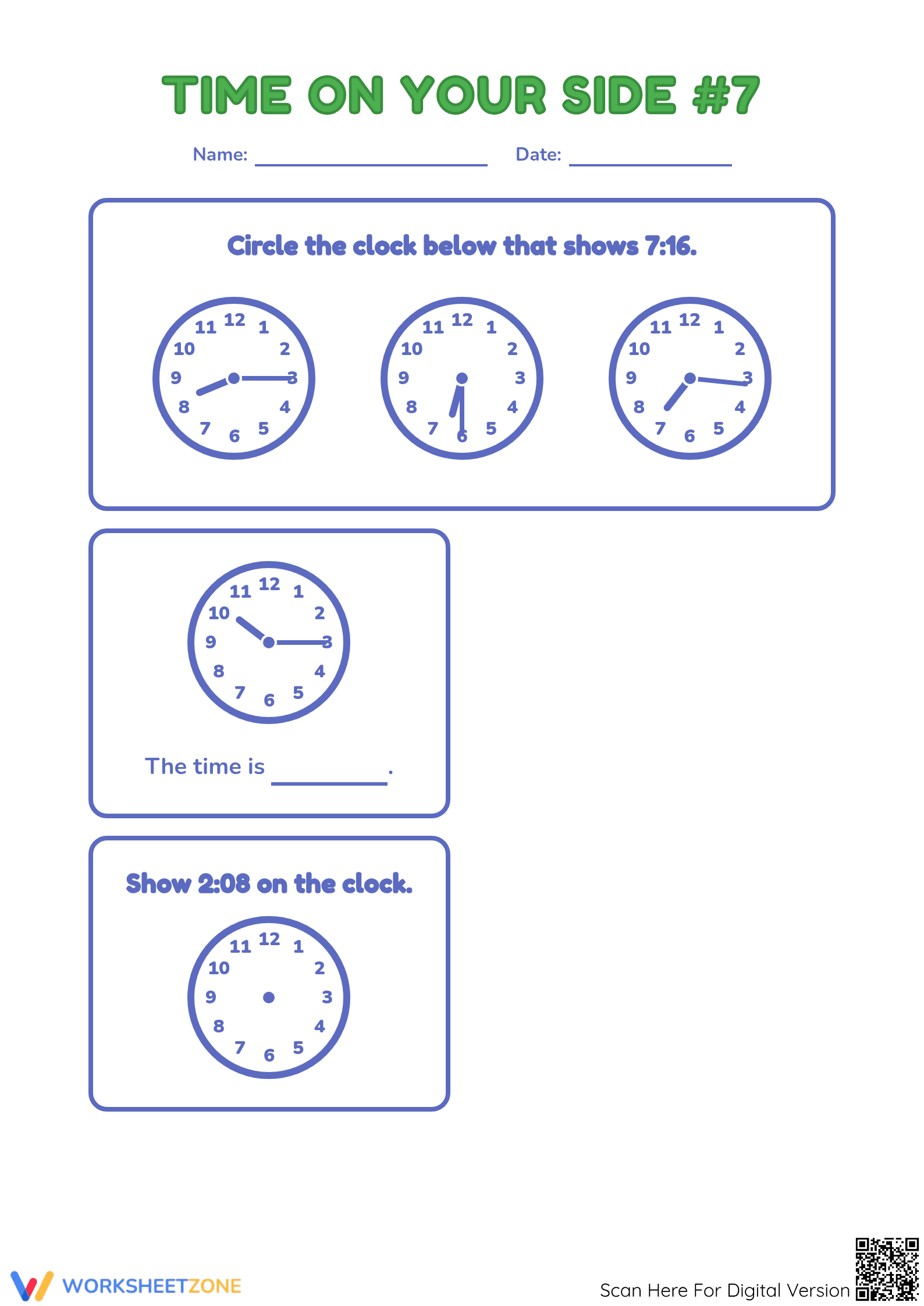
Students will master the mechanics of telling time and applying temporal logic with this comprehensive Grade 2 math resource. By interacting with both analog and digital representations, learners build the spatial awareness necessary to translate clock hand positions into numeric values. This worksheet ensures students can move beyond simple identification toward solving real-world elapsed time scenarios.
At a Glance
- Grade: 2 · Subject: Math
- Standard:
2.MD.C.7— Tell and write time from analog and digital clocks to the nearest five minutes- Skill Focus: Analog reading, clock hand drawing, and elapsed time calculation
- Format: 4 pages · 10 problems · Answer key included · PDF
- Best For: Independent practice or formative assessment during time units
- Time: 25–40 minutes
What's Inside
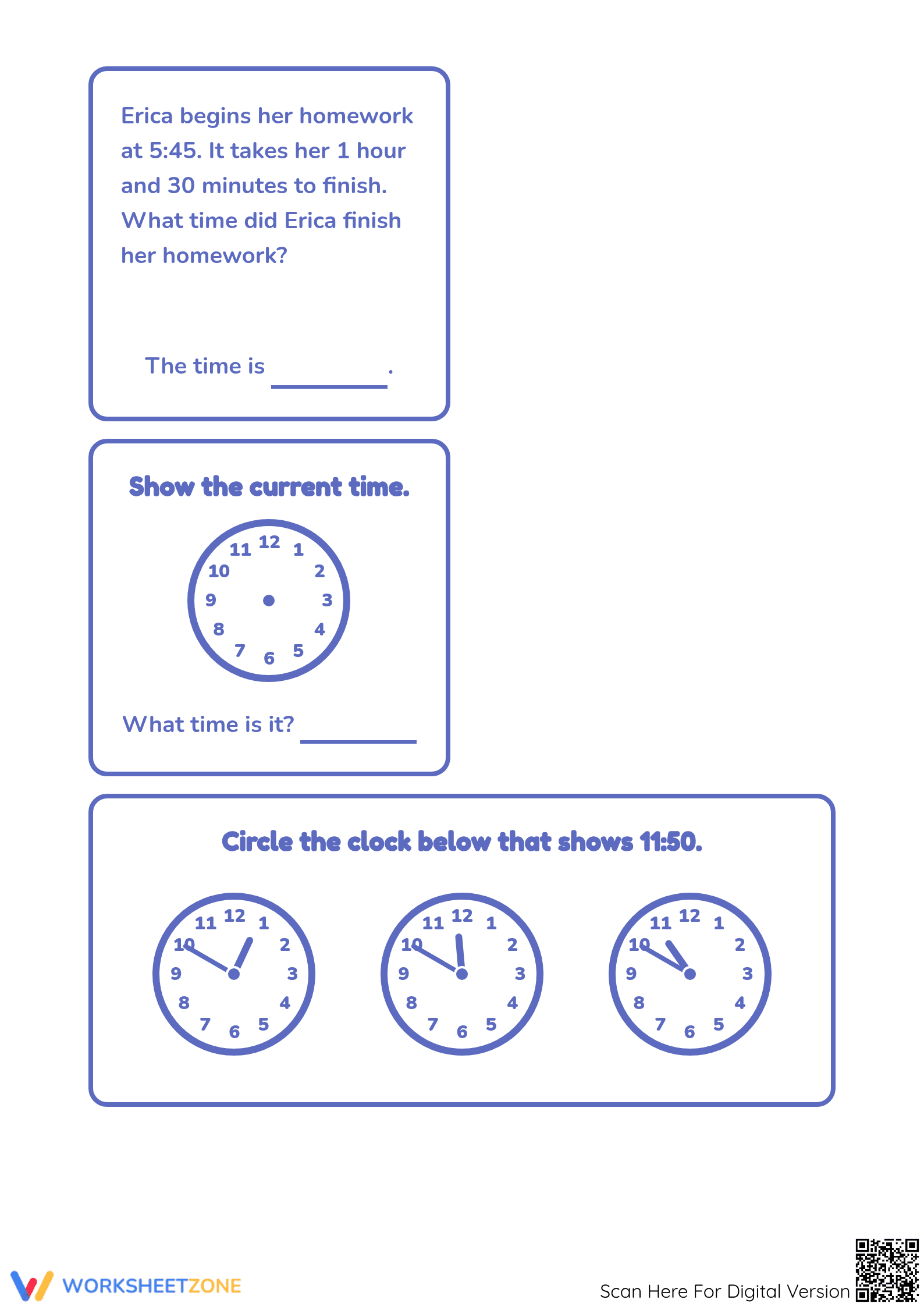
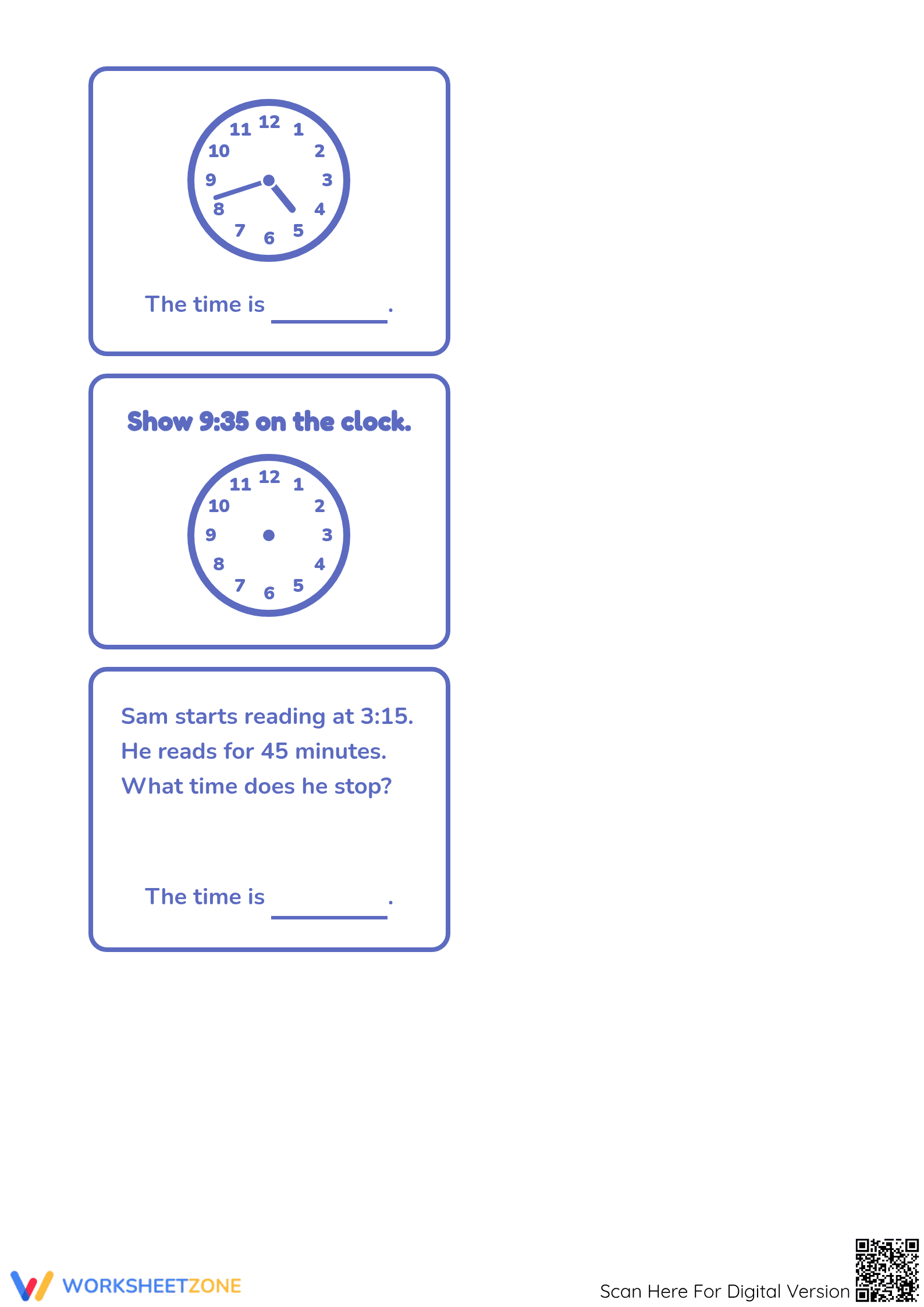
This four-page instructional packet contains ten distinct mathematical challenges. The curriculum includes visual multiple-choice circling tasks, open-ended analog reading prompts, performance-based clock drawing, and two rigorous word problems involving elapsed time. A full answer key is provided to facilitate student self-correction or rapid teacher grading, ensuring immediate feedback on temporal accuracy.
Skill Progression
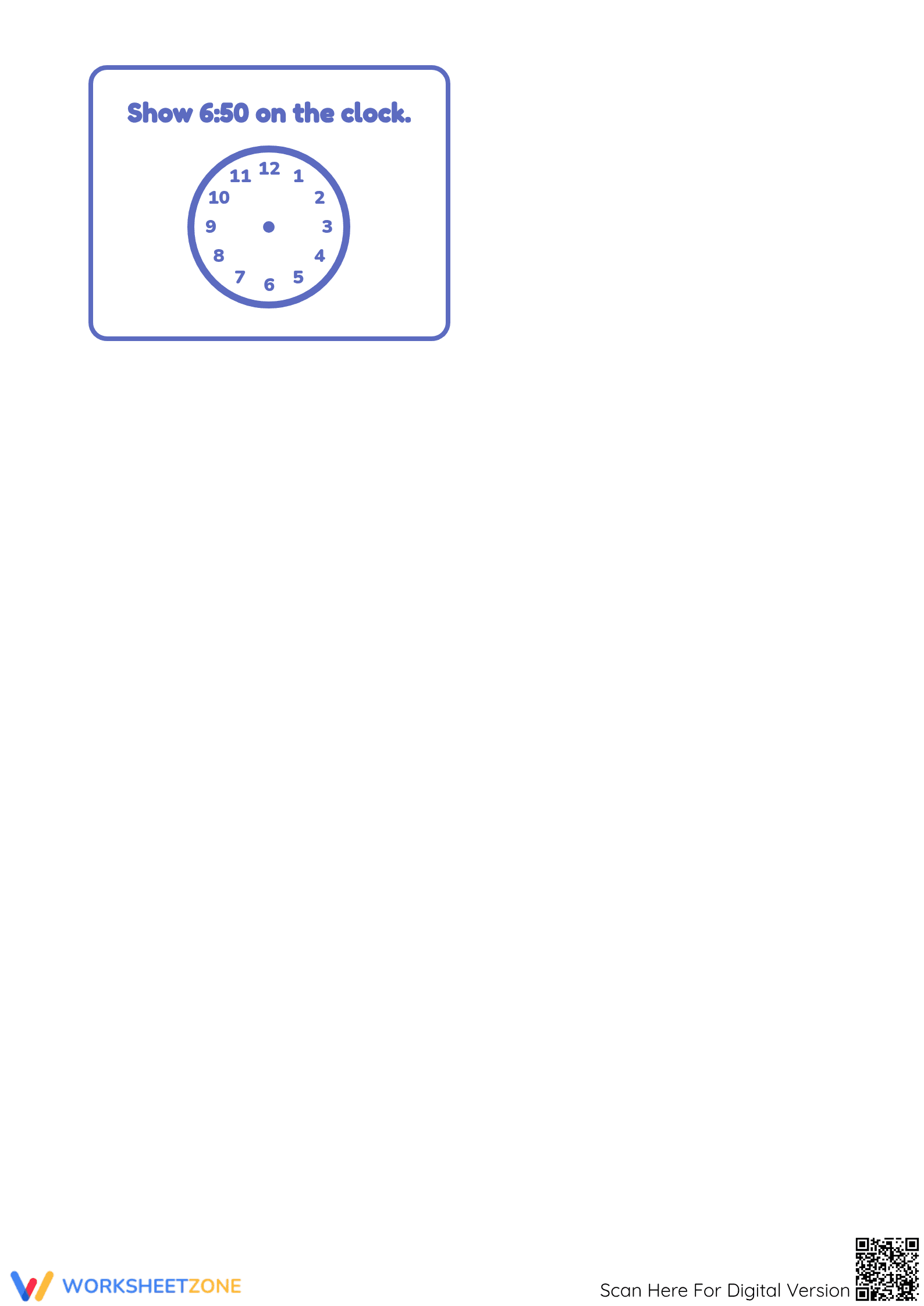
This worksheet follows a gradual-release model, starting with 2 multiple-choice tasks for guided recognition of clock faces. It progresses to 4 open-ended tasks requiring students to read analog clocks or draw hands for specific times (e.g., 2:08, 6:50). Finally, 2 complex word problems challenge students to apply elapsed time calculations (e.g., adding 1 hour 30 minutes) for independent application.
Standards Alignment
The primary focus of this material is 2.MD.C.7: "Tell and write time from analog and digital clocks to the nearest five minutes, using a.m. and p.m." While the standard emphasizes five-minute intervals, this resource extends learning by including precise minute tasks to ensure total mastery of clock face geography. This standard code can be copied directly into lesson plans, IEP goals, or district curriculum mapping tools.
How to Use It
Utilize this worksheet as a mid-unit formative assessment after students have learned to identify the hour and minute hands. For best results, assign the first two pages during a supervised math center and the final two pages as independent work. Teachers should observe if students correctly move the hour hand slightly past the number when drawing times like 6:50 to check for advanced conceptual understanding.
Who It's For
This resource is designed for Grade 2 students working on measurement and data standards. It also serves as an excellent intervention tool for Grade 3 students who require additional support with analog clock fluency before moving into more complex elapsed time standards. The clear layout and varied task types accommodate diverse learning styles, including visual and kinesthetic learners.
The 2.MD.C.7 standard requires students to transition between the abstract numeric representation of digital clocks and the spatial, circular logic of analog faces. This Grade 2 worksheet facilitates that transition through multi-modal tasks that include visual identification, manual clock drawing, and linguistic word problems. By requiring students to calculate finishing times, such as the 1 hour and 30 minute duration in Erica’s homework scenario, the material moves beyond rote identification toward functional application. According to Fisher & Frey (2014) on gradual release of responsibility, scaffolded tasks that move from recognition to production are essential for internalizing mathematical concepts. This resource provides that progression, ensuring students can not only read the clock but also apply temporal logic to real-world schedules. The inclusion of precise minute tasks alongside standard intervals challenges students to maintain accuracy in minute hand observation.


